The Beatles Film That Changed Cinema: How A Hard Day’s Night Redefined the Visual Language of Music
A Hard Day’s Night (1964), directed by Richard Lester, is the definitive Beatles film that changed cinema by bridging the gap between avant-garde filmmaking and mainstream pop culture. By employing French New Wave techniques—such as jump cuts, handheld camera work, and non-linear editing—it effectively invented the modern music video and established the "mockumentary" as a viable cinematic genre.
In the landscape of 2026, music documentaries and high-concept concert films are ubiquitous on streaming platforms. However, none of these modern iterations would exist in their current form without the radical departure from tradition seen in the Beatles' first feature-length outing. Before 1964, "pop movies" were largely rigid, staged vehicles for stars like Elvis Presley or Cliff Richard. A Hard Day’s Night shattered those conventions, offering a stylized "day in the life" of the Fab Four that felt more like a documentary than a scripted musical.
The Pre-1964 Landscape: The Stagnation of the Music Film
To understand how A Hard Day’s Night changed cinema, one must first look at what it replaced. Throughout the 1950s and early 1960s, the "rock and roll movie" followed a strict, often wooden formula. Studios typically viewed pop stars as fleeting commodities with a short shelf life. Consequently, films were produced quickly and cheaply with the sole intent of selling soundtrack LPs.
In these earlier films, the narrative was usually a thin excuse for the star to stand still and sing toward the camera. Elvis Presley’s films, while commercially successful, were often criticized for their predictable plots—usually involving a misunderstood rebel who finds love and success through song. The cinematography was standard for the era: wide shots, static cameras, and glossy, high-key lighting that felt more like a stage play than a movie.
The Beatles and their manager, Brian Epstein, were wary of this trap. They wanted a film that reflected their actual personalities—witty, irreverent, and slightly cynical—rather than a sanitized version of themselves. By choosing Richard Lester, an American director with a background in television commercials and surrealist comedy (specifically his work with The Goons), they ensured their debut would be anything but standard.
Richard Lester and the Influence of the French New Wave
Richard Lester’s direction is the primary reason A Hard Day’s Night is studied in film schools today. Lester was deeply influenced by the Nouvelle Vague (French New Wave), a movement led by directors like Jean-Luc Godard and François Truffaut. These filmmakers rejected traditional Hollywood storytelling in favor of experimentation.
Lester brought these "art-house" sensibilities to a mass-market audience. He utilized handheld cameras, which allowed for a sense of urgency and intimacy that static tripods could not capture. This technique made the viewer feel like they were running through the streets of Marylebone Station alongside John, Paul, George, and Ringo.
Furthermore, the film utilized jump cuts—editing transitions that break the continuity of time. In 1964, this was considered a "mistake" by traditional editors. However, Lester used it to create a rhythmic, frantic energy that mirrored the chaos of Beatlemania. This visual freneticism became the blueprint for the music video era that would follow decades later.
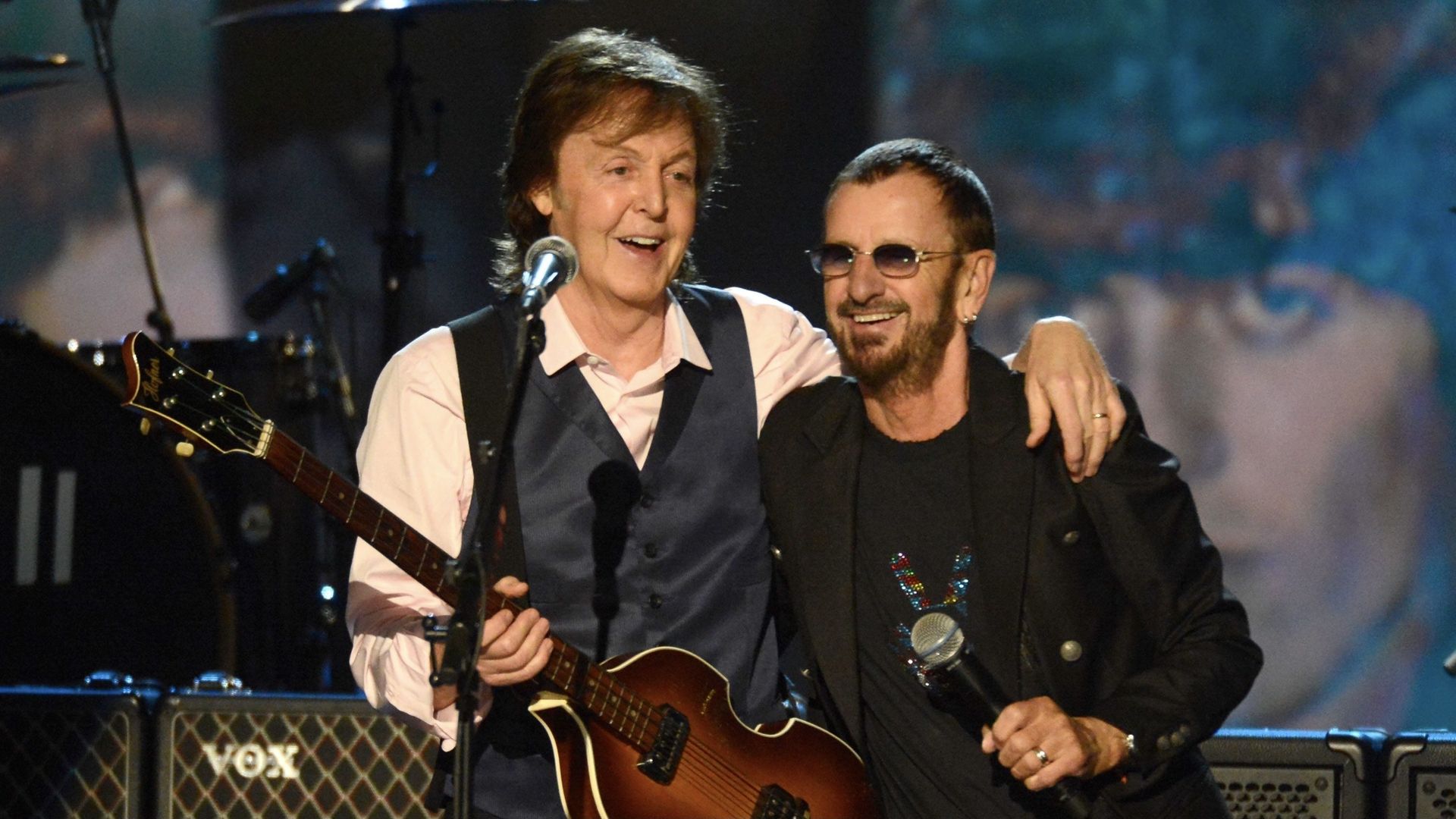
The Invention of the Music Video: The "Can’t Buy Me Love" Sequence
If there is a single moment in A Hard Day’s Night that changed cinema forever, it is the sequence featuring the song "Can’t Buy Me Love." In this scene, the Beatles escape the confines of a television studio to frolic in an open field.
Unlike previous musical films where characters sang to each other or an audience, this sequence was entirely non-literal. The Beatles aren't "performing" the song in the traditional sense; they are playing, jumping, and running while the music acts as a soundtrack to their liberation. Lester used multiple camera angles, high-speed filming (slow motion), and rapid-fire editing to match the beat of the music.
The British Film Institute (BFI) has frequently cited this sequence as the prototype for the modern music video. It demonstrated that film could be used to interpret music visually rather than just recording a performance. By the time MTV launched in 1981, the "Lester style" had become the industry standard for how music was presented on screen.
Alun Owen and the "Mock-Documentary" Script
While the visuals were revolutionary, the screenplay by Alun Owen provided the necessary foundation. Owen spent several days shadowing the band to capture their unique Liverpool vernacular and their "us versus them" mentality regarding the press and the older generation.
The film is technically a work of fiction, yet it presents itself as a documentary. This "mock-documentary" or mockumentary style allowed the band to break the "fourth wall," looking directly into the camera and acknowledging the absurdity of their fame. The inclusion of Wilfrid Brambell as Paul’s fictional "very clean" grandfather added a surrealist comedic layer that distanced the film from the earnestness of previous pop movies.
This approach influenced a wide range of future projects, from The Monkees television show to Rob Reiner’s This Is Spinal Tap. It allowed celebrities to play "versions" of themselves, a trope that remains a staple of modern entertainment.
Technical Specifications and Comparative Impact
The technical choices made during the production of A Hard Day’s Night were often born of necessity but resulted in aesthetic breakthroughs. The decision to shoot in black and white, for instance, was partially a cost-saving measure, but it also gave the film a "gritty" newsreel quality that enhanced its documentary feel.
| Feature | Pre-Beatles Music Films (e.g., Blue Hawaii) | A Hard Day’s Night (1964) |
|---|---|---|
| Cinematography | Static, tripod-based, high-key lighting. | Handheld, multi-angle, naturalistic lighting. |
| Editing Style | Continuity editing (linear, slow). | Jump cuts, rhythmic montages, non-linear. |
| Narrative Tone | Earnest, romantic, scripted "star vehicle." | Irreverent, surreal, mock-documentary. |
| Music Integration | Staged "performances" within the plot. | Non-literal visual interpretations (music videos). |
| Dialogue | Formal, traditional screenplay. | Naturalistic, Liverpool slang, witty repartee. |
The Role of Gilbert Taylor’s Cinematography
One cannot discuss the impact of this film without mentioning cinematographer Gilbert Taylor. Taylor’s work on A Hard Day’s Night was so distinctive that he was later sought out by Stanley Kubrick for Dr. Strangelove and George Lucas for the original Star Wars.
Taylor used Arriflex cameras and fast film stock to capture the grainy, high-contrast look of the film. This wasn't just about fashion; it was about mobility. Because the cameras were light and the lighting was often natural (or made to look natural), the Beatles were free to improvise their movements. This freedom of movement was a radical departure from the "marks" that actors were traditionally required to hit on a studio floor.
Legacy in 2026: Why It Still Matters
As of 2026, A Hard Day’s Night has undergone several high-definition restorations, including a definitive 4K and 8K release by the Criterion Collection. These restorations have highlighted the intricate detail of Taylor’s cinematography and the precision of Lester’s editing, proving that the film's appeal is not merely nostalgic but technical and artistic.
The film’s influence extends into the digital age. The "quick-cut" editing style seen in TikTok trends and YouTube vlogs can trace its DNA back to the Marylebone Station chase sequence. Modern directors like Edgar Wright and Wes Anderson have frequently cited Lester’s visual wit as a foundational influence on their own kinetic directing styles.
Furthermore, the film changed how the music industry marketed artists. It proved that a band could be presented as a collective of distinct individuals rather than just a lead singer and his "backing group." This shift in branding influenced every boy band and rock group that followed, from The Rolling Stones to BTS.
Frequently Asked Questions
Was A Hard Day's Night entirely improvised?
No. While it feels spontaneous, the film was meticulously scripted by Alun Owen. However, Richard Lester encouraged the band to add their own "Beatle-isms" and ad-libs to the dialogue. The natural chemistry between the four members often made the scripted lines feel like off-the-cuff remarks.
Why was the film shot in black and white?
The primary reason was a mix of budget and speed. United Artists wanted the film produced quickly to capitalize on the band's popularity before it faded (a common fear in 1964). Shooting in black and white was faster to light and process. Ultimately, this choice worked in the film's favor, giving it a timeless, "cool" aesthetic that distinguished it from the colorful, gaudy musicals of the era.
Did the film win any awards for its technical achievements?
Yes, it was nominated for two Academy Awards: Best Original Screenplay (Alun Owen) and Best Score (George Martin). While it was a commercial "pop" movie, the critical establishment recognized that it was a significant piece of filmmaking. It is consistently ranked on the BFI’s list of the top 100 British films.
How did the film influence the creation of The Monkees?
The Monkees television show was directly inspired by the "Can’t Buy Me Love" sequence in A Hard Day’s Night. The show’s creators, Bob Rafelson and Bert Schneider, wanted to replicate the film’s frantic energy, surreal humor, and use of music montages for a weekly TV audience.
Is A Hard Day's Night considered a "rockumentary"?
It is often called the first "rockumentary," but since the events are fictionalized, it is more accurately the first mockumentary. It uses the language of documentary film to tell a scripted story, a technique that would later be perfected in films like This Is Spinal Tap and Popstar: Never Stop Never Stopping.
Practical Recommendation for Film Students and Fans
To truly appreciate how A Hard Day’s Night changed cinema, viewers should watch it alongside a contemporary film from 1964, such as Elvis Presley’s Viva Las Vegas. The contrast in editing speed, camera movement, and narrative tone is staggering.
For those looking to study the film's technical aspects, the Criterion Collection edition is the recommended source, as it includes audio commentaries from Richard Lester and the production crew, detailing how they achieved specific shots with limited time and resources. Studying the "Can’t Buy Me Love" scene frame-by-frame reveals the sophisticated rhythmic editing that remains the gold standard for music-based media in 2026.
Image Gallery
Select an image to open it in a new tab.

Celine Dubois
Contemporary Living and Global Arts Columnist
