Effective Articulation Exercises for Actors: A Technical Guide to Vocal Precision

Articulation exercises for actors are structured vocal and physical drills designed to improve the clarity, precision, and efficiency of speech production. By targeting the muscles of the jaw, tongue, and lips, these exercises enable performers to navigate complex linguistic patterns and rapid dialogue without sacrificing intelligibility or dramatic intention.
The Physiology of Articulation
Articulation is the process of shaping the airflow from the lungs into recognizable speech sounds through the movement of the articulators. These articulators include the tongue, teeth, hard palate, soft palate (velum), lips, and jaw. For an actor, the challenge lies in the "placement" of these sounds—where the tongue touches the roof of the mouth or how the lips form to create specific vowels and consonants.
When an actor experiences "mumbling" or "mushy" speech, it is frequently due to a lack of agility or tension in the articulators. If the jaw is chronically tight, the tongue cannot move freely to reach the alveolar ridge (the ridge behind your top teeth). If the lips are passive, consonants like 'p', 'b', 'm', and 'w' lose their crisp edge. Effective exercises prioritize the release of unnecessary tension, allowing for maximum range of motion.
Prerequisites for Vocal Practice
Before engaging in intensive articulation drills, the actor must establish a baseline of physical readiness. Practicing articulation with a tight neck or a shallow breath will result in vocal strain rather than progress.
- Alignment: Ensure the spine is neutral. If the head is thrust forward—a common issue in modern postural habits—the muscles of the throat and jaw are pulled taut, which restricts the tongue base.
- Breath Support: Articulation is the modification of breath. If the breath is not supported by the diaphragm, the air pressure behind the consonants will be inconsistent, leading to weak or "breathy" articulation.
- The Release: Perform gentle massage or stretching on the masseter muscles (the large muscles at the back of the jaw). A common "release" exercise involves gently yawning to drop the jaw, then slowly closing it while keeping the throat open.

Core Exercises for Articulation
The most effective training programs for actors incorporate a mix of isolation, resistance, and integration exercises. These should be performed in a sequence that moves from warming up the individual muscles to applying them to complex text.
The "Siren" and Lip Trills
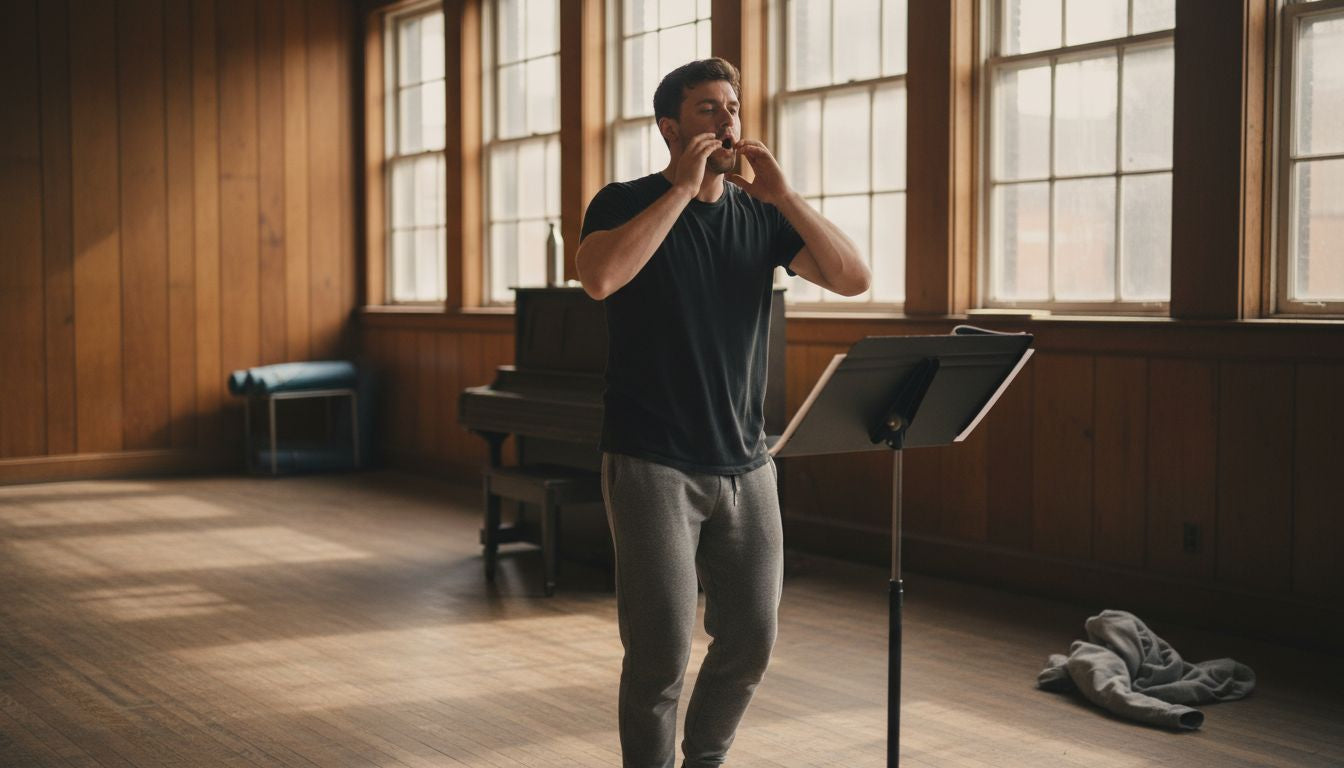
Lip trills involve blowing air through loosely closed lips to create a vibration. This helps relax the facial muscles and connects the breath to the lips. By oscillating the pitch while trilling, the actor encourages the engagement of the abdominal muscles, ensuring that the lips remain relaxed but responsive.
Tongue Isolations
The tongue is the most powerful articulator. Many actors struggle because they attempt to use the whole tongue for sounds that require only the tip.
- Tongue Pointing: Extend the tongue as far out of the mouth as possible and point it toward the nose, then the chin, then the corners of the mouth.
- The "L" Sweep: Keeping the jaw still, sweep the tip of the tongue inside the mouth, tracing the gum line from the back of the molars on the left, across the front, to the back of the molars on the right.
Consonant Crispening (The "Plosive" Drill)
Plosives are sounds like 'p', 't', and 'k' that require a sudden release of air.
- Select a sequence of words that alternate between these sounds: "Pat, tap, cap, kat, pak, tak."
- Exaggerate the "pop" of the consonant. Use a small mirror to ensure the lips and tongue are making contact with the exact points of the palate required. If the sound is "wet" or sloppy, the tongue is likely hitting too much of the palate or the lips are not sealing tightly enough.
Comparing Training Approaches
Different acting techniques emphasize varying aspects of speech. The following table compares common methodologies in vocal training for actors.
| Methodology | Primary Focus | Application |
|---|---|---|
| Linklater Technique | Resonance and freeing the natural voice | Unblocking physical tension to allow clear speech |
| Knight-Thompson Speechwork | Skillful phonetic control | Mastering accents and complex character voices |
| Alexander Technique | Postural alignment | Creating a stable foundation for articulation |
| Classical Declamation | Consonant strength and breath pressure | High-stakes, large-space projection |
Integrating Articulation into Rehearsal
Articulation exercises are most effective when they are integrated into the performance process, not just treated as a warm-up. If you have a particularly difficult line of dialogue, use the "exaggeration method."
- The Over-Articulation Phase: Speak the line at a slow, deliberate pace. Move your mouth to an extreme degree, far beyond what is required for natural conversation. This builds muscle memory in the articulators.
- The "Silent" Phase: Speak the line with full breath and physical energy but without making sound. Focus entirely on the movement of the tongue and lips.
- The Return to Naturalism: Speak the line again at a normal speed. By having pushed the muscles to their limit in the previous steps, the "normal" effort will feel significantly more efficient and precise.
Common Pitfalls and Troubleshooting
- The "Jaw-Lock" Effect: If your jaw is locked, your speech will sound "pressed" or strained. If you find your jaw clenching during complex passages, stop and perform a simple chewing motion with your mouth closed. This resets the temporomandibular joint.
- Over-Articulation: While precision is key, over-articulation can lead to a "robot" effect that ruins the dramatic reality of a scene. Always temper your technical exercises with the requirement of the character's internal life. The goal is to be heard, not to be a machine.
- Vowel Modification: Remember that consonants are the "bones" of speech, but vowels are the "flesh." If you articulate consonants clearly but sacrifice vowel quality, the voice will sound brittle. Maintain the integrity of the vowel shape even while sharpening the consonant edges.
Frequently Asked Questions
How long should I practice articulation exercises daily? Consistency is more important than duration. Fifteen minutes of focused, high-quality work is superior to an hour of mindless repetition. Incorporate a five-minute warm-up into your daily routine and a focused session when encountering difficult scripts.
Can articulation exercises help with stage fright? Yes. Focusing on the physical mechanics of the articulators acts as a grounding technique. By shifting your attention from the anxiety of the performance to the physical sensation of the tongue and lips, you can interrupt the physiological feedback loop of panic.
Is there a difference between articulation and diction? They are often used interchangeably, but "articulation" refers to the physical shaping of sounds, while "diction" often refers to the choice of words or the regional style of speech. For an actor, articulation is the prerequisite for clear diction.
Do I need a vocal coach to learn these exercises? While a coach can provide essential feedback on your specific blind spots, the foundational exercises are accessible through study of established texts like Kristin Linklater’s Freeing the Natural Voice. A coach is most beneficial when you are ready to apply these skills to demanding classical texts or specific dialect work.
How do I maintain clarity when speaking quickly? Clarity during rapid-fire dialogue comes from the "economy of motion." The more efficiently your articulators move—meaning they travel the shortest distance required to form a sound—the faster you can speak without losing clarity. Practice slow, precise movements to build the necessary coordination.
Next Actions
To begin your training, start by recording yourself reading a complex monologue. Listen specifically for "fuzzy" consonants or dropped endings. Choose one specific area—such as the front-of-mouth sounds (p, b, m)—and spend one week focused on daily 10-minute drills targeting these areas. Re-record the monologue at the end of the week to measure your progress against the baseline recording. Ensure that your posture remains upright and your breath is fully supported throughout every session to prevent unnecessary strain.
Image Gallery
Select an image to open it in a new tab.



Omar Farooq
EdTech Innovation and Virtual Pedagogy Journalist
