
The legacy of John Wayne, born Marion Robert Morrison, remains a pillar of American cinema in 2026, yet his real life is often obscured by decades of tall tales. While he personified the American frontier hero, many "facts" about his military service, health, and personal habits are actually exaggerated myths or complete fabrications.
The Truth About John Wayne’s Military Service
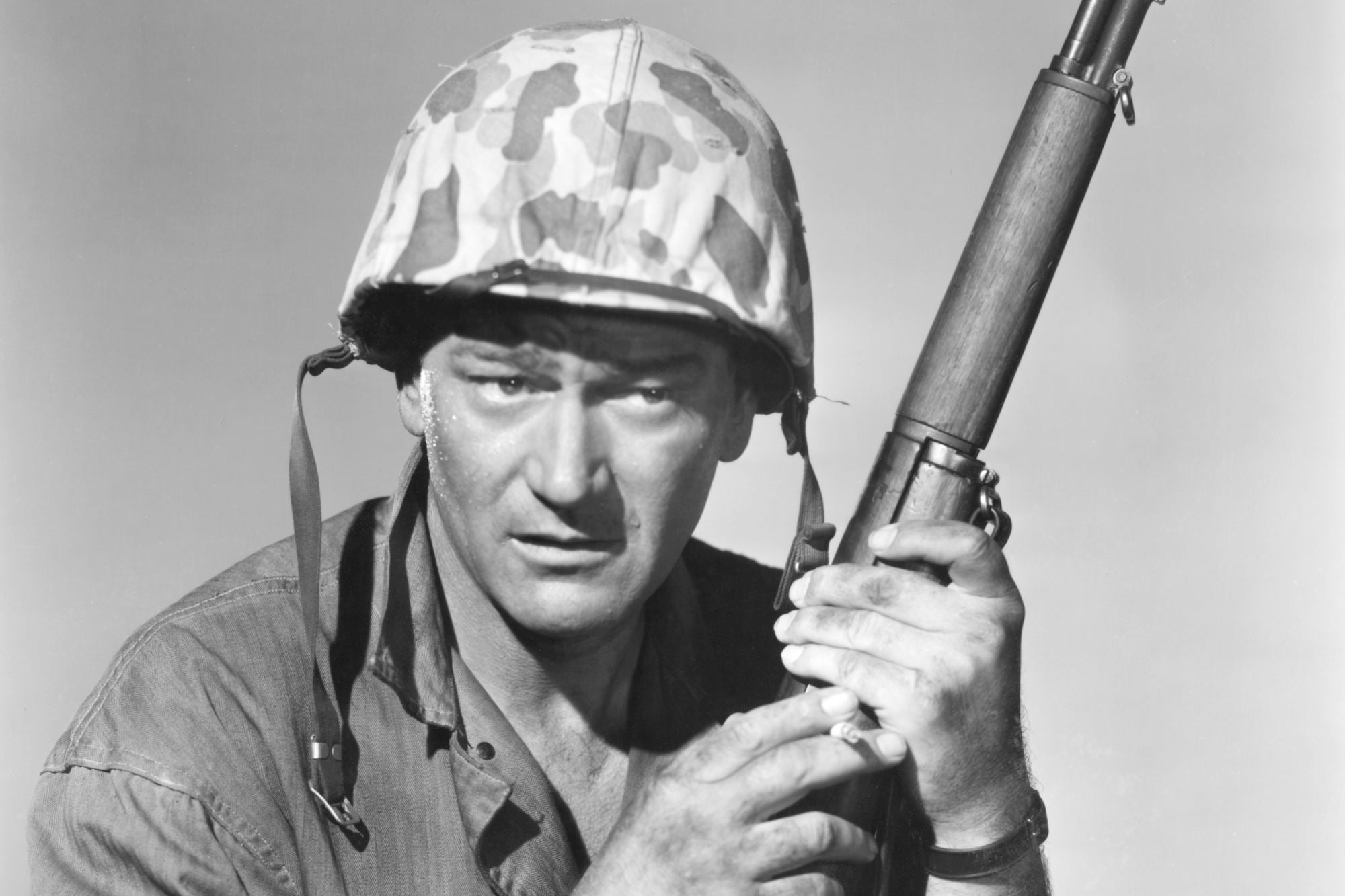
One of the most persistent and debated aspects of John Wayne’s life is his lack of military service during World War II. For a man who became the cinematic face of the American soldier in films like Sands of Iwo Jima and They Were Expendable, his absence from the actual front lines created a narrative of "draft dodging" that still circulates today. However, the reality of his status was dictated by a complex mix of age, family obligations, and studio interference rather than a desire to avoid duty.
When the United States entered World War II in 1941, Wayne was 34 years old, which was considered relatively old for initial enlistment. He was initially classified by the Selective Service as 3-A (family deferment) because he was a father of four. Despite this, Wayne did express a desire to serve. He wrote to John Ford, who was already serving in the Navy’s OSS, asking if he could be placed in Ford's unit.
The primary obstacle was Herbert J. Yates, the head of Republic Pictures. Wayne was Republic's only A-list star, and the studio was facing financial ruin if their top box-office draw was removed from the roster. Yates reportedly threatened Wayne with a breach-of-contract lawsuit if he attempted to enlist. Furthermore, the Selective Service eventually reclassified Wayne as 2-A (deferred in support of national interest), arguing that his presence in morale-boosting films was more valuable to the war effort than his presence in a foxhole.
While his peers like Jimmy Stewart and Henry Fonda famously served with distinction, Wayne’s "failure" to serve became his greatest personal regret. Historians note that this guilt likely fueled his later outspoken patriotism and his willingness to take on roles that portrayed the military in an idealized light. To call him a "draft dodger" is technically inaccurate, as he never broke any laws or fled his obligations; he simply remained within the legal classifications provided to him.
The Radioactive Legacy of Snow Canyon and "The Conqueror"
A common legend suggests that John Wayne was "killed by the government" due to the filming of the 1956 movie The Conqueror. The production took place in St. George, Utah, which was downwind from the Nevada Test Site where the U.S. government had recently conducted atmospheric nuclear testing. The myth posits that the radioactive "pink sand" of Snow Canyon gave the entire cast and crew cancer.
The statistics are indeed alarming. Out of the 220 people who worked on the production, 91 had developed some form of cancer by the early 1980s, and 46 had died from it, including Wayne, Susan Hayward, and director Dick Powell. This rate is significantly higher than the statistical average for a group of that size.
However, debunking the "government assassination" myth requires looking at Wayne's personal habits. John Wayne was a legendary six-pack-a-day cigarette smoker for most of his adult life. He was diagnosed with lung cancer in 1964 and had his left lung and several ribs removed. While he was declared cancer-free for years afterward, he eventually succumbed to stomach cancer in 1979.
While the radioactive fallout at Snow Canyon almost certainly contributed to the high cancer rates among the crew, attributing Wayne’s death solely to the government tests ignores decades of heavy tobacco use. Scientists today suggest a "synergistic effect" where the radiation exposure exacerbated the damage already done by smoking, but the radiation was not the lone culprit.

The Myth of the Stalin Assassination Plot
A more sensational myth suggests that Soviet dictator Joseph Stalin was so offended by John Wayne’s anti-communist rhetoric that he ordered the KGB to assassinate him. According to various biographies, most notably Michael Munn’s The John Wayne Story, two KGB agents supposedly traveled to Los Angeles in the early 1950s to kill the Duke in his office at Warner Bros.
The story goes that the plot was foiled by the FBI, and Wayne allegedly convinced the agents to stay in the U.S. and work for the government. While this makes for a fantastic screenplay, most serious historians treat the "Stalin hit" with extreme skepticism. There are no declassified Soviet records that mention a plot against a Hollywood actor, nor are there FBI files from that era confirming such a bizarre event.
The myth likely persists because it aligns so perfectly with Wayne’s "Cold Warrior" persona. While Stalin was known for his paranoia and did target political rivals abroad, the idea that he would risk an international incident over a Western film star is generally considered a piece of Hollywood folklore or a "tall tale" Wayne himself might have enjoyed embellishing over drinks.
The "40 Pounds of Red Meat" Urban Legend
Perhaps the most persistent—and most easily debunked—myth regarding John Wayne concerns his autopsy. For decades, a rumor has circulated that doctors found 40 pounds (some versions say 60 or 70 pounds) of undigested red meat impacted in his colon at the time of his death. This myth is often used as a cautionary tale by proponents of vegetarianism or "colon cleanses."
From a biological standpoint, this is an impossibility. The human colon is not large enough to hold 40 pounds of waste without rupturing, and such a condition would have resulted in a fatal bowel obstruction long before it reached that weight. Furthermore, John Wayne’s official cause of death was stomach cancer, and his medical records do not mention any such mass of undigested food.
This urban legend is a "copy-paste" myth that has also been attributed to Elvis Presley and John Candy. It is a classic example of "medical folklore" used to shock the public, with no basis in the actual pathology reports of the deceased.
Comparing the Screen Persona vs. Historical Reality
To understand why these myths persist, it is helpful to compare the "Duke" seen on screen with the Marion Morrison who lived behind the scenes.
| Feature | The Hollywood Persona ("The Duke") | The Historical Reality (Marion Morrison) |
|---|---|---|
| Military Record | Decorated war hero (on screen) | Deferred (3-A/2-A) during WWII; never served. |
| Origins | Rough-and-tumble Westerner | Prop man and former football player at USC. |
| Real Name | John Wayne | Marion Robert Morrison (changed to Mitchell later). |
| Physical Stature | 6'4" and indestructible | Suffered from chronic injuries and severe cancer. |
| Hair | Iconic thick hair | Wore high-quality toupees for the majority of his career. |
| Politics | Purely conservative icon | Supported some Democratic policies early in life; later a staunch Republican. |
The "Marion" Name and the Toupee Controversy
There is a long-standing myth that John Wayne changed his name because he was ashamed of the "effeminate" name Marion. While it is true he used the name John Wayne professionally, the change was not his idea. When he was cast in his first starring role in The Big Trail (1930), director Raoul Walsh and Fox Studios executive Winfield Sheehan decided that "Marion Morrison" didn't fit a leading man. They chose "John Wayne" after the Revolutionary War general "Mad Anthony" Wayne. Wayne wasn't even present for the meeting where his new name was chosen.
Regarding his hair, many fans refused to believe the Duke was bald. Wayne began losing his hair in the late 1940s and wore hairpieces for the rest of his life. Unlike many of his contemporaries who were secretive about it, Wayne was surprisingly candid. When a reporter once asked him if his hair was real, Wayne famously replied, "It's real hair. It's just not mine." This honesty contrasts with the myth that he was deeply insecure about his appearance.
The Controversial 1971 Playboy Interview
In the 2020s, much of the "debunking" around John Wayne has shifted toward his social and political views, specifically regarding a 1971 interview with Playboy magazine. Some fans try to mythologize Wayne as a man who was "perfectly in line with modern values," while critics sometimes exaggerate his views into caricature.
The reality, as documented in the interview, is that Wayne held views that are considered highly offensive by modern standards. He made disparaging comments about Native Americans and Black Americans, stating at one point, "I believe in white supremacy until the Black people are educated to a point of responsibility."
Debunking the myth that he was "just a man of his time" requires acknowledging that even in 1971, these comments were controversial and led to significant backlash. Understanding the real John Wayne requires accepting the complexity of a man who could be a loyal friend and a talented artist while also harboring the deep-seated prejudices of his era.
Why the Myths Persist in 2026
John Wayne remains an archetype. For many, he represents a version of America that feels stable and courageous. Myths grow around such figures because we want our icons to be "larger than life." Whether it's the Stalin assassination plot or the radioactive sand of Utah, these stories add a layer of mystery and danger to a man who, in reality, was a hard-working actor who struggled with his health and his conscience.
By peeling back the layers of these myths, we don't diminish the impact of his work in cinema. Instead, we find a more human figure: a man named Marion who was pressured by his studio to stay home during the war, who fought a long and public battle with cancer, and who was honest about his hair even while he was protective of his image.
Frequently Asked Questions
Did John Wayne really dodge the draft during WWII?No. John Wayne did not "dodge" the draft in a legal sense. He was granted a 3-A deferment for being a father and a 2-A deferment because his film work was deemed in the national interest. While he did not serve, he remained within the legal boundaries set by the Selective Service at the time.
Is it true that the movie "The Conqueror" killed John Wayne?It is highly likely that exposure to nuclear fallout during the filming of The Conqueror in Utah contributed to the high cancer rates among the cast and crew. However, Wayne was also a lifelong heavy smoker, which is a primary risk factor for the lung and stomach cancers he eventually developed.
What was John Wayne's real name and why did he change it?His birth name was Marion Robert Morrison. The name was changed to John Wayne by Fox Studios executives in 1930 because they felt "Marion" was not a strong enough name for a Western film star. Wayne was not involved in the decision.
Did John Wayne really have 40 pounds of meat in his system when he died?No. This is a complete urban legend with no medical basis. It is physically impossible for the human body to function with that amount of undigested waste, and no such finding exists in his medical records or autopsy reports.
Did John Wayne wear a wig?Yes. John Wayne began wearing hairpieces in the late 1940s as his natural hair thinned. He was relatively open about this fact, famously joking that the hair was real, even if it didn't grow from his own head.
Practical Recommendation for History Enthusiasts
If you are researching the life of John Wayne, prioritize primary sources such as his 1971 Playboy interview and official biographies by established historians like Scott Eyman (John Wayne: The Life and Legend). Avoid tabloid-style "trivia" sites that frequently repeat the "red meat" or "Stalin hit" myths without citing verifiable FBI or medical records. Understanding the Duke requires looking at the documents of the time rather than the legends that followed.
Image Gallery
Select an image to open it in a new tab.





Ingrid Bjornson
Global Cyber Policy and Regulation Analyst
