Why Is Gold a Better Conductor Than Silver? Deconstructing Electrical Conductivity in Precious Metals

Contrary to a common engineering misconception, gold is actually a worse electrical conductor than silver, not a better one. Silver holds the highest electrical and thermal conductivity of any known element on Earth, outperforming gold under standard laboratory and operational conditions. However, gold is frequently chosen over silver in high-reliability electronic contacts, aerospace applications, and precision instruments because it resists corrosion, oxidation, and surface degradation, ensuring stable, long-term electrical performance where silver would otherwise fail.
Setting the Record Straight: Silver vs. Gold Conductivity
To understand the core mechanics of electrical conductivity, it is necessary to examine how electrons move through a metal lattice. Metals conduct electricity because they possess a "sea" of free, delocalized valence electrons that can move relatively unimpeded when an external electric field is applied. The ease with which these electrons drift determines a material's conductivity rating.
Silver ($\text{Ag}$) features a single valence electron in its outer $5s$ shell that is exceptionally mobile. According to the International Annealed Copper Standard (IACS), which sets copper at 100% conductivity ($5.8 \times 10^7 , \text{S/m}$ at $20^\circ\text{C}$), silver ranks at approximately 105% to 106% IACS, boasting a conductivity of roughly $6.3 \times 10^7 , \text{S/m}$.
Gold ($\text{Au}$), while also possessing a single valence electron in its outer $6s$ shell, exhibits a conductivity rating of roughly 70% IACS, translating to about $4.1 \times 10^7 , \text{S/m}$. This lower performance stems from relativistic effects in heavy elements like gold, which pull inner-shell electrons closer to the nucleus and alter the scattering cross-section of conduction electrons. Consequently, purely on the metric of electrical transport efficiency, silver defeats gold by a wide margin.
Why Gold Is Often Perceived as Superior
The persistent belief that gold outperforms silver stems from a conflation of pure electrical conductivity with overall electrical reliability and environmental stability. In real-world engineering environments, raw conductivity is only one variable in a complex equation that includes oxidation resistance, mechanical wear, and contact resistance.
The Problem with Silver: Tarnishing and Oxidation
Silver is a highly reactive transition metal when exposed to atmospheric trace gases. While silver does not react readily with pure oxygen at room temperature, it is exceptionally sensitive to sulfur compounds present in the air, such as hydrogen sulfide ($\text{H}_2\text{S}$).
When silver reacts with sulfur, it forms silver sulfide ($\text{Ag}_2\text{S}$), commonly recognized as tarnish. Unlike copper oxide, which can sometimes be relatively conductive, silver sulfide is a semiconductor with high electrical resistance. Over time, an unsealed silver contact exposed to ambient air will develop a microscopic insulating tarnish layer. This layer increases contact resistance, generates localized heat, creates signal distortion, and can ultimately cause circuit failure in low-voltage or micro-current applications.
The Advantage of Gold: Chemical Inertia
Gold, conversely, is a noble metal. It is remarkably resistant to chemical attack, meaning it does not oxidize, tarnish, or react with atmospheric moisture, sulfur, or industrial pollutants under standard conditions.
Because gold does not form an oxide or sulfide film, a gold-plated connector maintains a pristine, metal-to-metal contact interface indefinitely. Even though its raw conductivity is lower than silver's, the absence of an insulating surface film ensures that the effective contact resistance remains consistently low throughout the operational lifespan of the device.
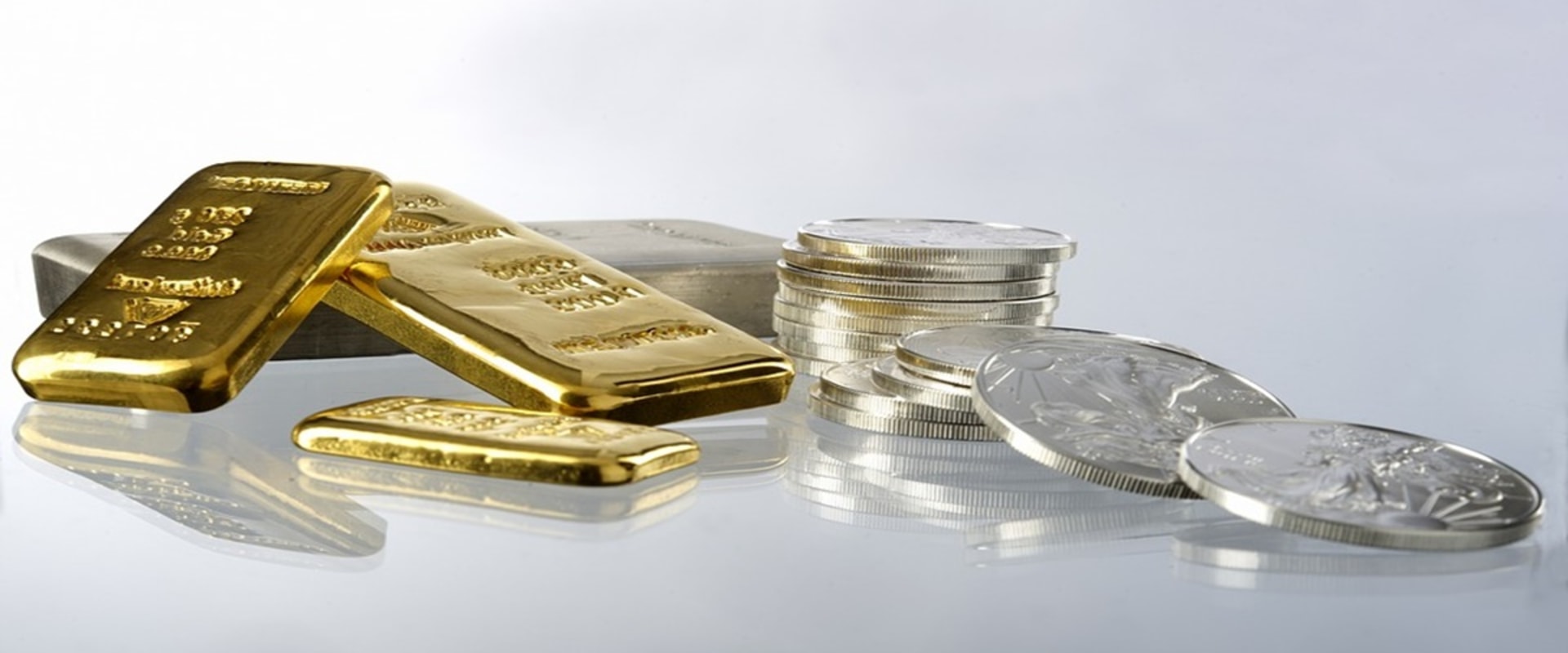
Comparative Metrics of Precious and Base Conductors
Evaluating conductors requires looking at a matrix of physical, electrical, and chemical properties. The table below outlines how silver, gold, copper, and aluminum compare across key engineering parameters.
| Metal | Electrical Conductivity (% IACS) | Resistivity ($\text{n}\Omega\cdot\text{m}$ at $20^\circ\text{C}$) | Thermal Conductivity ($\text{W/m}\cdot\text{K}$) | Chemical Reactivity | Primary Engineering Use Cases |
|---|---|---|---|---|---|
| Silver | ~105% – 106% | 15.87 | 429 | Moderate (reacts with sulfur to form tarnish) | High-end audio cables, photovoltaic cells, specialty RF connectors, fuse links |
| Copper | 100% (Baseline) | 16.78 | 401 | Moderate (forms non-insulating/semi-conductive oxides) | Standard household wiring, power transformers, motor windings, busbars |
| Gold | ~70% | 24.40 | 317 | Extremely Low (noble metal, highly inert) | Microchip wire bonding, aerospace contacts, edge connectors, medical implants |
| Aluminum | ~61% | 28.20 | 237 | High (forms a tough, passivating oxide layer) | High-voltage transmission lines, aircraft frames, structural wiring |
Engineering Trade-Offs: When to Use Gold, Silver, or Copper
Selecting the correct conductor involves balancing electrical efficiency against environmental durability, weight, and material cost. Engineers analyze specific operational contexts to determine the best metal for a given application.
Silver: Maximum Efficiency and High-Frequency Performance
Silver is deployed where maximum electrical or thermal transfer is required and where environmental protection (such as hermetic sealing, inert gas purging, or protective plating) can prevent tarnish formation.
- Radio Frequency (RF) Engineering: Skin effect dictates that high-frequency alternating current (AC) travels primarily along the outer surface of a conductor. Silver plating is frequently applied to copper waveguides, cavity resonators, and high-frequency coaxial cables to minimize signal attenuation at gigahertz frequencies.
- Photovoltaics: Silver paste is screen-printed onto the surface of silicon solar cells to collect and transport generated electrical current efficiently.
- Audio Interconnects: High-end audio cables occasionally utilize high-purity silver to maximize signal fidelity, though the audible benefits in consumer audio are frequently debated compared to properly sized copper.
Gold: Uncompromising Reliability in Critical Contacts
Gold is utilized where the cost of failure far exceeds the material cost of the precious metal. Because microscopic corrosion can cause catastrophic failures in mission-critical systems, gold is the industry standard for specific interface points.
- Semiconductor Packaging: Gold wire bonding connects microscopic silicon integrated circuit pads to external package leads via thermocompression bonding. Gold does not form brittle intermetallic compounds easily and maintains reliable welds.
- Connectors and Edge Cards: Memory module fingers, SIM cards, USB connector pins, and military-grade circular connectors are typically flash-plated with hard gold over a nickel barrier layer. This ensures thousands of mating cycles without frictional degradation or oxidation.
- Aerospace and Defense: Satellites and deep-space probes operate in environments where maintenance is impossible. Gold plating protects exposed electrical infrastructure from vacuum-induced cold welding and atomic oxygen degradation.
Copper: The Economic and Industrial Workhorse
While this discussion focuses on precious metals, copper remains the baseline standard for 99% of electrical engineering applications. It offers an optimal balance of high conductivity (100% IACS), moderate cost, and adequate mechanical workability. Where weight is a primary constraint—such as in overhead power distribution or commercial aircraft—aluminum is substituted despite its lower conductivity due to its exceptional lightness.
Common Misconceptions and Technical Clarifications
The persistent myth that gold is a superior conductor often leads to flawed consumer choices and engineering misunderstandings. Clarifying these technical points prevents costly errors in system design.
Gold-Plated Audio and Video Cables
Consumer electronics marketing frequently highlights "gold-plated connectors" as a mark of superior signal speed or audio clarity. From an electrical physics standpoint, electrons do not travel faster or cleaner through gold than they do through copper or silver. The actual signal path inside the equipment is made of standard copper traces on a printed circuit board (PCB). The gold plating on the exterior plug serves strictly to prevent the connector from oxidizing while sitting in a drawer or port over time. Once plugged in, a nickel or standard copper connector would perform identically if kept free of corrosion.
The Role of Underplating (Nickel Barriers)
Gold is rarely plated directly onto copper or brass substrates for electrical contacts. Copper atoms tend to migrate through thin layers of gold over time, oxidizing on the surface and degrading the connection. To prevent this, manufacturers apply a micro-layer of nickel underplate before depositing the gold layer. Nickel provides structural hardness and acts as a diffusion barrier, ensuring that the gold coating remains pure and effective throughout its lifecycle.
Practical Guidance for Selecting Conductors
When designing circuits, specifying components, or troubleshooting electrical interfaces, engineers and technicians should adhere to these practical guidelines:
- Evaluate Environmental Exposure: If a connection is hermetically sealed or exposed to clean, dry indoor air, high-purity copper or silver-plated components provide superior electrical conductivity at a fraction of the cost.
- Prioritize Gold for Low-Voltage, Low-Current Signals: In dry-circuit conditions (where voltage and current are too low to break down microscopic surface films), use gold plating to prevent intermittent connection failures caused by tarnish or oxidation.
- Account for Mechanical Wear: For components that must endure repeated plugging and unplugging, specify hard-gold plating over a nickel barrier to resist abrasion and galling.
- Manage Galvanic Corrosion: When mating dissimilar metals (such as gold-plated pins with aluminum or bare copper housing), use appropriate barrier pastes or sealants to prevent galvanic cells from forming in humid or saline environments.
Image Gallery
Select an image to open it in a new tab.


Omar Farooq
EdTech Innovation and Virtual Pedagogy Journalist
