Wittenberg, officially known as Lutherstadt Wittenberg, is the primary historical hub of the Protestant Reformation in Germany. It is the site where Martin Luther famously initiated the Reformation in 1517 by posting his 95 Theses, fundamentally transforming the religious, political, and cultural landscape of the Western world through his theological challenges.
The Significance of Lutherstadt Wittenberg in 2026
As of 2026, Lutherstadt Wittenberg remains one of the most vital pilgrimage and cultural sites in Europe. Located in the state of Saxony-Anhalt, along the banks of the Elbe River, this town preserves the architectural and intellectual environment of the 16th century. While centuries have passed, the town’s layout and its core monuments continue to provide an immersive look into the events that ended the religious monopoly of the Roman Catholic Church in Central Europe.
The designation "Lutherstadt" (Luther Town) is not merely a branding exercise; it is a legal status granted by the German government to honor the town’s role in the life of Martin Luther. For modern visitors, researchers, and students of history, Wittenberg serves as an open-air museum where the transition from the Middle Ages to the Early Modern period is physically manifested in stone, art, and archival documents.
Historical Foundations: Why Wittenberg?
To understand why a small town in the Electorate of Saxony became the "Reformation Hub," one must look at the convergence of political power and academic ambition. In the late 15th century, Frederick III, Elector of Saxony (known as Frederick the Wise), chose Wittenberg as his residence and established the University of Wittenberg in 1502.
The university, also known as the Leucorea, was intended to be a center for humanistic studies. Frederick’s support provided a protective environment for radical intellectual inquiry. Martin Luther arrived as a professor of theology, and it was within this academic framework that he developed the doctrine of justification by faith alone. The presence of the printing press in Wittenberg further amplified the town’s influence, allowing Reformation ideas to spread with unprecedented speed across Europe.
Key Reformation Sites in Wittenberg
The historical center of Wittenberg is relatively compact, allowing visitors to follow the "Reformation Path." The following sites are recognized by UNESCO as World Heritage sites due to their outstanding universal value.
The Castle Church (Schlosskirche) and the Theses Door
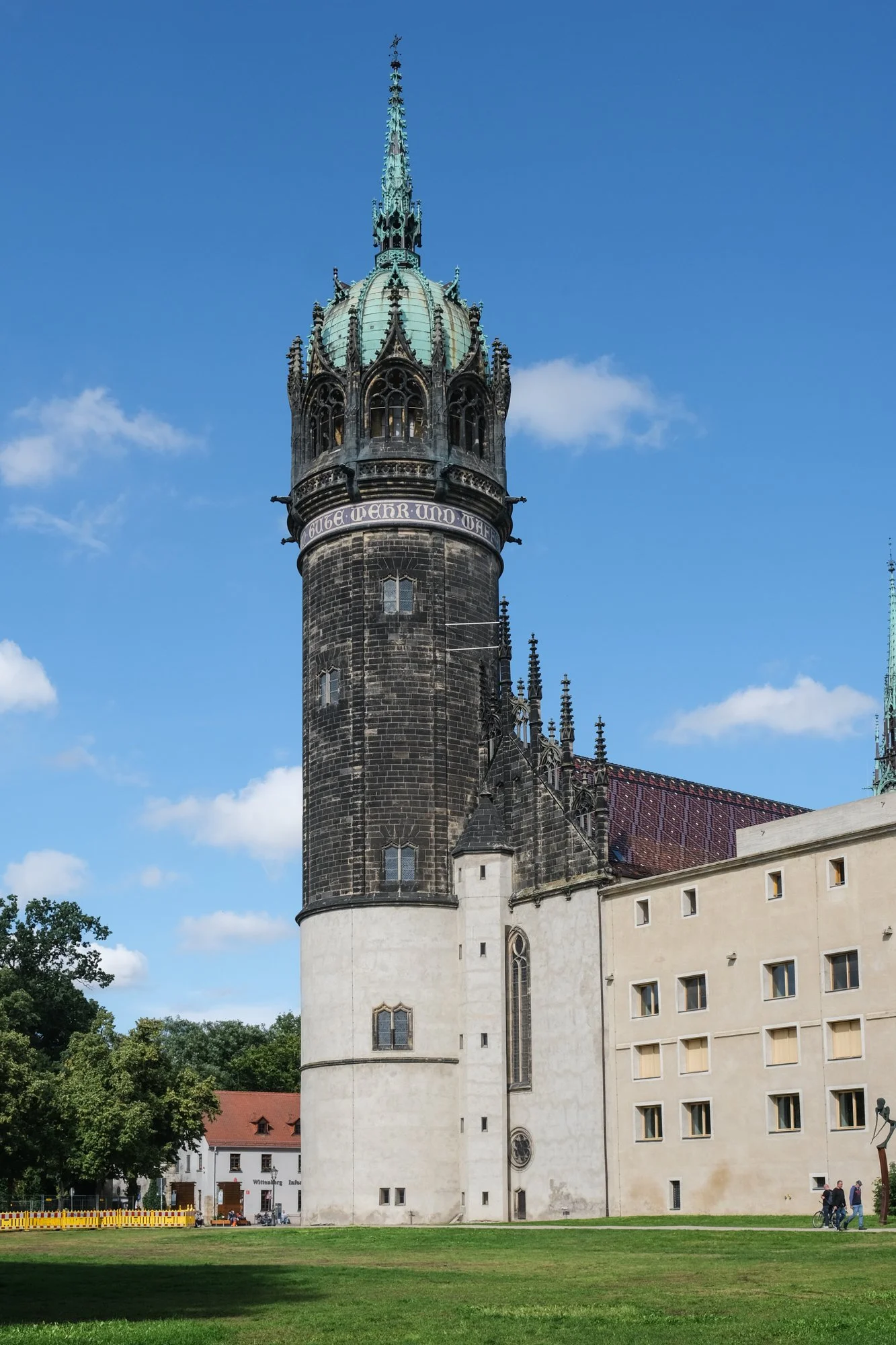
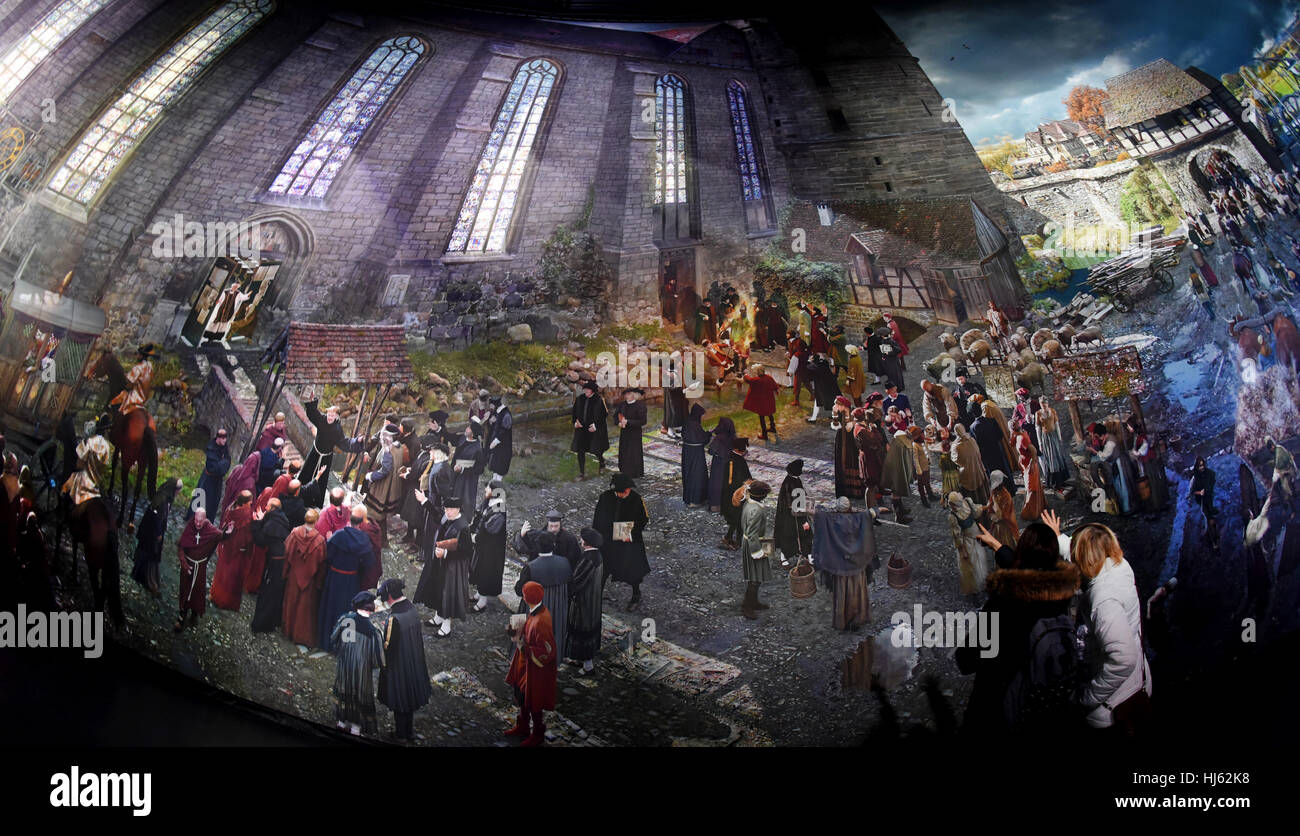
The Castle Church is perhaps the most iconic structure in the history of Protestantism. On October 31, 1517, Martin Luther reportedly nailed his 95 Theses to the north portal of this church. At the time, the church doors served as a public bulletin board for the university.
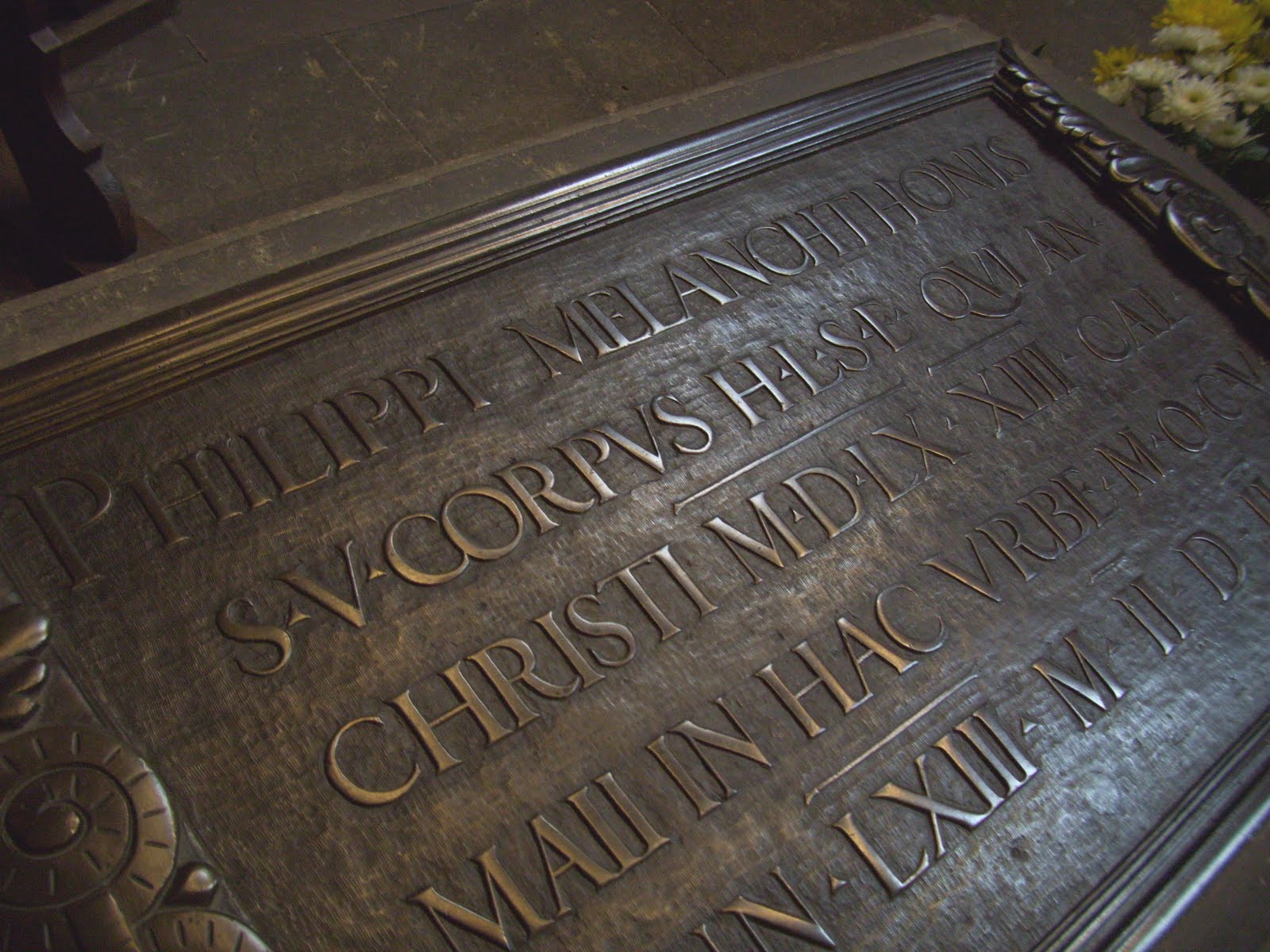
While the original wooden doors were destroyed during the Seven Years' War, they were replaced in the 19th century with bronze doors inscribed with the Latin text of the Theses. Inside the church, the graves of Martin Luther and his colleague Philipp Melanchthon are located beneath the floor, serving as a solemn reminder of their lifelong commitment to the town. The church’s spire, adorned with the words of Luther’s famous hymn "A Mighty Fortress Is Our God" (Ein feste Burg ist unser Gott), dominates the Wittenberg skyline in 2026.
The Luther House (Lutherhaus)
Originally built as an Augustinian monastery, the Luther House became Martin Luther's residence for over 35 years. After the monastery was dissolved during the Reformation, Frederick the Wise gave the building to Luther. Today, it stands as the world's largest museum dedicated to the history of the Reformation.
The museum houses the "Lutherstube," the original living room where Luther held his "Table Talks"—informal discussions with students and guests that were later recorded and published. The exhibits in 2026 feature original manuscripts, paintings by Lucas Cranach the Elder, and Luther’s pulpit. The building provides deep insight into Luther’s transition from a monk to a family man and a revolutionary leader.
St. Mary’s Church (Stadtkirche)
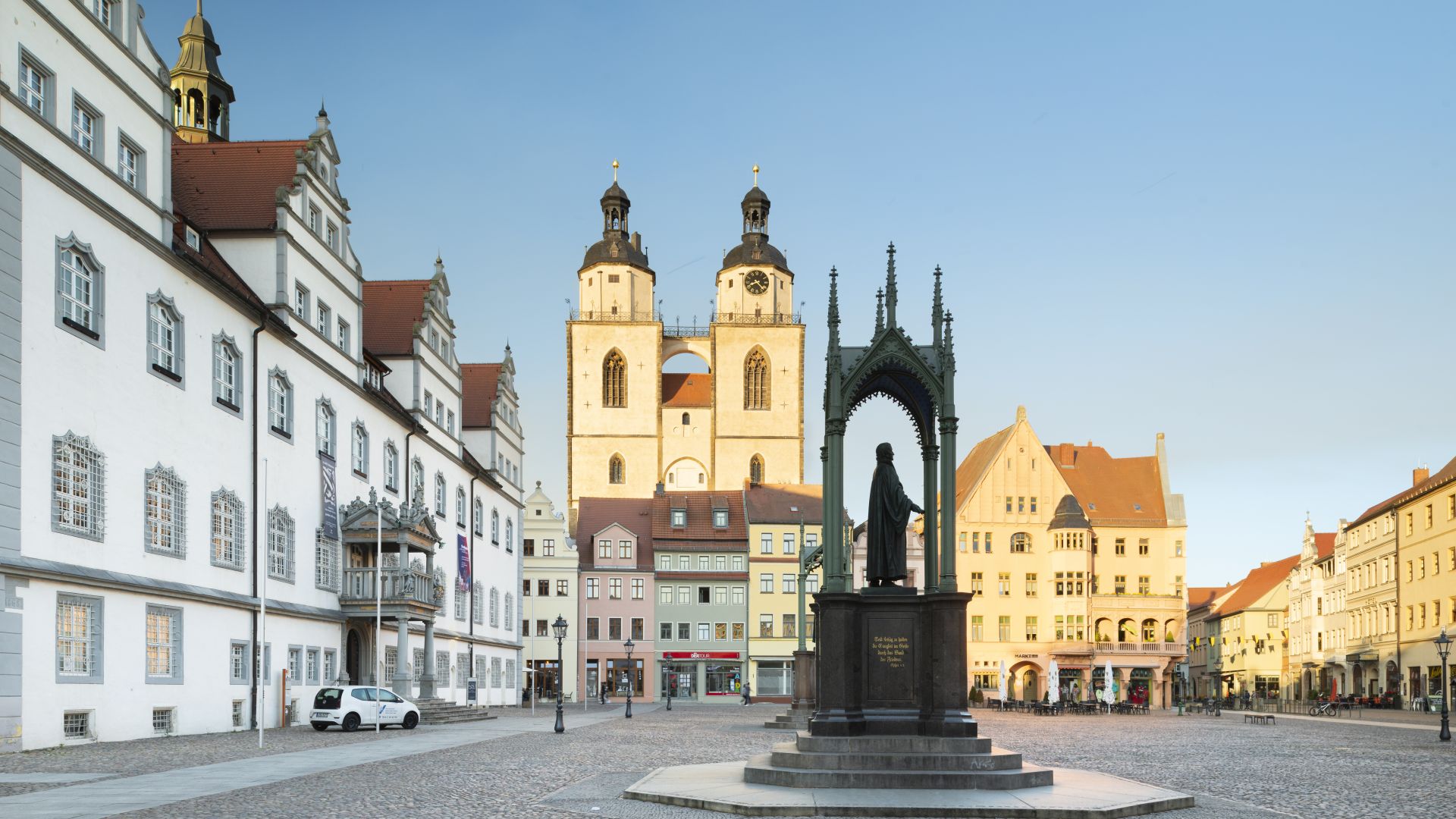
Known as the "Mother Church of the Reformation," St. Mary’s is where Luther regularly preached and where the first Protestant church services were held in the German language rather than Latin. It was also the site where the first celebration of the Lord's Supper in both kinds (bread and wine for the laity) took place.
The church is home to the famous Reformation Altar painted by Lucas Cranach the Elder. This masterpiece of Reformation art depicts the central tenets of the new faith: baptism, confession, and the Eucharist, featuring portraits of Luther, Melanchthon, and Cranach himself among the biblical figures.
The Melanchthon House
Philipp Melanchthon, known as the "Teacher of Germany," was Luther’s closest collaborator and a brilliant linguist and theologian. His house in Wittenberg is a Renaissance gem that has been meticulously preserved. Unlike the more austere Luther House, Melanchthon’s residence reflects the refined tastes of a Renaissance scholar. It serves as a museum highlighting the educational reforms that Melanchthon spearheaded, which shaped the German school system for centuries.
Comparison of Essential Historical Sites in Wittenberg
| Site | Primary Historical Role | Key Artifact/Feature |
|---|---|---|
| Castle Church | Location of the 95 Theses | Bronze Theses Doors; Luther & Melanchthon Graves |
| Luther House | Residence and family home of Luther | The "Lutherstube" (original living room) |
| St. Mary's Church | Luther's preaching pulpit | The Reformation Altar by Lucas Cranach |
| Melanchthon House | Home of the "Teacher of Germany" | Renaissance garden and scholarly exhibits |
| Leucorea | The University of Wittenberg | Historical campus and academic archives |
The Role of Art: Lucas Cranach the Elder
No study of Wittenberg as a Reformation hub is complete without mentioning the Cranach family. Lucas Cranach the Elder was a close friend of Luther and the court painter to the Electors of Saxony. His workshop in Wittenberg became a factory for Reformation propaganda.
Cranach developed a distinct visual language for the new faith. He painted numerous portraits of Luther, helping to create the world's first "media personality." His woodcuts and paintings were used to illustrate Luther's German translation of the Bible, making the theological concepts accessible to a largely illiterate population. In 2026, the Cranach Courtyards (Cranach-Höfe) remain a vibrant center for art and culture in Wittenberg, maintaining the legacy of the Reformation’s visual architects.
Practical Information for Visiting Wittenberg in 2026
Wittenberg is highly accessible for international travelers, primarily via Germany's extensive rail network. Whether visiting for a day or a week, understanding the local logistics ensures a productive experience.
Getting There and Transport
Wittenberg is situated on the main railway line between Berlin and Leipzig. High-speed ICE trains connect Berlin Central Station to Wittenberg in approximately 40 to 45 minutes, making it an easy day trip from the capital. Leipzig is even closer, reachable in about 30 minutes.
Within the town, the historical center is a designated pedestrian zone. Most of the major Reformation sites are within a 15-minute walk of each other. For those with mobility issues, local bus services and bicycle rentals are readily available.
Accessibility and Entry Fees
In 2026, most major museums in Wittenberg offer combined tickets (Kombi-Tickets) that provide discounted entry to the Luther House, Melanchthon House, and temporary exhibitions. It is advisable to check the Luther Memorials Foundation of Saxony-Anhalt for current seasonal opening hours and special events.
- Standard Adult Admission: Expect to pay between €12 and €15 for a combined museum ticket.
- Guided Tours: Public tours in English are typically offered at 11:00 AM and 2:00 PM during the peak tourist season (May through October).
- Accessibility: Most sites have been modernized with ramps and elevators, though the cobblestone streets of the old town can be challenging for some.
The Cultural Calendar: "Luther’s Wedding"
Every June, the town hosts its largest annual festival, "Luther’s Wedding" (Luthers Hochzeit). This three-day event commemorates the marriage of Martin Luther to the former nun Katharina von Bora in 1525. The festival transforms the entire town center into a medieval market, featuring parades, traditional music, and historical reenactments. It is one of the most significant historical festivals in Germany and attracts thousands of visitors. If traveling in 2026, booking accommodation well in advance for the June festivities is essential.
Educational and Research Opportunities
For those interested in the academic side of the Reformation, the Herzog August Bibliothek and the local Wittenberg University archives offer extensive resources. The Leucorea continues to function as an institute for higher education and research, hosting international conferences on church history and the influence of the Reformation on modern democracy.
The Reformation did not only change religion; it influenced the German language, the concept of public education, and the relationship between the state and the individual. Researchers in Wittenberg study these "Reformation impacts" to understand how 16th-century ideas continue to resonate in 21st-century secular society.
Frequently Asked Questions
How much time do I need to see all the Reformation sites in Wittenberg?
While the main sites can be visited in a single day (6–8 hours), a two-day visit allows for a much deeper exploration of the museums and a trip to the nearby Elbe meadows. A two-day stay also permits an evening stroll through the town after the day-trippers from Berlin have departed, offering a more contemplative experience.
Is the Castle Church door the original one Martin Luther used?
No, the original wooden doors were burned during the bombardment of Wittenberg in 1760. The current bronze doors were commissioned by King Frederick William IV of Prussia and installed in 1858. They serve as a permanent memorial, with the text of the 95 Theses cast directly into the metal.
Can I attend a church service in English in Wittenberg?
Most regular services at the Stadtkirche and Schlosskirche are in German. However, during the summer months and around Reformation Day (October 31), special ecumenical services in English are often held for international pilgrims and tourists. It is recommended to check the local parish calendars online before your visit.
Why is the town called "Lutherstadt"?
The title "Lutherstadt" is an official prefix granted to towns where Martin Luther lived or worked significantly. Wittenberg was the first to receive this designation in 1922 (officially recognized in 1938). Other "Luther towns" include Eisleben (where he was born and died) and Mansfeld.
What is the best way to travel from Berlin to Wittenberg?
The Deutsche Bahn (DB) ICE or IC trains are the fastest options. For a more budget-friendly route, the regional train (RE) takes about 1 hour and 15 minutes. Using a "Quer-durchs-Land-Ticket" or a "Sachsen-Anhalt-Ticket" can be cost-effective for small groups traveling on regional trains.
Final Recommendations for Your Visit
To get the most out of Wittenberg as the Reformation hub, start your journey at the Luther House to establish the historical context of Luther’s life. Then, walk the length of the town to the Castle Church, effectively following the timeline of the Reformation’s growth. Make sure to visit the Cranach Courtyards to see how art was integrated into the religious movement. Finally, allow time for quiet reflection at the Stadtkirche, where the Reformation was truly lived out by the local community. For a comprehensive experience in 2026, consider purchasing a 24-hour Wittenberg Card, which includes museum admissions and local public transport.
Image Gallery
Select an image to open it in a new tab.



Celine Dubois
Contemporary Living and Global Arts Columnist
