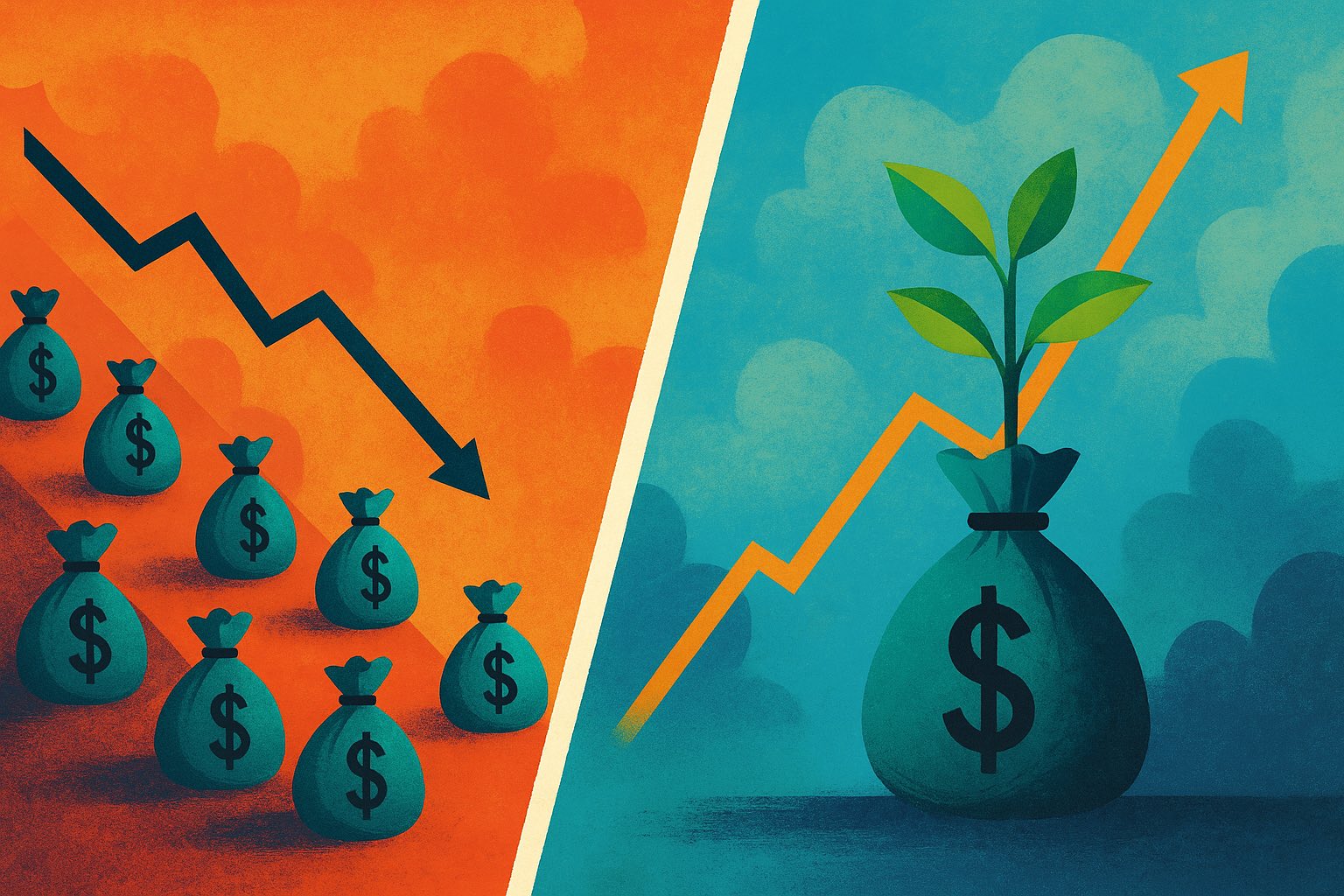
Trading Contracts for Difference (CFDs) often results in significant financial losses for casual investors due to high leverage, complex fee structures, and the structural advantages held by institutional market participants. Regulatory data consistently shows that 70% to 80% of retail CFD accounts lose money because the instrument's design prioritizes short-term speculation over long-term wealth accumulation.
The Structural Nature of CFDs and Retail Misconceptions
A Contract for Difference (CFD) is a financial derivative that allows an investor to speculate on the price movement of an underlying asset—such as stocks, indices, or commodities—without ever owning the asset itself. The "contract" is an agreement between the trader and the broker to exchange the difference in the price of the asset from when the contract is opened to when it is closed.
For casual investors, the primary appeal is the low barrier to entry. Unlike traditional stock trading, which may require significant capital to build a diversified portfolio, CFD platforms allow users to start with a few hundred dollars. However, this accessibility masks a fundamental reality: CFDs are high-risk instruments originally designed for institutional hedging and professional speculation. Casual investors often approach these tools with a "buy and hold" mentality suited for traditional equities, failing to realize that the structural costs and mechanics of CFDs are specifically engineered for high-frequency, short-duration trades.
The mismatch between the instrument’s design and the casual investor’s strategy is the first hurdle. Most casual participants lack the sophisticated risk management software, real-time data feeds, and technical expertise required to navigate a market where the "house" (the broker) often acts as the counterparty. When a retail trader loses, the market maker frequently gains, creating an inherent conflict of interest that is rarely transparent to the novice user.
The Leverage Trap: Magnifying Volatility
The most significant factor contributing to retail failure in CFD trading is leverage. In 2026, while regulators like the European Securities and Markets Authority (ESMA) and the Financial Conduct Authority (FCA) have capped retail leverage—typically at 1:30 for major currency pairs and lower for volatile assets like equities—the impact remains devastating for the unprepared.
Leverage allows a trader to control a large position with a small amount of capital, known as margin. For example, with 1:30 leverage, a $1,000 deposit allows a trader to hold a $30,000 position. While this magnifies potential profits, it equally magnifies losses. A mere 3.3% move in the price of the underlying asset against the trader’s position will wipe out 100% of the initial $1,000 investment.
Casual investors often focus on the upside potential of leverage without calculating the "distance to liquidation." Market volatility is a natural occurrence; price "noise" can easily cause a 2% or 3% fluctuation within a single trading day. For a leveraged CFD trader, this noise is not just a temporary dip—it is a catastrophic event that triggers a margin call or an automatic liquidation of the position. Because casual investors often lack the liquid capital to top up their margin during these fluctuations, they are forced out of trades at the worst possible time, realizing losses that a traditional stock investor could simply "ride out."

Complexity of Fee Structures and the "House Edge"
Unlike commission-free stock apps that have become common, CFD brokers generate revenue through a variety of opaque channels that erode a casual investor's capital over time. These costs act as a "drag" on performance, meaning a trader needs to be significantly more than 50% accurate just to break even.
The Spread
The spread is the difference between the "buy" (bid) and "sell" (ask) price. In CFD trading, you start every trade in the red because you buy at the higher price and must sell at the lower price. For illiquid assets or during volatile periods, these spreads widen significantly. A casual investor trading frequently will find that a large portion of their capital is consumed by the spread before the market even moves in their favor.
Overnight Financing (Swaps)
Because CFDs are leveraged products, the broker is essentially lending the trader the capital to hold the larger position. For this "loan," the broker charges an overnight financing fee, often referred to as a swap rate. While these fees might seem negligible on a single night (e.g., 0.02%), they compound. If a casual investor holds a position for several weeks, the financing costs can consume any profit made from the price movement. This makes CFDs fundamentally unsuitable for long-term investing.
Slippage and Re-quotes
During periods of high volatility, the price a trader sees on their screen may not be the price at which the trade is executed. "Slippage" occurs when the market moves so fast that the broker executes the order at a significantly worse price. For a casual trader with a tight stop-loss, slippage can result in a loss much larger than originally anticipated, sometimes exceeding the initial margin if negative balance protection is not robustly applied.
Comparative Analysis: CFDs vs. Traditional Equity Investing
To understand why casual investors struggle with CFDs, it is helpful to compare them with traditional "spot" equity trading.
| Feature | CFD Trading | Traditional Stock Investing |
|---|---|---|
| Ownership | No ownership; price speculation only. | Legal ownership of shares. |
| Leverage | High (e.g., 1:5 to 1:30). | None or very low (1:2 via margin). |
| Time Horizon | Short-term (minutes to days). | Long-term (years to decades). |
| Costs | Spreads, swaps, commissions. | Commissions (often $0), no carry fees. |
| Dividends | Adjustment made; no tax benefits. | Direct payment; potential tax perks. |
| Risk of Total Loss | High and rapid due to leverage. | Low (unless company goes bankrupt). |
| Regulatory Warnings | Mandatory "70-80% lose money" alerts. | Standard market risk disclosures. |
This comparison highlights that the CFD environment is optimized for speed and speculation. The traditional investor benefits from time and the general upward trajectory of the economy. The CFD trader is fighting against time, fees, and the math of leverage.
Psychological Barriers and Behavioral Finance
The psychological toll of CFD trading is a primary reason why casual investors fail. Behavioral finance identifies several "traps" that are amplified by the fast-paced nature of derivative trading.
- Overconfidence Bias: Casual investors often believe they have a "hunch" or have "done their research" on a specific stock. While they might be right about the company's direction over six months, they lack the technical skills to predict the 24-hour volatility that CFDs demand.
- Revenge Trading: After a leveraged loss, the impulse is to "win it back" quickly. This leads to increasing the position size or taking lower-quality trades, eventually resulting in the "blown account" syndrome.
- Loss Aversion: Retail traders tend to hold onto losing CFD positions in the hope they will turn around, all while paying overnight financing fees. Conversely, they "cut" their winning trades too early out of fear the profit will disappear. This creates a mathematical profile where the average loss is significantly larger than the average win.
Professional traders use automated stop-losses and rigid risk-to-reward ratios. Casual investors, often trading on mobile apps during lunch breaks or after work, lack the emotional discipline and the environment to maintain such rigor.
Market Asymmetry and the Institutional Advantage
The CFD market is not a level playing field. Casual investors are competing against institutional firms that utilize High-Frequency Trading (HFT) algorithms, artificial intelligence, and direct market access (DMA).
By the time a casual investor reads a news headline in 2026 and opens their CFD app, the institutional algorithms have already processed the data and moved the price. Retail traders are often the "exit liquidity" for professionals. Furthermore, many retail CFD brokers operate as "Market Makers" (B-Book execution). This means the broker does not always hedge the trade in the real market; instead, they take the opposite side of the client's trade. Statistically, because the broker knows most retail traders lose, it is more profitable for the broker if the client fails. This creates an environment where "stop hunting" (brief price spikes that trigger retail stop-losses before the price returns to its original trend) is a frequent complaint among retail participants.
Regulatory Realities and the Importance of Protections
In the current 2026 landscape, global regulators have tightened the screws on the CFD industry to protect consumers. Authorities such as the European Securities and Markets Authority (ESMA) and the Financial Conduct Authority (FCA) require brokers to provide:
- Negative Balance Protection: Ensuring a trader cannot lose more money than they have in their account.
- Standardized Risk Warnings: Brokers must disclose the exact percentage of their retail clients who lose money.
- Leverage Caps: Limiting the "power" available to retail users to prevent instant account wipeouts.
While these protections are vital, they do not make CFD trading "safe." They merely prevent the most egregious forms of financial ruin (like owing the broker money after a crash). The underlying math of CFDs remains skewed against the casual participant who does not treat the activity as a full-time professional endeavor.
Frequently Asked Questions
Can you make a living trading CFDs?
While a very small percentage of professional traders do make a living through CFDs, it requires years of experience, significant capital, and sophisticated risk management systems. For the vast majority of people, especially casual investors, CFDs should be viewed as a high-risk speculative activity rather than a reliable source of income or a primary investment vehicle.
Why do brokers offer CFDs if they are so risky for clients?
Brokers offer CFDs because they are highly profitable for the firm. Revenue is generated through spreads, commissions, and financing fees. Additionally, in "Market Maker" models, the broker profits directly when a client loses a trade. The high turnover of retail accounts (clients losing their capital and being replaced by new ones) is a core part of many CFD brokerage business models.
Is a "Stop-Loss" order enough to protect my capital?
A stop-loss is an essential tool, but it is not a guarantee. In fast-moving markets or during "gaps" (when the price jumps from one level to another without trading in between), your stop-loss may be executed at a much worse price than you requested. This is known as slippage. Only "Guaranteed Stop-Losses" (GSLOs), for which brokers usually charge an extra fee, can ensure execution at your exact price.
Are there any "safe" ways to use CFDs?
"Safe" is relative in finance, but CFDs are most appropriately used by experienced investors for short-term hedging. For example, if an investor owns a large portfolio of stocks and expects a brief market dip, they might "short" an index CFD to offset potential losses in their main portfolio. This is a tactical use of the instrument rather than a speculative attempt to "get rich quick."
Should I use a demo account before trading CFDs?
Using a demo account is highly recommended, but it often gives casual investors a false sense of security. Demo accounts do not replicate the psychological pressure of losing real money, nor do they always perfectly simulate the slippage and liquidity issues found in live markets. Success in a demo environment rarely translates directly to success in live CFD trading.
Practical Recommendations for Casual Investors
If you are a casual investor looking to build long-term wealth, the evidence suggests that CFDs are likely to be a net negative for your portfolio. Instead of high-leverage speculation, consider the following actions:
- Prioritize Asset Ownership: Focus on purchasing "spot" equities or Exchange-Traded Funds (ETFs) where you own the underlying asset. This eliminates overnight financing fees and allows you to benefit from long-term economic growth.
- Utilize Tax-Advantaged Accounts: Depending on your jurisdiction, look into accounts like IRAs (USA), ISAs (UK), or similar structures that provide tax benefits for long-term holders—benefits not available to CFD speculators.
- Limit Speculative Capital: If you choose to trade CFDs for the experience or high-risk potential, never use more than 1% to 5% of your total net worth. Treat it as a "speculative bucket" and assume that the capital could be lost entirely.
- Educate on Risk Management: Before placing a single trade, understand "Position Sizing." Never risk more than 1-2% of your account balance on any single CFD trade. If you cannot calculate your risk per trade, you are not ready to use CFDs.
For the casual investor, the path to financial security is almost always found in patience and diversification, two qualities that the fast-paced, high-cost world of CFD trading is designed to exploit.
Image Gallery
Select an image to open it in a new tab.
Zara El-Hashem
Sociocultural Dynamics and Academics Writer
