The Prison Escape of Matt and Sweat: Everything Revealed About the Dannemora Breakout

In June 2015, Richard Matt and David Sweat executed a daring and elaborate escape from the Clinton Correctional Facility in Dannemora, New York, reminiscent of a Hollywood thriller. Their three-week flight from justice exposed systemic corruption, security lapses, and the vulnerabilities of one of America’s most secure "maximum-security" environments.
The escape of Richard Matt and David Sweat remains one of the most studied prison breaks in modern history. By leveraging intimate relationships with prison staff and exploiting chronic administrative complacency, the duo navigated a labyrinth of steam pipes and brick walls to reach freedom. As of 2026, the case continues to serve as a cautionary tale for correctional facilities worldwide regarding internal oversight and the dangers of inmate manipulation.
The Masterminds: Who Were Richard Matt and David Sweat?
To understand how the escape was possible, one must first understand the men who orchestrated it. Both Matt and Sweat were serving life sentences for brutal murders, and both were housed in the "Honor Block" of Clinton Correctional Facility, a designation that granted them more freedom than the average inmate.
Richard Matt was the older of the two, a 48-year-old with a history of escape attempts and a reputation for being highly manipulative. He was serving 25 years to life for the 1997 kidnapping, torture, and dismemberment of his former boss, William Rickerson. Matt was an artist, often using his paintings to curry favor with prison staff—a tactic that would eventually become a cornerstone of the escape plot.
David Sweat, 34 at the time, was serving life without parole for the 2002 murder of a Broome County Sheriff’s Deputy, Kevin Tarsia. Sweat was known for his technical aptitude and physical stamina. While Matt provided the psychological manipulation and strategic planning, Sweat provided the manual labor, spending months cutting through steel and exploring the prison's underbelly.
The Methodology: How the Escape Was Revealed
The details revealed during the subsequent investigation by the New York State Inspector General painted a picture of a meticulously planned operation that took months to execute. Unlike the quick, impulsive escapes seen in lesser facilities, Matt and Sweat treated their breakout as an engineering project.
Tools and Smuggling
The escape required heavy-duty tools that inmates should never have had access to. The investigation revealed that Joyce Mitchell, a civilian supervisor in the prison’s tailor shop, smuggled hacksaw blades, drill bits, and other tools into the facility. These items were often hidden inside frozen hamburger meat, which Mitchell then gave to a corrections officer, Gene Palmer, to deliver to the inmates. Palmer, who claimed he was unaware of the contents, bypassed metal detectors—a catastrophic breach of protocol.
The Tunneling Process
Starting in the winter of 2014, David Sweat used the smuggled tools to cut a hole in the back of his and Matt's adjacent cells. Because they were in the Honor Block, they had the privilege of having lockers and other items that could easily hide the holes they were creating.
Over several months, Sweat spent his nights exploring the "catwalks" behind the cell walls. He eventually cut into a large steam pipe, which provided a direct path to a manhole outside the prison walls. The sheer amount of labor involved was staggering; Sweat later admitted to investigators that he spent nearly every night for six months working in the dark, hot, and cramped spaces beneath the prison.

The Role of "The Enablers"
The escape would have been impossible without the assistance of prison staff. The subsequent investigation "revealed" a culture of over-familiarity between inmates and employees at Clinton Correctional.
- Joyce Mitchell: Mitchell’s relationship with the inmates, particularly Matt, moved beyond professional boundaries. She was allegedly seduced by Matt and became a willing participant in the plot. She was supposed to be the getaway driver but backed out at the last minute after suffering a panic attack, checking herself into a hospital instead. This failure to show up forced Matt and Sweat to flee into the dense woods of the North Country on foot, significantly changing the trajectory of the manhunt.
- Gene Palmer: A long-time corrections officer, Palmer admitted to doing favors for the inmates in exchange for information on other prisoners and for Matt’s artwork. While he denied knowing about the escape plan, his actions—delivering the meat containing tools and allowing the inmates access to restricted areas—facilitated the breach. Palmer eventually served time in jail for his role.
The Manhunt: 22 Days of Terror
When the morning count on June 6, 2015, revealed two dummies in the inmates' beds instead of Matt and Sweat, the largest manhunt in New York State history began. The escapees left a mocking note pinned to a pipe that read, "Have a Nice Day!" alongside a racist caricature.
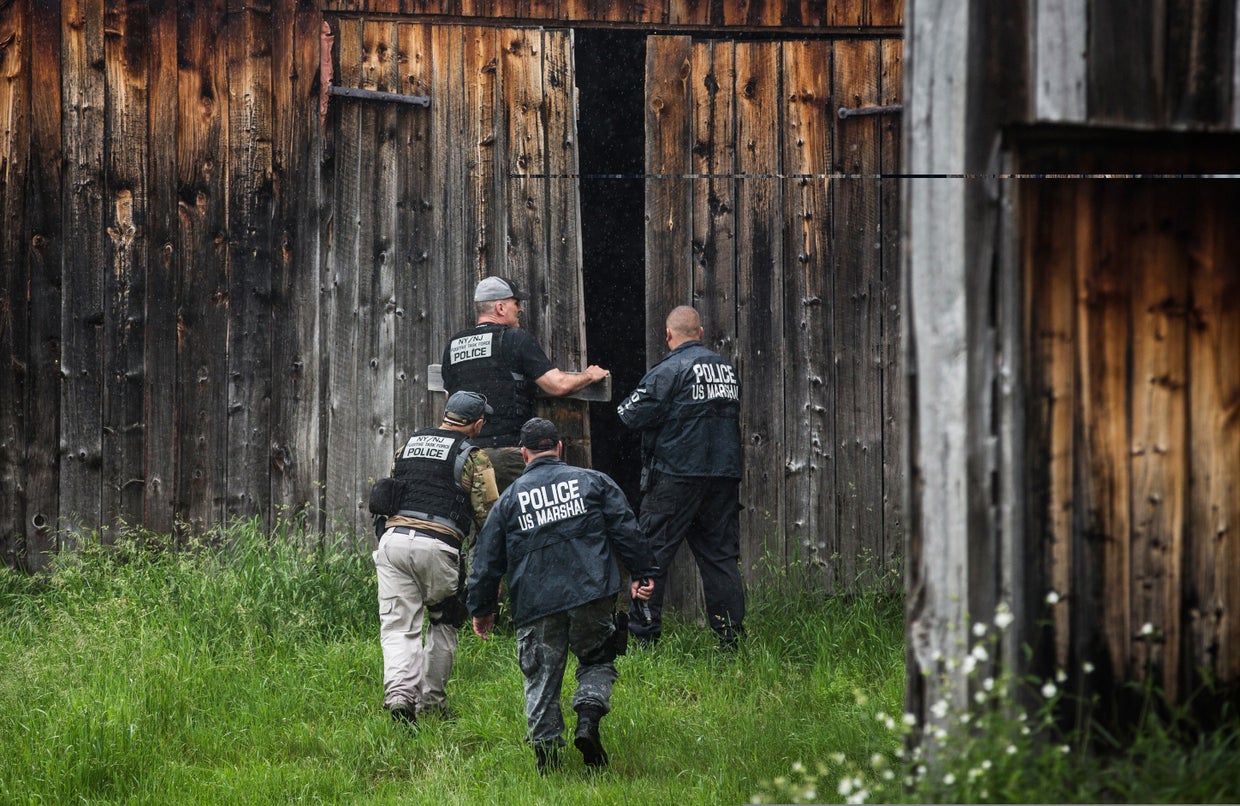
For the next three weeks, over 1,300 federal, state, and local law enforcement officers swarmed the Adirondack region. The search was hampered by heavy rain, thick forest, and the fact that the escapees had a significant head start. Residents were told to lock their doors, and many fled their homes in fear.
| Event Date | Milestone | Outcome |
|---|---|---|
| June 6, 2015 | Discovery of the Escape | State of emergency declared; Clinton Correctional locked down. |
| June 12, 2015 | Joyce Mitchell Arrested | Charged with promoting prison contraband and criminal facilitation. |
| June 26, 2015 | Richard Matt Located | Shot and killed by a Border Patrol agent in Malone, NY. |
| June 28, 2015 | David Sweat Captured | Shot and wounded by a State Trooper near the Canadian border. |
| June 2016 | IG Report Released | Revealed systemic failures and 11 distinct security breaches. |
The Climax: The End of the Road
The manhunt ended in two distinct phases. On June 26, law enforcement responded to a report of a shot fired at a camper. Richard Matt, who had become ill and was slowed down by the rugged terrain, was discovered in the woods near Malone, New York. When he refused to drop a 20-gauge shotgun he had stolen from a local cabin, a Border Patrol agent shot and killed him. An autopsy later revealed that Matt was suffering from extreme dehydration and bug bites, and was nearly incapacitated by the time he was found.
Two days later, on June 28, Sergeant Jay Cook of the New York State Police spotted a man walking down a road near Constable, New York, less than two miles from the Canadian border. When the man—David Sweat—fled into a field, Cook fired two shots, striking him in the torso. Sweat was captured alive and eventually returned to the prison system, where he was placed in solitary confinement for an extended period.
What the Investigation Revealed: Systemic Failures
The New York State Inspector General’s report, released a year after the escape, was a scathing indictment of the Department of Corrections and Community Supervision (DOCCS). It revealed that the escape was not merely the result of two clever inmates, but rather the inevitable outcome of a "broken system."
Chronically Lax Supervision
The report detailed how guards frequently skipped mandatory cell counts or performed "ghost counts" where they would simply sign off on paperwork without actually verifying the presence of an inmate. On the night of the escape, the guard on duty failed to notice that the figures in Matt and Sweat's beds were actually bundles of clothing.
Maintenance and Infrastructure Overlook
Because the prison was over 170 years old, many of its blueprints were outdated or incomplete. The investigation revealed that maintenance staff had not properly inspected the tunnels and catwalks for years. This lack of oversight allowed the inmates to work for months without being detected.
The "Honor Block" Fallacy
The Honor Block was intended to reward well-behaved inmates, but it effectively created a "blind spot" for security. Inmates were allowed to move more freely, and guards were more likely to trust them. This trust was exploited by Matt and Sweat to gather intelligence on guard rotations and the prison's physical layout.
Security Reforms Since the Escape
In the years following the 2015 escape, New York State implemented a series of reforms designed to prevent a repeat of the Dannemora incident. By 2026, these changes have become standard operating procedure across the state's maximum-security facilities.
- Enhanced Cell Inspections: New protocols require more frequent and more intrusive inspections of cell walls and floors. Specialized equipment, such as thermal imaging and high-definition cameras, is now used to detect tampering behind walls.
- Contraband Control: The process for civilian staff and contractors entering the prison has been tightened significantly. All items brought into the facility, including food for staff, are subject to rigorous X-ray screening.
- Management Changes: Following the escape, several top officials at Clinton Correctional were replaced, and the state established a more centralized oversight committee to monitor internal security audits.
- Closure of Older Blocks: Some of the oldest and most difficult-to-monitor sections of New York's aging prisons have been decommissioned or renovated to eliminate the "dead zones" that Sweat used to his advantage.
Frequently Asked Questions
Where is David Sweat now?
As of 2026, David Sweat remains incarcerated within the New York State prison system. Following the escape, he was moved to Five Points Correctional Facility, a modern, highly secure prison. He has spent much of his remaining sentence in special housing units (solitary confinement) due to his high-risk escape status.
How much did the manhunt cost?
The total cost of the 22-day manhunt and the subsequent repairs to Clinton Correctional Facility was estimated to be approximately $50 million. This includes overtime for thousands of officers, equipment, and the massive logistical effort required to search the Adirondack wilderness.
What happened to Joyce Mitchell?
Joyce Mitchell was sentenced to 2.3 to 7 years in prison. She was released on parole in early 2020. Since her release, she has lived under strict supervision and has spoken in various interviews about how she was manipulated by Matt and Sweat.
Did they ever reach Canada?
No. While David Sweat was less than two miles from the border when he was captured, neither inmate successfully crossed into Canada. Their progress was significantly slowed by the lack of a getaway vehicle and the difficulty of navigating the dense, swampy terrain of Northern New York.
Was anyone else held responsible?
In addition to Mitchell and Palmer, several other prison employees were suspended or reassigned. The Inspector General's report led to a broad "cleaning of house" within the DOCCS, focusing on those who failed to enforce basic security protocols.
Final Assessment and Practical Lessons
The prison escape of Matt and Sweat revealed that no wall is high enough and no gate is strong enough to compensate for human error and complacency. For those in the fields of security and criminal justice, the primary lesson is the danger of "normalized deviance"—the process by which people become so accustomed to breaking small rules (like skipping a count) that they no longer see it as a risk.
For the general public, the event remains a fascinating look at the limits of human ingenuity and the persistent flaws in the systems designed to protect society. If you are researching this topic for academic or professional purposes, the 154-page report by the New York State Inspector General remains the definitive primary source for understanding the technical and social failures that led to the breakout.
Image Gallery
Select an image to open it in a new tab.


Celine Dubois
Contemporary Living and Global Arts Columnist
