Understanding Neck Pain Radiating to Arm: Causes, Symptoms, and Clinical Management

Neck pain radiating to the arm typically indicates nerve root irritation or compression in the cervical spine, often referred to as cervical radiculopathy. Symptoms range from sharp, shooting electric shocks to dull aches accompanied by numbness, tingling, and muscle weakness. Pinpointing the exact anatomical source requires a careful clinical evaluation to distinguish spinal compression from peripheral nerve entrapment or referred pain.
Anatomy of the Cervical Spine and Nerve Roots
To understand why a problem in the neck can cause severe sensations down the entire arm, it is helpful to examine the structural architecture of the cervical spine. The human neck consists of seven cervical vertebrae (labeled C1 through C7). Between these stacked bony segments lie intervertebral discs, which act as shock absorbers and allow the neck to flex, extend, and rotate smoothly.
Each vertebra features a central canal through which the spinal cord passes. Additionally, on both the left and right sides of each vertebral level, small openings called neural foramina allow individual spinal nerve roots to exit the spinal column and travel outward into the shoulders, arms, hands, and fingers.
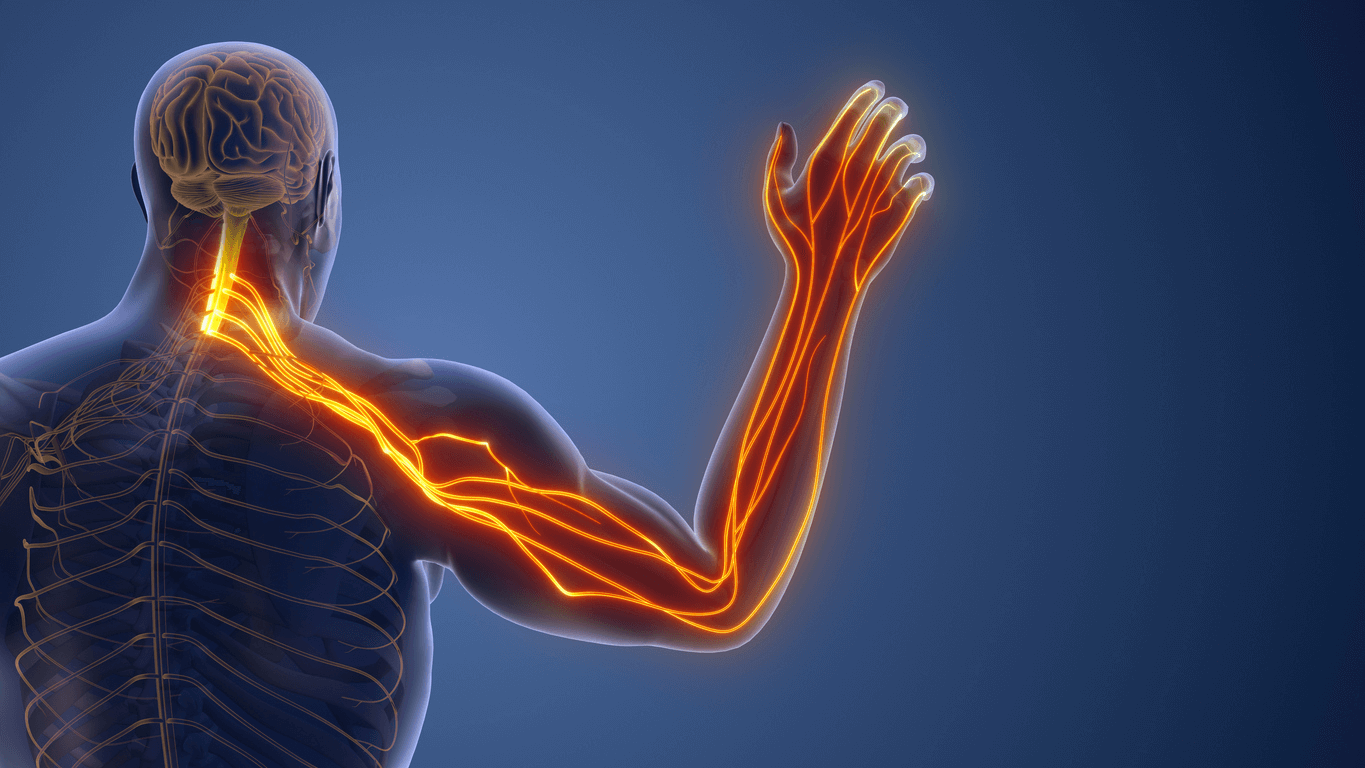
When these nerve roots become compressed, inflamed, or stretched, they signal distress along the exact sensory and motor pathways they serve. This phenomenon explains why a pathology originating in the cervical spine manifests as pain, numbness, or weakness far away from the neck itself. Medical professionals refer to this specific radiating pain pattern as dermatomal distribution, because each nerve root supplies sensation and motor function to a specific, mapped region of the upper extremity.
Primary Medical Causes of Cervical Radiculopathy
Neck pain radiating to the arm rarely happens without an underlying structural shift in the cervical spine. Several distinct medical conditions frequently account for this symptom profile.
Cervical Disc Herniation
Intervertebral discs consist of a tough outer ring (annulus fibrosus) and a gel-like inner core (nucleus pulposus). Over time, or due to acute trauma, repetitive strain, or age-related degeneration, the outer ring can tear. This allows the inner gel to bulge or rupture outward into the spinal canal or neural foramen. If this herniated material presses directly against an exiting nerve root, it triggers immediate inflammation, pain radiating down the arm, and localized sensory deficits. Cervical disc herniations are more common in younger adults aged 30 to 50.
Cervical Spinal Stenosis and Bone Spurs
As people age, normal wear and tear on the spine can lead to osteoarthritis. The body attempts to stabilize the joint by growing excess bone, known as osteophytes or bone spurs. If these osteophytes develop inside or around the neural foramina, they narrow the space available for the nerve roots. Similarly, thickening of the ligaments surrounding the spine can reduce the overall diameter of the spinal canal (stenosis). This chronic, progressive compression typically affects older adults and results in persistent, dull aches combined with intermittent sharp shooting pains into the arm.
Degenerative Disc Disease
As discs lose water content and height over time, the distance between adjacent vertebrae decreases. This loss of disc height places abnormal mechanical stress on the facet joints at the back of the spine and can cause the vertebrae to shift slightly, pinching the nerves that exit the neck.
Recognizing Symptoms and Dermatomal Patterns
The specific location of pain, numbness, and weakness in the arm often provides a strong diagnostic clue regarding which cervical nerve root is affected. Physicians rely on these distinct dermatomal maps during physical examinations.
- C5 Nerve Root: Affects the shoulder and outer upper arm. Symptoms may include shoulder pain, weakness when raising the arm, and diminished sensation over the deltoid muscle.
- C6 Nerve Root: Affects the outer forearm, thumb, and index finger. Patients frequently experience pain traveling down the lateral side of the arm, numbness in the thumb, and weakness in the biceps and wrist extensors (weakness during wrist extension).
- C7 Nerve Root: The most commonly affected nerve root. Pain radiates down the back of the arm into the middle finger. Numbness often targets the middle finger, and triceps weakness may occur.
- C8 Nerve Root: Affects the inner forearm, ring finger, and little finger. Symptoms include hand weakness, difficulty with grip strength, and numbness along the medial side of the hand.
Common Symptom Characteristics
Patients frequently describe the pain using specific qualitative terms. It may feel sharp, burning, electric, or like a deep, throbbing ache. Symptoms often worsen with specific neck movements, such as tilting the head toward the affected side or looking upward, which further narrows the neural foramen. Conversely, patients sometimes find temporary relief by placing their hand on top of their head, a maneuver known as Bakody's sign that reduces tension on the affected nerve root.
Clinical Diagnosis and Differential Testing
Accurately diagnosing the root cause of radiating arm pain requires a comprehensive physical and neurological examination performed by a qualified healthcare provider, such as a primary care physician, neurologist, or spine specialist.
| Diagnostic Method | Primary Purpose | What It Evaluates |
|---|---|---|
| Clinical Examination | Assess nerve function | Reflexes, motor strength, and sensory perception across dermatomes. |
| Cervical X-rays | Bony anatomy assessment | Alignment, bone spurs, degenerative changes, and narrowing of disc spaces. |
| Magnetic Resonance Imaging (MRI) | Soft tissue visualization | Direct imaging of disc herniations, spinal cord compression, and nerve root impingement. |
| Computed Tomography (CT) Scan | Detailed bone evaluation | High-resolution cross-sectional images of bony structures and foraminal stenosis. |
| Electromyography (EMG) / NCV | Functional nerve testing | Electrical activity in muscles and nerve conduction speed to confirm nerve damage. |
During the physical examination, the doctor will perform specialized orthopedic tests, such as the Spurling test, where the examiner gently compresses the patient's head while it is tilted and rotated to the affected side. An increase in radiating arm symptoms during this maneuver strongly suggests cervical nerve root compression.
Conservative Management and Treatment Options
For the vast majority of patients experiencing neck pain radiating to an arm, symptoms resolve without surgical intervention through conservative, non-invasive treatments.
Physical Therapy and Exercise
Structured physical therapy forms the cornerstone of recovery. Licensed physical therapists employ cervical traction to gently open the neural foramina and relieve pressure on pinched nerves. Targeted strengthening exercises focus on deep cervical flexors and scapular stabilizers to improve posture and reduce mechanical load on the cervical spine. Manual therapy techniques, including gentle soft tissue mobilization and controlled joint mobilization, can also alleviate muscle spasms.
Pharmacological Interventions
Medications help manage acute inflammation and pain during the healing phase. Commonly prescribed options include:
- Nonsteroidal Anti-inflammatory Drugs (NSAIDs): Medications such as ibuprofen or naproxen reduce local inflammation around the compressed nerve root.
- Oral Corticosteroids: A short tapered course of oral steroids can dramatically reduce severe nerve inflammation in acute flare-ups.
- Nerve Pain Modulators: Medications like gabapentin or pregabalin are sometimes prescribed to calm neuropathic, shooting pain.
- Muscle Relaxants: Used short-term to manage painful cervical muscle spasms that frequently accompany nerve irritation.
Interventional Procedures
If conservative measures fail to provide relief after several weeks, a physician may recommend an image-guided epidural steroid injection. During this procedure, a corticosteroid and local anesthetic mixture is injected near the inflamed nerve root under fluoroscopic guidance to provide targeted, longer-lasting anti-inflammatory relief.
Surgical Indications and Procedures
While conservative care is successful for most individuals, surgery becomes necessary in specific scenarios. Red-flag symptoms that demand urgent medical evaluation and potential surgical intervention include progressive neurological deficits, significant muscle wasting, loss of bowel or bladder control, and unmanageable, severe pain that does not respond to weeks of appropriate medical therapy.
Common surgical approaches for cervical radiculopathy include:
- Anterior Cervical Discectomy and Fusion (ACDF): The surgeon accesses the cervical spine from the front of the neck, removes the damaged or herniated disc to relieve pressure on the nerve root and spinal cord, and fuses the adjacent vertebrae together using a bone graft and metal plate.
- Cervical Disc Arthroplasty (Artificial Disc Replacement): Similar to an ACDF, the damaged disc is removed from the front, but instead of fusing the bones together, the surgeon implants an artificial disc designed to preserve natural motion in the cervical segment.
- Posterior Cervical Foraminotomy: Performed from the back of the neck, this minimally invasive procedure involves removing a small amount of bone and tissue from the neural foramen to widen the passageway for the compressed nerve root without requiring spinal fusion.
Red Flags: When to Seek Immediate Medical Care
Most instances of neck pain radiating to the arm develop gradually and allow time for planned medical appointments. However, certain symptoms indicate a medical emergency requiring immediate evaluation in an emergency department.
Patients must seek emergency care if they experience:
- Rapidly progressive weakness: A sudden inability to lift the arm, grip objects, or write.
- Bowel or bladder dysfunction: Urinary or fecal incontinence or retention, which can signal severe spinal cord compression (cauda equina or cervical myelopathy syndromes).
- Bilateral symptoms: Numbness, weakness, or tingling affecting both arms and both legs simultaneously.
- Systemic symptoms: Neck pain accompanied by unexplained fever, chills, night sweats, or a history of recent major trauma or cancer.
Frequently Asked Questions
Can neck pain radiating to the arm go away on its own?
Yes. Mild cases caused by acute muscle strain or minor inflammation often resolve spontaneously within a few days to weeks with relative rest, posture correction, and over-the-counter anti-inflammatory medication. However, true cervical radiculopathy caused by disc herniation or severe bone spurs frequently requires targeted physical therapy or medical management to fully resolve.
Is it safe to stretch my neck when my arm is hurting?
Unsupervised aggressive stretching or forceful chiropractic manipulation of the neck can worsen nerve compression and increase inflammation. Always consult a qualified physician or physical therapist before attempting specific neck stretches if you are experiencing radiating arm pain.
What is the difference between radiculopathy and neuropathy?
Cervical radiculopathy specifically refers to pathology and compression occurring where nerve roots exit the spinal cord in the neck. Peripheral neuropathy involves damage to nerves located further out in the peripheral nervous system, often resulting from systemic conditions like diabetes or localized entrapment such as carpal tunnel syndrome.
How do I sleep comfortably with a pinched nerve in my neck?
Sleeping on your back using a supportive cervical pillow that maintains the natural curve of the neck is generally recommended. Alternatively, sleeping on your side with a pillow that fills the exact space between your mattress and your ear helps keep the cervical spine in a neutral, uncompressed alignment. Avoid sleeping on your stomach, as this forces the neck into prolonged, uncomfortable rotation.
How long does it take for a pinched nerve in the neck to heal?
With appropriate conservative care, such as physical therapy and anti-inflammatory medication, most patients experience significant improvement within 6 to 12 weeks. Complete healing of nerve irritation can occasionally take several months depending on the severity of the initial compression.
Conclusion and Next Steps
Neck pain radiating to the arm is a signal of nerve root irritation in the cervical spine that warrants careful medical attention. While conditions like herniated discs and spinal stenosis can cause significant discomfort, the vast majority of patients achieve full recovery through conservative approaches such as physical therapy, targeted medication, and activity modification. Persistent, worsening, or severe neurological symptoms require prompt diagnostic imaging and specialist consultation to determine whether interventional procedures or surgery are necessary. If you are experiencing these symptoms, schedule an evaluation with a primary care provider or spine specialist to obtain an accurate diagnosis and a personalized treatment plan.
Image Gallery
Select an image to open it in a new tab.
Omar Farooq
EdTech Innovation and Virtual Pedagogy Journalist
