Do Home Loans Include Life Insurance to Cover Mortgage in Case of Death?

When you sign a mortgage agreement to buy a home, you might assume that an accidental or untimely death of a borrower is automatically factored into the financing structure, ensuring that your surviving family members inherit a fully paid-off property. Standard home loans do not inherently include life insurance to cover a mortgage in the event of your death. A conventional mortgage is purely a financial contract between you and a lender, designed to secure debt against real estate property. If the borrower passes away, the legal obligation to repay the debt does not simply vanish; instead, it becomes the responsibility of the estate, co-borrowers, or heirs.
Understanding this distinction is critical for anyone planning long-term financial security for their household. While home loans do not bundle life insurance into their standard terms, lenders do require various forms of protection—such as homeowners insurance and private mortgage insurance—which protect the lender against property damage and default, respectively, rather than protecting your family from the loss of your income. To ensure that your mortgage is completely covered if you die, you must actively secure separate coverage, such as a traditional term life insurance policy or a specialized mortgage protection insurance plan.
The Core Structure of a Standard Mortgage
To understand why home loans do not include life insurance, it helps to examine what a mortgage actually is. At its foundational level, a mortgage is a secured loan. You pledge your physical real estate as collateral to a financial institution in exchange for the capital needed to purchase the home.
The primary focus of the lender is risk mitigation regarding the property's value and your ability to make monthly payments while you are alive. Lenders care deeply about credit scores, debt-to-income ratios, and employment stability, but they do not underwrite your personal mortality as part of the loan origination process.
Because the loan is a legally binding contract tied to an estate, a borrower's death triggers specific legal and financial procedures. The debt remains attached to the property. If you die with a mortgage, the loan does not get written off. The lender expects the monthly payments to continue uninterrupted, regardless of who is living in the home.
What Happens to a Mortgage When a Borrower Dies?
When a borrower passes away, the handling of the mortgage depends heavily on how the property title was held, whether there are co-borrowers or co-signers, and who inherits the estate.
Sole Ownership and Estates
If the deceased person was the sole owner of the home and the sole borrower on the mortgage, the property becomes part of their estate. The executor or administrator of the estate must use the estate's remaining assets to continue paying the mortgage. If the estate lacks liquid funds, the executor may need to sell the home to satisfy the debt.
Co-Borrowers and Joint Tenants
If the mortgage features co-borrowers or co-signers, the surviving co-borrower remains legally responsible for the entirety of the debt. When property is held as "joint tenants with right of survivorship," ownership of the home automatically transfers to the surviving owner, but the mortgage obligation remains in full force. The surviving owner must qualify to take over the payments or refinance the loan into their own name.
Heirs and Beneficiaries
If you inherit a home through a will or trust, you generally inherit the mortgage liability along with it. Federal regulations, specifically the Garn-St. Germain Depository Institutions Act of 1982, protect heirs from certain predatory practices, allowing them to assume the mortgage under the existing terms without triggering a "due-on-sale" clause, provided they occupy the property or meet specific inheritance criteria. However, inheriting the home does not mean the mortgage is paid off; you must still make the monthly payments or sell the property.
Existing Insurance Requirements on Home Loans
Borrowers often confuse the various types of insurance associated with home loans, assuming that one of them covers mortality. Lenders mandate specific insurance policies at closing, but none of them are life insurance.
- Homeowners Insurance: Protects against physical damage to the property from events like fire, windstorms, or vandalism. It protects the physical structure and your personal belongings, but offers no death benefit.
- Private Mortgage Insurance (PMI): Required by lenders when a conventional home buyer puts down less than 20% on a conventional loan. PMI protects the lender if you default on your payments; it does not protect your family if you die.
- Mortgage Insurance Premium (MIP): Similar to PMI, this is required for all Federal Housing Administration (FHA) loans for the life of the loan in most cases. Like PMI, it protects the lender against financial loss from borrower default.
None of these mandated policies will pay off your remaining mortgage balance if you pass away. Relying on them to protect your family from mortgage debt is a dangerous misconception.
Solutions for Covering a Mortgage in Case of Death
Because standard home loans leave a coverage gap upon death, borrowers must proactively establish financial safeguards. There are two primary insurance products utilized to ensure a mortgage is paid off if the primary earner dies: traditional term life insurance and mortgage protection insurance.
Traditional Term Life Insurance
Term life insurance provides coverage for a specific period, such as 10, 20, or 30 years—timelines that often align closely with the duration of a standard mortgage.
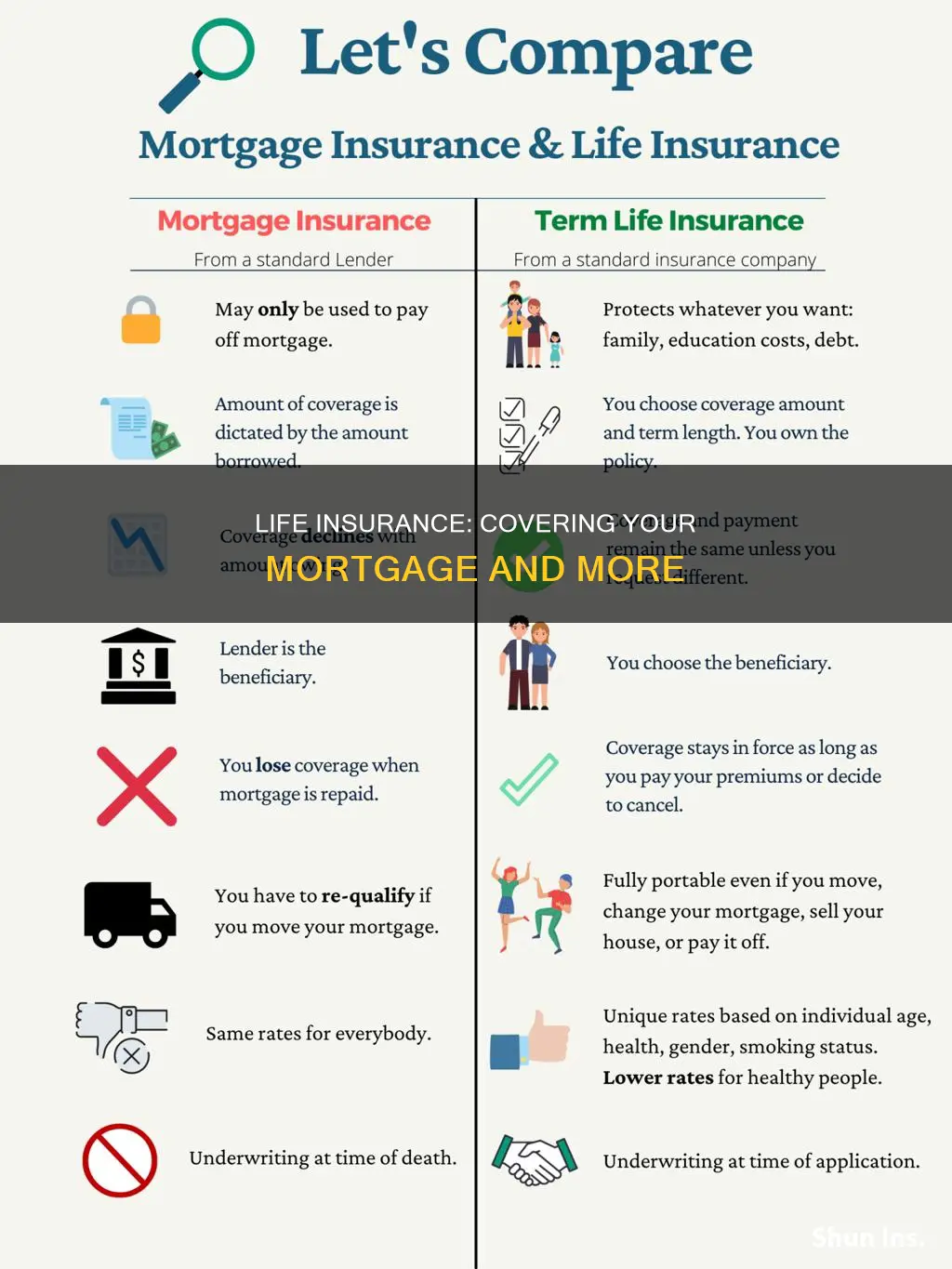
- How it works: You pay a fixed monthly or annual premium. If you pass away during the term, the insurer pays a tax-free lump sum to your designated beneficiaries. Your beneficiaries can use these funds to pay off the mortgage balance entirely or continue making monthly payments.
- Advantages: Term life insurance payouts are versatile. Your family is not required to use the money solely for the mortgage; they can also use it for living expenses, childcare, or college tuition. Furthermore, term life insurance policies are often significantly less expensive than specialized mortgage protection plans.
Mortgage Protection Insurance (MPI)
Mortgage protection insurance is a specialized type of life insurance specifically designed to pay off the remaining balance of a mortgage if the insured borrower dies.
- How it works: Unlike traditional life insurance, where the death benefit remains flat, an MPI policy's death benefit typically decreases over time, mirroring the amortization schedule of your mortgage. As your loan balance shrinks, so does the payout amount.
- Advantages: MPI policies are often easier to qualify for, sometimes requiring little to no medical exam or health underwriting. They are tailored precisely to the housing debt.
- Disadvantages: The payout goes directly to the mortgage lender, not your family. If you die late in the loan term when the balance is low, the policy pays out very little, yet you may have paid fixed premiums for decades.
| Feature / Aspect | Traditional Term Life Insurance | Mortgage Protection Insurance (MPI) | Homeowners / Mortgage Insurance (PMI/MIP) |
|---|---|---|---|
| Primary Purpose | Provide general financial security and income replacement for beneficiaries. | Pay off the specific mortgage balance upon the death of the borrower. | Protect the lender against property damage or borrower financial default. |
| Beneficiary | Family members or individuals chosen by the policyholder. | The mortgage lender (pays off the loan balance directly). | The lender (recovers losses on property or default). |
| Death Benefit Structure | Level payout throughout the entire term of the policy. | Decreasing payout that matches the declining mortgage principal. | None. No death benefit is included. |
| Medical Underwriting | Generally requires detailed health questionnaires and often a medical exam. | Often simplified underwriting with fewer medical requirements. | None. Based on property value and credit/down payment metrics. |
| Cost Flexibility | Highly customizable; often offers lower rates for healthy individuals. | Can be more expensive relative to the decreasing payout benefit. | Bundled into monthly mortgage payments or paid upfront. |
Evaluating Your Options: Which Is Right for You?
When deciding how to protect your household from mortgage debt, evaluate your family's overall financial picture rather than looking at the mortgage in isolation. If you have dependents who rely on your income for groceries, utilities, and healthcare, a standard term life insurance policy is almost always the superior choice. It offers financial flexibility that allows your family to decide whether keeping the home is the best financial move, or if selling it and downsizing is more practical.
Conversely, if you struggle to qualify for traditional life insurance due to age or health conditions, mortgage protection insurance can serve as an accessible alternative to ensure the home remains paid for if you die. Always compare quotes from multiple insurers and consult with an independent financial advisor to match your coverage choices with your long-term estate planning goals.
Frequently Asked Questions
Do lenders require life insurance to get a home loan?
No. Financial institutions do not require borrowers to purchase life insurance as a condition for approving a conventional mortgage. They only require property insurance (homeowners insurance) and, depending on the down payment size, mortgage insurance (PMI or MIP) to protect their own financial interests.
Can my family lose the house if I die and I don't have life insurance?
Yes. If you are the sole borrower and do not have life insurance or sufficient estate assets to pay off the mortgage, the lender can foreclose on the property. Surviving family members must either assume the loan, refinance it into their own names, or sell the home to satisfy the debt.
Is mortgage protection insurance more expensive than term life insurance?
In many cases, yes. Because mortgage protection insurance often features simplified underwriting that bypasses stringent medical exams, insurers charge higher premiums to offset the higher statistical risk they take on. Traditional term life insurance usually offers more coverage for a lower price if you are in good health.
What happens to a co-signed mortgage if the primary borrower dies?
If you co-signed a mortgage, you are legally obligated to make the monthly payments if the primary borrower passes away. The debt does not disappear, and the lender will hold the surviving co-signer fully responsible for the remainder of the loan balance.
Can I cancel mortgage insurance (PMI) once I build equity?
Yes. For conventional loans, you can request to cancel PMI once your loan balance reaches 80% of the home's original appraised value. Lenders are legally required to automatically terminate PMI when the balance reaches 78%, provided you are current on your payments. This applies to PMI, not life insurance or MPI.
Next Actions and Recommendations
Review your current mortgage documentation and estate plans today. If you have dependents who would struggle to service your housing debt in your absence, obtain quotes for a term life insurance policy that matches or exceeds your remaining loan balance and duration. Consult a licensed insurance professional to ensure your family's financial future is fully secured against unforeseen tragedy.
Image Gallery
Select an image to open it in a new tab.
Celine Dubois
Contemporary Living and Global Arts Columnist
