Why Discounting a Note is Rarely Worth it

Discounting a promissory note—selling a future stream of installment payments for an immediate lump sum of cash—often destroys significant long-term wealth, shifting the bulk of the asset’s intrinsic value to the secondary market buyer while exposing the original holder to steep financial sacrifices.
For individuals holding a promissory note, seller-financed mortgage, or business debt instrument, the temptation to trade future certainty for immediate capital can be overwhelming. When unexpected expenses arise, or when cash is required to fund a new venture, the secondary market for notes offers a seemingly straightforward escape hatch: sell the paper, pocket the cash, and walk away. However, looking closely at the mathematics of discounting reveals that this transaction is rarely worth the cost. By accelerating liquidity, noteholders frequently surrender up to thirty, forty, or even fifty percent of their asset's total face value, paying an exorbitant implicit interest rate for the privilege of immediate access to their own money.
Navigating the complex ecosystem of note-buying requires a clear-eyed evaluation of why these transactions heavily favor the investor, how the math erodes principal value, and what viable alternatives exist for noteholders who need cash without sacrificing their long-term financial security.
Understanding the Mechanics of a Discounted Note
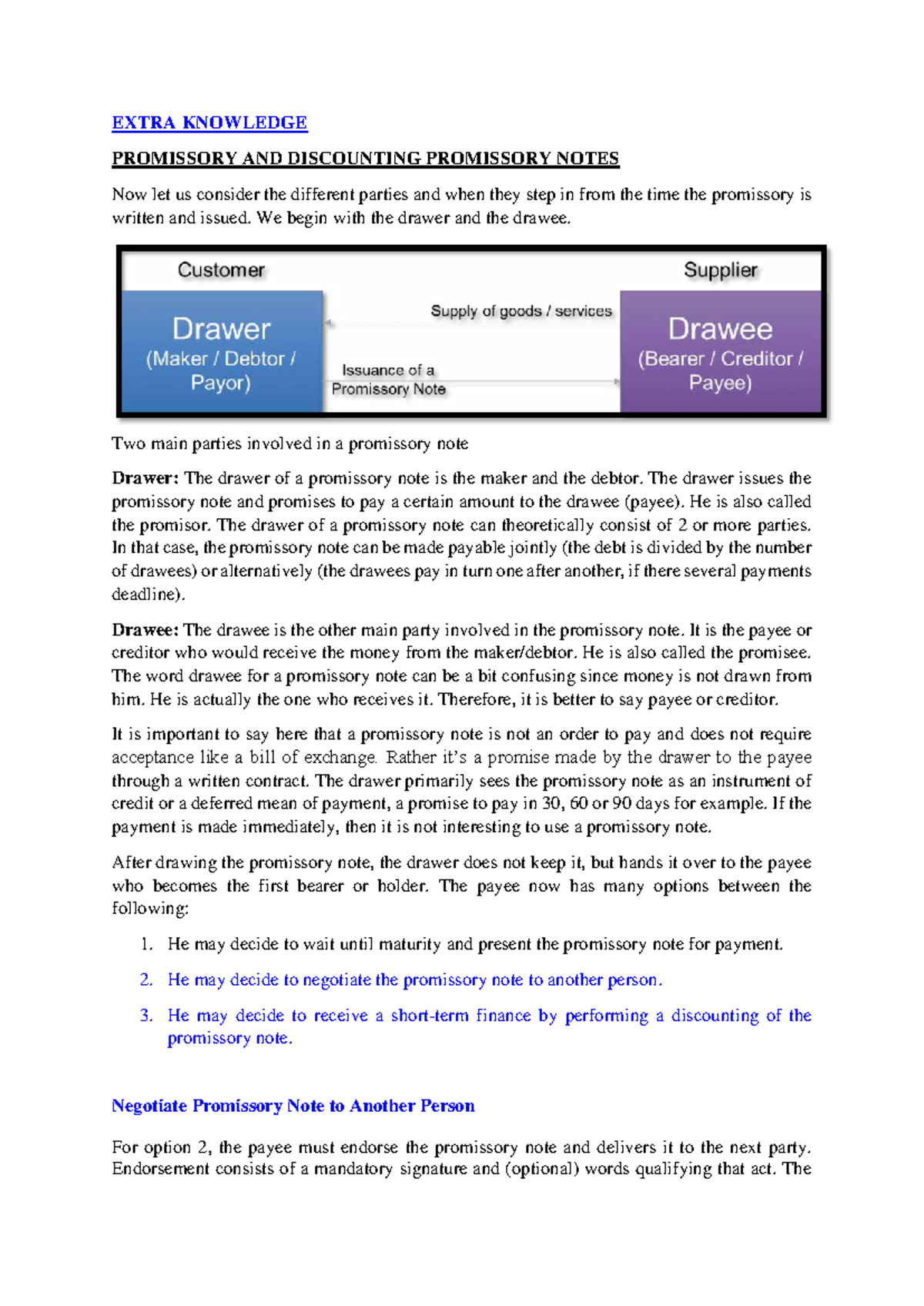
To understand why discounting a note is typically a financially disadvantageous move, one must first examine how the secondary note market operates. A promissory note is a legal IOU representing a promise by a maker (the borrower) to pay a payee (the lender or seller) a specified sum of money, with interest, over a defined schedule. When a noteholder decides to sell this contract to a third-party investor or factoring company, the buyer does not pay the remaining face value of the note. Instead, they purchase the right to collect future payments at a deeply discounted price.
This discount is not a random fee; it is a calculated yield requirement. Secondary market investors operate under distinct risk parameters and target high internal rates of return (IRRs). While a note might carry a modest interest rate of 6% or 7% originating from the original sale, an investor purchasing that note will often demand an annual yield of 12%, 15%, or higher to compensate for the liquidity risk, administrative overhead, and the possibility of borrower default.
To achieve this higher yield, the investor reduces the purchase price of the note. The wider the gap between the original note's interest rate and the investor's required yield, the deeper the discount applied to the principal balance. Consequently, the noteholder absorbs the entire financial penalty of that yield adjustment instantly, sacrificing years of accumulated interest and a substantial portion of the principal balance just to convert the asset into cash today.
The Hidden Costs and Mathematical Reality
The true cost of discounting a note becomes glaringly apparent when calculating the effective cost of funds. Many noteholders view the discount as a simple service fee or transaction cost, akin to closing costs on a traditional real estate transaction. In reality, it functions as an extraordinarily high-interest loan secured by your own asset.
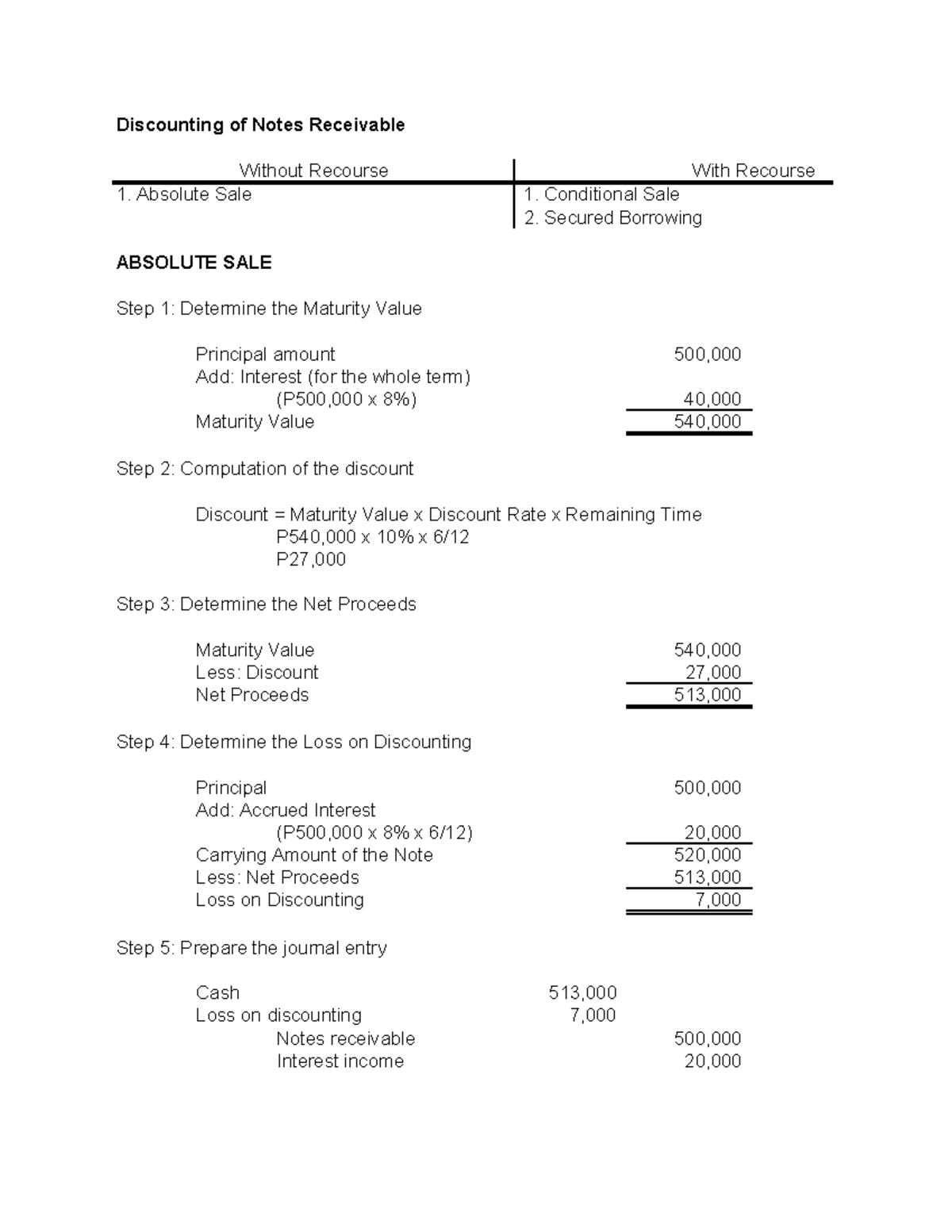
Consider a scenario where a seller holds a promissory note with a remaining balance of $100,000, paying $800 a month at a 6% interest rate with ten years remaining. A note investor offers a lump sum of $70,000 to buy the entire note. On the surface, receiving $70,000 in cash today might solve an immediate liquidity crunch. However, the noteholder is trading away future payments totaling roughly $96,000 over the next decade.
When evaluated through financial modeling, the discount represents an annualized rate of return for the buyer that far exceeds conventional lending rates. The seller is essentially paying a massive premium for liquidity, forfeiting $26,000 in nominal value plus the time value of money. Furthermore, if the borrower decides to pay off the note early—a common occurrence when interest rates drop or properties are refinanced—the note investor receives the full payoff, while the original seller receives nothing more than the initial discounted lump sum. The seller has completely decoupled themselves from any future upside.
Common Factors That Deepen the Discount
Note buyers do not apply uniform discounts across all instruments. They conduct rigorous underwriting to determine the perceived risk of the paper, and every perceived flaw increases the steepness of the discount:
- Low Interest Rates: Notes carrying below-market interest rates require much deeper discounts because investors can earn higher returns elsewhere in the current financial climate.
- Credit History of the Payer: If the borrower has a checkered credit history or a low credit score, the investor increases the discount to hedge against potential default.
- Lacks Equity or Down Payment: In real estate notes, if the original buyer put down little to no money, the risk of strategic default during a market downturn rises, prompting investors to demand a larger margin of safety.
- Documentation Deficiencies: Missing escrow accounts, unrecorded liens, or poorly drafted promissory language create legal vulnerabilities that investors offset by slashing the purchase price.

Partial Note Sales: A Compromise with Limitations
Recognizing that full discounting is financially punishing, many note brokers and investors market "partial note sales" as a middle-ground solution. In a partial sale, the noteholder does not sell the entire stream of payments. Instead, they sell a specific number of future payments—for example, the next 36 or 60 monthly installments—while retaining the right to all payments that fall outside that window.
| Feature | Full Note Sale | Partial Note Sale | Traditional Bank Loan / HELOC |
|---|---|---|---|
| Immediate Cash | 100% of discounted value | Portion of total value | Varies based on collateral |
| Long-Term Control | None (permanent transfer) | Regained after partial term expires | Full retention of underlying asset |
| Discount Severity | Maximum principal erosion | Moderate (restricted to sold term) | Interest charges and fees |
| Risk Exposure | Eliminated | Shared (retains tail-end risk) | Retained (debt obligation) |
While partial sales protect noteholders from losing the entire asset, they still carry significant drawbacks. The discount rate applied to the sold portion is often still higher than traditional financing costs. Moreover, the administrative complexity increases. Servicing the note must be carefully managed so that payments are correctly routed to the investor during the contracted window and safely reverted to the original noteholder once that term concludes. If the borrower defaults halfway through the partial sale period, legal complications can arise regarding who holds priority over the remaining collateral.
Why Noteholders Consider Discounting (And Why It Often Fails to Solve the Root Problem)
Noteholders typically seek to discount their notes under duress or in pursuit of a perceived high-return opportunity. Understanding these motivations helps illuminate why the transaction frequently backfires.
The Urgency Trap
Medical emergencies, tax liens, or foreclosure threats create acute financial pressure. In these moments, cognitive bias can lead individuals to accept a heavily discounted lump sum because immediate cash feels priceless. However, once the emergency passes, the long-term realization of how much wealth was needlessly surrendered often triggers deep financial regret. The immediate relief rarely compensates for the permanent destruction of passive income.
Chasing Reinvestment Fallacies
Another common driver is the desire to take the lump sum and reinvest it into a higher-yielding asset, such as a booming stock market sector, cryptocurrency, or a new real estate development. Unless the alternative investment generates a net return that drastically outperforms both the note's yield and the severe penalty of the discount—a statistically improbable feat over the long term—the net effect is wealth destruction. The noteholder trades a secure, predictable income stream for speculative risk.
Strategic Alternatives to Discounting a Note
Before submitting a promissory note to a secondary market buyer for valuation, noteholders should exhaust all alternative avenues for securing liquidity. Because a note is a legally binding asset backed by collateral (such as real estate or business equipment), several financial instruments can unlock cash without requiring a permanent sale.
- Pledge the Note as Collateral (Hypothecation): Instead of selling the note, a noteholder can often use the note as collateral to secure a bank loan or a line of credit. This process, known as hypothecation, allows the holder to borrow against the value of the note while retaining ultimate ownership of the income stream. Once the bank loan is repaid, the note returns fully to the holder's control.
- Home Equity Loans or Personal Credit Lines: If the note stems from a property sale where the holder retains a secondary lien, or if the holder has other unencumbered assets, traditional lending products often provide cash at significantly lower interest rates than the implicit cost of a note discount.
- Negotiate with the Payer: If liquidity is needed to cover a temporary shortfall, noteholders can sometimes work directly with the borrower. While the borrower cannot prepound the entire balance without refinancing, understanding communication can sometimes yield structured adjustments or temporary relief arrangements.
- Structured Settlement or Legal Review: If the note was acquired through a legal settlement or inheritance, consulting with a fee-only financial planner or estate attorney can reveal tax-advantaged ways to manage cash flow without resorting to liquidation.
Evaluating Long-Term Wealth Preservation
Promissory notes are designed to act as wealth-building instruments, providing steady, predictable cash flow that mimics a pension or annuity. When an individual chooses to discount a note, they are effectively liquidating their future security for present convenience. The mathematics of the secondary note market heavily favor institutional buyers who specialize in capturing yield spreads at the expense of retail sellers.
By carefully weighing the true cost of funds, exploring hypothecation and collateralized borrowing, and resisting the urge to make rushed financial decisions during periods of temporary distress, noteholders can protect their hard-earned assets. Preserving the integrity of a note ensures that the original investment fulfills its ultimate purpose: generating sustainable, long-term financial stability.
Image Gallery
Select an image to open it in a new tab.


Mateo Castillo
Decentralized Finance and E-Payments Strategist
