The Case of George Floyd and Derek Chauvin: Legal Proceedings, Verdicts, and Systemic Impact
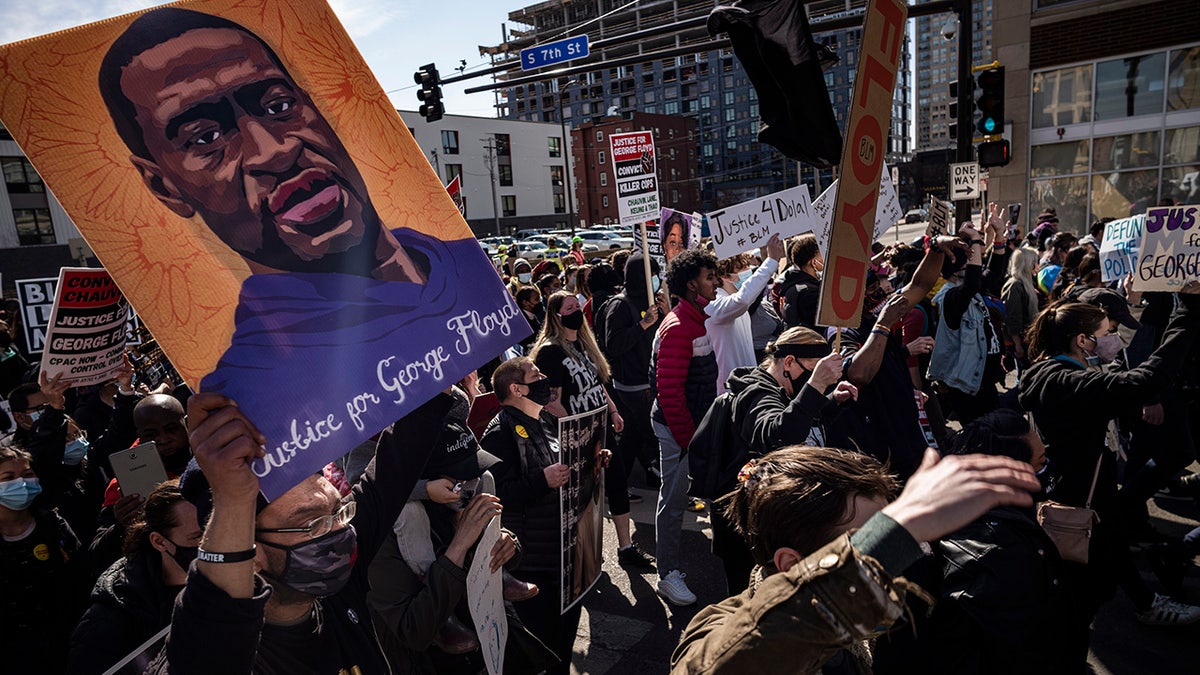
The case of George Floyd and Derek Chauvin encompasses the May 25, 2020, murder of George Floyd by Minneapolis police officer Derek Chauvin, resulting in Chauvin’s state and federal convictions for murder and civil rights violations, which triggered nationwide protests, comprehensive police accountability reforms, and a landmark re-examination of the American criminal justice system.
Introduction to the Incident and Global Aftermath
The incident on May 25, 2020, in Minneapolis, Minnesota, fundamentally altered the sociopolitical landscape of the United States and sparked international demonstrations against police brutality and systemic racism. Minneapolis Police Department (MPD) officers responded to a call regarding a suspected counterfeit twenty-dollar bill at a neighborhood grocery store. During the encounter, officers detained George Floyd, a 46-year-old Black man.
Officer Derek Chauvin, a 19-year veteran of the MPD, pinned Floyd to the asphalt outside a squad car. Chauvin placed his left knee on the back of Floyd's neck and kept it there for over nine minutes while Floyd was handcuffed and pinned face-down. Despite Floyd's repeated statements that he could not breathe, calls for help, and eventual unresponsiveness, Chauvin maintained the restraint.
Bystander video captured the event in its entirety, circulating globally within hours. The visual evidence contradicted initial police press releases, which had characterized the incident merely as a "medical incident during police interaction." The stark disparity between the official police account and the video footage catalyzed widespread outrage. Within days, peaceful protests erupted in Minneapolis and rapidly expanded to all fifty U.S. states and numerous international cities, making it one of the largest protest movements in modern history.
The State Criminal Prosecution of Derek Chauvin
The legal accountability process moved through both state and federal jurisdictions. In the state prosecution, Minnesota v. Derek Michael Chauvin, the state of Minnesota brought multiple criminal charges against the former officer, culminating in a high-profile trial that set numerous legal and broadcasting precedents.
Charges and Indictment
Immediately following public identification of the officers involved, Minnesota Governor Tim Walz and Minnesota Attorney General Keith Ellison assumed a leading role in the prosecution. On May 29, 2020, Hennepin County Attorney Mike Freeman initially charged Chauvin with third-degree murder and second-degree manslaughter.
As public pressure mounted and investigative findings expanded, Attorney General Ellison took over lead prosecution duties and elevated the charges. On June 3, 2020, a grand jury and prosecutors added a charge of second-degree unintentional murder while committing a felony. The statutory definitions for these charges in Minnesota carry substantial sentencing exposure:
- Second-Degree Unintentional Murder: Up to 40 years in prison.
- Third-Degree Murder: Up to 25 years in prison.
- Second-Degree Manslaughter: Up to 10 years in prison and/or a $20,000 fine.
The Trial and Key Evidence
The trial commenced in March 2021 inside the Hennepin County Government Center in Minneapolis, presided over by Judge Peter Cahill. It marked the first time a criminal trial of a police officer was televised live across the state and nation in Minnesota history, ensuring intense public and legal scrutiny.
The prosecution, led by attorney Jerry Blackwell and supported by a legal team assembled by Attorney General Ellison, focused heavily on medical testimony, use-of-force experts, and eyewitness accounts. Key elements of the state's case included:
- Bystander and Body-Camera Footage: Continuous video evidence showing the duration and positioning of the restraint, demonstrating that Floyd posed no physical threat and was handcuffed for the entirety of the incident.
- Medical Testimony: Leading pulmonologists, toxicologists, and the Hennepin County Medical Examiner, Dr. Andrew Baker, testified regarding the cause of death. Dr. Baker ruled the death a homicide caused by "law enforcement subdual, restraint, and neck compression," which led to cardiopulmonary arrest. Independent experts dismissed defense claims that fentanyl and methamphetamine intoxication or underlying heart disease were the primary causes of death.
- Police Hierarchy Testimony: High-ranking Minneapolis police officials, including Police Chief Medaria Arradondo, testified that Chauvin's actions violated department policy, training, and the foundational duty of care. Chief Arradondo stated unequivocally that kneeling on Floyd's neck was "not part of our training" and was uncalled for once Floyd was handcuffed and no longer resisting.
The defense, led by attorney Eric Nelson, argued that Chauvin followed his training, that a hostile crowd distracted the officers, and that Floyd's pre-existing medical conditions and drug use were the actual causes of his death. Despite these arguments, the jury deliberated for less than 11 hours following a three-week trial.
Verdict and Sentencing
On April 20, 2021, the jury found Derek Chauvin guilty on all three counts:
- Second-degree unintentional murder
- Third-degree murder
- Second-degree manslaughter
On June 25, 2021, Judge Peter Cahill sentenced Chauvin to 22.5 years in prison, citing an abuse of a position of trust and authority and the particular cruelty of committing the crime in the presence of children and other bystanders. Under Minnesota sentencing guidelines, an offender must typically serve two-thirds of their sentence in prison (approximately 15 years) before becoming eligible for supervised release, with the remainder served on supervised release.

Federal Civil Rights Prosecutions and Guilty Pleas
Concurrent with and following the state proceedings, the United States Department of Justice (DOJ) pursued federal criminal charges against Chauvin and the three other responding officers—J. Alexander Kueng, Thomas Lane, and Tou Thao—for violating George Floyd's constitutional rights.
| Officer | State Trial Status | Federal Charge Outcome | Current Status (As of 2026) |
|---|---|---|---|
| Derek Chauvin | Convicted of 2nd/3rd-degree murder and manslaughter | Pleaded guilty to federal civil rights violations | Serving concurrent federal sentence at FCI Tucson |
| J. Alexander Kueng | Pleaded guilty to aiding and abetting manslaughter | Pleaded guilty to federal civil rights violations | Serving federal sentence |
| Thomas Lane | Pleaded guilty to aiding and abetting manslaughter | Pleaded guilty to federal civil rights violations | Serving federal sentence |
| Tou Thao | Convicted in state court of aiding and abetting manslaughter | Convicted at federal trial of civil rights violations | Serving federal sentence |
In December 2021, Derek Chauvin entered a change of plea in federal court, admitting that he willfully deprived George Floyd of his right to be free from unreasonable seizure and excessive force, resulting in bodily injury and death. By pleading guilty to federal charges, Chauvin avoided a separate federal trial, though the plea agreement stipulated a recommended federal sentence of 20 to 25 years to run concurrently with his state sentence.
In July 2022, U.S. District Judge Paul Magnuson sentenced Chauvin to 24.5 years in federal prison. To satisfy security and safety concerns regarding high-profile inmates, Chauvin was subsequently transferred to the Federal Correctional Institution (FCI) Tucson in Arizona.
Co-Defendant Legal Outcomes
The accountability process extended to the other three officers present during the restraint. Their legal trajectories involved distinct combinations of state plea agreements and federal convictions.
J. Alexander Kueng and Thomas Lane
- Kueng: Held Floyd’s legs and assisted in the restraint. He pleaded guilty in state court in May 2022 to aiding and abetting manslaughter and pleaded guilty to federal civil rights charges in December 2021. He received a state sentence of 3.5 years and a federal sentence of 3 years.
- Lane: Held Floyd's legs and twice asked Chauvin if they should roll Floyd onto his side. Lane pleaded guilty in state court to aiding and abetting second-degree manslaughter in July 2022 and pleaded guilty to federal civil rights violations. He received a 3-year state sentence and a 2.5-year federal sentence.
Tou Thao
- Thao: Held back bystanders and controlled the perimeter during the incident. Thao chose not to plead guilty, opting for a stipulated evidence trial in state court where Hennepin County Judge Peter Cahill found him guilty of aiding and abetting manslaughter in May 2023. Additionally, a federal jury convicted Thao and his co-defendants of violating Floyd's civil rights in 2022. Thao received a state sentence of 4.9 years and a federal sentence of 3.5 years.
Civil Settlements and Institutional Accountability
Beyond criminal convictions, the legal fallout encompassed significant civil litigation and systemic investigations into municipal governance and police practices.
The City of Minneapolis Civil Settlement
In March 2021, while the state criminal trial was underway, the Minneapolis City Council voted unanimously to approve a $27 million civil settlement with the family of George Floyd. This settlement resolved a federal civil rights lawsuit filed by the Floyd family against the city and the individual officers. At the time, it stood as one of the largest pre-trial settlements for a wrongful death civil rights claim in U.S. history, reflecting the severe legal liability facing the municipality.
Department of Justice Pattern-or-Practice Investigation
Following the murder of George Floyd, the U.S. Department of Justice Civil Rights Division launched a comprehensive "pattern-or-practice" investigation into the Minneapolis Police Department and the City of Minneapolis.
In June 2023, the DOJ released its findings report. The federal investigation concluded that the MPD routinely engaged in a pattern or practice of:
- Unlawful use of excessive force, including unjustified lethal and less-lethal force.
- Unlawful discrimination against Black and Native American people in enforcement activities.
- Infringement upon the rights of people engaged in protected speech, such as journalists and demonstrators covering police conduct.
- Deficiencies in training, supervision, accountability systems, and wellness support for officers.
To resolve these findings, the City of Minneapolis and the DOJ entered into negotiations for a court-enforced consent decree, establishing independent oversight and mandatory structural reforms for the police department.
Legislative and Policy Impacts on Policing
The case of George Floyd served as a major catalyst for legislative action across various levels of government, altering the operational environment of law enforcement agencies nationwide.
State-Level Reforms
Numerous state legislatures enacted substantive policing reforms in the wake of the 2020 protests. These legislative packages frequently included:
- Bans and Restrictions on Neck Restraints: Prohibition or strict limitation of chokeholds, carotid holds, and prone restraints across dozens of state jurisdictions.
- Duty-to-Intervene Mandates: Statutory requirements obligating law enforcement officers to intervene when a colleague uses excessive force, coupled with mandatory reporting requirements.
- Decertification and Licensing: Creation of statewide standards boards with the authority to revoke a police officer's license, preventing disciplined or fired officers from moving to different departments in other jurisdictions.
- Qualified Immunity Adjustments: Limited modifications in states like Colorado and New Mexico to civil liability protections for public officials, though broader national reform stalled in the U.S. Congress.
Federal Legislative Status
At the federal level, the George Floyd Justice in Policing Act passed the U.S. House of Representatives multiple times but encountered legislative gridlock in the U.S. Senate. The bill aimed to establish a national police misconduct registry, ban federal use of chokeholds and no-knock warrants in certain cases, and reform qualified immunity for law enforcement officers. Despite the lack of federal statutory passage, numerous federal executive orders signed by President Joe Biden implemented several of the bill's provisions for federal law enforcement agencies, including mandatory body-worn cameras, stricter use-of-force policies, and restricted no-knock entry warrants.
Frequently Asked Questions
What specific charges was Derek Chauvin convicted of?
Derek Chauvin was convicted in state court of second-degree unintentional murder, third-degree murder, and second-degree manslaughter. He subsequently pleaded guilty in federal court to separate civil rights violations for depriving George Floyd of his constitutional right to be free from unreasonable seizure.
What was the sentence given to Derek Chauvin?
Derek Chauvin received a state sentence of 22.5 years in prison, handed down by Judge Peter Cahill in June 2021. He also received a concurrent federal sentence of 24.5 years after pleading guilty to federal civil rights violations. He is currently serving his time in a federal correctional facility.
How long was Derek Chauvin's knee on George Floyd's neck?
Trial evidence and video footage established that Derek Chauvin kept his knee on George Floyd's neck and back for 9 minutes and 29 seconds. The final minutes of this duration occurred while Floyd was unresponsive and had lost a pulse.
What happened to the other three police officers involved?
The three other responding officers—J. Alexander Kueng, Thomas Lane, and Tou Thao—were all convicted of federal civil rights violations. They also faced state criminal charges, with Kueng and Lane pleading guilty to aiding and abetting manslaughter, and Thao convicted of the same charge following a stipulated evidence bench trial. All three received prison sentences ranging from 2.5 to 4.9 years in state court, running concurrently with federal terms.
What was the financial settlement in the civil lawsuit?
The City of Minneapolis agreed to pay $27 million to the family of George Floyd in March 2021 to settle a federal civil rights wrongful death lawsuit prior to the conclusion of the criminal trial.
Image Gallery
Select an image to open it in a new tab.
Zara El-Hashem
Sociocultural Dynamics and Academics Writer
