The Best Treatment for Stretch Marks: Dermatological Options, Efficacy, and Reality

Finding the best treatment for stretch marks depends significantly on their age, color, and depth, as early-stage red or purple marks respond well to topical retinoids and vascular lasers, whereas mature white or silvery striae typically require advanced collagen-stimulating procedures like microneedling or fractional laser resurfacing for noticeable improvement.
Stretch marks—medically known as striae distensae—are a common form of dermal scarring that occur when the skin is stretched rapidly due to rapid growth, weight fluctuation, bodybuilding, or pregnancy. While they are entirely harmless from a physiological standpoint, their appearance can cause cosmetic distress. Navigating the myriad of over-the-counter creams, prescription topicals, and in-office dermatological procedures can be overwhelming. Understanding how different treatments interact with the skin's structural matrix is essential for setting realistic expectations and achieving optimal results.
Understanding Stretch Marks: Biology and Stages
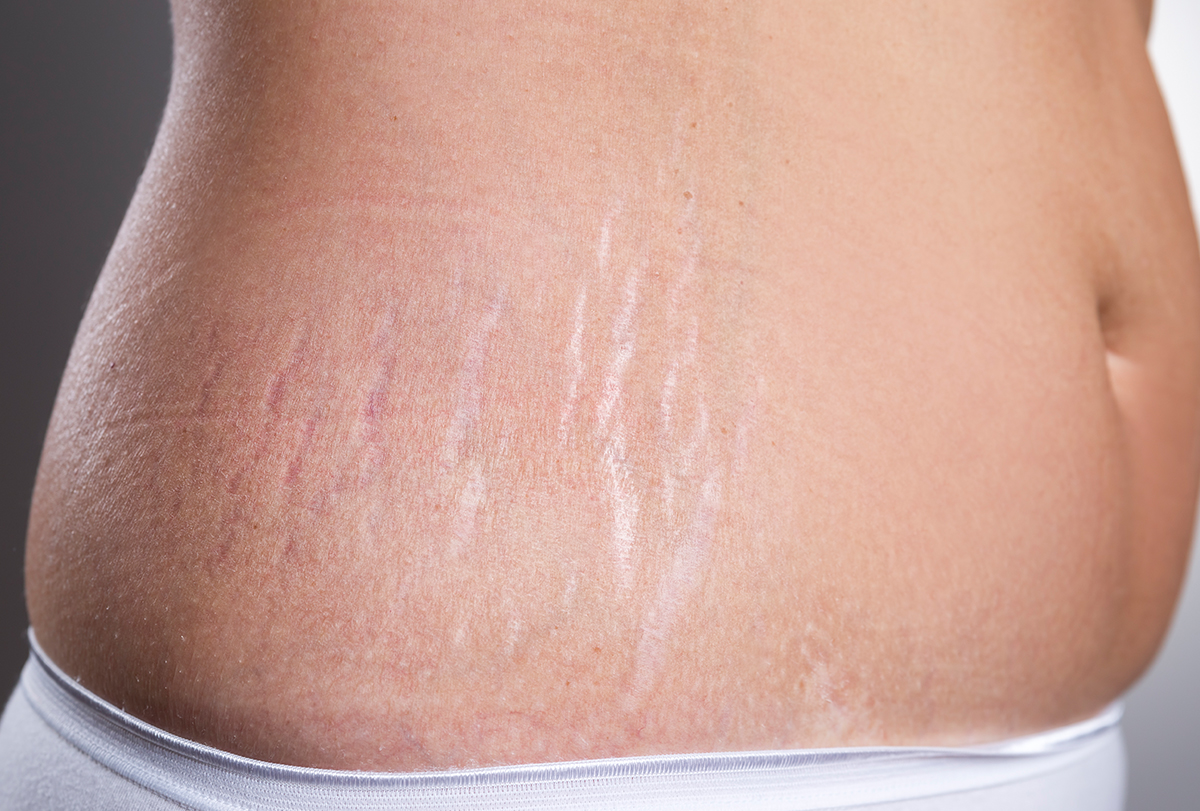
To evaluate any treatment, one must first understand what stretch marks are at a microscopic level. Stretch marks develop in the dermis, the thick middle layer of skin that provides elasticity and strength. When the dermis is stretched beyond its capacity, the collagen and elastin fibers rupture. Initially, blood vessels show through the tear, resulting in red, pink, or purple lines known as striae rubrae.
Over time, these blood vessels contract, and the marks transition into striae albae, turning white, silvery, or slightly depressed compared to the surrounding skin. Treating early striae rubrae is generally much more successful because the blood supply remains active, allowing for cellular repair and collagen remodeling. Once they mature into striae albae, they behave more like traditional scars, making them significantly harder to alter or erase completely.
The Role of Genetics and Prevention
Genetics play a profound role in susceptibility to stretch marks. Hormonal fluctuations, such as elevated cortisol levels during pregnancy or puberty, weaken elastic fibers in the skin, making certain individuals more prone to tearing. While numerous commercial body oils and butters claim to prevent stretch marks entirely, independent dermatological studies show that topical moisturizers alone rarely prevent them if a person is genetically predisposed. However, keeping the skin well-hydrated does improve overall skin barrier function and can minimize the itching associated with rapid skin expansion.
Topical Treatments: Over-the-Counter Creams and Prescription Retinoids
Topical treatments are usually the first line of defense due to their accessibility, affordability, and ease of use at home. However, their efficacy varies wildly depending on whether the product is an over-the-counter cosmetic or a prescription-strength medication.
Prescription Retinoids (Tretinoin)
Prescription-strength retinoids, such as tretinoin (Retin-A), are among the few topical agents backed by clinical data for improving early stretch marks. Tretinoin works by rebuilding collagen in the dermis and accelerating cellular turnover.
- Best For: Early-stage, red or purple stretch marks (striae rubrae).
- Limitations: They are generally ineffective on mature white stretch marks (striae albae). Furthermore, retinoids are strictly contraindicated during pregnancy and breastfeeding due to the risk of systemic absorption and potential fetal harm.
Over-the-Counter Scar Creams and Oils
Countless consumer products feature ingredients like cocoa butter, shea butter, vitamin E, and hyaluronic acid. While these ingredients deeply moisturize the stratum corneum (the outermost layer of skin) and can temporarily plump the area to make marks less noticeable, they do not repair broken dermal collagen fibers. They serve primarily as supportive skincare rather than transformative treatments.

In-Office Dermatological Procedures
When over-the-counter options fail to yield satisfactory results, patients typically turn to professional, in-office dermatological procedures. These interventions use controlled trauma or energy to stimulate the body's natural wound-healing cascade, prompting the production of fresh collagen and elastin.
| Treatment Type | Mechanism of Action | Best Suited For | Typical Recovery Time | Average Sessions Needed |
|---|---|---|---|---|
| Microneedling (CIT) | Fine needles create micro-injuries, triggering collagen and elastin synthesis. | Both early and mature stretch marks on all skin tones. | 1 to 3 days of mild redness. | 3 to 6 sessions. |
| Fractional Laser Resurfacing | Concentrated light energy penetrates the dermis, vaporizing damaged tissue and stimulating remodeling. | Stubborn mature stretch marks (striae albae). | 3 to 7 days of peeling and swelling. | 3 to 5 sessions. |
| Vascular Lasers (PDL/Nd:YAG) | Targets hemoglobin in blood vessels to reduce redness and inflammation. | Fresh, red, or purple stretch marks (striae rubrae). | Minimal downtime, slight bruising possible. | 2 to 4 sessions. |
| Chemical Peels | Exfoliates the upper skin layers to improve texture and encourage cell turnover. | Superficial, early-stage stretch marks. | 3 to 5 days of flaking. | 4 to 6 sessions. |
Microneedling and Collagen Induction Therapy (CIT)
Microneedling, also known as Collagen Induction Therapy, utilizes a specialized medical-grade device outfitted with fine needles to puncture the skin at controlled depths. This mechanical trauma initiates a healing response, stimulating fibroblasts to deposit new collagen and elastin fibers into the depressed scar tissue.
When combined with Platelet-Rich Plasma (PRP)—derived from the patient's own blood—microneedling can yield even more pronounced improvements in skin texture and pigmentation. It is considered one of the safest in-office treatments for darker skin tones because it does not use thermal energy, which carries a higher risk of post-inflammatory hyperpigmentation.
Fractional Laser Resurfacing
Fractional lasers, such as non-ablative (e.g., 1540nm or 1927nm) and ablative (e.g., CO2) lasers, target microscopic columns of skin while leaving surrounding tissue intact. This encourages rapid re-epithelialization and deep dermal remodeling. Ablative lasers offer dramatic results for deep, texturally uneven stretch marks, but they require a longer recovery period and carry a higher risk of side effects in patients with higher melanin counts.
Radiofrequency (RF) Microneedling
Combining traditional microneedling with radiofrequency energy delivers thermal heat directly into the dermis. This dual-action approach tightens lax skin around the stretch marks while aggressively stimulating collagen production. It is particularly beneficial when stretch marks are accompanied by skin laxity, such as after significant weight loss or postpartum abdominal stretching.
Comparing Options: Cost, Safety, and Realistic Expectations
Choosing the right approach requires balancing financial investment, recovery time, and biological limitations. No treatment can completely erase stretch marks; dermatologists generally aim for a 30% to 70% visual improvement.
- Cost Considerations: Over-the-counter topicals are inexpensive ($20–$80 per month) but offer minimal structural change. In-office laser and microneedling treatments require multiple sessions, with costs typically ranging from $300 to $1,500 per session depending on the geographic location and the technology used.
- Safety and Side Effects: Topical retinoids can cause dryness, peeling, and photosensitivity. Energy-based devices carry risks of blistering, scarring, or temporary pigmentary changes, particularly if performed by inexperienced practitioners or on untoned skin. Consulting a board-certified dermatologist ensures that the chosen modality matches the patient's specific skin type (Fitzpatrick scale) and scar maturity.
Frequently Asked Questions
Can stretch marks disappear completely on their own?
Stretch marks rarely vanish entirely without intervention. Over the course of several years, they often fade from a prominent red or purple hue to a silvery-white color that blends more naturally with the surrounding skin, becoming significantly less noticeable, but the underlying textural depression in the dermis typically remains.
Are laser treatments safe for darker skin tones?
Certain lasers, such as ablative CO2 lasers, carry a high risk of causing hyperpigmentation or hypopigmentation in darker skin types (Fitzpatrick types IV through VI). However, non-ablative fractional lasers, vascular lasers with appropriate wavelength settings, and microneedling are generally considered safe alternatives when performed by an experienced clinician.
Do stretch mark removal creams work during pregnancy?
Most effective active ingredients, notably prescription retinoids, are strictly unsafe for use during pregnancy or lactation. Pregnant individuals should rely on safe, deeply hydrating emollients or consult their OB-GYN before applying any active topical treatments.
How many treatment sessions are usually required to see results?
For in-office procedures like microneedling or fractional lasers, a series of three to six sessions spaced four to six weeks apart is typically required. Because collagen remodeling is a gradual biological process, final results usually manifest three to six months after completing the full treatment course.
Does weight loss or weight gain affect existing stretch marks?
Significant weight fluctuations can cause the skin to stretch or contract further, potentially widening existing marks or triggering the formation of new ones. Maintaining a stable weight and engaging in regular strength training to build underlying muscle mass can improve overall skin firmness and minimize the appearance of laxity around stretch marks.
Conclusion and Next Actions
Addressing stretch marks effectively requires patience, financial investment, and a clear understanding of your skin's unique biology. Begin by assessing the age and color of your marks: utilize prescription topicals or vascular lasers for fresh red lines, and turn to microneedling or fractional resurfacing for mature white scars. Schedule a consultation with a board-certified dermatologist to evaluate your skin type, discuss realistic improvement metrics, and craft a tailored treatment plan that aligns with your personal goals.
Image Gallery
Select an image to open it in a new tab.
Declan O'Connor
Higher Education and Campus Culture Reporter
