Why the American Health Care Problem Persists: Structural Drivers and Systemic Complexities

The American health care problem persists because the nation’s medical ecosystem is built on a fragmented, profit-driven architecture characterized by misaligned financial incentives, decentralized regulatory oversight, high administrative overhead, and powerful lobbying interests that consistently resist structural reform.
Introduction: Untangling the Persistence of US Health Care Dysfunction
To understand why the American health care system remains persistently expensive, unequal, and complex, one must examine a mosaic of historical accidents, economic incentives, and legislative compromises. Unlike peer nations in the Organisation for Economic Co-operation and Development (OECD), which treat health care primarily as a public utility or a fundamental right, the United States approaches medical care through a market-based lens. This framework relies heavily on private insurance, employer-sponsored plans, and for-profit entities operating across disjointed federal, state, and private jurisdictions.
Despite incremental legislative efforts—most notably the enactment of the Affordable Care Act (ACA)—fundamental cost drivers remain unchecked. Patients face soaring out-of-pocket expenses, employers struggle with unsustainable premium hikes, and millions remain underinsured or uninsured. Resolving this persistence requires looking past political rhetoric to analyze the structural, economic, and operational machinery that drives American medicine.
Historical Origins of Employer-Sponsored Insurance
The foundation of the modern American health care crisis was laid during the mid-20th century, specifically during World War II. Wage controls instituted by the federal government prevented employers from competing for scarce labor by offering higher salaries. To circumvent these restrictions, companies began offering health insurance fringe benefits to attract workers.
The Tax Subsidy Trap
In 1943, the Internal Revenue Service ruled that employer-sponsored health insurance contributions were tax-deductible for companies and untaxed for employees. This institutionalized a system where health coverage became tethered to employment.
- Loss of Portability: When individuals lose or change jobs, their coverage is disrupted, creating administrative friction and coverage gaps.
- Insulated Consumers: Because employers pay a significant portion of premiums, employees are historically insulated from the true underlying cost of care, reducing consumer price sensitivity.
- Exclusion of the Unemployed: Individuals outside the traditional workforce—such as freelancers, part-time workers, and the retired under-65 population—must navigate individual insurance markets historically plagued by high costs and adverse selection.
Economic and Administrative Inefficiencies
A primary reason the American health care problem persists is staggering administrative waste. Administrative expenses consume a vastly disproportionate share of every healthcare dollar in the United States compared to single-payer or multi-payer systems abroad.
The Bureaucracy of Billing and Coding
Because the U.S. features thousands of distinct insurance plans, each with its own formularies, prior authorization rules, tiered networks, and reimbursement schedules, healthcare providers must maintain massive administrative apparatuses simply to bill and collect payments.
- Front-End Verification: Hospitals and clinics employ eligibility verification teams to determine what a specific plan covers.
- Clinical Documentation Improvement: Specialized staff must translate medical charts into complex diagnostic and procedural codes (such as ICD-10 and CPT codes).
- Denial Management: Insurers frequently deny claims on procedural grounds, requiring providers to dedicate personnel to appeals and resubmissions.
According to studies published in health policy journals, administrative costs account for up to 25% to 30% of total U.S. health care expenditures, dwarfing the administrative overhead seen in countries with centralized national health systems.
Pharmaceutical Pricing and Market Monopolies
The cost of prescription drugs in the United States represents another intractable pillar of the healthcare crisis. Drug manufacturers operate within a framework that grants robust intellectual property protections and market exclusivity, often shielding brand-name medications from generic or biosimilar competition for extended periods.
The Role of Pharmacy Benefit Managers (PBMs)
The pharmaceutical supply chain is complicated by middlemen known as Pharmacy Benefit Managers. PBMs negotiate rebates and discounts with drug manufacturers on behalf of health insurers. However, critics and regulatory bodies have scrutinized PBM practices for opacity:
- Rebate Chasing: PBMs often favor drugs with higher list prices and larger manufacturer rebates over cheaper, equally effective alternatives, driving up overall system costs.
- Formulary Exclusion: Insurers and PBMs frequently shuffle drug tiers, leaving patients with sudden cost spikes or forcing them to switch therapies.
- Lack of Price Transparency: Because list prices, net prices, and rebates are proprietary trade secrets, consumers cannot easily comparison-shop for medications.
Comparing U.S. Health Care Mechanics with Peer Nations
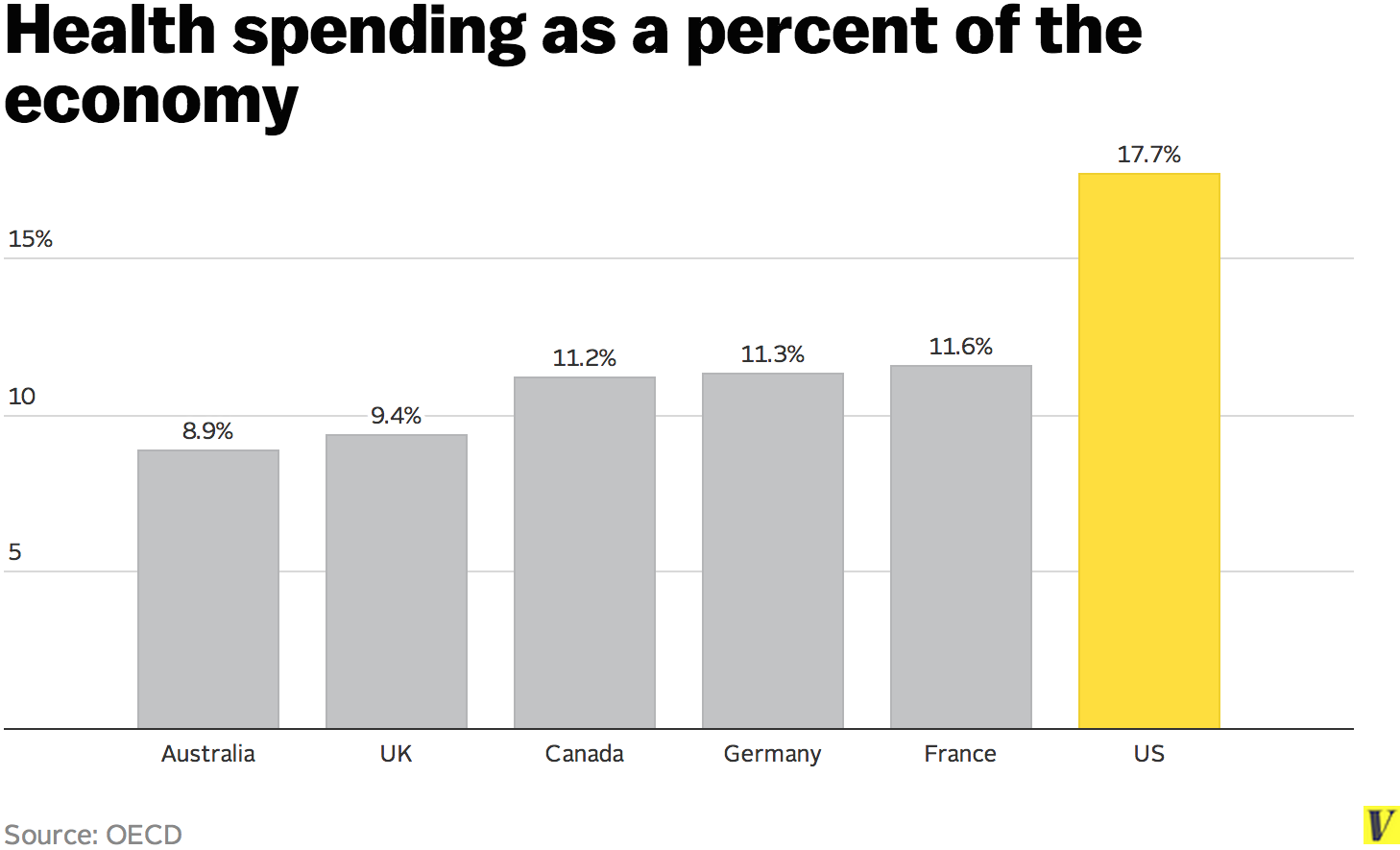
To contextualize why the American model struggles while other high-income nations achieve universal coverage at lower costs, examining core structural metrics proves illuminating.
| Feature / Metric | United States | Typical Western European System (e.g., Germany / France) | Single-Payer Model (e.g., UK / Canada) |
|---|---|---|---|
| Primary Funding Mechanism | Private insurance, employer-sponsored plans, out-of-pocket, public programs (Medicare/Medicaid) | Social health insurance (mandatory payroll taxes combined with sickness funds) | General tax revenue (government-funded budget) |
| Administrative Overhead | High (fragmented billing, multiple private payers) | Moderate (standardized regulations, non-profit sickness funds) | Low (centralized government administration) |
| Price Regulation | Market-driven, negotiated individually by private insurers | Government-regulated or heavily negotiated fee schedules | Direct government price setting for services and drugs |
| Coverage Universality | Universal access is not guaranteed; millions remain uninsured or underinsured | Universal access mandated by law | Universal access guaranteed as a public right |
| Per Capita Spending | Highest in the world ($12,000+ per year) | Moderate to high compared to global averages | Generally lower than U.S. and Western European averages |
Consolidation, Provider Monopolies, and Health Systems
Over the past three decades, the American healthcare provider landscape has undergone massive consolidation. Independent community hospitals, private physician practices, and regional medical groups have been absorbed by sprawling health systems and private equity firms.
The Impact of Market Concentration
When a single health system acquires dominant market share in a geographic region, its leverage over private insurers increases. This market power allows health systems to demand higher reimbursement rates, which insurers pass on to consumers via higher premiums and deductibles.
- Reduced Competition: Patients in consolidated markets have fewer choices for care, muting the quality-improving effects of market competition.
- Facility Fees: Large health systems routinely bill separate "facility fees" for outpatient visits conducted in acquired doctor's offices, driving up the cost of routine check-ups.
- Private Equity Influx: Private equity firms have increasingly acquired physician practices, nursing homes, and emergency staffing companies, prioritizing short-term financial returns over long-term clinical stability.
Legal, Regulatory, and Legislative Roadblocks
Realizing comprehensive structural reform in the United States faces formidable legislative hurdles. The American political system is designed with numerous veto points—such as the Senate filibuster, bicameralism, and federalism—that make sweeping federal overhauls exceptionally difficult to pass.
The Power of Special Interest Lobbying
The healthcare sector is among the highest-spending lobbying groups in Washington, D.C. Pharmaceutical companies, health insurance associations, hospital networks, and physician trade groups invest billions of dollars annually to shape legislation, defeat price-control measures, and protect existing revenue streams.
Furthermore, federalism creates a patchwork of state-level regulations. For instance, states that chose not to expand Medicaid under the Affordable Care Act left millions of low-income residents in a coverage gap, illustrating how political geography directly impacts health equity.
Frequently Asked Questions
Why is health care so much more expensive in the United States than in other developed nations?
The higher cost is driven primarily by higher prices for medical services, pharmaceuticals, and administrative overhead, rather than by higher utilization rates. Fragmented negotiations, lack of centralized price controls, and heavy reliance on for-profit intermediaries allow entities throughout the supply chain to extract maximum margins.
What role did the Affordable Care Act play in addressing these problems?
The Affordable Care Act expanded Medicaid eligibility, prohibited insurers from denying coverage or charging higher rates for pre-existing conditions, allowed young adults to stay on their parents' plans until age 26, and created regulated insurance marketplaces. However, it preserved the underlying private-employer and private-insurance architecture, leaving fundamental cost drivers largely unaddressed.
Why can't consumers easily shop around for medical care like other consumer goods?
Healthcare markets violate standard economic principles of consumer transparency. Medical emergencies preclude advance shopping, prices are rarely posted publicly in real time, quality metrics are difficult for laypersons to interpret, and insurance cost-sharing structures (such as deductibles and copays) obscure the true cost of care until after services are rendered.
How do health insurance deductibles contribute to the crisis?
To lower monthly premiums, employers and insurers increasingly offer high-deductible health plans (HDHPs). While these plans lower fixed monthly costs, they shift financial risk onto patients, many of whom delay necessary preventive care, diagnostic tests, and chronic disease management because they cannot afford out-of-pocket costs before their deductible is met.
Can state-level reforms fix the American health care problem?
While states can experiment with Medicaid innovations, insurance market regulations, and public option pilots, state-level reform faces severe economic constraints. States must balance their budgets annually and cannot print money or run persistent deficits like the federal government, making single-payer financing difficult to sustain without massive tax increases.
Conclusion and Next Actions
The persistence of the American health care problem is not an accident of nature; it is the logical outcome of a decentralized, market-driven system that prioritizes fragmentation and financial intermediation over universal access and cost containment. For policymakers, researchers, and citizens seeking solutions, meaningful progress requires addressing root causes: reining in administrative waste, regulating pharmaceutical and provider monopolies, and decoupling health insurance from employment.
Individuals navigating this complex system should actively review their plan formularies during open enrollment, utilize independent price transparency tools where available, advocate for workplace wellness and health savings account (HSA) optimizations, and support legislative transparency initiatives aimed at holding insurers and pharmacy benefit managers accountable.
Image Gallery
Select an image to open it in a new tab.
Akira Tanaka
International Academic Trends Correspondent
