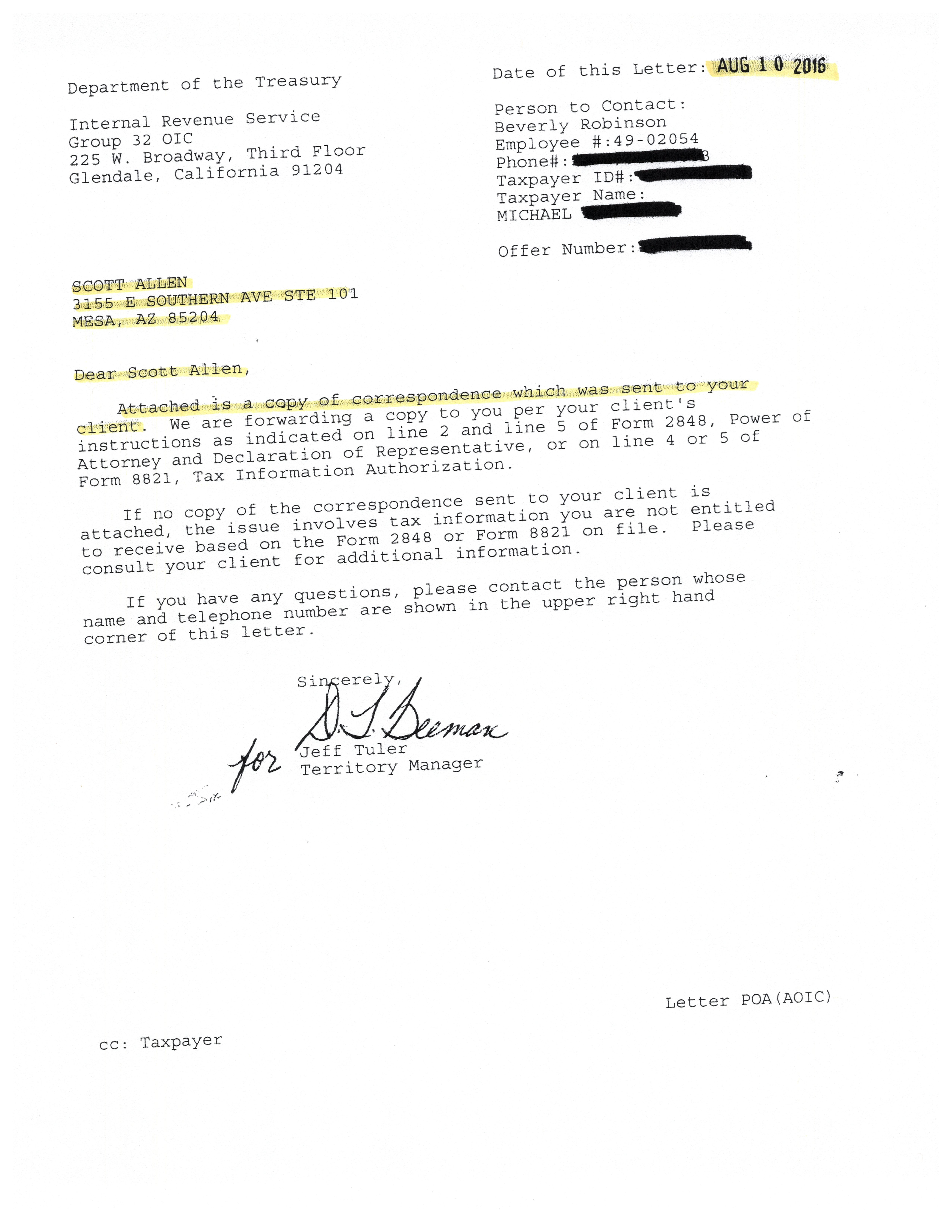
An Offer in Compromise (OIC) is an agreement between a taxpayer and the Internal Revenue Service (IRS) to settle a tax debt for less than the full amount owed. The process is reserved for taxpayers who can prove they have no reasonable prospect of paying their full liability, and it requires a rigorous disclosure of financial assets, income, expenses, and future earning potential.
The Core Concept of an Offer in Compromise
The IRS provides the Offer in Compromise program as a bridge for taxpayers experiencing genuine financial hardship. It is not an amnesty program or a simple negotiation tactic; it is a highly structured administrative process. When you submit an OIC, you are effectively asking the government to accept a fraction of what is owed because you can demonstrate that collecting the full amount is either impossible or would create an economic burden that outweighs the value of the tax collection.
To successfully navigate this, you must understand that the IRS evaluates your file based on the "Reasonable Collection Potential" (RCP). This is a calculation of your assets (the "equity" you hold) plus your anticipated future income, adjusted for necessary living expenses. If your RCP is lower than your total tax debt, you may be a candidate for an OIC.
Eligibility Requirements: Are You a Candidate?
Before considering the paperwork, the IRS requires you to meet specific threshold criteria. If you fail to meet these, the IRS will return your application without processing it.
- Filing Compliance: You must have filed all required tax returns. If you have unfiled returns, the IRS will not consider your offer.
- Estimated Payments: You must have made all required estimated tax payments for the current year.
- Federal Tax Deposits: If you are a business owner with employees, you must have made all required federal tax deposits for the current and two preceding quarters.
- Pending Bankruptcy: You cannot be in an active bankruptcy proceeding. If you are, your OIC request will be rejected.
The Mechanics of the Application
The OIC process relies on two primary forms: Form 656, Offer in Compromise, and the collection information forms (Form 433-A (OIC) for individuals or Form 433-B (OIC) for businesses).
Form 656 is the actual offer document. It details the amount you are proposing to pay and the terms of that payment (either lump sum or periodic). Form 433-A (OIC) is the engine of the application. It acts as a comprehensive financial snapshot. You must document:
- Assets: Bank accounts, retirement funds, real estate, vehicles, and business equipment.
- Income: Wages, dividends, interest, and any other cash inflows.
- Expenses: Housing, utilities, food, transportation, and health care. The IRS uses strict national and local standards to determine what constitutes a "necessary" expense versus a luxury.
Navigating the Evaluation Process
Once submitted, the IRS performs a deep dive into your financial records. This process is time-consuming, often taking several months or longer.
- Preliminary Review: The IRS checks your application for completeness and eligibility.
- Investigation: A tax examiner reviews your financial disclosures. They verify your income against reported W-2s and 1099s, and they cross-reference your assets with public records.
- Verification of RCP: The examiner calculates your RCP. If they determine you have more equity or income than you claimed, they may issue a counter-offer or reject the application entirely.
- Decision: You will receive a formal notification of acceptance or rejection. If accepted, you must adhere strictly to the terms of your payment agreement. If rejected, you have the right to file an appeal within 30 days.
Common Misconceptions and Risks
Many taxpayers hear advertisements suggesting that they can "settle for pennies on the dollar." While this is mathematically possible, it is statistically rare for the average taxpayer.
The biggest risk in the OIC process is the suspension of collection activity during the review period. While the application is pending, the IRS generally pauses enforced collection (levies and garnishments). However, interest and penalties continue to accrue. If your offer is rejected, you will owe the original balance plus the added interest and penalties from the period of review. Furthermore, if you are not prepared, the detailed financial investigation can lead to the IRS identifying assets you had not previously disclosed, potentially putting you in a worse position than before you applied.
Comparison of IRS Tax Debt Solutions
When you cannot pay your tax debt in full, an OIC is only one of several options. Use the table below to determine if an OIC is the right path for your specific financial situation.
| Solution | Best For | Pros | Cons |
|---|---|---|---|
| Offer in Compromise | Extreme financial hardship/No assets | Eliminates debt for less than total owed | Highly invasive; low approval rate |
| Installment Agreement | Regular, stable income | Spreads debt over up to 72 months | Interest/penalties continue to accrue |
| Currently Not Collectible | Temporary unemployment or illness | Pauses collection for a set period | Debt remains; interest continues to grow |
| Partial Pay Installment | Significant debt but limited ability to pay | Lower monthly payment than standard IA | Requires periodic financial review |
Frequently Asked Questions
1. Does the IRS accept most offers? No. The IRS only accepts offers where it is clear that they cannot collect the full amount owed within the legal timeframe. Statistically, thousands of applications are rejected annually because they fail to meet the "Reasonable Collection Potential" criteria or are incomplete.
2. How long does the process take? The evaluation process varies based on the complexity of your financial situation. On average, the IRS takes between six to twelve months to review and reach a decision on an OIC application.
3. What happens if my offer is rejected? You will receive a letter explaining the reasons for the rejection. You can file an appeal with the IRS Office of Appeals within 30 days of the date on the rejection letter. If you do not appeal or if the appeal is denied, you must arrange a different payment method, such as an installment agreement, to avoid collection actions.
4. Can I hire someone to help me? Yes. You can represent yourself, or you can hire a tax attorney, a Certified Public Accountant (CPA), or an Enrolled Agent (EA). Given the technical and legal nature of the financial disclosures, many taxpayers find professional representation beneficial for ensuring all expenses are properly documented under IRS guidelines.
5. Does an OIC impact my credit score? The IRS does not report your OIC to credit bureaus. However, if a Notice of Federal Tax Lien was previously filed, that lien remains part of the public record and will continue to impact your credit until the liability is fully resolved and the lien is released.
Next Steps for Taxpayers
If you believe you qualify for an Offer in Compromise, your first step should be to use the IRS Offer in Compromise Pre-Qualifier tool available on the official IRS website. This tool provides an initial assessment of your eligibility.
Once you have verified your preliminary eligibility, gather all relevant financial documentation, including bank statements for the last three months, proof of all income sources, and verification of all monthly expenses. If your case is complex—involving business assets, equity in real estate, or complex investment income—consulting with a tax professional experienced in resolution is highly recommended. The accuracy and transparency of your disclosures are the most significant factors in the success of your offer.
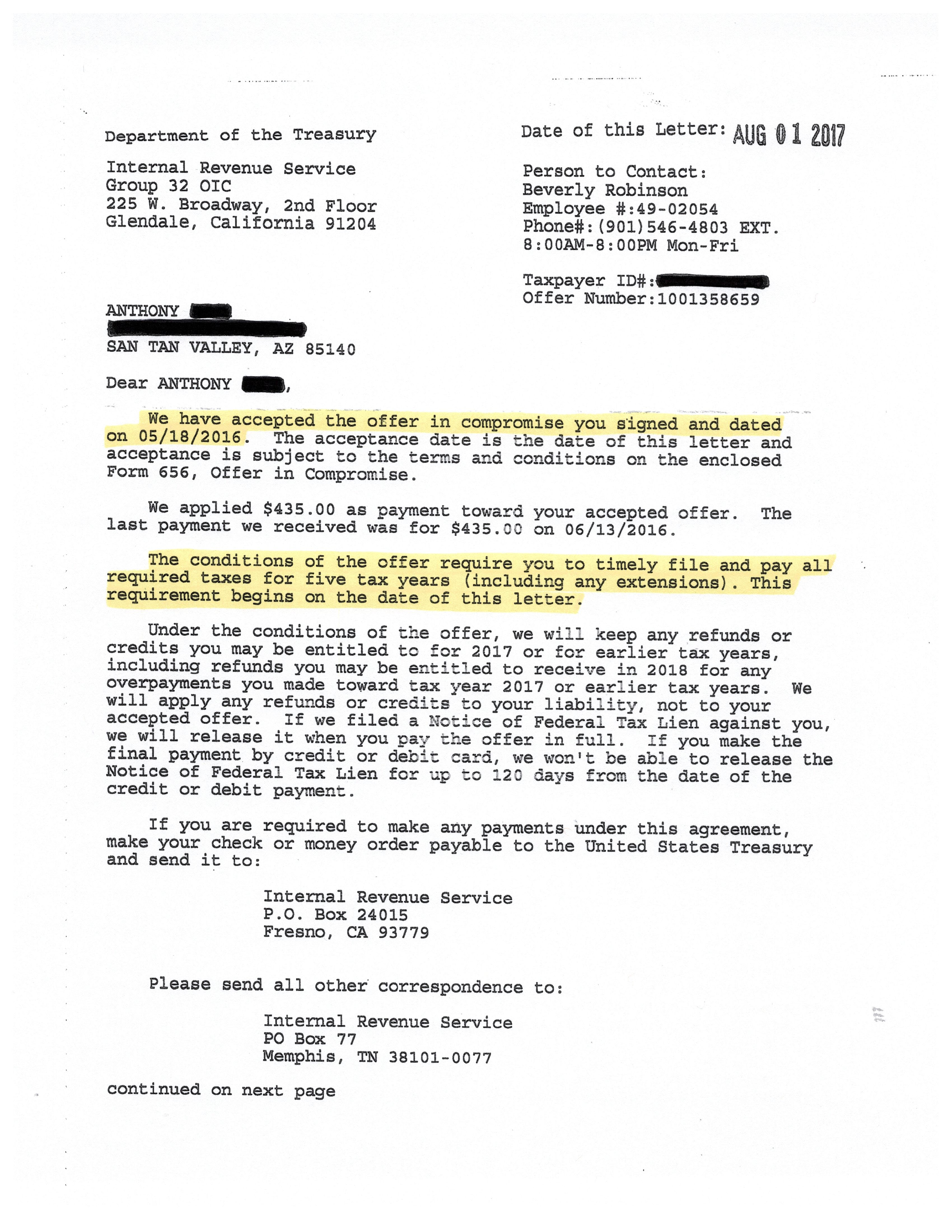
Image Gallery
Select an image to open it in a new tab.




Zara El-Hashem
Sociocultural Dynamics and Academics Writer
