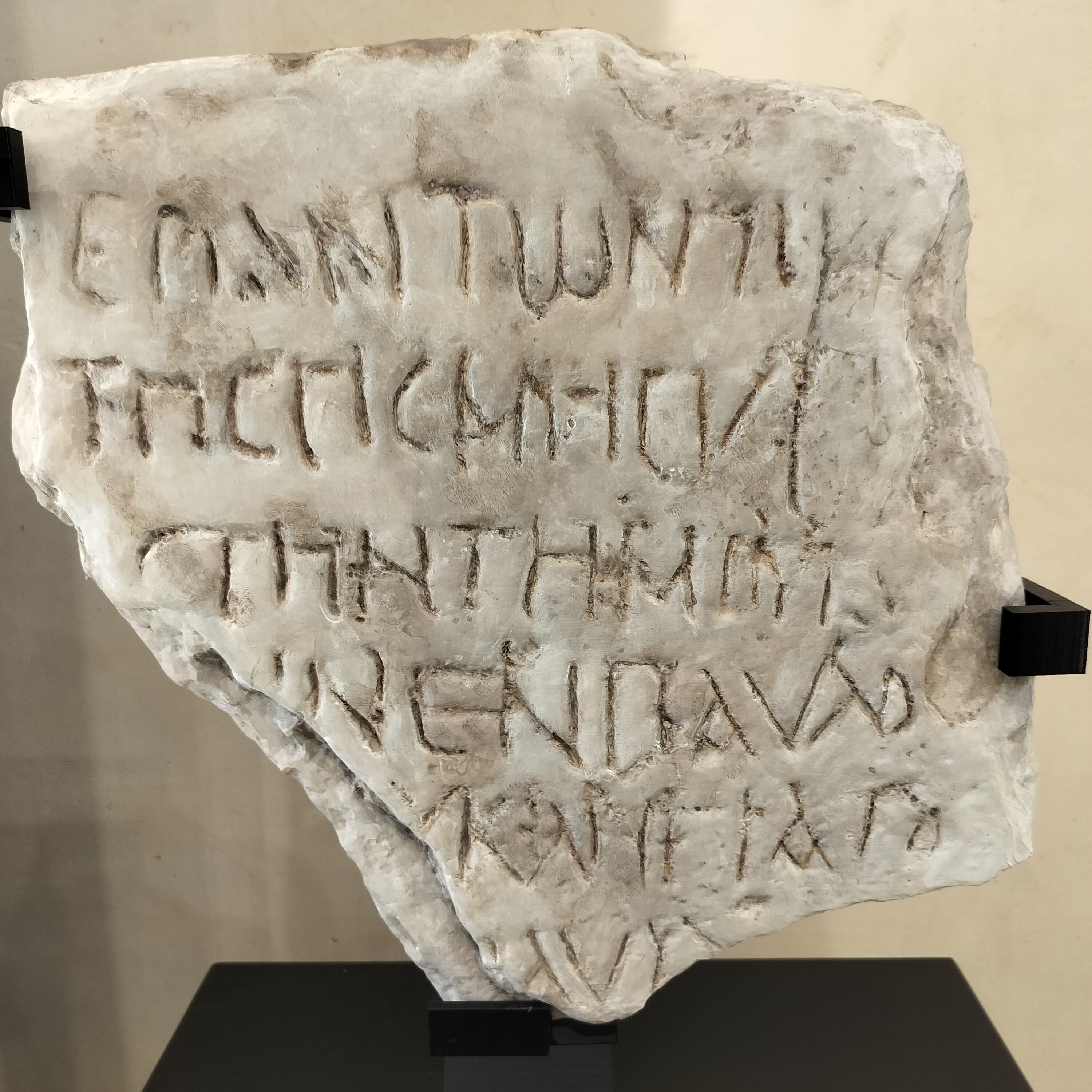
The term "apostle" serves as a bridge between classical Greek maritime language and the foundational structures of Western religious thought. Historically, an apostle is "one who is sent forth" with specific authority, evolving from a general envoy in Greek antiquity to a designated ecclesiastical office within the early Christian movement. This evolution reflects broader linguistic shifts and the institutionalization of religious authority over two millennia.
The Etymological Origins of the Term
To understand the apostle in language and history, one must begin with the Greek verb stellein, meaning "to send." When combined with the prefix apo- (away from), it forms apostellein. In the classical period, the resulting noun apóstolos (ἀπόστολος) did not originally carry the heavy religious weight it holds today. Instead, it was a practical, often technical term.
In Greek historiography and naval records, an apóstolos referred to a naval expedition, a fleet, or even the commander of a naval group. It essentially described a force or an individual sent out with a specific commission to achieve a state-level objective. By the time of the Septuagint—the Greek translation of the Hebrew Bible—the term began to align with the Hebrew concept of the shaliah.
The shaliah was a legal representative in Jewish tradition. A common rabbinic dictum stated that "a man’s agent is as himself." This legal framework is crucial to the linguistic development of the "apostle." It transitioned the word from a mere "messenger" (like angelos) to a "representative" who carries the full authority of the sender. While an angelos delivers a message, an apóstolos acts on behalf of the one who sent him.
The Linguistic Transition from Greek to Germanic Languages
The spelling "apostel," frequently found in Dutch, German, and older variants of English, marks the linguistic journey of the word as it migrated from the Mediterranean to Northern Europe. As Christianity spread through the Roman Empire, the Latinized apostolus became the standard ecclesiastical term.
Old English and Middle English Variations
In Old English (c. 450–1100), the word appeared as apostol. Because the early English church was heavily influenced by Latin liturgy, the word was borrowed directly rather than being replaced by a Germanic equivalent like "representative" (ærendwreca). By the Middle English period, influenced by Anglo-Norman French, the spelling fluctuated before stabilizing.
The Germanic "Apostel"
In German and Dutch, the "apostel" spelling remains standard. The linguistic preservation of the hard "t" and the final "el" reflects the High German consonant shifts and the phonetic stabilization of the Middle Ages. In these languages, the term has historically been used not only for the biblical figures but also as a title for the first Christian missionaries to specific regions. For example, Boniface is frequently referred to as the "Apostel der Deutschen" (Apostle of the Germans).

The Historical Role of the Twelve
In history, the "Apostle" is most famously identified with the inner circle of Jesus of Nazareth. However, the historical reality of "The Twelve" is more complex than a simple list of names. The number twelve was symbolically significant, representing the twelve tribes of Israel and signaling a "new Israel" or a restoration movement within 1st-century Judaism.
The historical criteria for being an apostle in the earliest Christian decade were rigorous. According to the Acts of the Apostles, a candidate had to have been a witness to the ministry of Jesus from his baptism by John until his ascension. This historical requirement was designed to ensure the continuity of the tradition.
The Apostolic Commission
The historical function of these individuals was primarily "witnessing." Unlike later bureaucratic church offices, the early 1st-century apostle was an itinerant figure. Their authority was not localized to a single city but was "plenipotentiary," meaning they held full power to act on behalf of the burgeoning movement across geographical boundaries.
The Case of Paul: Expanding the Definition
The most significant historical shift in the use of the term "apostle" occurred with Paul of Tarsus. Paul did not meet the traditional criteria of having followed Jesus during his earthly ministry. His claim to apostleship was based on a subjective visionary experience on the road to Damascus.
This created a linguistic and historical tension. Paul’s insistence on his title "Apostle to the Gentiles" expanded the term's meaning from "witness of a historical life" to "herald of a divine revelation." Paul’s letters are the earliest written records we have that use the term apóstolos in a Christian context, predating the written Gospels. His usage emphasizes the function of the office—preaching and founding communities—rather than just the status of having known Jesus.
The Office vs. The Function: A Comparison
As the church transitioned into the 2nd century and beyond, the term "apostle" underwent a process of "ossification." It moved from a functional description of a traveling missionary to a static, revered title reserved for a closed group of founders.
| Feature | The Functional Apostle (1st Century) | The Institutional Apostle (2nd Century Onward) |
|---|---|---|
| Primary Task | Itinerant preaching and church planting. | Safeguarding the "Apostolic Tradition" and doctrine. |
| Geographic Scope | Mobile, crossing regional borders. | Linked to "Apostolic Sees" (Rome, Antioch, etc.). |
| Authority Source | Direct commission or visionary experience. | Succession (Apostolic Succession) and ordination. |
| Linguistic Usage | Applied broadly to Barnabas, James, and others. | Strictly limited to "The Twelve" plus Paul. |
| Documentary Evidence | Paul’s Epistles, The Didache. | Creeds, Irenaeus, Eusebius. |
The Concept of Apostolic Succession
By the year 2026, the historical study of "Apostolic Succession" remains a cornerstone of ecumenical dialogue. This historical development occurred when the original apostles died. To maintain order, the early church developed the idea that the authority of the apostles was passed down to the episkopoi (bishops).
Linguistically, this changed the "apostolic" from a noun (the person) to an adjective (the quality of the church). The Nicene Creed’s phrase "One, Holy, Catholic, and Apostolic Church" illustrates this. Historically, this served to delegitimize "Gnostic" or fringe groups that could not trace their leadership back to an original apostle.
Apostles of Nations: Medieval Historical Extensions
The term "apostle" did not remain confined to the New Testament era. In European history, it was frequently bestowed upon the individuals who converted entire nations. This usage is linguistic shorthand for "the foundational missionary."
- Patrick (Ireland): Referred to as the Apostle of Ireland for his 5th-century mission.
- Cyril and Methodius (The Slavs): Known as the Apostles to the Slavs for creating the Cyrillic alphabet to translate the liturgy.
- Ansgar (The North): The Apostle of the North, who brought Christianity to Scandinavia.
These figures did not claim the same status as "The Twelve," but the historical use of the title served to elevate their work to a level of foundational authority. It suggested that their mission was a direct continuation of the work started in the 1st century.
Modern Linguistic and Secular Usage
In the modern era, and continuing into 2026, the word "apostle" has been de-secularized in several ways. We often see the term applied to pioneers of social or intellectual movements. For instance, one might hear of an "apostle of non-violence" (referring to Gandhi) or an "apostle of free trade."
This secularization retains the core etymological meaning: an individual who is "sent" by a cause or an idea to spread a message with total conviction. However, it strips away the requirement for divine commission. Historically, this shows how deeply the concept of the "sent messenger" is embedded in Western rhetoric.
Common Misunderstandings in Language and History
One frequent error in historical analysis is conflating "apostle" with "disciple." Linguistically, they are quite different. Mathetes (disciple) means "learner" or "student." An individual can be a disciple (learner) without being an apostle (one sent).
Historically, the Gospels describe a large group of disciples, but only a select few were commissioned as apostles. This distinction is vital for understanding the hierarchy of the early Christian movement. Another misconception is that the apostles were purely religious figures. In the context of the Roman Empire, their claim to represent a "Kingdom" was often viewed as a political or seditious act, as the term apóstolos still carried connotations of official state representation.
Frequently Asked Questions
What is the literal translation of "apostle" from Greek?
The word apóstolos literally translates to "one who is sent off" or "envoy." It is derived from apo (away) and stellein (to send). In ancient Greece, it was used for naval commanders or officials sent on a specific mission.
Why is the spelling sometimes "apostel"?
The spelling "apostel" is the standard form in Germanic languages like German and Dutch. It reflects the phonetic evolution of the Latin apostolus as it was adopted by Northern European tribes during their conversion to Christianity in the early Middle Ages.
Was Mary Magdalene considered an apostle?
Historically, Mary Magdalene has been called "Apostola Apostolorum" (Apostle to the Apostles). While she was not one of "The Twelve," she was the first to be "sent" to announce the resurrection, meeting the functional definition of an apostle in the early church.
How did the criteria for an apostle change over time?
Initially, an apostle had to be an eyewitness to Jesus's life. Following Paul’s ministry, the definition expanded to include those who received a direct divine call. By the 2nd century, the title became a closed historical category, and its authority was transferred to the office of the bishop through "Apostolic Succession."
What is the "Apostolicon"?
The Apostolicon is a historical term for a collection of letters written by an apostle, most commonly referring to the collection of Paul’s epistles used by Marcion of Sinope in the 2nd century. It represents an early stage in the formation of the New Testament canon.
Practical Implications for Historical Research
For students and researchers in 2026, the study of the apostle in language and history requires a multidisciplinary approach. One must look at:
- Epigraphy and Papyrology: Examining how apóstolos was used in non-religious tax and naval documents to understand the word's secular "weight."
- Patristic Studies: Analyzing the writings of the Early Church Fathers to see how they restricted the title to the Twelve to fight "heresy."
- Comparative Linguistics: Tracking the word across different Indo-European languages to see how it maintained its meaning despite cultural shifts.
When engaging with historical texts, it is essential to determine whether the author is using "apostle" as a functional description (a missionary) or a formal title (a member of the Twelve). This distinction often changes the entire interpretation of a historical document.
Recommendation for Further Study
To further explore the nuances of this topic, researchers should consult the Theological Dictionary of the New Testament (Kittel), which provides an exhaustive linguistic history of the term. Additionally, reviewing the Oxford Dictionary of the Christian Church will provide the necessary historical context for the development of apostolic offices through the Middle Ages.
Image Gallery
Select an image to open it in a new tab.





Celine Dubois
Contemporary Living and Global Arts Columnist
