
Transnistria is a self-proclaimed breakaway republic internationally recognized as part of Moldova, operating as a de facto independent state with its own government, currency, military, and police force since its violent secession in 1992. Situated along a narrow strip of land between the Dniester River and the Ukrainian border, this unrecognized territory remains one of Europe's most persistent frozen conflict zones.
Introduction to the Transnistrian Region
Understanding what Transnistria is requires looking past standard geopolitical maps of Eastern Europe. Officially known as the Pridnestrovian Moldavian Republic (PMR), this narrow strip of territory spans approximately 4,163 square kilometers and is home to roughly 350,000 to 450,000 residents. Although it functions internally like an independent nation—complete with its own constitution, flag, anthem, parliament, and currency (the Transnistrian ruble)—it lacks formal diplomatic recognition from any United Nations member state, including Russia.
Geographically, Transnistria sits primarily on the eastern bank of the Dniester River, though it also includes Bender (Tighina), a city on the western bank. Its economy, culture, and political orientation are heavily tied to its complex historical roots, which trace back to the collapse of the Soviet Union. For travelers, researchers, and political observers, navigating Transnistria involves understanding a unique administrative ecosystem where Soviet symbolism coexists with modern market capitalism, all under the shadow of ongoing regional instability.
Historical Origins and the 1992 War
The roots of the Transnistrian conflict lie in the demographic and linguistic shifts of the late Soviet era. During the 1980s, as the Soviet Union experienced the reformist policies of perestroika and glasnost, the Moldavian Soviet Socialist Republic saw a resurgence of ethnic Moldovan (Romanian) nationalism. In 1989, Moldova declared Moldovan (written in the Latin alphabet) as the state language, replacing the Cyrillic script used during the Soviet period.
The Breakdown of the Soviet Republic
For the industrial strip of land on the left bank of the Dniester River—where the population was heavily skewed toward Russian and Ukrainian speakers—these linguistic and cultural changes triggered deep anxiety. The region had historically distinct demographics; unlike the rest of Moldova, the left bank had never been part of interwar Greater Romania and had been integrated into the Soviet administrative structure much earlier.
Fearing eventual unification with Romania and perceived marginalization by the central authorities in Chișinău, local leaders in Tiraspol—the region's largest city—began organizing political resistance. By September 1990, the region unilaterally declared its independence as the Pridnestrovian Moldavian Soviet Socialist Republic, long before the formal dissolution of the USSR.
The 1992 Armed Conflict
Tensions escalated into open warfare in early 1992 following the internationally recognized independence of the Republic of Moldova. Armed clashes broke out between Moldovan police and military forces on one side, and Transnistrian separatist militias backed by the Russian 14th Guards Army on the other.
The heaviest fighting occurred around the city of Bender in the summer of 1992, resulting in hundreds of military and civilian casualties. The conflict was effectively frozen in July 1992 when a ceasefire agreement was signed by the presidents of Moldova and Russia. This agreement established a tripartite peacekeeping force comprising Moldovan, Transnistrian, and Russian military units, alongside military observers, to patrol the Security Zone along the Dniester River.
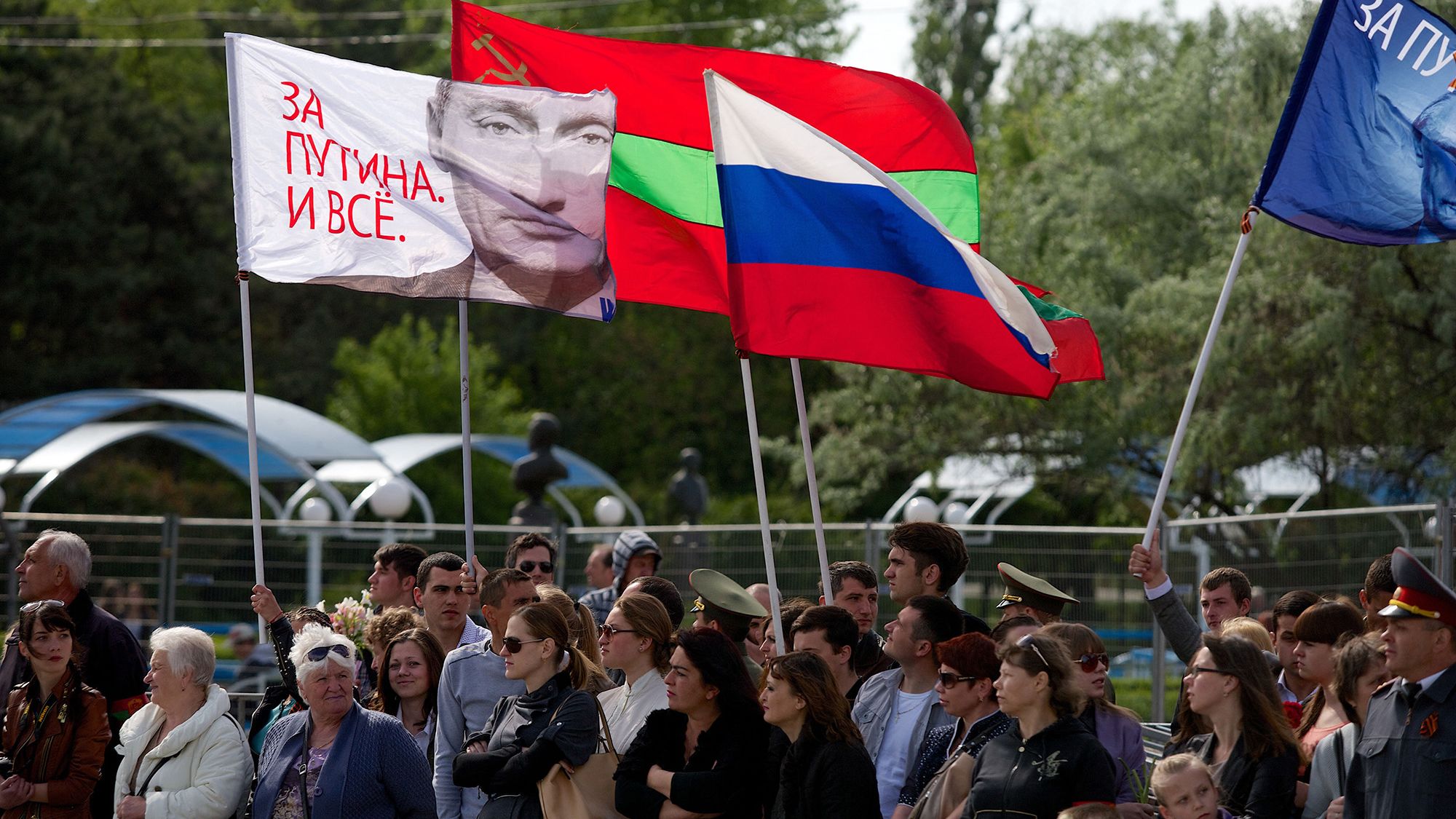
Governance, Economy, and International Status
Today, Transnistria operates as a presidential-parliamentary republic, though its political system has long been characterized by concentrated political and economic power. For decades, the political and economic landscape was heavily influenced by Sheriff, a massive conglomerate founded in the early 1990s that grew to control a vast share of the region's supermarkets, gas stations, mobile networks, and heavy industry.
The Economic Model
Transnistria’s economy is a hybrid structure combining state ownership of strategic utilities with private enterprise. Heavy industry—including steel production, textile manufacturing, and electricity generation—forms the backbone of the economy. A significant portion of the region's electricity is generated at the Cuciurgan power plant, located within Transnistria, which historically supplied power to both the separatist region and the rest of Moldova.
Despite operating outside Moldova's direct tax and customs jurisdiction for decades, the Transnistrian economy is deeply integrated with European and global trade networks. Following the signing of the EU-Moldova Association Agreement and Deep and Comprehensive Free Trade Area (DCFTA), Transnistrian enterprises began registering with Moldovan authorities in Chișinău to export goods duty-free to the European Union. Consequently, a large share of Transnistria’s exports now flows to EU markets rather than Russia, defying the simple narrative of complete economic isolation.
International Recognition and Isolation
From the perspective of international law, Transnistria is an autonomous territorial unit with a special legal status within the Republic of Moldova. No UN member state recognizes its independence. It maintains formal diplomatic ties with only three other unrecognized or partially recognized post-Soviet territories: Abkhazia, South Ossetia, and Nagorno-Karabakh (Artsakh).
Because of its unrecognized status, Transnistrian passports are generally invalid for international travel. Residents of the region typically hold multiple citizenships—commonly Moldovan, Russian, and Ukrainian—allowing them to travel abroad using legal documents recognized by the international community.
Comparison of Moldovan and Transnistrian Administrative Frameworks
| Feature | Republic of Moldova (Controlled Territory) | Transnistria (PMR - De Facto Administration) |
|---|---|---|
| Official Status | Sovereign UN member state | Unrecognized breakaway territory |
| Capital | Chișinău | Tiraspol |
| Currency | Moldovan Leu (MDL) | Transnistrian Ruble (PRB) |
| Primary Language(s) | Romanian (Moldovan) | Russian, Ukrainian, Moldovan (Cyrillic) |
| Customs & Border Control | Enforces border checks along the external border with Ukraine and administrative boundary lines | Maintains internal border checkpoints, customs posts, and immigration control |
| International Recognition | Universal recognition by the United Nations | Recognition only by Abkhazia, South Ossetia, and Artsakh |
Security, Geopolitics, and the Impact of the War in Ukraine
The security architecture of Transnistria has remained remarkably stable since 1992, anchored by the presence of a Russian military contingent known officially as the Operational Group of Russian Forces (OGRF), alongside the Russian peacekeepers. This military presence has been a persistent point of contention between Chișinău and Moscow, with Moldova repeatedly calling for the withdrawal of Russian troops and the transformation of the peacekeeping mission into a civilian-led international mission.
The geopolitical landscape shifted dramatically following the escalation of the Russia-Ukraine war in 2022. Because Transnistria shares a long border with Ukraine, the conflict instantly disrupted supply chains, closed border crossings on the Ukrainian side, and heightened security concerns across the region.
Despite periodic fears that the conflict might spread into Transnistria or that the region could be used as a staging ground for military operations against Ukraine, the situation along the Dniester River has remained largely contained. The closure of the Ukrainian border shifted Transnistria's trade routes and logistical dependencies almost entirely toward Moldova and the European Union, further binding the region economically to Chișinău despite the lack of political resolution.
Practical Realities for Visitors and Observers
Visiting Transnistria is legally possible for foreign nationals, but it requires navigating a distinct set of administrative procedures and border controls. Because Moldova controls the international entry points to the country (primarily Chișinău International Airport), foreign travelers enter Moldovan territory first.
Border Crossings and Registration
When traveling from the government-controlled areas of Moldova into Transnistria, visitors pass through administrative boundary checkpoints staffed by Transnistrian border guards and peacekeepers.
- Documentation: Foreign travelers must present a valid passport. While no visa is required for short stays, visitors receive a migration card at the border checkpoint.
- Registration: Travelers staying in Transnistria for more than 24 hours are legally required to register with local migration authorities. If staying in a hotel, the establishment typically handles this registration; private lodgings require a visit to the local migration office.
- Currency Exchange: International credit and debit cards generally do not function within Transnistria due to international sanctions and the isolation of the local banking system. Visitors must carry cash—specifically Moldovan lei, US dollars, euros, or Russian rubles—to exchange at local banks or authorized exchange booths for Transnistrian rubles.
Frequently Asked Questions
Is Transnistria safe to visit?
While consular services from foreign embassies are limited or unavailable within Transnistria due to its unrecognized status, the region experiences low rates of violent crime against tourists. However, visitors should exercise caution, avoid photographing military installations or administrative buildings, and monitor up-to-date travel advisories issued by their home governments regarding travel to Moldova.
Do I need a visa to enter Transnistria?
Citizens of most countries do not require a pre-arranged visa for short-term visits under 45 days. Upon crossing the administrative boundary line, travelers undergo a brief passport check and are issued a migration slip, which must be retained and presented upon departure.
What currency is used in Transnistria?
The official currency is the Transnistrian ruble, issued by the Transnistrian Republican Bank. This currency cannot be exchanged outside the territory and is not recognized internationally. Major international credit cards are widely unusable, making cash a necessity for all transactions within the region.
What is the relationship between Moldova and Transnistria today?
Relations are managed through periodic talks, often facilitated by the Organization for Security and Co-operation in Europe (OSCE) in the "5+2" negotiation format. While a comprehensive political settlement regarding the final status of the region remains elusive, practical cooperation exists on trade, telecommunications, and cross-border movement.
Who supports Transnistria financially and politically?
Historically, Transnistria has received substantial economic and political support from the Russian Federation, including subsidized natural gas supplies and financial aid to supplement local pensions. However, political shifts and geopolitical developments have increasingly integrated the region's economy with Moldovan and European trade frameworks.
Conclusion and Next Actions
Transnistria remains a complex geopolitical anomaly where Soviet heritage, unrecognized statehood, and modern European market integration intersect. For those planning to visit or study the region, the primary next action is to consult current government travel advisories for Moldova, verify entry and registration requirements, and ensure adequate cash reserves are available, as standard international banking services do not operate within the territory.
Image Gallery
Select an image to open it in a new tab.

Simon Caldwell
Enterprise Technology and Systems Editor
