What Pre-Med Chemistry Really Involves: A Realistic Breakdown of the Academic Journey
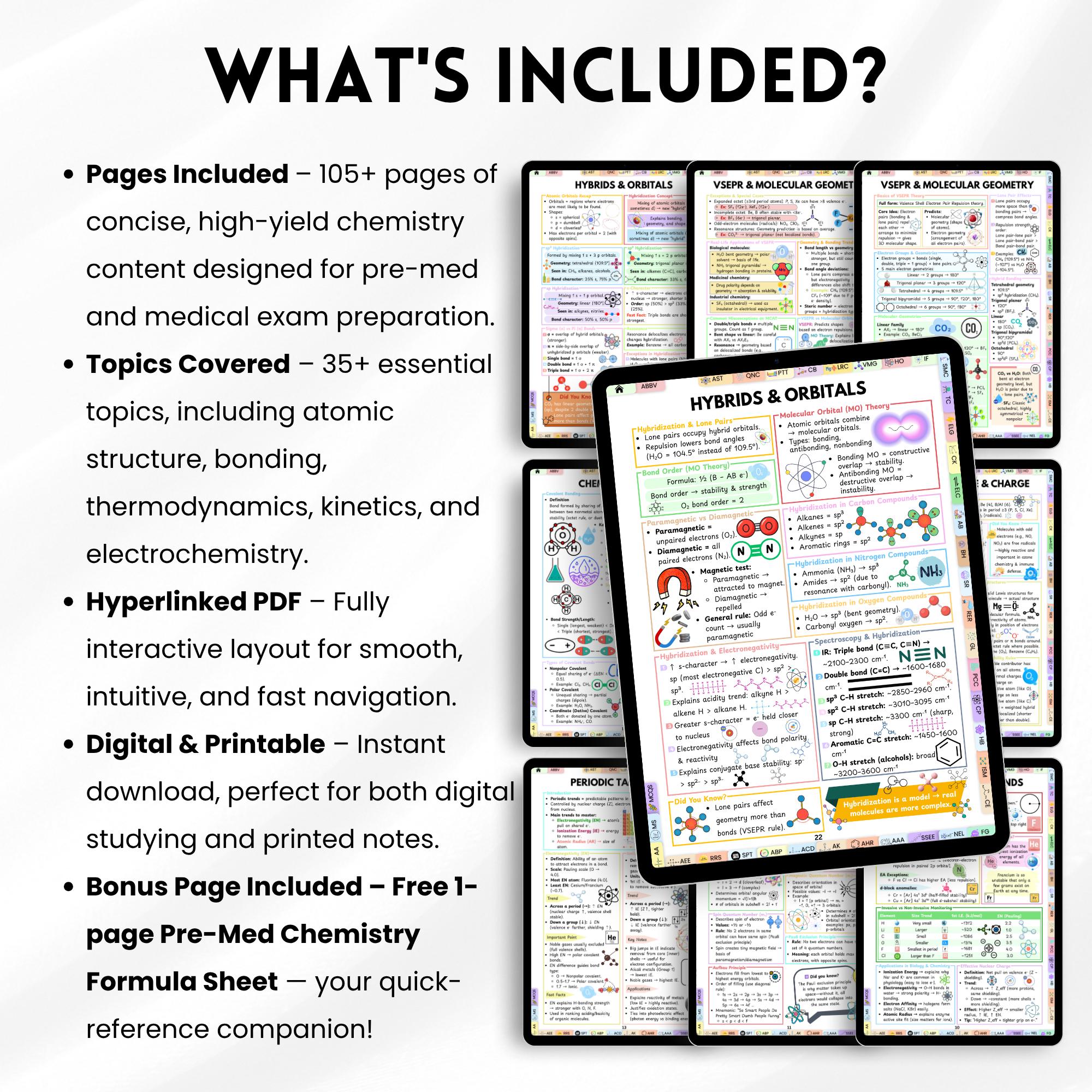
Pre-med chemistry is a rigorous, multi-year progression of General and Organic Chemistry sequences designed to test analytical reasoning, quantitative problem-solving, and the ability to master complex conceptual frameworks under significant time constraints. It serves as both a foundation for physiological sciences and a selective filter for medical school admissions.
Understanding the Structural Foundation
The chemistry sequence is the heartbeat of the pre-medical curriculum. While biology introduces the mechanisms of life, chemistry explains the atomic and molecular forces that govern those mechanisms. Most pre-medical tracks consist of two primary pillars: General Chemistry and Organic Chemistry, each typically spanning two semesters with associated laboratory components.
In General Chemistry, the focus is on macro-to-micro connections. You move from the behavior of gases and thermodynamics to the intricacies of chemical equilibrium, kinetics, and acid-base chemistry. The primary challenge here is not just memorization, but the ability to apply mathematical models to physical phenomena. You are expected to master stoichiometric calculations, understand periodic trends, and predict how energy shifts affect chemical reactions.
Organic Chemistry, often cited as the most significant hurdle for pre-med students, transitions the focus to carbon-based structures. This is where the curriculum pivots toward functional groups, stereochemistry, and reaction mechanisms. Rather than solving for X in a gas-law equation, you are tasked with predicting the outcomes of multi-step syntheses. This requires a shift in cognitive approach: you must learn to "see" molecules in three dimensions and understand how electron density drives chemical transformation.
The Laboratory Component: Where Theory Meets Reality
A substantial portion of what pre-med chemistry involves happens in the laboratory. This is where the abstract formulas from lectures are put to the test. Laboratory work is rarely about "finding the right answer" in the way a math problem might be; it is about data acquisition, precision, and understanding why a synthesis failed or a titration went awry.
In the lab, you develop essential skills that transition into medical practice:
- Methodological Precision: Following specific protocols to ensure reproducibility.
- Troubleshooting: Identifying why your precipitate did not form or why your yield was significantly lower than the theoretical maximum.
- Scientific Communication: Documenting procedures in a laboratory notebook that would be legally and scientifically defensible.
- Instrumentation Literacy: Gaining experience with analytical tools such as Spectrophotometry, Gas Chromatography (GC), and Nuclear Magnetic Resonance (NMR) spectroscopy.
Managing the Cognitive Load
The "real" involvement of pre-med chemistry extends beyond the classroom into the realm of time management and mental fortitude. Medical schools view these courses as "weeder" classes, meaning they are designed to be difficult enough to identify students who possess the resilience required for the demands of medical school.
The volume of material is high, and the pace is relentless. Unlike introductory humanities courses, chemistry builds on itself sequentially. If you do not grasp the concept of electronegativity in the first month of General Chemistry, you will struggle with polarity, intermolecular forces, and reactivity patterns throughout the remainder of the program. This creates a cumulative effect where any lapse in understanding or study habits can lead to a compounding deficit.
Comparison of Chemistry Course Components
| Course Level | Primary Focus | Cognitive Skill Required | Typical Challenges |
|---|---|---|---|
| General Chemistry I | Atomic structure, stoichiometry | Quantitative math application | Precision, unit conversion |
| General Chemistry II | Kinetics, equilibrium, thermodynamics | Abstract modeling | Multi-step problem solving |
| Organic Chemistry I | Nomenclature, stereochemistry | Spatial visualization | Memorizing reaction patterns |
| Organic Chemistry II | Synthesis, mechanism pathways | Deductive logic, pattern recognition | Predicting complex reactions |
Navigating the Pre-Med Chemistry Path: Practical Strategies
To succeed, students must shift from "study-to-pass" to "study-to-understand." This means engaging with the material in ways that reinforce retention.
1. Master the Language of Chemistry
Chemistry is a language. If you cannot translate a name like "2-bromo-4-methylhexan-3-one" into a molecular structure, you will be unable to solve problems involving that molecule. Invest time in learning nomenclature early; it is the vocabulary upon which everything else is built.
2. Prioritize Mechanism Over Memorization
In Organic Chemistry, it is tempting to memorize every reaction you encounter. However, the most successful students focus on the "Why." Understand the movement of electrons—the nucleophiles and electrophiles—and you will be able to predict the outcome of reactions you have never seen before, rather than relying on rote memorization.
3. Leverage Office Hours and Peer Support
Chemistry is inherently collaborative at the professional level. Use your professor’s office hours not just to ask about a grade, but to walk through your reasoning process. When you can explain a reaction mechanism to a peer, you have moved from knowledge to mastery.
Common Pitfalls and How to Avoid Them
The most common mistake students make is underestimating the time commitment required for homework and practice problems. Reading the textbook is insufficient; you must engage with the end-of-chapter problems until they feel intuitive.
Another common error is treating the laboratory as a separate entity from the lecture. These components are designed to reinforce each other. When you are in the lab, think about the reaction mechanisms you learned that week. Connecting the physical act of mixing reagents to the theory of electron flow is what transforms a student from a test-taker into a scientist.
Frequently Asked Questions
Is chemistry the hardest part of the pre-med journey? It is widely considered one of the most difficult segments, primarily due to its cumulative nature and the high volume of conceptual material. However, difficulty is subjective; some students struggle more with the spatial reasoning of Organic Chemistry, while others find the heavy math of General Chemistry to be the primary barrier.
How does chemistry relate to actual medical practice? Pharmacology is essentially the study of chemical interactions within the body. Understanding how molecules interact, how receptors bind to ligands, and how metabolic pathways function (Biochemistry) provides the foundational logic required to understand how medications treat disease.
Should I take extra chemistry electives? While not always required, courses like Biochemistry are essential for the MCAT (Medical College Admission Test) and are highly recommended. Advanced courses in Physical Chemistry or Medicinal Chemistry can provide a competitive edge in your application, demonstrating that you can handle high-level scientific rigor.
What if I struggle with a specific chemistry concept? Do not fall behind. Chemistry is linear. If you encounter a roadblock, seek help immediately through tutoring centers, professor office hours, or study groups. Ignoring a gap in your knowledge early in the semester will almost certainly manifest as a failure to understand larger concepts later on.
Does my chemistry grade matter for medical school admission? Yes. Your BCPM (Biology, Chemistry, Physics, and Math) GPA is a primary metric evaluated by admissions committees. While a strong upward trend is better than a downward one, consistently high performance in chemistry is a strong signal of your preparedness for the academic intensity of medical school.
Next Steps for Success
If you are currently in or about to begin your chemistry sequence, your first step should be to audit your current study methods. Transition away from passive reading and toward active problem solving. Obtain the syllabus as soon as it is available, identify the high-density weeks, and map out your semester. Chemistry is not a subject that can be crammed; it is a discipline that must be inhabited daily. Stay consistent, prioritize the underlying mechanics, and remember that these courses are not just hurdles to clear—they are the training ground for your future as a medical professional.
Image Gallery
Select an image to open it in a new tab.


Celine Dubois
Contemporary Living and Global Arts Columnist
