Judy Winslow, the youngest daughter on the hit sitcom Family Matters, famously disappeared without explanation after the show’s fourth season in 1993. Producers chose to write her out due to budget cuts and the character’s diminishing storylines following the overwhelming popularity of Steve Urkel, effectively treating the character as if she never existed.
The disappearance of Judy Winslow remains one of the most cited examples of "Chuck Cunningham Syndrome" in television history. For fans who grew up watching the Winslow family navigate life in Chicago, the sudden absence of the youngest child was jarring. To understand why this happened, one must look at the evolution of the show, the shifting dynamics of 1990s television production, and the subsequent life of the actress who portrayed her, Jaimee Foxworth.
The Evolution of Family Matters and the Rise of Urkel
When Family Matters premiered in 1989 as a spin-off of Perfect Strangers, it was designed as a traditional African American ensemble sitcom. The focus was on Carl Winslow, an LAPD officer (later Chicago PD), his wife Harriette, their three children—Eddie, Laura, and Judy—along with Carl’s mother, Estelle, and Harriette’s sister Rachel and her son Richie.
In the first season, Judy Winslow, played by Jaimee Foxworth, was a standard precocious youngest child. She participated in family meetings, had minor subplots involving school or chores, and contributed to the "wholesome family" atmosphere. However, the trajectory of the series changed forever in the middle of the first season with the introduction of a one-off character: the nerdy neighbor, Steve Urkel, played by Jaleel White.
Urkel was originally intended to appear in only one episode. However, the audience's reaction was so explosive that producers Miller-Boyett quickly realized the character was a goldmine. As Urkel moved from a recurring guest to a series regular and eventually the central protagonist, the show’s internal logic began to shift. The grounded family drama was replaced by high-concept slapstick comedy centered on Urkel’s inventions and his unrequited love for Laura Winslow.
The Marginalization of Judy Winslow
As the "Urkel-mania" phenomenon took over, the secondary characters began to lose screen time. While Eddie and Laura remained essential as foils for Steve, and Carl remained the primary antagonist/father figure, the younger children became narratively redundant.
By the third and fourth seasons, Judy’s lines were often reduced to simple reactions or background presence. The show’s writers struggled to find unique storylines for her that weren't already being serviced by Richie (the younger nephew) or the evolving teenage dramas of Eddie and Laura.
The Final Appearance
Judy Winslow’s final appearance occurred in the Season 4 episode titled "Mama's Wedding," which aired in 1993. In a move that has become a piece of television lore, the character was seen walking upstairs to her room and simply never came back down. For the remaining five seasons of the show, Judy was never mentioned again. The Winslows effectively became a two-child family, and even in retrospective episodes or "memory" sequences, Judy was conspicuously absent.
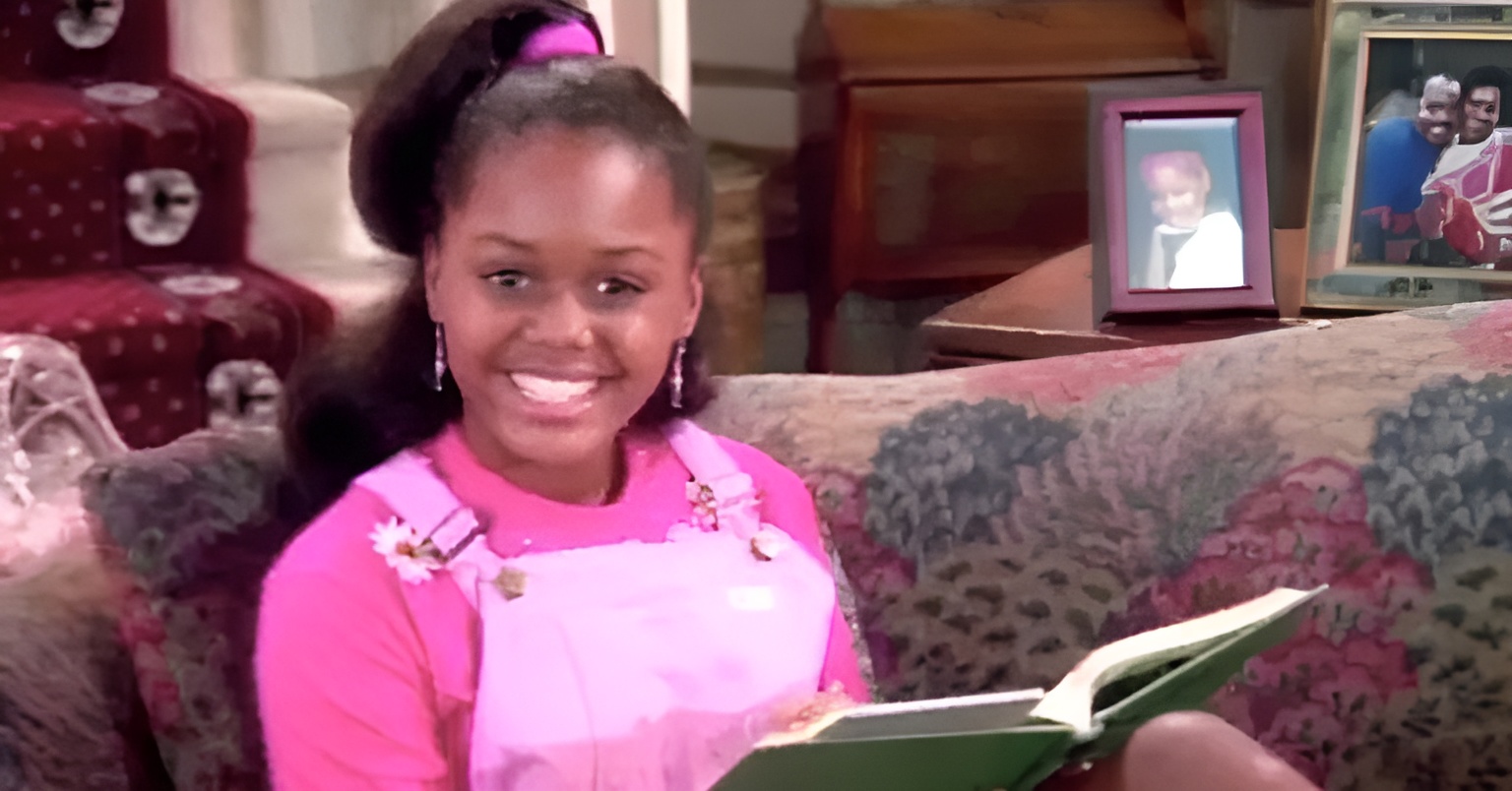
Why Was Jaimee Foxworth Let Go?
The decision to remove Judy Winslow was primarily a business move dictated by the production company. Television shows, especially long-running sitcoms, face escalating costs as the main cast negotiates higher salaries. By Season 4, Jaleel White, Reginald VelJohnson, and Jo Marie Payton were commanding significant paychecks.
According to various interviews with the cast and crew over the years, the producers felt they needed to trim the budget. Since Judy had no significant storylines and didn't contribute to the show's primary comedic engine (the Carl-Steve dynamic), she was deemed "expendable."
Jaimee Foxworth’s mother and manager, Gwynn Foxworth, has noted in past interviews that the producers didn't offer a dramatic send-off or a "moving away to boarding school" explanation because they didn't want to pay the salary associated with a recurring character. By simply deleting her from the continuity, they avoided the need for future appearances or guest spots.
The Concept of "Chuck Cunningham Syndrome"
Judy Winslow is the poster child for what television critics call Chuck Cunningham Syndrome. This term originated from the show Happy Days, where the eldest son, Chuck, disappeared after the second season with no explanation.
| Feature of the "Syndrome" | Application to Judy Winslow |
|---|---|
| Sudden Disappearance | Judy went upstairs in Season 4 and was never seen again. |
| Retconned History | Later episodes referred to the Winslows as having only two children. |
| Lack of Explanation | No dialogue ever addressed her absence (no move, no death, no school). |
| Production Motivation | Budgetary cuts and character redundancy due to a "breakout" star (Urkel). |
In the world of sitcoms, this tactic is often used to streamline a show that has moved away from its original premise. For Family Matters, the premise had shifted from "a family's daily life" to "the adventures of Steve Urkel," leaving little room for a traditional youngest daughter.
Life After the Show: Jaimee Foxworth’s Journey
For Jaimee Foxworth, the sudden termination was a significant blow. Being written off a hit show at the age of 13 is a difficult transition for any child actor. While her co-stars continued to enjoy the success of a top-rated sitcom, Foxworth found herself struggling to find work in an industry that often pigeons-holes child stars.
The Career Transition
Following Family Matters, Foxworth formed a musical group with her sisters called S.H.E. They were signed to Shaquille O'Neal's record label, T.W.IsM. Records, and released an album in 1997. However, the group did not achieve mainstream success, and the transition from acting to music proved difficult.
Struggles and Recovery
In the early 2000s, Foxworth faced significant financial and personal hardships. This period of her life became public knowledge when she entered the adult film industry under the pseudonym "Crave." This move was largely born out of financial necessity and a lack of support systems following her exit from mainstream Hollywood.
Her struggles with substance abuse also became a focal point of her public narrative. In 2008, she appeared on the VH1 reality series Celebrity Rehab with Dr. Drew. During the show, she spoke candidly about the trauma of being abruptly discarded by the television industry and the subsequent depression and addiction that followed.
Since her appearance on Celebrity Rehab, Foxworth has made significant strides in her recovery. She became a mother in 2009, which she has frequently cited as a turning point in her life, providing her with the motivation to remain sober and build a stable life away from the spotlight.
The 2017 Reunion Controversy
The mystery of Judy Winslow was reignited in 2017 when Entertainment Weekly hosted a high-profile reunion for the cast of Family Matters. The photoshoot and interview featured almost every major cast member, including Jaleel White, Reginald VelJohnson, Jo Marie Payton, and Darius McCrary.
Jaimee Foxworth was not invited to participate.
The exclusion sparked a massive backlash on social media from fans who felt that excluding the actress—who had been a series regular for nearly half the show's run—was a slight. Foxworth expressed her disappointment publicly, stating that she would have loved to be part of the celebration. The producers and the magazine defended the decision by focusing on the "core" cast that remained until the end of the series, but for many, it felt like Judy Winslow was being written out of history for a second time.
Why Judy's Absence Still Matters in TV History
The "case of the missing Winslow" is more than just a piece of trivia; it represents a specific era of television production where continuity was secondary to syndication and ratings. In the modern era of "prestige TV" and serialized storytelling, such a disappearance would be impossible. Fans would demand an explanation on social media, and the show's internal logic would be scrutinized.
However, in the early 90s, sitcoms were often viewed as "disposable" entertainment meant for casual viewing. Producers assumed that if they stopped showing a character, the audience would eventually forget they existed. In the case of Judy Winslow, they underestimated the long-term memory of the "TGIF" (Thank God It's Friday) generation.
Comparing Judy Winslow to Other Sitcom Disappearances
Family Matters was not the only show of its era to suffer from this.
- The Cosby Show: The character Sondra Huxtable was non-existent in the pilot (Clair says she has four children) but was added later as an eldest daughter away at college.
- Boy Meets World: The younger sister, Morgan Matthews, disappeared for a long stretch of Season 2 before being replaced by a different, older actress (Lindsay Ridgeway) in Season 3, with a meta-joke about her being in her room for a long time.
- Step by Step: Another Miller-Boyett production where the youngest son, Brendan Lambert, became increasingly invisible in later seasons.
Frequently Asked Questions
Did Judy Winslow ever return for the series finale?
No. Unlike many shows that bring back original cast members for the final episode, Judy Winslow did not appear in the Season 9 finale of Family Matters. By that point, the show had moved from ABC to CBS and had undergone significant cast changes, including the recasting of the mother, Harriette Winslow.
Why didn't they just say Judy went to college?
At the time of her disappearance, Judy would have been approximately 13 or 14 years old, making a college explanation chronologically impossible. The writers could have sent her to a boarding school or to live with a relative (like Aunt Rachel), but the decision was made to simply ignore her existence to save on writing time and potential future salary obligations.
Was there any tension between Jaimee Foxworth and Jaleel White?
There have been no documented reports of specific "feuds" between the two actors during their time on the show. However, cast members have noted that as Jaleel White's star rose, the set became more focused on his needs and his character's development, which naturally created a divide between the "original" family cast and the "Urkel" show.
What is Jaimee Foxworth doing today in 2026?
As of 2026, Jaimee Foxworth remains largely retired from the professional acting world. She has focused her energy on raising her son and occasionally appearing at fan conventions or in documentaries about child stardom. She has remained an advocate for the mental health of child actors, using her platform to highlight the need for better protections for young performers in the industry.
Is Family Matters available to watch today?
Yes, the series is widely available on various streaming platforms. Modern viewers often binge-watch the series and notice Judy’s disappearance much more quickly than original viewers did, leading to a resurgence in the "What happened to Judy?" discourse every few years.
Final Thoughts for Fans
If you are revisiting Family Matters and find yourself confused by the shrinking Winslow family, you aren't alone. Judy Winslow’s exit was a calculated, albeit cold, production decision that prioritized the "Urkel" brand over the original family ensemble.
For those looking to support Jaimee Foxworth, the best course of action is to follow her authorized social media channels and support her advocacy for child actors. While Judy may have walked upstairs and never come back down in the fictional world of Chicago, the actress who played her has built a resilient life beyond the walls of the Winslow household.
The mystery of Judy Winslow serves as a lasting reminder of how the "business" side of show business can sometimes override the "show" side, leaving fans with questions that take decades to fully answer.
Image Gallery
Select an image to open it in a new tab.
Omar Farooq
EdTech Innovation and Virtual Pedagogy Journalist
