Understanding Solar Panel Installation in Cheshire: A Technical and Regulatory Guide
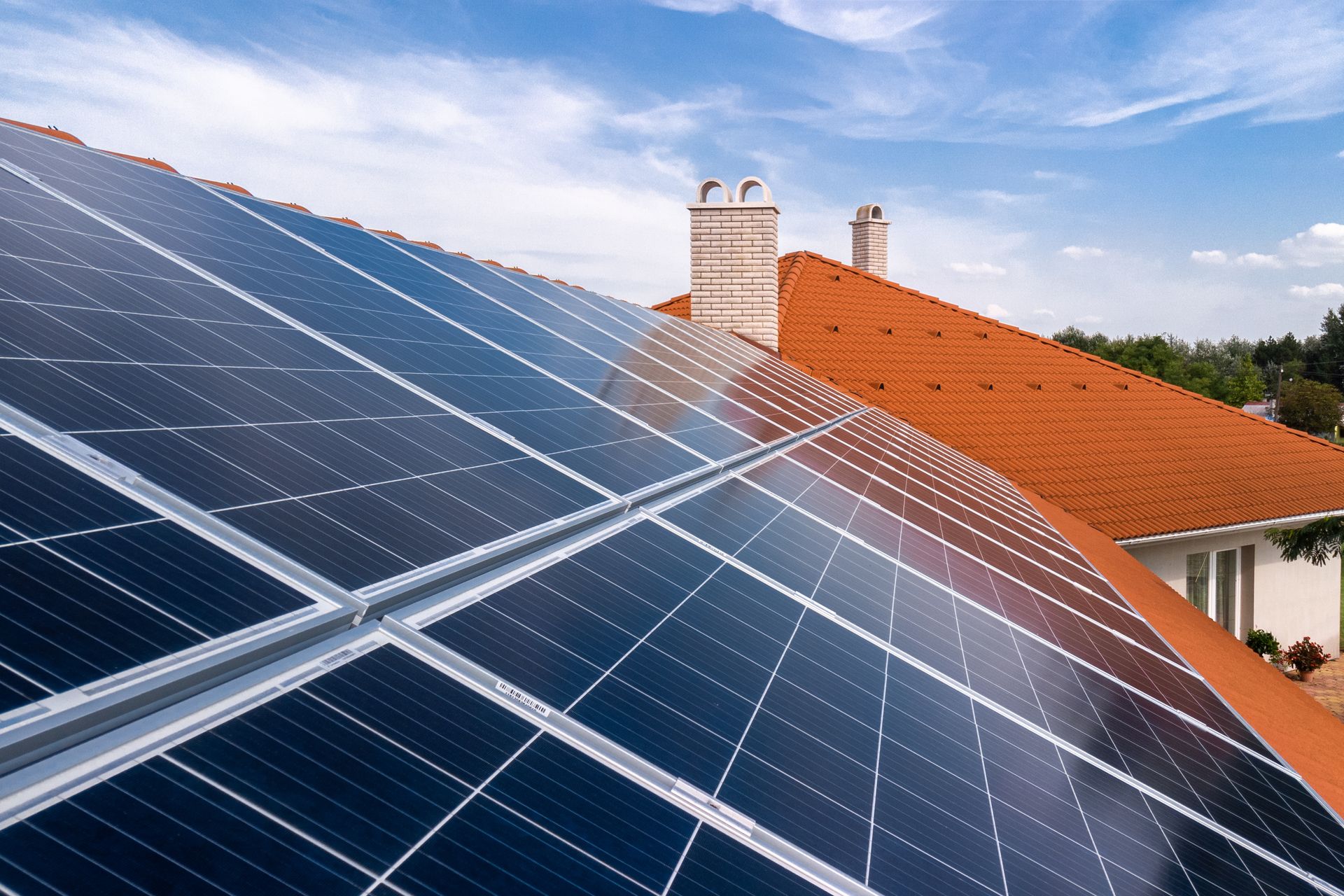
Installing a solar photovoltaic (PV) system in Cheshire requires balancing system sizing, roof architecture, Distribution Network Operator (DNO) approvals, and local planning regulations. Homeowners must select certified hardware, submit appropriate grid applications, and comply with UK Building Regulations to maximize long-term financial returns and energy independence.
The Solar Energy Potential in Cheshire
Cheshire benefits from strong solar generation metrics despite its location in North West England. The county receives an average annual solar irradiance of approximately 900 to 950 kilowatt-hours per kilowatt-peak (kWh/kWp) on a south-facing roof pitched at 30 to 40 degrees. While southern coastal regions of the UK experience slightly higher total irradiance, modern solar photovoltaic systems do not require direct, unclouded sunlight to generate electricity; daylight across diffuse spectrums produces significant yield.
- Solar Photovoltaic Panels
- (DC Power Generated)
- Hybrid / String Inverter
- Home Battery Storage
- (Stored DC/AC Energy)
- Main Consumer Unit
- (Stored DC/AC Energy)
- (AC Power Converted)
- Main Consumer Unit
- Home Appliances
- Utility Grid (SEG Export)
- Home Battery Storage
Geographic variations within Cheshire—ranging from the coastal plain bordering the Wirral to suburban corridors in Warrington, Wilmslow, and the rural terrain of Cheshire East—show minor microclimate variations. However, daylight availability remains broadly consistent across the region. High-efficiency monocrystalline solar panels utilizing N-Type TOPCon (Tunnel Oxide Passivated Contact) or HJT (Heterojunction Technology) cell designs offer lower temperature coefficients and superior performance in low-light and overcast conditions, making them particularly effective for the Cheshire climate.
Planning Permissions, Building Regulations, and Local Restrictions
Most domestic solar installations in Cheshire fall under Permitted Development Rights (PDR), defined under Schedule 2, Part 14, Class A of the Town and Country Planning (General Permitted Development) (England) Order 2015. Under these rules, explicit planning permission from local authorities—such as Cheshire East Council, Cheshire West and Chester Council, or Warrington Borough Council—is generally not required, provided specific conditions are met:
Panels must not project more than 200 millimetres beyond the plane of the roof slope.
Panels must not be higher than the highest part of the roof (excluding the chimney).
Equipment must be installed, so far as practicable, to minimize its effect on the external appearance of the building and the amenity of the area.
Rooftop PDR Clearance Envelope
- Solar Panel
- Max 200mm Projection
- Solar Panel
Conservation Areas and Listed Buildings
Cheshire contains numerous designated Conservation Areas—including historic districts in Chester, Knutsford, Wilmslow, Tarporley, and Bollington—alongside thousands of Grade I, Grade II*, and Grade II listed structures.
If a property sits within a Conservation Area, Permitted Development Rights still apply to roof-mounted panels on standard pitches in many cases, but panels cannot be installed on a wall or roof slope that fronts a highway without full planning permission.
For Listed Buildings, Permitted Development Rights do not apply to solar panels. Listed Building Consent (LBC) is mandatory prior to any works, requiring architectural impact assessments, non-destructive roof mounting strategies, and often building-integrated photovoltaic (BIPV) equipment or ground-mounted arrays located outside sensitive curtilages.
Building Regulations Compliance
Regardless of planning permission status, all solar panel installations must comply with national Building Regulations:
- Part A (Structural Safety): The existing roof structure (trusses, rafters, purlins) must be evaluated to ensure it can sustain the dead load of the mounting frames and panels, as well as calculated wind uplift forces specific to Cheshire's geographical exposure zone.
- Part P (Electrical Safety): Electrical installation work must be designed, inspected, and tested by a competent person under an approved self-certification scheme (such as NICEIC or NAPIT) to ensure safety against electric shock and fire risks.
- Part B (Fire Safety): Materials used in roof coverings must meet designated fire spread classifications, particularly when mounting hardware penetrates existing waterproofing layers.
System Architecture: Panels, Inverters, and Battery Storage
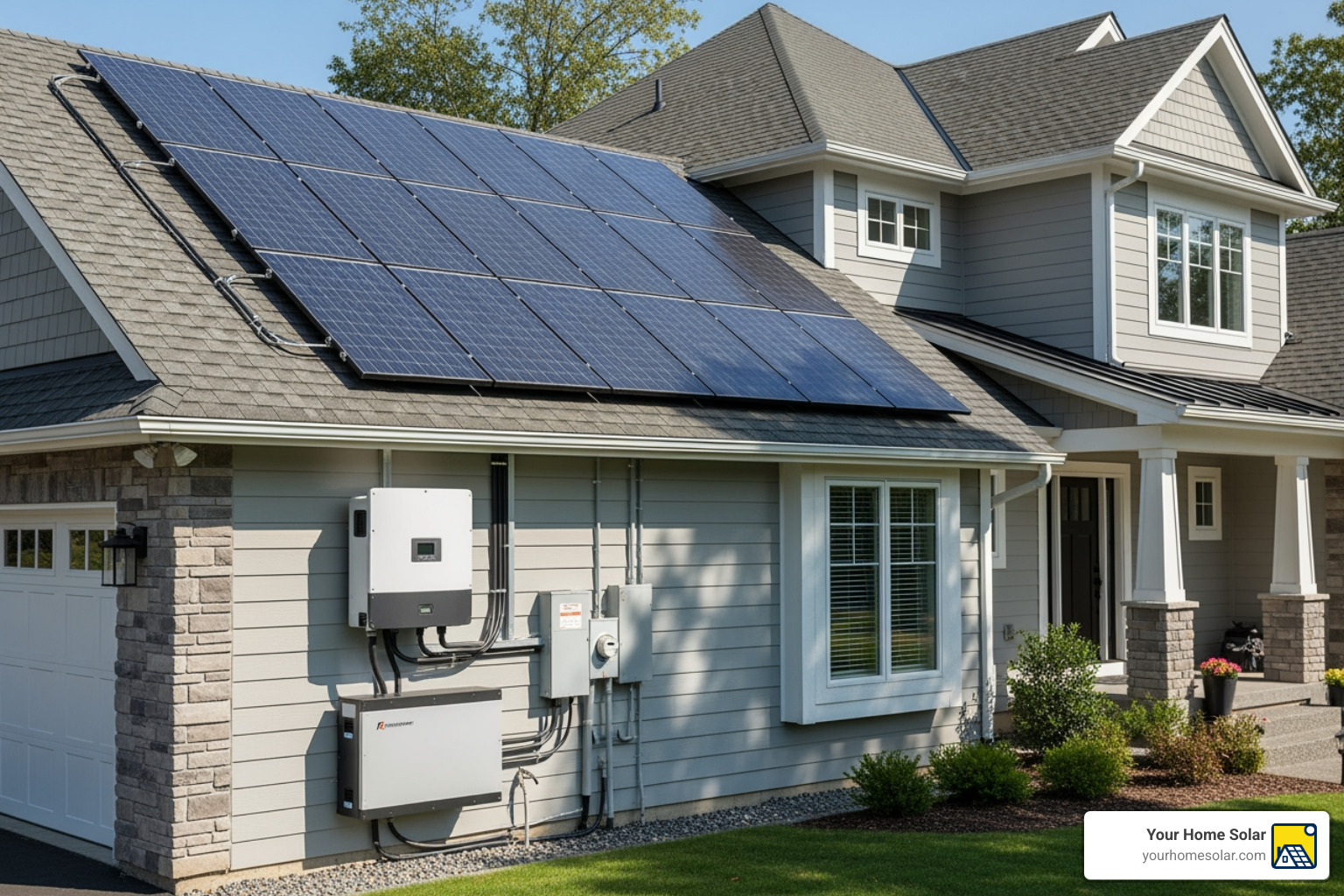
Selecting system hardware requires matching component technical specifications to property geometry, household energy consumption profiles, and shading obstacles.
| Component | Standard Choice | Premium Option |
|---|---|---|
| Photovoltaic Cell | Monocrystalline P-Type | N-Type TOPCon / HJT |
| Inverter Type | Single String Inverter | Microinverters / DC-Opt |
| Battery Storage | AC-Coupled LFP Array | DC-Coupled High Voltage |
Photovoltaic Module Selection
Monocrystalline silicon panels are the standard across modern installations. Premium N-Type TOPCon modules yield module efficiencies between 21.5% and 23.0%, featuring lower annual degradation rates (typically ~0.4% per year compared to ~0.55% for older P-Type PERC cells). For aesthetic integration on traditional Cheshire clay tiles or natural slate, all-black panels (black cells, black backsheets, and black anodized aluminum frames) are frequently preferred over standard silver-framed modules.
Inverter Architectures
The inverter converts direct current (DC) power generated by panels into alternating current (AC) electricity synchronized with the domestic 230V 50Hz supply.
- String Inverters: Ideal for unshaded roofs with panels oriented across one or two uniform pitches. A single inverter processes power from an entire series ("string") of panels. If one panel in the string experiences shade from a chimney, tree, or dormer, performance across the whole string drops.
- Microinverters & DC Optimizers (Module-Level Power Electronics - MLPE): Installed behind individual panels, MLPE allows each solar module to operate at its maximum power point independently. This architecture prevents shading on one roof section from suppressing total array performance, provides panel-level system monitoring, and eliminates high-voltage DC string runs through the loft space. Brands like Enphase and SolarEdge are standard implementations for complex, multi-pitch, or shaded Cheshire roofs.
Battery Energy Storage Systems (BESS)
Integrating battery storage allows households to capture excess daytime generation for use during peak evening hours, or to charge from the national grid during low-cost overnight off-peak tariff windows.
Most modern installations deploy Lithium Iron Phosphate (LFP / $\text{LiFePO}_4$) chemistry, which offers higher thermal stability, enhanced safety, and extended cycle life (typically 6,000+ cycles at 80% Depth of Discharge) compared to Nickel Manganese Cobalt (NMC) chemistries.
Systems can be configured as DC-coupled (where the battery connects to a single hybrid solar inverter prior to AC conversion, yielding higher overall round-trip efficiency) or AC-coupled (where the battery uses its own dedicated inverter, making it ideal for retrofitting onto existing solar PV arrays).
Grid Connection Procedures: Navigating DNO Applications in Cheshire
Solar PV systems operate in parallel with the local electricity distribution network. In Cheshire, grid infrastructure is managed by two primary Distribution Network Operators (DNOs):
SP Energy Networks (SP Manweb): Covers the majority of Cheshire, including Chester, Crewe, Macclesfield, Northwich, and South Cheshire.
Electricity North West Limited (ENWL): Covers northern boundaries of the county, including parts of Warrington and areas bordering Greater Manchester.
System Inverter Capacity kW
- Is capacity ≤ 3.68kW per phase?
- YES: G98 Application (Fit and Inform)
- NO: G99 Application (Prior Approval)
- Is capacity ≤ 3.68kW per phase?
The capacity of the system's inverter determines the grid connection pathway governed by Energy Networks Association (ENA) Engineering Recommendations:
Engineering Recommendation G98 (Fit and Inform)
Systems with a total AC export capacity of up to 3.68 kW per phase (which equals 16 Amperes at 230V) fall under standard G98 regulations.
Under G98, the installer does not require advance approval from SP Energy Networks or Electricity North West to connect the system to the grid. The installer completes the installation, ensures compliance with loss-of-mains protection standards, and submits a formal G98 notification to the relevant DNO within 28 days of commissioning.
Engineering Recommendation G99 (Prior Permission)
Systems where the inverter export capacity exceeds 3.68 kW on a single-phase supply (or 11.04 kW on a three-phase supply) fall under G99 regulations.
Under G99, the installer must submit a formal grid connection application and obtain written approval from the DNO prior to installation. The DNO evaluates local network headroom, transformer load profiles, and potential voltage rise risks along the distribution feeder line. The DNO may issue full approval, specify export limitation parameters (e.g., capping maximum grid export to 3.68 kW via a dynamic export limiter while allowing the inverter to generate 6 kW locally), or request network reinforcement costs.
Financial Dynamics: Costs, Incentive Schemes, and Financial Returns
Equipment and Installation Cost Breakdown (2026 Baseline)
System pricing varies depending on hardware selection, scaffolding requirements, roof type, and electrical upgrades. Below are average installed price ranges for residential systems across the UK and Cheshire market:
- 3.6 kW Solar PV Array (No Battery): £5,000 – £6,500
- 4.5 kW Solar PV Array with 5 kWh Battery Storage: £8,500 – £11,000
- 6.0 kW Solar PV Array with 10 kWh Battery Storage: £12,000 – £15,500
VAT Relief on Energy-Saving Materials
Under current UK tax regulations, supply and installation of domestic solar panels and battery storage systems benefit from a 0% VAT rate. This zero-rate policy applies to direct panel installations as well as standalone or integrated energy storage retrofits installed by a VAT-registered contractor.
Smart Export Guarantee (SEG) and Smart Tariffs
Feed-in Tariffs (FiT) closed to new applicants in 2019. Modern solar installations monetize surplus generation exported to the national electricity grid through the Smart Export Guarantee (SEG).
Under the SEG legislation, licensed electricity suppliers with over 150,000 domestic customers must offer an export tariff for eligible renewable installations. To qualify for SEG payments, systems must be certified under the Microgeneration Certification Scheme (MCS) or an equivalent accredited standard, and export volume must be recorded by a compliant Smart Meter (SMETS1 or SMETS2) capable of reading half-hourly export data.
Available export incentives vary across energy suppliers:
- Fixed SEG Tariffs: Offer a flat rate per kWh exported (typically ranging between 3p/kWh and 15p/kWh depending on supplier conditions).
- Dynamic / Smart Tariffs: Offer variable export rates linked to wholesale energy market pricing, or higher export rates when paired with the supplier’s domestic import tariff (e.g., Octopus Energy's dynamic export rates).
By integrating battery storage, Cheshire homeowners can store daylight generation during the day, discharge it during expensive peak import windows (typically 4:00 PM to 7:00 PM), and export surplus stored energy when export compensation rates spike.
Step-by-Step Installation Process
Installing a solar array involves structural, technical, and regulatory steps executed in sequence:
- Step 1: Desktop Assessment & Survey
- Step 2: DNO Application & Structural Sign-off
- Step 3: Roof Mounting & Cable Routing
- Step 4: Electrical Hookup & Battery Integration
- Step 5: Testing, MCS Registration & DNO Sign-off
Step 1: Technical Site Survey & Structural Assessment
A technical surveyor assesses property orientation, roof pitch, shading factors (using sun path measuring instruments or 3D LiDAR modelling), and consumer unit capacity. The structural integrity of the roof timbers is inspected to verify that rafters can handle added loads without deflection.
Step 2: DNO Application and Design Finalization
If the inverter capacity exceeds 3.68 kW single-phase, the installer submits a G99 application to SP Energy Networks or Electricity North West. Solar panel layout plans, string designs, and electrical schematic drawings are finalized.
Step 3: Scaffolding and Roof Installation
Safe working scaffolding is erected around the eaves. Installers lift roof tiles or slates to fix stainless steel or aluminum roof hooks directly to structural rafters. Waterproof flashing panels (or weather-resistant slate boots) are placed around the hook mounts to prevent water ingress. Aluminum mounting rails are anchored to the hooks, and solar panels are clamped securely into place.
- Solar Module Frame
- Mid / End Clamps
- Aluminum Mounting Rail
- Stainless Steel Roof Hook
- Weatherproof Flashing
- Structural Rafter
Step 4: Electrical Wiring and System Integration
Solar DC cables rated for exterior UV exposure are routed beneath panels, through weather-tight roof entry caps into the loft area, and down to the inverter location. The installer fits AC/DC isolator switches, connects the inverter to a dedicated circuit breaker within the property’s main consumer unit, mounts the battery storage unit, and installs CT (Current Transformer) clamps to monitor real-time home energy imports and exports.
Step 5: Commissioning, Testing, and MCS Certification
The engineer carries out standard electrical safety tests, including open-circuit voltage ($V_{oc}$), short-circuit current ($I_{sc}$), insulation resistance, and earth fault testing. Once verified, the installer commissions the system, registers the installation with the Microgeneration Certification Scheme (MCS), provides the building owner with an MCS Certificate and Building Regulations Compliance Certificate, and notifies the local DNO.
Technical & Financial Comparison of System Configurations
The table below summarizes common residential solar PV system configurations installed across Cheshire:
| Parameter / Feature | Compact Array (Single-Phase) | Standard Family Home Array | Large Suburban / Rural System | Commercial / Large Estate System |
|---|---|---|---|---|
| Solar Array Capacity (kWp) | 3.6 kWp | 5.0 kWp | 7.5 kWp | 10.0 kWp+ |
| Typical Panel Count (440W Modules) | ~8 Panels | ~11–12 Panels | ~17 Panels | ~23+ Panels |
| Required Roof Area | ~16 m² | ~24 m² | ~35 m² | ~48 m² |
| Est. Annual Generation (Cheshire) | ~3,300 kWh | ~4,600 kWh | ~6,900 kWh | ~9,200 kWh |
| Inverter Type & Capacity | 3.6 kW String / Micro | 5.0 kW Hybrid Inverter | 6.0 kW–7.5 kW Hybrid | 10.0 kW Three-Phase Inverter |
| Battery Storage Capacity | Optional (5 kWh) | 5 kWh – 10 kWh LFP | 10 kWh – 15 kWh LFP | 15 kWh – 20 kWh LFP |
| Grid Connection Pathway | G98 (Notify after install) | G99 (Prior Approval) | G99 (Prior Approval) | G99 (Prior Approval / Network Assessment) |
| Est. Total Installed Cost (0% VAT) | £5,000 – £7,500 | £8,500 – £12,000 | £13,000 – £17,000 | £17,500 – £23,000+ |
| Est. Annual Energy Cost Savings | £500 – £750/year | £900 – £1,300/year | £1,400 – £2,000/year | £2,100 – £3,000+/year |
Note: Output estimates are based on an unshaded 35-degree pitch south/south-west array in Cheshire generating 920 kWh per installed kWp. Savings vary according to household self-consumption percentages and utility tariff selection.
Common Pitfalls and Troubleshooting in Cheshire Installations
Avoiding systemic errors during system specification prevents structural degradation, low electrical yields, and regulatory non-compliance.
- Common Mistakes Matrix:
- Incorrect Fixing Method: Leaks around slate/tile penetrations
- Inadequate DNO Filings: Network fines or forced system shutdown
- String-Shading Overlook: Severe total array yield drops
- Non-MCS Accreditation: Ineligibility for SEG export payments
1. Inappropriate Roof Fixing Methods on Historic Slate
Cheshire features many older properties topped with natural Welsh slate or rosemary clay tiles. Unqualified installers sometimes drive fixings directly through slate tiles or use silicone sealant as primary waterproofing. Over time, thermal expansion breaks seals and cracks slates, leading to water ingress into rafters. Correct installations require removing targeted slates, securing purpose-built hooks directly to rafters, and fitting lead or slate-flashing kits around mounting points.
2. Failure to Account for Shading Profiles
Cheshire's suburban and semi-rural settings often feature mature tree canopies, chimneys, or neighboring gables. Connecting shaded panels in a single unoptimized string lowers output across the whole string. Using microinverters or DC optimizers, or running split string channels into independent Maximum Power Point Trackers (MPPT) on the inverter, mitigates shade-induced output losses.
3. Non-Compliance with DNO Export Limits
Installing an inverter with a rated AC output above 3.68 kW without prior G99 approval from SP Energy Networks or Electricity North West violates distribution grid operating regulations. If network capacity is breached, the DNO can require immediate disconnection of the unapproved system until formal review and grid upgrades are completed.
4. Bypassing MCS Certification Requirements
To qualify for export compensation through the Smart Export Guarantee (SEG) and ensure compliance with home insurance policies, systems must be installed by an MCS-accredited company using MCS-certified equipment. Self-installed arrays or non-certified contractor builds cannot obtain MCS compliance certificates, rendering them ineligible for SEG revenue.
Frequently Asked Questions
Do I need planning permission for solar panels in a Cheshire conservation area?
Planning permission is generally not required if your property sits within a Conservation Area, provided the panels are mounted on a standard roof slope, do not project more than 200mm, and are not mounted on a wall or roof elevation facing a public highway. However, if your building is Grade I, Grade II, or Grade II listed*, Permitted Development Rights do not apply, and Listed Building Consent (LBC) is mandatory before starting work.
How does Cheshire’s weather affect solar panel generation compared to southern England?
Cheshire receives approximately 900 to 950 kWh of solar yield per kWp per year, compared to roughly 1,000 to 1,050 kWh/kWp in southern coastal England. This variance is relatively minor (~10%). Modern N-Type monocrystalline solar panels are highly sensitive to diffuse daylight, allowing systems across Cheshire to deliver strong financial returns throughout cloudy conditions.
What is the practical difference between G98 and G99 grid approval?
G98 covers smaller solar installations where total inverter export capacity is 3.68 kW or less on a single-phase connection. G98 allows the installer to fit the equipment and inform the DNO within 28 days. G99 applies to any installation exceeding 3.68 kW per phase; it requires the installer to submit detailed application plans and wait for formal written approval from SP Energy Networks or Electricity North West before commissioning the system.
Can solar panels be installed on slate roofs typical of traditional Cheshire homes?
Yes, solar panels can be safely installed on natural slate roofs. However, installers must use specialized slate mounting hardware—such as slate flashing hooks or solar-slate replacement brackets—rather than standard tile hooks. Installers must carefully remove individual slates, secure mounting hooks to internal rafters, apply weatherproof flashing, and trim slates back into position without cracking them.
How does the Smart Export Guarantee (SEG) operate alongside a home solar battery?
The SEG pays homeowners for solar electricity exported to the national distribution grid. When paired with a solar battery, excess generation during peak sunlight hours charges the battery first. Once the battery reaches 100% capacity, any additional solar power is exported to the grid, earning SEG tariff credits. Some smart tariffs also allow homeowners to store cheap grid energy in the battery overnight and export surplus stored power during peak grid price periods.
Recommended Next Steps for Cheshire Homeowners
To ensure a smooth installation process, follow this structured roadmap:
- Evaluate Energy Needs: Review your annual electricity bills (recorded in kWh) to establish baseline household demand and determine whether battery storage is cost-effective.
- Verify Local Restrictions: Check whether your property sits within a designated Conservation Area or carries listed building status via the planning portals of Cheshire East, Cheshire West and Chester, or Warrington Borough Council.
- Obtain Multiple Technical Quotes: Request site surveys from at least three installer companies holding active MCS accreditation and registration with a consumer protection body like HIES (Home Insulation & Energy Systems) or RECC (Renewable Energy Consumer Code).
- Confirm Grid Strategy: Verify that your installer conducts structural roof calculations and manages the G98 notification or G99 prior approval application with SP Energy Networks or Electricity North West on your behalf.
- Review Final Paperwork: Upon completion, ensure you receive your complete hand-over package: MCS Certificate, Electrical Installation Certificate (EIC), Building Regulations Compliance Certificate, DNO approval sign-off, and inverter/battery warranty documentation.
Image Gallery
Select an image to open it in a new tab.


Vivian Cho
Executive IT and Emerging Technologies Reporter
