
Sell side research consists of analytical reports and financial models produced by investment banks and brokerage firms to facilitate trading, provide investment ideas, and foster relationships with institutional clients. Investors utilize these materials to gain insight into company valuations, industry trends, and market sentiment, though they must weigh the inherent biases of the providers to make informed, independent decisions.
Defining the Sell Side Ecosystem
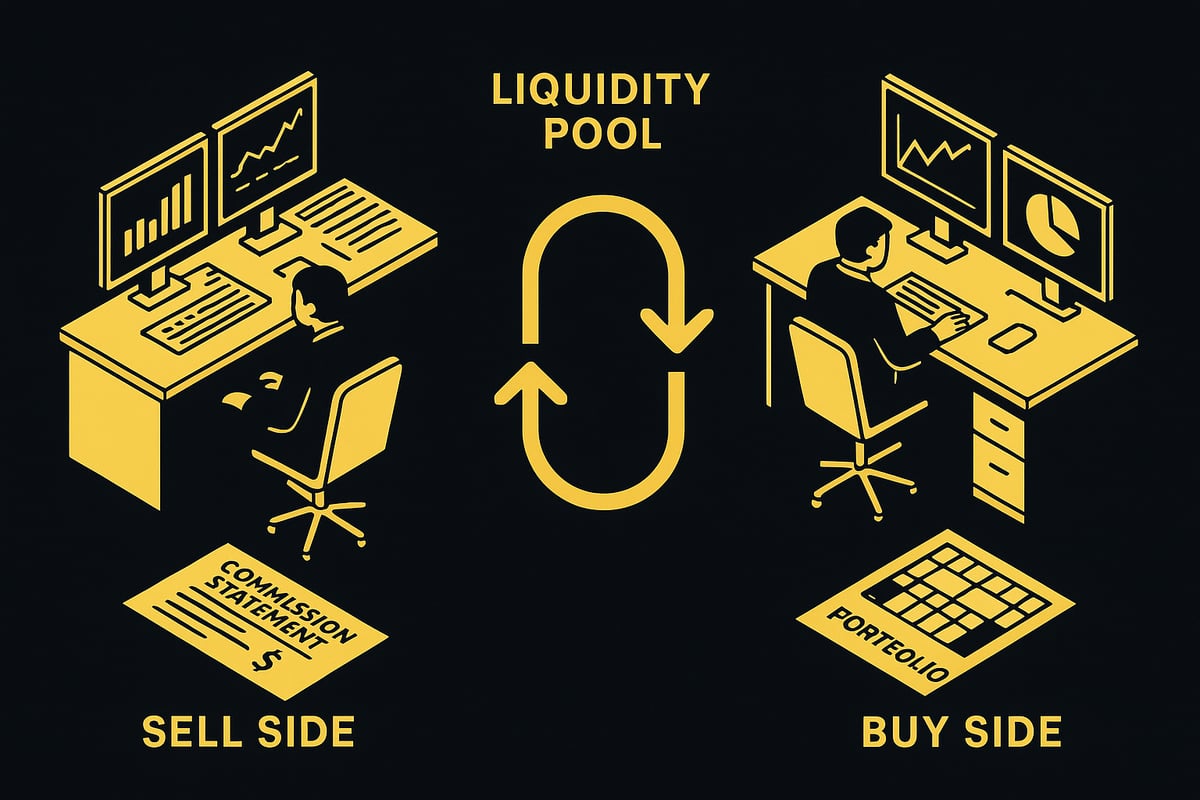
The financial world is colloquially divided into the "buy side" and the "sell side." Buy side firms—such as asset managers, hedge funds, pension funds, and private equity groups—are the institutions that invest capital on behalf of their clients. Conversely, the sell side comprises the institutions that facilitate these investments.
Investment banks, brokerage houses, and market makers constitute the sell side. Their primary business objective is to generate commissions, underwriting fees, and trading profits. Sell side research serves as a value-added service provided by these firms to institutional clients. By producing high-quality analysis on public equities, fixed-income instruments, and macroeconomic trends, these firms attract trading volume. When an institutional investor finds a research note particularly valuable, they are more likely to direct their trading business—and the associated commissions—to that specific bank.
The Role of the Equity Research Analyst
At the heart of sell side research is the equity research analyst. These professionals are typically specialists, focusing on a specific sector (such as technology, healthcare, or energy) or a specific geographic region. Their core tasks involve building detailed financial models, maintaining earnings estimates, and producing written reports that culminate in a recommendation—typically classified as Buy, Hold, or Sell.
A typical sell side report includes:
- Investment Thesis: A summary of why the analyst believes the stock will outperform or underperform the market.
- Valuation Analysis: An application of various methodologies, such as Discounted Cash Flow (DCF) or multiples-based valuation (Price-to-Earnings, EV/EBITDA), to arrive at a target price.
- Risk Factors: A critical section outlining the potential pitfalls, including regulatory hurdles, competitive pressures, or macroeconomic headwinds.
- Earnings Estimates: Detailed projections of revenue, margins, and Earnings Per Share (EPS) for the upcoming quarters and fiscal years.
Understanding Inherent Conflicts of Interest
Investors must approach sell side research with a healthy degree of skepticism. Unlike independent research firms, sell side analysts work for institutions that often have multifaceted relationships with the companies they cover.
Investment banks frequently act as underwriters for Initial Public Offerings (IPOs) or secondary offerings for the very companies their analysts cover. This creates a potential conflict of interest. An analyst may feel subtle—or explicit—pressure to maintain a favorable rating on a company to keep the bank’s investment banking division in the firm’s good graces for future advisory mandates.
Furthermore, analysts often rely on management teams for guidance and access to information. If an analyst is too critical or publishes a "Sell" rating, they risk losing access to management, which can impair their ability to gather the insights needed to produce quality research. This "access premium" is a known phenomenon in the industry, and savvy investors adjust their interpretation of research accordingly, often reading between the lines of overly optimistic reports.
Comparing Sell Side vs. Independent Research
It is beneficial for investors to understand the distinction between sell side research and independent research. Independent research providers generally charge a subscription fee for their reports, meaning they do not rely on trading commissions or investment banking fees.
| Feature | Sell Side Research | Independent Research |
|---|---|---|
| Primary Funding | Trading commissions / IB fees | Subscription / Retainer fees |
| Target Audience | Institutional clients (mostly) | Diverse (Retail & Institutional) |
| Conflict Potential | High (due to banking ties) | Low (no banking involvement) |
| Primary Goal | Generate trading flow | Provide actionable insights |
| Accessibility | Usually gated to clients | Often sold to the public |
How Investors Effectively Utilize Research
To leverage sell side research, investors should treat it as a data source rather than a definitive roadmap. The most effective approach involves using these reports to understand the "consensus."
If all major analysts have a "Buy" rating on a company, the consensus is positive, and the stock price likely already reflects that optimism. An investor who finds a dissenting voice—a "Sell" or "Underperform" rating—may find the contrarian analysis more valuable for identifying potential risks that the broader market has ignored.
Furthermore, investors should focus on the underlying assumptions in the analyst's financial model rather than just the final recommendation. If an analyst projects 20% revenue growth but the company has only been achieving 5% growth, the investor can focus their own due diligence on determining whether that 20% figure is realistic or merely a result of the analyst's optimistic bias.
Practical Steps for Accessing Research
For the average retail investor, accessing high-quality, professional-grade sell side research can be difficult. Institutional research is expensive to produce, and banks generally distribute it only to their top-tier trading clients.
However, several avenues exist:
- Discount Brokerages: Some major brokerage platforms provide their retail clients with access to research reports from a subset of partner firms. Check your brokerage’s research portal to see what is included in your account.
- Financial Aggregators: Platforms like Bloomberg Terminal or FactSet are the industry standards for professionals, though they carry a significant cost. For retail investors, aggregators that compile consensus estimates and summaries of analyst ratings can provide similar value at a lower price point.
- Company Investor Relations: While not the same as third-party research, the Investor Relations (IR) page of a public company often provides transcripts of earnings calls and presentations that help investors understand the same metrics that analysts are scrutinizing.
Frequently Asked Questions
Does a "Buy" rating mean I should buy the stock? No. A "Buy" rating is the analyst’s opinion based on their specific timeframe, risk tolerance, and valuation model. It does not account for your individual financial situation, portfolio goals, or tax circumstances. Always conduct your own verification before executing a trade.
Why do analysts rarely issue "Sell" ratings? Issuing a "Sell" rating can damage relationships with the company’s management and potentially conflict with the bank’s business interests. As a result, sell side research often exhibits an upward bias, where "Hold" is often the polite equivalent of a negative sentiment.
What is the difference between consensus and an individual analyst report? Consensus represents the average of all analyst estimates regarding a company's financial performance. An individual report offers a specific view that may differ significantly from the consensus, often serving as a catalyst for market volatility if the analyst’s view gains traction.
Are sell side reports legally binding? No. They are opinions, not financial advice. There is no legal liability for an analyst whose "Buy" recommendation results in a stock price decline, provided they have followed appropriate disclosure and regulatory guidelines.
How can I identify potential bias in a report? Check the bank’s disclosures at the end of the report. If the bank has provided investment banking services to the company in the past 12 months, this must be disclosed. A high ratio of "Buy" ratings across an analyst’s entire portfolio is also a general indicator of potential institutional bias.
Next Steps for Investors
To maximize the value of the research you consume, begin by aggregating reports from multiple firms rather than relying on a single bank. By comparing the assumptions across three or four different analysts, you can identify which inputs are universally agreed upon and which are the subject of intense debate. Use this information to sharpen your own investment thesis, verify the financial metrics, and ensure your decision aligns with your long-term wealth strategy. Professional investors rarely follow a recommendation blindly; they use research to build a foundation of knowledge from which they make independent, evidence-based choices.

Image Gallery
Select an image to open it in a new tab.


Lars Thomsen
Global Labor Markets and Economic Strategy Editor
