Understanding Self-Insured Retention for California Auto Insurance

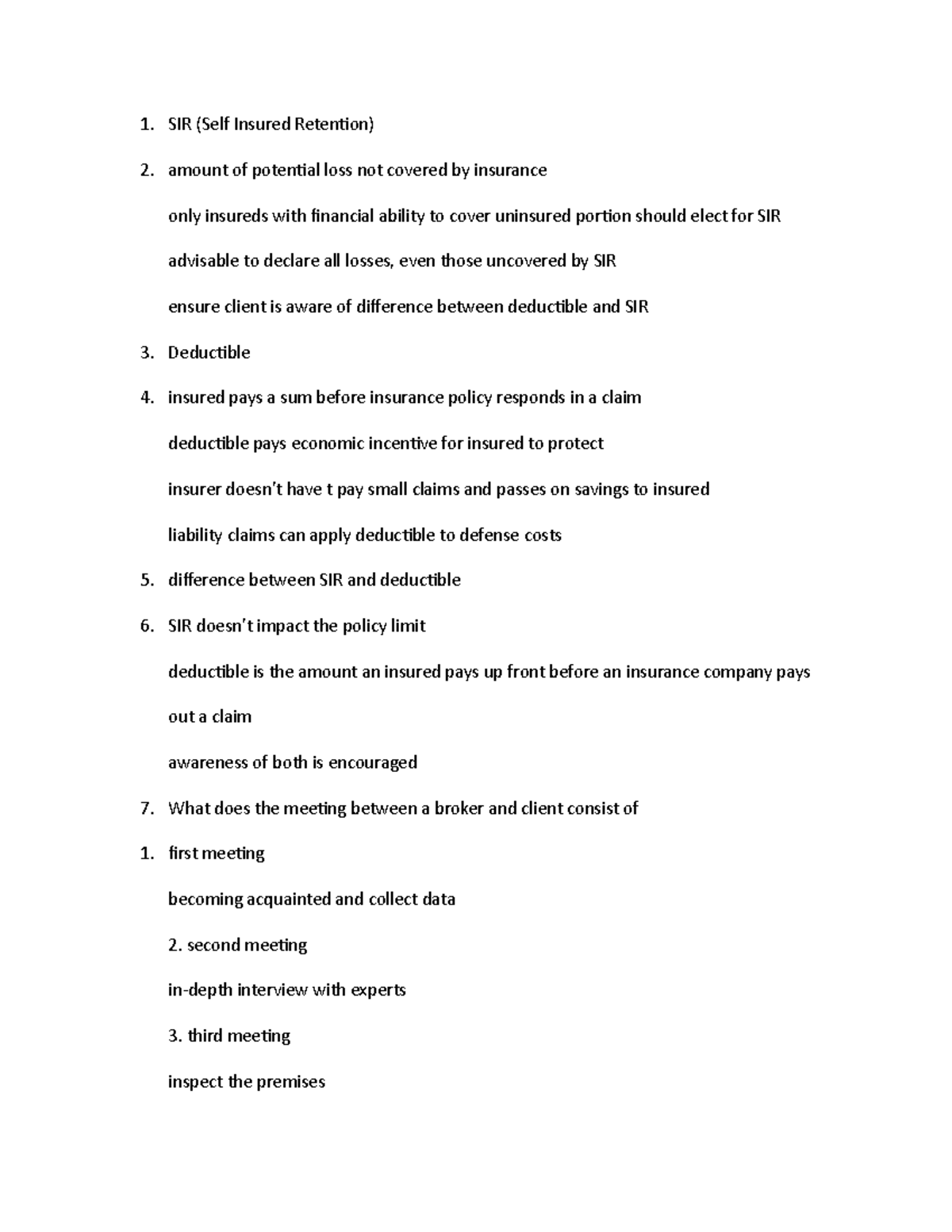
Self-insured retention (SIR) in the context of California auto insurance is a structured financial arrangement where an individual or a business entity assumes direct responsibility for the initial portion of a liability claim, with a traditional insurance policy providing coverage only once the predetermined SIR amount has been exhausted. Unlike a standard deductible, which generally functions within the internal administrative processes of a single policy, an SIR often involves a contractual agreement where the insured acts as their own insurer for the primary layer of risk. This mechanism is frequently utilized by commercial fleets, high-net-worth individuals, or specialized entities operating under the regulatory framework established by the California Department of Insurance (CDI).
The Mechanics of Self-Insured Retention vs. Standard Deductibles
To navigate the complexities of California auto insurance, it is essential to distinguish between a deductible and self-insured retention. While both represent a portion of the financial burden borne by the policyholder, their operational impact on claim handling is significantly different.
A deductible is typically a feature of a standard insurance policy. When a loss occurs, the insurance company generally manages the entire claim process, including legal defense and settlement negotiations. The insurer pays the total loss and subsequently seeks reimbursement from the insured for the deductible amount, or deducts it from the final settlement payment. The insurer maintains full control over the claims process from the outset.
In contrast, self-insured retention shifts the administrative burden to the policyholder for the duration of the "retained" layer. Under an SIR agreement, the policyholder is often required to manage the claim investigation, legal defense, and settlement payments up to the specified dollar amount. The commercial auto insurer providing the excess coverage typically does not get involved until the SIR threshold has been breached. This distinction is critical in California, as the state’s rigorous insurance regulations mandate strict adherence to fair claims settlement practices. If a policyholder manages an SIR, they must ensure their claim-handling procedures remain compliant with the California Fair Claims Settlement Practices Regulations, even though they are acting as the primary payor.
Regulatory Landscape in California
California’s auto insurance market is governed by the California Insurance Code, which is enforced by the Department of Insurance. For entities looking to employ self-insured retention, there are specific legal prerequisites, particularly regarding proof of financial responsibility.
Under California Vehicle Code Section 16056, a person or entity may satisfy financial responsibility requirements by holding a certificate of self-insurance. While this is distinct from purchasing an insurance policy with an SIR layer, the two concepts often intersect for larger commercial operations. To qualify for a certificate of self-insurance, an entity must demonstrate that they possess and will continue to possess the ability to pay judgments obtained against them.
When an SIR is integrated into a commercial auto policy, it is often treated as a contract-based risk transfer. The insurance policy sits above the SIR layer. In California, the insurer providing the excess layer remains technically liable for the full amount in the event of an insolvency of the primary party, unless the contract explicitly dictates otherwise and complies with state underwriting standards. Policyholders must ensure that their SIR agreements are clearly defined in the policy endorsements to avoid "gaps" in coverage that could leave the entity exposed to personal or corporate liability.
Why Entities Choose SIR in California
The adoption of SIR for auto insurance is rarely a decision made for simplicity; it is a calculated financial strategy. For many California-based businesses, the primary motivations include:
- Cash Flow Management: By assuming the risk for smaller, frequent losses, businesses can reduce their immediate premium costs. They pay to the insurer only for catastrophic coverage, which is statistically cheaper than insuring against frequent, minor fender-benders.
- Control Over Claims: Some entities prefer to manage their own claims to maintain relationships with specific legal counsel or to ensure that settlements are handled in a manner that protects the company's reputation and operational continuity.
- Incentivizing Safety: When a company effectively acts as its own insurer for the first $50,000 or $100,000 of a loss, there is a direct, immediate financial incentive to implement robust driver training and vehicle maintenance programs. The cost of an accident is not just an insurance premium increase; it is an immediate out-of-pocket expense.
Comparative Analysis of Coverage Structures
| Feature | Standard Deductible | Self-Insured Retention (SIR) |
|---|---|---|
| Claim Handling | Managed entirely by the insurer | Managed by the insured up to the limit |
| Legal Defense | Provided by the insurer | Usually the responsibility of the insured |
| Premium Impact | Moderate reduction | Significant reduction |
| Administrative Burden | Low | High |
| Primary Payor | Insurer pays first, collects later | Insured pays until limit is reached |
Operational Risks and Mitigation
While SIR can be a powerful financial tool, it carries substantial risks that require professional oversight. In California, the primary risk is the exhaustion of the SIR in the event of a significant liability claim. If a company lacks the liquidity to pay the SIR amount when a claim is filed, the entire defense strategy can be compromised, leading to potential "bad faith" allegations if the insurer is not notified promptly of a claim that is likely to pierce the SIR layer.
To mitigate these risks, organizations often employ a Third-Party Administrator (TPA). A TPA is a licensed entity that handles the claims process, legal defense management, and loss reporting on behalf of the self-insured entity. Using a TPA ensures that the claim-handling process adheres to California’s strict regulatory timeline requirements, preventing the common pitfalls that occur when businesses attempt to manage complex auto liability claims in-house without the requisite legal infrastructure.
The Role of Financial Solvency
California regulators are particularly focused on the solvency of entities that choose to self-insure or carry high SIRs. If a business entity files for bankruptcy or faces severe liquidity constraints, the state may look to the excess insurer to cover the SIR layer. However, insurance contracts often contain "reimbursement provisions." These provisions stipulate that if the insurer is forced to pay a claim within the SIR layer due to the policyholder's inability to pay, the policyholder is contractually obligated to reimburse the insurer. In a bankruptcy scenario, this can create complicated litigation regarding the priority of creditors, a situation that underscores the importance of maintaining adequate liquidity reserves specifically earmarked for insurance retentions.
Common Pitfalls in California SIR Agreements
One of the most frequent errors encountered in California is the failure to properly coordinate the SIR limit with the statutory minimums required by the state. California requires drivers to maintain minimum levels of financial responsibility. An SIR agreement must be structured so that the combination of the SIR and the excess insurance policy never falls below the state-mandated minimum coverage levels.
Another common oversight is the "notification trigger." Many insurance policies with an SIR require the insured to notify the excess carrier as soon as a claim exceeds a certain percentage of the SIR (e.g., 50%). Failing to provide timely notice can jeopardize coverage. In California, the "notice-prejudice" rule often limits an insurer’s ability to deny coverage for late notice unless they can prove they were substantially prejudiced by the delay, but relying on this rule is a dangerous legal strategy. Clear, proactive communication with the carrier is the safest path.
Frequently Asked Questions
1. Does a self-insured retention policy cover me for personal use of a business vehicle? If the vehicle is insured under a commercial policy with an SIR, the terms of the policy govern all uses, including personal use by employees. However, it is common for commercial insurers to limit personal use coverage. You must review your specific policy declarations to determine if personal liability is included or excluded within the SIR structure.
2. Is SIR available for individual, non-commercial drivers in California? Generally, no. SIR is primarily a commercial insurance mechanism. Individual auto insurance policies in California use deductibles for collision and comprehensive coverages, but they do not typically allow for a self-insured retention on liability, as state law requires the insurer to be the primary point of contact for third-party liability claims.
3. What happens if I cannot pay the SIR when a claim occurs? If your policy contains a reimbursement provision, the insurance company may pay the claim and then initiate a collection action against you. Furthermore, if you are a commercial entity, the failure to satisfy the SIR could lead to a breach of your insurance contract, potentially resulting in the cancellation of your excess coverage.
4. Can I change my SIR limit mid-policy term? Mid-term changes to SIR limits are generally not permitted unless there is a significant change in the business operation, such as a merger or acquisition. Most carriers require that SIR levels be set at the policy inception to allow for accurate underwriting of the excess risk.
5. Are TPA costs included in the self-insured retention amount? This depends entirely on the language of your policy. Some SIR agreements are "loss-only," meaning the retention applies only to settlements and judgments. Others include "allocated loss adjustment expenses" (ALAE), meaning the costs of legal defense, investigations, and TPA fees count toward the exhaustion of the SIR. Always clarify this with your broker.
Recommended Next Actions
If you are a business owner or fleet manager considering a transition to a self-insured retention model, the first step is to perform a historical loss analysis. Review your claim history over the past five years to determine the frequency and severity of your losses. If your losses are consistently below a certain threshold, an SIR may provide significant savings.
Consult with a commercial insurance broker who specializes in California liability law to obtain an actuarial study of your risk profile. This study will provide the data necessary to set an SIR limit that balances cash flow benefits against the risk of financial strain. Ensure that any agreement you enter includes a robust TPA contract, as the regulatory burden of handling liability claims in California is too high to manage internally without specialized legal and administrative support.

Image Gallery
Select an image to open it in a new tab.

Zara El-Hashem
Sociocultural Dynamics and Academics Writer
