
Slavic Emmanuel Church in Portland, Oregon, stands out for its pivotal role as a spiritual and cultural sanctuary for Eastern European immigrants across the Pacific Northwest. Unique for bridging Soviet-era evangelical traditions with modern American ministry, the church features multi-generational choir music, bilingual services, extensive youth development, and active local refugee resettlement and international humanitarian relief programs.
Historical Roots: A Haven for Soviet-Era Religious Refugees
To understand what makes Slavic Emmanuel Church unique, one must examine the history of Eastern European evangelical immigration to Oregon. During the Soviet era, Protestant groups—primarily Baptists, Pentecostals, and Evangelical Christians—faced severe state-sponsored persecution, discrimination, and legal restrictions. Believers were often denied higher education, targeted by law enforcement, and forced to worship in clandestine house meetings.
The geopolitical landscape shifted dramatically in 1989 with the passage of the Lautenberg Amendment, a piece of U.S. legislation that established a presumption of refugee status for historically persecuted religious minorities from the Soviet Union. This opened a doorway for tens of thousands of Ukrainian, Russian, Belarusian, and Moldovan believers to seek asylum in the United States.
- Soviet-Era Persecution
- Lautenberg Amendment (1989)
- Mass Migration to Pacific Northwest
- Establishment of Slavic Emmanuel Church
The Portland metropolitan area, along with neighboring Vancouver, Washington, became one of the primary resettlement hubs in North America for these families. Slavic Emmanuel Church emerged within this migration wave as more than just a place of worship. It served as an institutional anchor where arriving families, stripped of their worldly possessions and unfamiliar with Western customs, found familiar spiritual traditions, administrative assistance, and emotional solidarity.
This foundation of shared resilience gives the congregation a distinct character. Unlike churches formed purely through local outreach or denominational expansion, Slavic Emmanuel Church carries the collective memory of maintaining faith under authoritarian pressure. That legacy instills a deep commitment to doctrinal conservative principles, personal devotion, and tight-knit communal responsibility that remains evident today.
Multilingual Ministry and Cultural Adaptation
One of the defining challenges facing any immigrant congregation is managing generational transition. Slavic Emmanuel Church handles this complex dynamic through a deliberate, structured approach to language, culture, and ministry.
Preserving Heritage While Embracing Integration
For first-generation immigrants, the Ukrainian and Russian languages represent not only comfort and native expression but also the sacred linguistic medium through which their faith was tested and preserved. Recognizing this, the church continues to offer primary services, prayer meetings, and traditional hymns in native Slavic languages.
However, the church leadership recognized early on that second- and third-generation youth, born and educated in Oregon, grow up natively speaking English. To prevent the youth flight common in many immigrant communities, Slavic Emmanuel Church developed robust English-language and bilingual ministries:
- Dual-Language Worship: Main services frequently feature real-time translation equipment or structured bilingual elements, ensuring accessibility for English-only speakers, visiting guests, and younger members.
- Youth and Young Adult Ministries: Gatherings, retreats, and Bible studies for teenagers and young adults are predominantly conducted in English, allowing young believers to articulate their faith within their primary linguistic framework.
- Cultural Literacy Classes: Sunday school programs integrate native language instruction alongside biblical teaching, helping children maintain conversational proficiency in Ukrainian or Russian so they can communicate deeply with parents and grandparents.
This balanced approach enables Slavic Emmanuel Church to function as a bridge between three distinct generations. Grandparents who experienced life behind the Iron Curtain worship under the same roof as college students navigating modern American secular culture, creating a rare intergenerational dialogue within the broader Portland community.
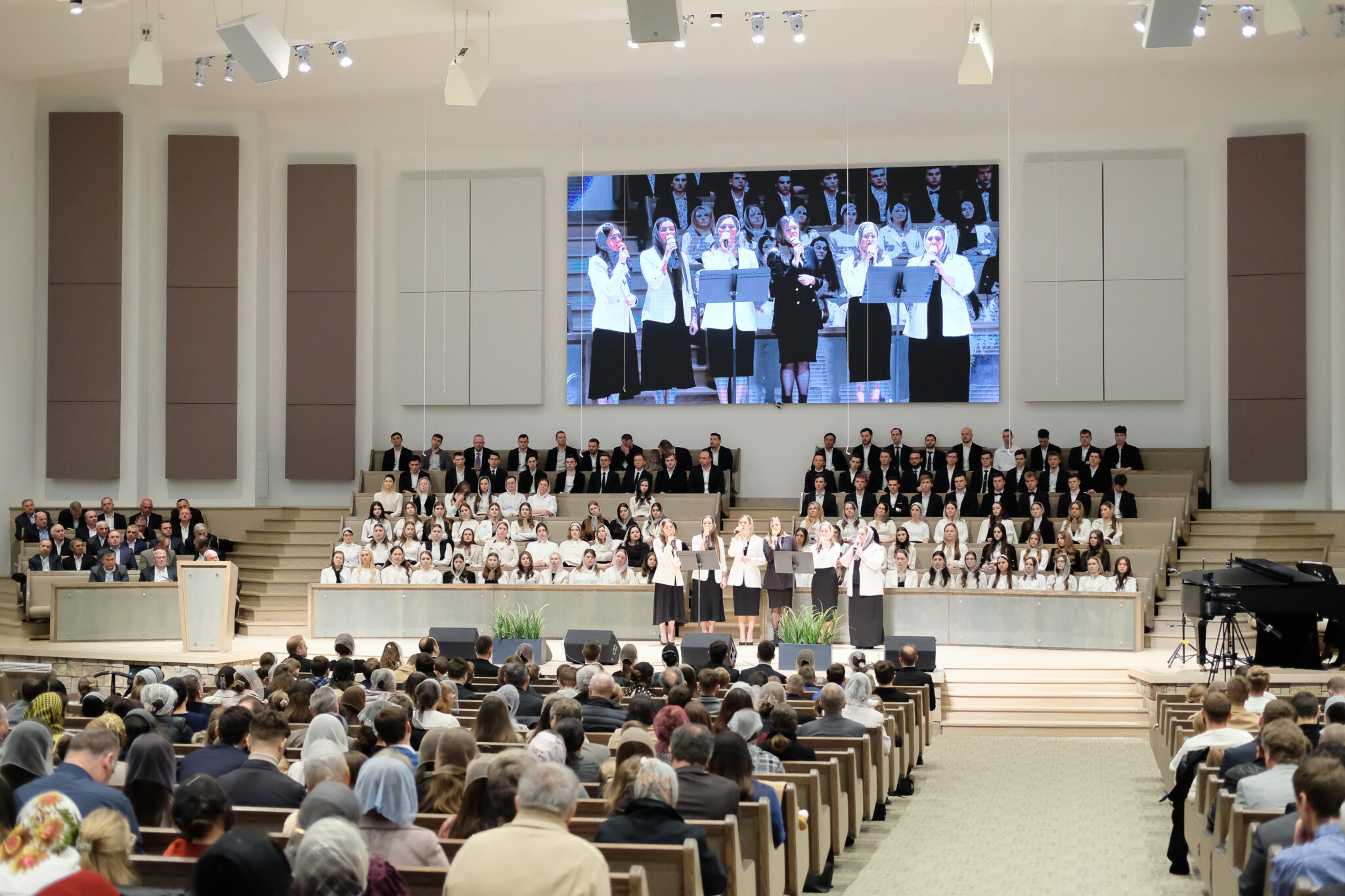
Exceptional Musical Traditions: Choirs, Orchestras, and Sacred Music
Music is a central pillar of Eastern European evangelical worship, and Slavic Emmanuel Church is widely recognized for the scale, rigor, and beauty of its musical offerings.
- Slavic Emmanuel Music Ministry
- Mixed Adult Choir (Traditional & Classical)
- Symphony Orchestra & Brass Ensembles
- Youth & Children's Choirs
- Chamber Vocal Groups & String Ensembles
While many contemporary American churches have transitioned entirely to small, amplified praise bands, Slavic Emmanuel Church maintains a rich, complex musical ecosystem that honors classical and traditional choral arrangements alongside modern worship music:
- Large Multi-Part Choirs: The church features expansive adult and youth choirs that perform four-part harmony arrangements. Choral singing is viewed not merely as performance art, but as a deeply spiritual form of congregational prayer and theological exposition.
- Orchestral Accompaniment: Services regularly incorporate full brass ensembles, string quartets, and symphony orchestras. Children in the church are encouraged from an early age to learn instruments, creating a self-sustaining pipeline of skilled musicians who serve in weekly worship services.
- Preservation of Sacred Hymnody: The congregation preserves a vast repertoire of historic Eastern European hymns, many composed during times of persecution. These songs carry poignant minor-key melodies and deeply reflective lyrics that contrast with the more upbeat, simplified structures of standard Western contemporary Christian music.
This dedication to artistic excellence and musical heritage draws visitors from across Oregon who wish to experience traditional sacred choral music performed at a exceptionally high technical standard.
Comprehensive Community and Family Support Systems
The social structure of Slavic Emmanuel Church extends far beyond Sunday morning gatherings. The congregation operates as a comprehensive mutual support network that addresses the spiritual, emotional, and practical needs of its members.
Family-Centric Infrastructure
Eastern European church culture places tremendous emphasis on large, closely knit family structures. Slavic Emmanuel Church supports this dynamic through tailored life-stage ministries:
- Sunday School System: Operating at a scale equivalent to a small private school, the church's Sunday school educates hundreds of children weekly using structured curricula that combine biblical literacy, moral guidance, and historical awareness.
- Marriage and Family Counseling: Pastoral staff provide specialized counseling that addresses the unique pressures faced by immigrant households, such as navigating cultural friction between traditional Eastern European parenting expectations and modern American social norms.
- Elderly Care and Visitation: Dedicated teams visit senior church members, ensuring that aging believers who may face language barriers or physical isolation remain fully connected to the community.
Peer Mentorship and Youth Leadership
Rather than segregating age groups into isolated silos, the church emphasizes cross-generational mentorship. Older members serve as spiritual mentors to young adults, providing career guidance, marriage advice, and practical counsel grounded in shared faith principles.
Global Humanitarian Relief and Local Resettlement
Another distinct characteristic of Slavic Emmanuel Church is its proactive role in international humanitarian work and local refugee support. The church's geographic and cultural connections to Eastern Europe make it a crucial nexus for direct relief operations.
Local Integration Assistance
When new immigrants or refugees arrive in the Portland area—whether escaping geopolitical conflict, economic instability, or religious oppression—Slavic Emmanuel Church frequently serves as a first point of contact. The congregation provides practical assistance, including:
- Temporary housing coordination and assistance in finding permanent rental properties.
- Employment networking within the local Slavic-owned business community (construction, trades, healthcare, and transportation).
- Administrative support for navigating U.S. government processes, social services, and school enrollments.
- Language translation for medical appointments, legal proceedings, and official documentation.
To learn more about federal programs governing refugee admissions and status, consult official resources provided by U.S. Citizenship and Immigration Services.
Direct International Relief Networks
Beyond local support, the church maintains direct humanitarian pipelines to Eastern Europe, particularly during times of regional crisis. Rather than relying solely on third-party international aid organizations, Slavic Emmanuel Church mobilizes its own network of affiliated churches, missionaries, and volunteers in countries such as Ukraine, Moldova, and Romania.
- Church Mobilization (Portland)
- Volunteer Logistics
- Direct Distribution to Eastern European Border/Conflict Zones
The congregation collects, packs, and ships non-perishable food, medical supplies, winter clothing, and financial aid directly to affected communities. During major crises, such as the full-scale conflict in Ukraine that escalated in 2022, the church raised substantial relief funds and sent volunteer teams directly to border zones to assist refugees fleeing violence.
Core Distinctives of Slavic Emmanuel Church at a Glance
The following table summarizes how Slavic Emmanuel Church compares across key operational and cultural dimensions relative to standard Western congregational models:
| Aspect | Traditional Western Evangelical Model | Slavic Emmanuel Church Approach | Community & Practical Impact |
|---|---|---|---|
| Primary Language | Monolingual (English) | Multilingual (Ukrainian, Russian, English) | Preserves cultural roots while enabling full integration for native-born youth. |
| Musical Style | Modern praise bands (guitars, keys, drums) | Classical choirs, full orchestras, brass bands, traditional hymns | Maintains high musical technique and rich theological depth in public worship. |
| Service Duration & Format | 60–75 minutes; streamlined, high-production flow | 90–120+ minutes; extended prayer, multiple sermons, choral sets | Emphasizes deep spiritual reflection, unhurried prayer, and communal participation. |
| Refugee & Relief Role | Financial support to external agencies | Direct in-house resettlement, aid logistics, and international relief teams | Provides immediate, culturally nuanced aid locally and overseas without intermediary overhead. |
| Intergenerational Unity | Age-segregated programming and separate services | Unified multi-generational worship with targeted age leadership | Fosters intergenerational family bonds and prevents youth isolation. |
Navigating a Visit: What Visitors and Newcomers Should Expect
For individuals unfamiliar with Eastern European evangelical traditions, attending a service at Slavic Emmanuel Church offers a culturally rich experience. Understanding the church’s worship etiquette and liturgical flow helps ensure a welcoming and comfortable visit.
Service Structure and Liturgy
Services at Slavic Emmanuel Church are structured differently from typical contemporary American services:
- Length: Plan for a longer service time, typically lasting between an hour and a half to two hours.
- Multiple Preachers: Rather than a single main sermon, services often feature two or three shorter sermons delivered by different pastors or elders, interspersed with choir performances and congregational prayer.
- Extended Prayer Time: The congregation frequently engages in open, audible corporate prayer times where members pray simultaneously or aloud from the floor.
Attire and Cultural Etiquette
While the church welcomes all visitors warmly, traditional modesty remains valued within the congregation:
- Dress Code: Attendees generally lean toward formal or business-casual attire. Men typically wear suits, dress shirts, or slacks, while women often wear dresses or skirts.
- Translation Services: Visitors who do not speak Ukrainian or Russian can inquire with greeters at the main entrance regarding translation headsets or designated English-language seating areas.
Frequently Asked Questions
What denomination is Slavic Emmanuel Church in Portland?
Slavic Emmanuel Church is an independent evangelical Christian church rooted in the Eastern European Protestant tradition. It shares core theological tenets with traditional Baptist and Bible church movements, emphasizing biblical authority, personal salvation, believer's baptism, and conservative Christian ethics.
What languages are used during services at Slavic Emmanuel Church?
Services utilize Ukrainian, Russian, and English. Main weekend services traditionally feature primary preaching in Ukrainian or Russian with live English translation available, while youth services, Sunday school classes, and young adult fellowships are conducted predominantly in English.
Are non-Slavic visitors welcome to attend services?
Yes. Slavic Emmanuel Church welcomes visitors from all cultural and ethnic backgrounds. Guests are encouraged to connect with host staff or greeters upon arrival to receive assistance with translation devices or information about church programs.
How does the church support newly arrived refugees in Oregon?
The church provides comprehensive support including temporary housing coordination, household item donations, local job placement assistance within community networks, language support, and help navigating local administrative and educational systems.
Why does the Portland metro area have such a large Slavic evangelical presence?
Following the passage of the U.S. Lautenberg Amendment in 1989, Portland and Vancouver were designated as primary resettlement zones by federal refugee agencies. Early arriving families established strong community support networks, leading to subsequent secondary migrations of relatives and fellow believers seeking a safe environment to build their lives.
Practical Summary and Guidance for Engagement
Slavic Emmanuel Church represents a distinctive synthesis of historical perseverance, rich musical artistry, and robust community service. For anyone interested in engaging with or supporting the church, consider the following next steps:
- Attending a Service: If planning a visit, arrive 15 minutes early to secure parking and speak with welcoming staff regarding translation equipment if needed.
- Community & Humanitarian Collaboration: Organizations or individuals seeking to partner on local refugee support or international relief shipments can reach out directly to the church's administrative offices to coordinate volunteer or supply efforts.
- Cultural Engagement: For those seeking to understand the historical context of Oregon's Eastern European population, attending seasonal choir concerts or special multi-cultural events at Slavic Emmanuel Church offers valuable insight into this vibrant community.
Image Gallery
Select an image to open it in a new tab.

Omar Farooq
EdTech Innovation and Virtual Pedagogy Journalist
