The Evolution of the Wachowskis: From Animation Aesthetics to Sci-Fi Cinema Mastery

The Wachowskis—Lana and Lilly—transformed modern science fiction by bridging the gap between the kinetic, boundless visual language of Japanese animation and the technical rigors of live-action Hollywood filmmaking. Their career trajectory, moving from underground comic book writing to directing genre-defining epics like The Matrix and Speed Racer, represents a singular fusion of "cyberpunk" philosophy and "otaku" visual culture that fundamentally altered the grammar of 21st-century cinema.
The Foundations: Comic Books and the "Storyboard" Mindset
Before they were known as the architects of the Matrix, the Wachowskis were deeply embedded in the world of sequential art. In the early 1990s, they wrote for Marvel Comics’ Epic imprint, notably on titles like Ectokid (created by Clive Barker). This period was foundational; it taught them the discipline of the "frame." In a comic book, every panel must convey maximum narrative information and kinetic energy because the images are static.
When they transitioned to film with the 1996 neo-noir Bound, they brought this precise, storyboard-driven approach with them. While Bound was a heist thriller rather than a sci-fi epic, it functioned as a proof-of-concept for their visual style. They used extreme camera angles and meticulous color palettes that felt more like a graphic novel than a standard mid-90s feature. This "animation mindset"—the idea that the director should have total control over every pixel and movement within the frame—would become their signature as they moved into the high-stakes world of science fiction.
The Matrix: Translating Anime into Live-Action Reality
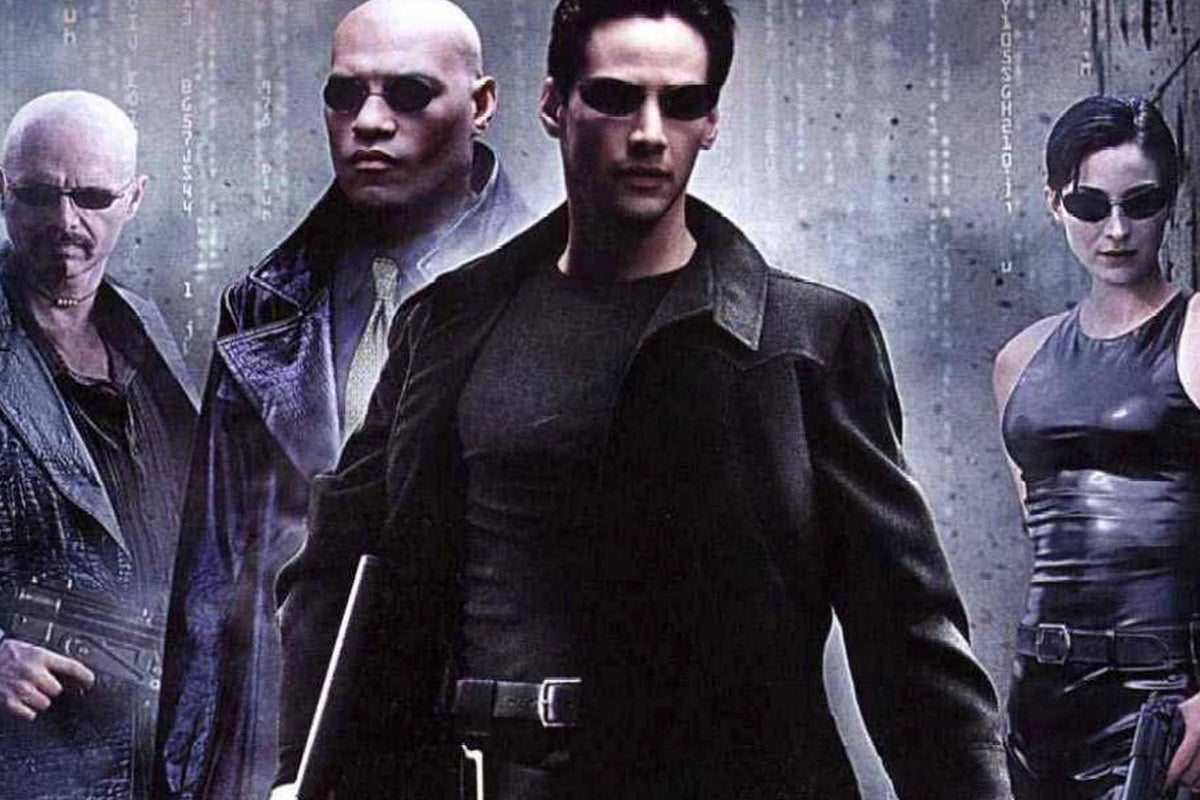
The 1999 release of The Matrix is widely considered the moment when the aesthetic of Japanese animation (anime) successfully "colonized" Hollywood. To secure the green light for the film, the Wachowskis famously showed executives Mamoru Oshii’s 1995 anime masterpiece Ghost in the Shell and stated, "We want to do that for real."
Their success lay in their ability to translate specific animation tropes into a medium that, at the time, was restricted by the laws of physics. They achieved this through three primary innovations:
- Bullet Time: This technique was a literal translation of the "frozen time" or "temporal stretching" common in manga and anime. By using a rig of still cameras triggered sequentially, they allowed the audience to move through a scene while the action was slowed to a crawl. This mimicked the way an illustrator can draw a character from multiple perspectives during a single split-second of action.
- Wire-Fu Integration: Influenced by Hong Kong action cinema and its animated counterparts, the Wachowskis insisted on long, unbroken takes of gravity-defying combat. They brought in legendary choreographer Yuen Woo-ping to ensure the physical movements had the exaggerated grace of an animated sequence.
- Color Coding and Digital Grading: The distinct green tint of the "Matrix" world and the cold blue of the "Real" world mirrored the atmospheric layering found in hand-painted anime backgrounds. It was a move away from "naturalism" toward a curated, symbolic visual language.
By 2026, the legacy of this transition is clear: The Matrix did not just use CGI as a tool; it used CGI to reconstruct the reality of the film to match a specific, non-naturalistic vision rooted in animation.

The Animatrix: A Reciprocal Tribute to the Source
If The Matrix was a live-action film inspired by animation, The Animatrix (2003) was the completion of the cycle. This anthology project saw the Wachowskis collaborating with the very directors who had inspired them, including Yoshiaki Kawajiri and Shinichiro Watanabe.
This project was crucial for several reasons. First, it expanded the lore of their universe without the constraints of a two-hour theatrical structure. Second, it solidified their status as creators who viewed animation as a peer to live-action, rather than a "lesser" medium for children. The segment "The Second Renaissance," written by the Wachowskis, used a documentary style to depict the war between humans and machines, utilizing the visceral, uncensored power of animation to show scale and horror that would have been financially or technically impossible in live-action at the time.
Speed Racer: The "Live-Action Cartoon" Experiment
While The Matrix is their most famous work, the 2008 adaptation of Speed Racer remains their most daring attempt to merge animation and cinema. At its release, the film was polarizing, but in the years leading up to 2026, it has undergone a massive critical reappraisal as a masterpiece of "Photo-Anime."
In Speed Racer, the Wachowskis abandoned the pursuit of realism entirely. They utilized a technique called "total focus," where the foreground, middle ground, and background are all digitally composited to be perfectly sharp. This mimics the look of traditional cel animation, where characters are layered over static, detailed backgrounds.
The film's "racing" sequences did not follow the laws of physics or traditional cinematography. Instead, they used "virtual cinematography" to create impossible camera paths, bright neon color palettes, and montage sequences where characters' faces float over the action—a direct lift from the visual shorthand of 1960s sports manga. This film represented the pinnacle of their "animation to cinema" journey: they were no longer just influenced by animation; they were using the camera to create a new, hybrid medium.
Technical Innovations and Production Comparison
The Wachowskis' transition required significant leaps in camera technology and post-production workflows. The following table illustrates how their specific animation-inspired goals led to concrete cinematic innovations.
| Film Title | Animation Influence | Technical Innovation | Impact on Sci-Fi Cinema |
|---|---|---|---|
| The Matrix | Ghost in the Shell, Akira | Bullet Time (Multi-camera arrays) | Redefined action photography and VFX integration. |
| The Animatrix | Cyberpunk Anthology | Collaborative Global Production | Established the "transmedia" model for film franchises. |
| Speed Racer | 1960s Cel Animation | "Photo-Anime" Layering | Challenged the "gritty realism" trend in sci-fi visuals. |
| Cloud Atlas | Visual Metamorphosis | Digital Prosthetics / Multi-role Casting | Explored non-linear, visual-first storytelling structures. |
| Sense8 | Ensemble "Hive-Mind" Visuals | Global Location Synchronicity | Translated animated "psychic" connections into physical reality. |
Later Works: Philosophical Sci-Fi and the Digital Frontier
As the Wachowskis moved further into the 21st century, their work became increasingly philosophical, yet the influence of animation remained the backbone of their world-building. Cloud Atlas (2012) and Jupiter Ascending (2015) pushed the boundaries of visual complexity.
In Jupiter Ascending, for instance, the "gravity boots" sequences were designed with the same attention to physics-breaking momentum found in high-octane anime like Macross. The sisters worked closely with stunt teams to develop "skating" movements that looked fluid and unnatural, purposely avoiding the "heavy" feel of typical Western sci-fi armor.
Their Netflix series Sense8 (2015–2018) represented a different kind of animation influence: the "shared soul" or "gestalt" consciousness common in magical girl and psychological anime genres. By filming on location across the globe but editing the scenes so that characters in different countries appeared to be in the same room, they achieved a live-action version of "match-cutting" that is a staple of experimental animation.
Common Obstacles in Transitioning Animation Styles to Film
Translating animation to live-action is fraught with technical and narrative risks. The Wachowskis encountered and addressed several "pain points" that often sink other adaptations:
- The Uncanny Valley: When directors try to make animated characters look "too real," they often become repulsive. The Wachowskis avoided this by leaning into the artificiality of their worlds. They didn't want the Matrix to look exactly like our world; they wanted it to look like a simulation.
- Pacing and Physics: Animation allows for "squash and stretch," where bodies deform during high-speed movement. To replicate this in cinema, the Wachowskis pioneered the use of digital doubles—fully CGI versions of actors—that could perform maneuvers impossible for human joints, yet they grounded these movements with "weight" and "impact" to keep the audience engaged.
- Visual Overload: The primary criticism of Speed Racer was that it was "too bright" or "too fast." The Wachowskis solved this in later projects like Sense8 by balancing hyper-kinetic visuals with deep, character-driven emotional arcs, ensuring the "animation" style served the story rather than distracting from it.
The Wachowskis' Impact as of 2026
By 2026, the Wachowskis are recognized as the bridge between the analog past of filmmaking and a future where the distinction between "animated" and "live" is increasingly irrelevant. The rise of "The Volume" (LED wall technology used in The Mandalorian) and real-time rendering engines like Unreal Engine 5 are the technological fulfillment of the "total control" environment the Wachowskis were trying to build in the late 90s.
Modern sci-fi hits from the 2020s frequently utilize the "neon-noir" aesthetic and kinetic fight choreography that the Wachowskis first imported from Japan. Furthermore, their career-long focus on themes of identity, transformation, and the breaking of binary systems—both in their personal lives as trans women and in their cinematic narratives—has become a cornerstone of contemporary sci-fi analysis.
Frequently Asked Questions
Which specific anime had the biggest influence on The Matrix?
The most direct influence was Mamoru Oshii’s Ghost in the Shell (1995). The Wachowskis replicated specific shots, such as the digital "rain" of green code, the way characters plug into the net via ports in their necks, and the iconic "rooftop jump" sequences. Other influences include Akira for its sense of urban decay and Fist of the North Star for its hyper-violent, stylized combat.
Did the Wachowskis ever direct an actual anime?
While they have not directed a traditional hand-drawn Japanese anime themselves, they served as creators, writers, and producers for The Animatrix. This project allowed them to direct the creative direction of seven different animation studios, effectively acting as showrunners for an animated series.
What is "Photo-Anime" and why is it important?
"Photo-Anime" is a term coined during the production of Speed Racer. It refers to a technique where high-resolution live-action photography is treated like an animated asset. Instead of using traditional lighting and depth of field, the directors used digital compositing to create a look that has the saturated colors and infinite focus of a cartoon, while still featuring real human actors.
How did their background in comics affect their film directing?
Their background in comics led to a "frame-perfect" directing style. Unlike many directors who find the scene through improvisation or loose coverage, the Wachowskis are known for incredibly detailed storyboarding. For The Matrix, they hired comic book artists Steve Skroce and Geof Darrow to draw every single shot of the film before a single camera was turned on.
Is The Matrix Resurrections (2021) considered part of this animation-to-cinema journey?
Yes, The Matrix Resurrections (directed by Lana Wachowski) serves as a meta-commentary on the journey. It explores how the "visual language" of the original trilogy was co-opted by mainstream culture and attempts to subvert those expectations by using a softer, more naturalistic digital palette, contrasting the "perfected" animation style of the earlier films with a more "human" and messy reality.
Practical Recommendations for Aspiring Filmmakers
To study the Wachowskis' methods effectively, focus on the following actions:
- Analyze Storyboard-to-Screen Comparisons: Many "Art of" books for the Matrix trilogy show the original Skroce/Darrow storyboards alongside the final film frames. This is a masterclass in how to plan visual storytelling.
- Study "The Animatrix" as a Narrative Bridge: Observe how different animation styles (from the photorealistic to the highly abstract) can be used to tell different parts of the same overarching story.
- Explore Post-Convergence Cinematography: Research the work of Bill Pope, the cinematographer who worked with the Wachowskis. His ability to light scenes that would later be heavily manipulated in post-production is key to understanding the "sci-fi cinema" transition.
- Embrace Non-Western Media: Much of the Wachowskis' innovation came from looking outside the Hollywood bubble. To innovate in sci-fi, look toward international animation, manga, and philosophy to find new visual metaphors for the screen.
Image Gallery
Select an image to open it in a new tab.
Simon Caldwell
Enterprise Technology and Systems Editor
