If You Take the Cash Value of Whole Life Insurance, Do You Still Get a Death Benefit?

If you access the cash value of your whole life insurance policy, your beneficiaries will still receive a death benefit as long as the policy remains in force. However, the total payout will be reduced by any outstanding loan balances or the amount of any partial surrenders you have taken.
Whole life insurance is often marketed as a "living benefit" product because it combines a permanent death benefit with a tax-advantaged savings component known as cash value. In 2026, as policyholders continue to seek ways to leverage their assets for retirement or emergency liquidity, understanding the delicate balance between the cash account and the insurance protection is essential. While the cash value is technically yours to use, it is inextricably linked to the face value of the policy. Accessing it is not as simple as withdrawing money from a standard bank account; there are specific rules, consequences, and mechanical impacts on the eventual death benefit that your heirs will receive.
The Relationship Between Cash Value and the Death Benefit
To understand what happens to the death benefit when you take cash value, you must first understand the structure of a whole life policy. Unlike term insurance, which provides only a death benefit for a specific period, whole life insurance is a "permanent" policy designed to last your entire life.
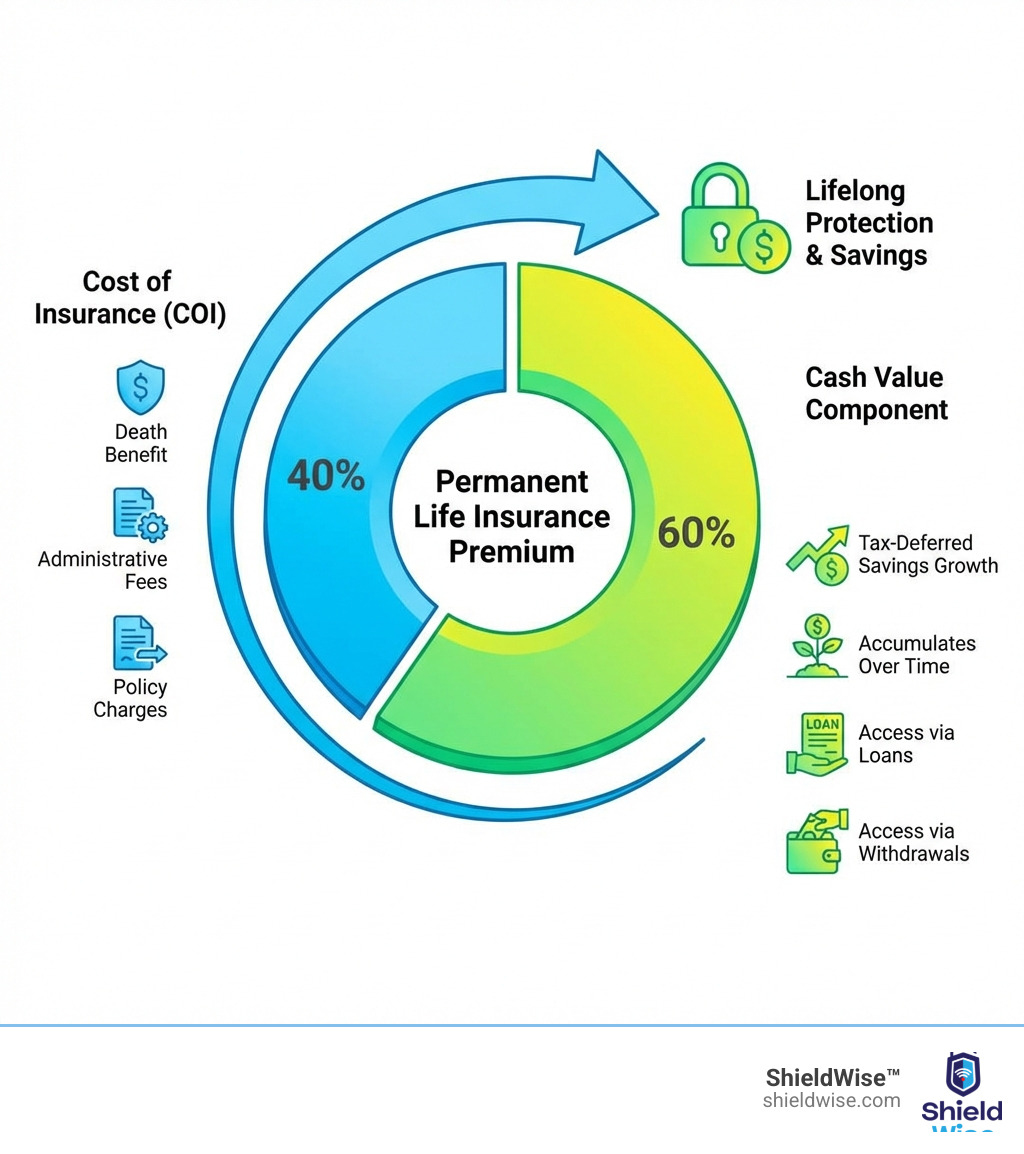
A portion of every premium payment you make is diverted into a cash value account. This account grows over time at a guaranteed rate set by the insurance company. In participating policies, it may also grow through dividends. The death benefit—the amount paid to your beneficiaries when you pass away—is essentially a combination of the "net amount at risk" to the insurance company and your accumulated cash value.
When you "take" the cash value, you are effectively reducing the equity in the policy. Because the insurance company uses that equity to offset their risk, any reduction in equity usually results in a reduction of the total payout unless specific steps are taken to replenish the account.
Different Ways to Access Cash Value and Their Impacts
The impact on your death benefit depends entirely on how you choose to access the funds. In 2026, insurance carriers offer several primary methods, each with a different set of rules regarding the death benefit.
1. Taking a Policy Loan
The most common way to access cash value without canceling the policy is through a policy loan. In this scenario, you are not actually withdrawing your own money. Instead, the insurance company lends you money from their general fund, using your cash value as collateral.
- Impact on Death Benefit: If you die with an outstanding loan, the insurance company subtracts the loan balance—plus any accrued interest—from the death benefit before paying your beneficiaries.
- The Risk of Lapse: If the loan balance and interest grow to exceed the total cash value of the policy, the policy may "lapse." If a policy lapses, the death benefit is completely forfeited, and you may face a significant tax bill on the gains within the policy.
2. Partial Surrenders (Withdrawals)
A partial surrender involves permanently withdrawing a portion of the cash value. Unlike a loan, you do not have to pay this money back.
- Impact on Death Benefit: A withdrawal typically reduces the death benefit dollar-for-dollar. For example, if you have a $500,000 death benefit and you withdraw $50,000 of cash value, your new death benefit is effectively $450,000.
- Tax Considerations: Withdrawals are generally tax-free up to the "basis" (the total amount of premiums you have paid into the policy). Anything above the basis is taxed as ordinary income.
3. Surrendering the Dividends
If you own a "participating" policy from a mutual insurance company, you may receive annual dividends. You can choose to take these dividends in cash rather than letting them build up as "paid-up additions" (extra insurance).
- Impact on Death Benefit: Taking dividends in cash does not reduce the base death benefit you originally purchased. However, it prevents the death benefit from growing over time. Many policyholders use dividends to buy additional coverage; if you take the cash instead, your death benefit stays at its original face value.
4. Full Policy Surrender
This is the "nuclear option." You cancel the policy entirely and walk away with the "net surrender value" (the cash value minus any surrender charges and outstanding loans).
- Impact on Death Benefit: The death benefit is completely eliminated. There is no coverage left for your beneficiaries.

Comparing Cash Value Access Methods
The following table outlines how different methods of accessing cash value affect the final death benefit and the policyholder's tax liability as of 2026.
| Method | Impact on Death Benefit | Requirement to Repay? | Tax Status (2026) | Policy Status |
|---|---|---|---|---|
| Policy Loan | Reduced by loan + interest balance | Recommended, not required | Generally tax-free | Remains active |
| Partial Withdrawal | Reduced dollar-for-dollar | No | Tax-free up to basis | Remains active |
| Cash Dividends | Prevents DB growth; base DB stays | No | Generally tax-free | Remains active |
| Full Surrender | Death benefit is terminated | N/A | Gains taxed as income | Terminated |
The Mechanics of Policy Loans and Interest in 2026
In the current 2026 financial environment, policy loan interest rates are a critical factor. When you take a loan against your cash value, the insurance company charges interest because they are losing the opportunity to invest that money elsewhere.
While you are not required to make monthly payments on a policy loan, the interest is "capitalized." This means that if you don't pay the interest out of pocket, it is added to the loan balance. Over a decade or two, a relatively small loan can grow significantly, eating away at the death benefit your family expects.
Example Scenario: Imagine you have a whole life policy with a $1,000,000 death benefit and $200,000 in cash value. You take a $100,000 loan to help pay for a grandchild’s education.
- Year 1: Death benefit is $900,000 ($1M - $100k).
- Year 10: If you haven't paid any interest and the rate is 5%, your loan balance has grown to approximately $162,889.
- Year 10 Death Benefit: Your beneficiaries would receive $837,111 ($1M - $162,889).
Tax Implications of Accessing Cash Value
As of 2026, the tax treatment of life insurance remains one of its most attractive features, but it is easy to trigger a tax event accidentally. Under the current tax code, life insurance proceeds (the death benefit) are generally received by beneficiaries income tax-free. However, the cash value is treated differently.
The FIFO Rule
Withdrawals from a life insurance policy follow the "First-In, First-Out" (FIFO) rule. This means the first dollars you take out are considered a return of your premiums (your basis). Since you already paid those premiums with after-tax dollars, those withdrawals are tax-free. Once you have withdrawn more than you have paid in premiums, every subsequent dollar is taxed as ordinary income.
MEC Status (Modified Endowment Contracts)
If you fund your policy too quickly—exceeding limits set by the IRS—the policy becomes a "Modified Endowment Contract" or MEC. If your policy is a MEC, the tax rules flip to LIFO (Last-In, First-Out). In this case, any money you take out via withdrawal or loan is considered taxable income first, and it may be subject to a 10% penalty if you are under age 59½.
Strategic Use: Why Take the Cash Value?
Despite the reduction in the death benefit, many policyholders in 2026 intentionally use their cash value for specific financial goals.
- Supplemental Retirement Income: Retirees often take loans or withdrawals during market downturns to avoid selling stocks at a loss. They accept a lower death benefit in exchange for "tax-free" income.
- Emergency Fund: Because cash value is accessible without a credit check or lengthy bank approval, it serves as a robust emergency reservoir.
- Paying Premiums: If you can no longer afford the premiums, you can use the cash value to pay the policy’s own costs. This is often called "Automatic Premium Loan" or "Reduced Paid-Up" insurance. This keeps some level of death benefit in place without requiring further out-of-pocket payments.
Common Pitfalls to Avoid
Taking the cash value requires a long-term view. Senior technical editors in the insurance field frequently point out these common errors:
- Ignoring Interest Accrual: Many policyholders forget that interest on loans compounds. They are shocked to find their death benefit has dwindled to almost nothing after 20 years.
- Taking Money Too Early: In the first 10 years of a policy, surrender charges can be high. If you take money out during this "surrender period," you may receive significantly less than the "account value" shown on your statement.
- Failing to Update Beneficiaries: When the death benefit changes due to a withdrawal, the original intentions for that money (e.g., paying off a mortgage) may no longer be met. It is vital to communicate these changes to your heirs.
Frequently Asked Questions
Can I put the money back to restore my death benefit?
Yes. If you took a policy loan, you can repay the principal and interest at any time. Once the loan is repaid, the death benefit is restored to its full original value. However, if you took a partial withdrawal (surrender), you typically cannot "re-deposit" those funds; the reduction in death benefit is usually permanent unless the policy allows for additional "paid-up additions."
Does taking the cash value affect the "guaranteed" death benefit?
Whole life policies have a "face amount" that is guaranteed as long as premiums are paid. Taking a loan or withdrawal does not change the guarantee itself, but it creates a "lien" against that guarantee. The insurance company will always satisfy the debt (the loan) first before paying the remainder to the beneficiaries.
How long does it take to get the cash value?
In 2026, most major insurers process cash value requests within 5 to 10 business days. Some digital-first carriers may offer faster electronic transfers, but the standard practice involves verifying the policy equity and ensuring no other liens exist on the policy before releasing funds.
What happens if I take the cash value and then the insurance company goes bankrupt?
Life insurance policies are generally protected by state guaranty associations. While limits vary by state, these associations typically provide coverage up to $300,000 in death benefits and $100,000 in cash surrender value. It is always best to choose a carrier with a high rating (A or better) from agencies like A.M. Best.
Can my creditors take my cash value or death benefit?
In many jurisdictions, life insurance cash values and death benefits are protected from creditors. However, if you withdraw the money and put it into a standard bank account, that protection usually vanishes. If you are taking cash value to avoid a judgment, consult with a legal professional regarding the specific asset protection laws in your state for 2026.
Will taking cash value affect my social security or Medicare?
Generally, no. Loans and withdrawals up to the basis are not considered "earned income." However, if you take a withdrawal that exceeds your basis, the taxable gain could technically increase your Modified Adjusted Gross Income (MAGI), which might affect the premiums you pay for Medicare Part B and Part D (known as IRMAA surcharges).
Practical Recommendation
Before you take the cash value of your whole life insurance policy, request an "In-Force Illustration" from your insurance agent or carrier. This document provides a year-by-year projection of how your specific loan or withdrawal will impact your death benefit, future cash value growth, and the longevity of the policy.
If your primary goal is to provide a specific sum for your family (such as a mortgage payoff or estate tax coverage), taking the cash value may jeopardize that goal. In such cases, it may be better to look for alternative financing or to only take a small loan that you intend to pay back within a few years.
Image Gallery
Select an image to open it in a new tab.


Mateo Castillo
Decentralized Finance and E-Payments Strategist
