Where Can I See the Blood Moon? Viewing Locations, Schedule, and Stargazing Guide
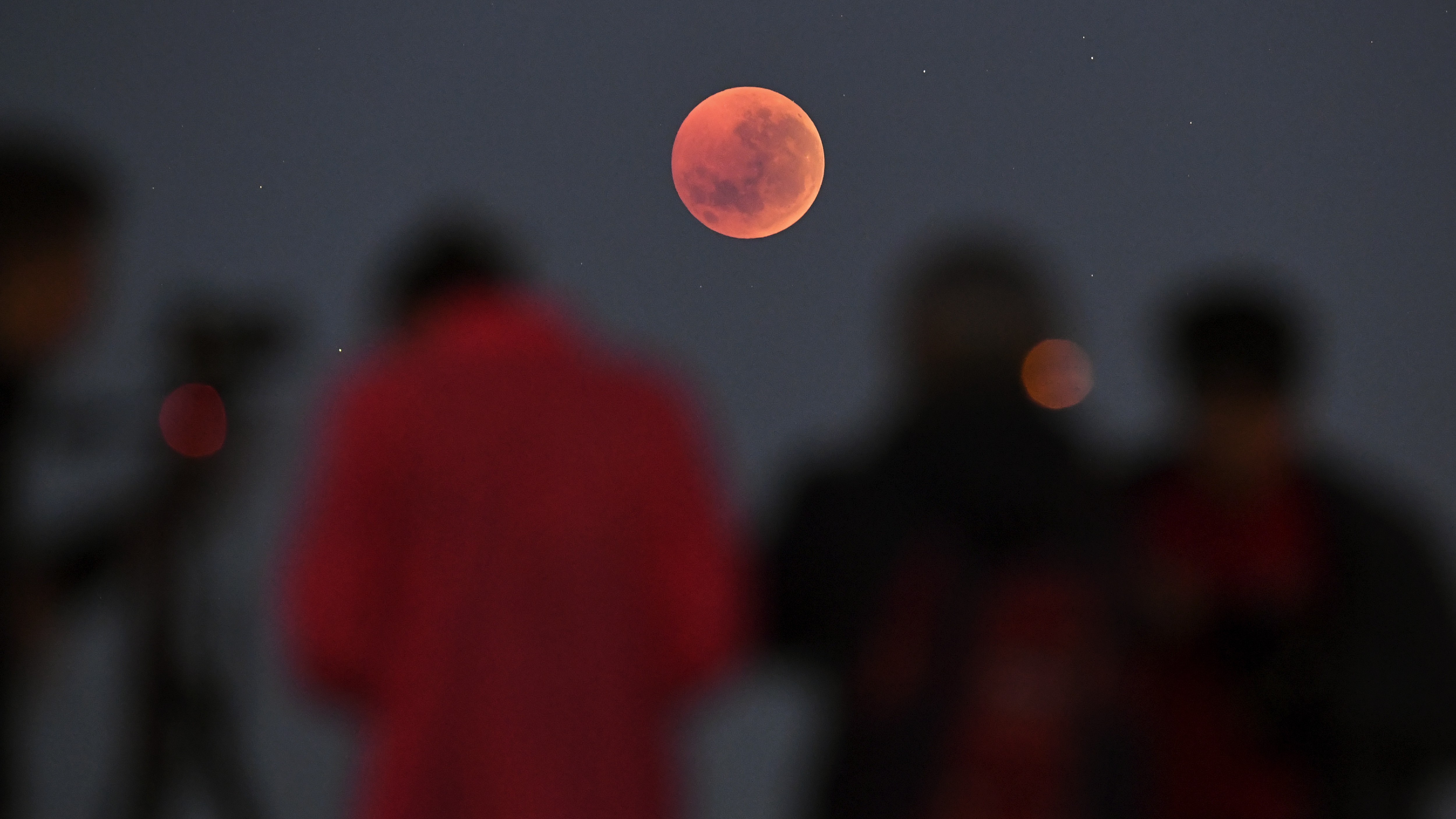
To see a Blood Moon—scientifically known as a total lunar eclipse—you must be located on the nighttime hemisphere of Earth while the eclipse occurs, under clear skies with an unobstructed view of the horizon. Unlike solar eclipses, total lunar eclipses are visible across entire continents simultaneously without specialized protective eye gear.
Understanding the Blood Moon: Scientific Causes and Visibility Dynamics
A "Blood Moon" is an informal term commonly used to describe a total lunar eclipse. This celestial event occurs exclusively during a full moon, when the Sun, Earth, and Moon line up in a near-perfect straight line in space (a state known as syzygy). During this alignment, Earth passes directly between the Sun and the Moon, casting a deep space shadow across the lunar surface.
Earth's shadow consists of two distinct concentric regions:
- The Penumbra: The faint outer shadow where Earth blocks only a portion of the Sun’s light.
- The Umbra: The dark, inner region where Earth completely blocks direct sunlight from reaching the Moon.
When the Moon enters the outer penumbra, observers notice only a subtle dimming of the lunar disk. As the Moon travels deeper into the central umbra, Earth's dark shadow begins creeping across the lunar surface, marking the partial eclipse phase. Once the entire Moon is immersed within Earth’s umbral shadow, the total phase—totality—begins.
- Sun
- Earth
- Moon in Umbra
- Penumbra
- Earth
Why the Moon Turns Red
If Earth completely blocks direct sunlight from hitting the Moon during totality, one might wonder why the Moon does not go completely pitch black. The reason for the reddish hue lies in Earth's atmosphere.
As sunlight passes through the ring of Earth's atmosphere surrounding the planet, air molecules scatter shorter wavelengths of light, such as blue and violet, far more effectively than longer wavelengths. This process, known as Rayleigh scattering, is the same physics phenomenon responsible for blue daytime skies and reddish sunsets.
The longer, redder wavelengths of sunlight travel through Earth's atmospheric layer with less scattering. As these red light rays pass through the atmosphere, Earth’s air acts like a broad lens, bending (refracting) the light inward toward the dark umbral shadow cone. This filtered red glow shines onto the lunar surface, illuminating the eclipsed Moon in shades ranging from bright copper and orange to deep crimson and charcoal.
Geographical Visibility Rules: Who Can See a Blood Moon?
One of the most appealing aspects of a total lunar eclipse compared to a total solar eclipse is its broad geographic reach. A total solar eclipse is visible only along a remarkably narrow geographic corridor—often less than 150 miles wide—because the Moon's shadow on Earth is relatively small.
In contrast, a lunar eclipse involves Earth casting its massive shadow onto the Moon. Because of this scale, anyone on the night side of Earth when the eclipse takes place can see the Blood Moon, provided local weather permits.
| Total Lunar Eclipse (Blood Moon) | Total Solar Eclipse |
|---|---|
| Visible from over 50% of Earth | Visible from a narrow path (<200km) |
| Lasts several hours (totality ~1h) | Totality lasts a few minutes max |
| Safe for naked-eye viewing | Requires certified solar filters |
Regional Variations and Viewing Conditions
While a total lunar eclipse covers roughly half the globe, your geographic location determines how and when you experience the event:
- Prime Viewing Zone (Full Duration): Locations positioned near the middle of the night side during totality will see the entire sequence from start to finish. The Moon sits comfortably high in the sky, well above atmospheric haze near the horizon.
- Moonrise Eclipse: Locations on the western edge of the visibility zone experience the eclipse as the Moon rises at dusk. In these areas, the Moon may already be partially or totally eclipsed as it climbs above the eastern horizon.
- Moonset Eclipse: Locations on the eastern edge of the visibility zone see the eclipse in the early morning hours just before dawn. Here, the Moon sets below the western horizon while still shrouded in Earth's shadow.
To verify precise visibility for your specific city or region, astronomers rely on detailed ephemeris data published by official sources like the NASA Eclipse Web Site and the US Naval Observatory Astronomical Applications Department.

Global Schedule of Total Lunar Eclipses
Because lunar eclipses require specific orbital alignments between the Sun, Earth, and Moon, they do not occur every month. The Moon’s orbit around Earth is tilted by approximately 5 degrees relative to Earth's orbital plane around the Sun (the ecliptic plane). Most full moons pass slightly above or below Earth's umbral shadow.
Lunar eclipses occur only when a full moon intersects one of the two orbital nodes—the points where the Moon's tilted orbit crosses Earth's orbital plane. On average, a total lunar eclipse occurs somewhere on Earth roughly once every 1 to 1.5 years, sometimes occurring in series called tetrads (four consecutive total lunar eclipses).
The table below outlines the global visibility and characteristics for major total lunar eclipses through 2028:
| Date of Eclipse | Phase Focus | Duration of Totality | Major Geographic Visibility Regions |
|---|---|---|---|
| March 13–14, 2025 | Total Eclipse | ~65 minutes | North America, South America, Western Europe, Western Africa, Pacific Ocean |
| September 7–8, 2025 | Total Eclipse | ~82 minutes | Europe, Africa, Asia, Australia, Indian Ocean |
| March 2–3, 2026 | Total Eclipse | ~58 minutes | East Asia, Australia, Pacific Rim, North America, South America |
| December 31, 2028 | Total Eclipse | ~71 minutes | Europe, Africa, Asia, Australia, Northern & Eastern North America |
Note: Date ranges reflect UTC coverage; local calendar dates vary depending on your time zone relative to Coordinated Universal Time.
Environmental and Location Factors for Optimum Viewing
Knowing that your country or continent falls within the visibility path is only the first step. Maximizing your view of a Blood Moon requires considering environmental and atmospheric factors.
- Clear Line of Sight: Elevation / Low Horizon Obstructions
- Dark Skies: Away from Urban Light Pollution (Bortle 1-4)
- Atmospheric Clarity: Low Atmospheric Moisture & Dust Particles
1. Cloud Cover and Local Weather
Cloud cover is the single most decisive factor for observational astronomy. Even thin high-altitude cirrus clouds can dull the contrast of the lunar disk, while low stratocumulus clouds can obscure the Moon entirely.
- Action Step: Check localized satellite cloud coverage forecasts 24 to 48 hours prior to the event. Have an alternate viewing location selected 30 to 60 miles away in case local weather turns overcast.
2. Light Pollution and the Bortle Scale
A common misconception is that urban light pollution completely ruins a lunar eclipse. Because a full moon is extremely bright, the eclipse remains clearly visible even from bright city centers.
However, viewing a Blood Moon from a dark-sky location (such as a state or national park classified as Bortle Class 1–4) dramatically improves the overall experience. During peak totality, as the brilliant white lunar glare drops by over 99%, the surrounding night sky turns dark again. From a dark site, stars and faint constellations that were previously washed out by full moonlight reappear around the blood-red Moon.
3. Horizon Obstructions
If an eclipse occurs near moonrise or moonset, the Moon will be situated low in the sky (often below 15 to 20 degrees elevation).
- Action Step: Scout a vantage point with an open view toward the eastern horizon (for moonrise eclipses) or the western horizon (for moonset eclipses). Elevated hills, coastal shorelines, rooftop decks, and broad agricultural fields provide ideal lines of sight.
4. The Danjon Scale of Lunar Eclipse Brightness
The precise color and darkness of a Blood Moon vary significantly from one eclipse to another. Astronomers quantify this appearance using the Danjon Scale (ranging from $L=0$ to $L=4$):
- L = 0: Very dark eclipse. Moon is almost invisible, especially near mid-totality. Occurs frequently after major volcanic eruptions that inject heavy dust and aerosols into the stratosphere.
- L = 1: Dark eclipse, gray or brownish in color. Details on the lunar surface are difficult to distinguish.
- L = 2: Deep red or rust-colored eclipse. A dark shadow typically occupies the center of the umbra, with a slightly brighter outer rim.
- L = 3: Brick-red eclipse. The umbral shadow usually has a bright or yellow rim.
- L = 4: Very bright copper-red or orange eclipse. The umbral shadow has a bluish, very bright rim.
Atmospheric conditions along the Earth's twilight band—including wildland smoke, airborne volcanic ash, and cloud layers—directly alter the value on the Danjon Scale during any given total eclipse.
Recommended Gear for Observing and Photography
Unlike solar eclipses, which require certified ISO 12312-2 solar filters to prevent permanent blindness, lunar eclipses are entirely safe to view with the naked eye. The Moon merely reflects indirect sunlight, posing no hazard to human vision.
While no special equipment is required, selected optical gear significantly enhances the observation experience.
- Naked Eye: High Field of View, broad colors, celestial context
- Binoculars: 7x50 / 10x50, surface relief, color rim details
- Telescope: Low magnification wide-eyepiece, shadow line tracking
- Camera: DSLR/Mirrorless + Telephoto Lens + Sturdy Tripod
Optical Enhancements
- Binoculars: A pair of 7x50 or 10x50 binoculars provides an exceptional balance of magnification and field of view. Binoculars bring out subtle color gradients across the Moon's volcanic maria (basaltic plains) and bright highland craters while preserving 3D depth perception.
- Telescopes: If using a telescope, select a wide-field eyepiece offering low-to-medium magnification (such as 30x to 60x). High magnification narrows the field of view too much, making it difficult to framed the full disk of the Moon alongside its subtle outer glow.
Basic Photography Setup Guidelines
Photographing a Blood Moon presents unique exposure challenges. A normal full moon is bright, requiring fast shutter speeds (e.g., 1/250s at ISO 100). During totality, however, the Moon becomes thousands of times dimmer, requiring dramatically longer exposures.
To capture crisp photographs of a total lunar eclipse without blur, follow these technical principles:
- Use a Sturdy Tripod: Camera stability is essential due to the longer shutter speeds needed during totality.
- Select a Telephoto Lens: A lens focal length of 200mm to 600mm is recommended to fill a reasonable portion of the camera sensor with the lunar disk.
- Adjust Camera Settings Dynamically:
- Partial Phases: Use lower ISO settings (ISO 100–400) and faster shutter speeds (1/125s to 1/500s) to avoid overexposing the bright, uneclipsed crescent.
- Totality Phase: Open the aperture to its widest setting (e.g., f/2.8 or f/4). Increase ISO to 800–3200 and set shutter speeds between 0.5 seconds and 2 seconds.
- Mind Focal Length Limitations (The 500 Rule): Because Earth rotates, setting a shutter speed that is too long on a stationary tripod will result in motion blur (star trailing/lunar trailing). To determine your maximum shutter speed before motion blur occurs, divide 500 by your effective focal length in millimeters:
$$\text{Max Shutter Speed (seconds)} = \frac{500}{\text{Focal Length (mm)} \times \text{Crop Factor}}$$
For example, on a full-frame camera using a 300mm lens, your maximum exposure time before noticeable motion blur is approximately $500 / 300 = 1.66\text{ seconds}$.
Step-by-Step Checklist for Blood Moon Viewing
To ensure a smooth observing experience, follow this step-by-step checklist ahead of the next scheduled total lunar eclipse:
- Check Timing: Convert UTC eclipse phases to local time
- Check Weather: Review local cloud cover 24-48 hours prior
- Scout Site: Secure clear horizon view (East/South/West)
- Prepare Gear: Charge batteries, pack tripod, optics, layers
- Set Up Early: Arrive 45 mins before Penumbral phase begins
Phase 1: Preparation (1–2 Weeks Prior)
- Verify whether your local region falls inside the geographic visibility window.
- Convert the official eclipse timeline (usually provided in UTC) to your local time zone (e.g., EST, PST, CET).
- Identify key stage milestones: Penumbral Begins, Partial Begins, Totality Begins, Maximum Eclipse, Totality Ends, Partial Ends.
Phase 2: Site Selection (24–48 Hours Prior)
- Check local meteorological forecasts for cloud coverage and precipitation.
- Identify a backup viewing location within 1 hour's drive in case of localized cloud cover.
- Confirm that your viewing area offers an unobstructed sightline toward the direction of the Moon (e.g., high Eastern horizon at moonrise or Western horizon at moonset).
Phase 3: Observing Day (2–3 Hours Prior)
- Dress warmly in extra layers; nighttime temperature drops significantly during stationary stargazing.
- Pack essential items: binoculars, camera tripod, extra charged camera batteries (cold weather depletes batteries rapidly), red LED headlamps (to preserve night vision), and insulated chairs.
- Arrive at your observing location at least 45 minutes prior to the start of the partial phase to set up gear comfortably.
Frequently Asked Questions
Do I need special eclipse glasses to view a Blood Moon?
No. Protective eclipse glasses are strictly required when viewing a solar eclipse to block intense, direct solar radiation. A lunar eclipse involves looking only at the Moon reflecting Earth’s faint shadow, which is completely safe for unassisted human sight.
Why does the Blood Moon look orange or brown instead of deep red?
The color of the Moon during totality depends on the concentration of dust, cloud cover, and airborne pollutants present throughout Earth’s atmospheric ring at that moment. High levels of volcanic ash or atmospheric dust scatter more light, producing darker rust or brown tones, whereas a clean atmosphere yields a brighter orange-red hue.
How long does a Blood Moon totality phase last?
Totality typically lasts anywhere from 30 minutes to over 90 minutes, depending on how centrally the Moon passes through Earth’s umbral shadow cone. The full sequence—from the initial penumbral entrance to the final exit—spans approximately five to six hours.
Can I see a Blood Moon if I live in a heavily populated city?
Yes. Unlike faint deep-sky nebulae, the Moon is bright enough to remain easily visible against urban light pollution. However, traveling to a darker location away from streetlights makes the sky darker during totality, revealing brighter surrounding stars and stronger visual contrast across the red lunar surface.
What happens if it rains or clouds over on the night of the eclipse?
If heavy cloud cover or rain blocks your local view, you will not be able to observe the eclipse visually from your location. In these instances, astronomical observatories and scientific media organizations (such as NASA, the European Southern Observatory, and mobile astronomical livestreams) broadcast real-time video feeds from dry, clear locations around the world.
Practical Recommendations for Stargazers
To ensure the best possible experience when viewing a Blood Moon, focus on preparation and site selection rather than high-end equipment.
Start by checking reliable scientific schedules like the NASA Lunar Eclipse Page or the Royal Observatory Greenwich Astronomy Guides to confirm exact local timings for totality. Prioritize finding an elevated viewing spot free of immediate light sources and obstructed horizons. Pack a pair of standard wide-field binoculars, bring warm clothing layers, and prepare a backup site in case local weather requires a quick relocation. With clear skies and simple advance planning, anyone on the nighttime side of Earth can enjoy one of nature's grandest skywatching events.
Image Gallery
Select an image to open it in a new tab.



Mateo Castillo
Decentralized Finance and E-Payments Strategist
