
The 2015 South Carolina church shooting, often referred to as the Mother Emanuel massacre, was a racially motivated mass shooting in Charleston. On June 17, 2015, a white supremacist opened fire during a Bible study at the Emanuel African Methodist Episcopal Church, killing nine Black parishioners. This tragedy catalyzed national movements regarding gun control, hate crime legislation, and the removal of Confederate symbols.
The shooting at the Emanuel African Methodist Episcopal (AME) Church stands as one of the most painful chapters in South Carolina’s history. To understand the "SC church shooting" is to look beyond the immediate violence and examine the historical significance of the site, the legal precedents set by the subsequent trials, and the enduring social shifts that followed. As of 2026, the event continues to shape American discourse on domestic terrorism and racial reconciliation.
The Historical Significance of Mother Emanuel AME Church
To grasp the magnitude of the attack, one must understand that Mother Emanuel is not merely a place of worship; it is a symbol of Black resilience. Founded in 1816, it is the oldest AME church in the South. The church has a long history of resisting institutionalized racism. In 1822, one of its founders, Denmark Vesey, was executed for attempting to organize a slave rebellion. Following the plot's discovery, the church was burned to the ground, and laws were passed to prohibit Black congregations from meeting without white supervision.
The congregation continued to meet in secret until the end of the Civil War. During the Civil Rights Movement of the 1960s, the church served as a vital hub for organizing and activism, hosting figures such as Dr. Martin Luther King Jr. When the shooter entered the building in 2015, he was not targeting a random location; he was targeting a pillar of African American heritage and political power.
The Events of June 17, 2015
On the evening of June 17, 2015, a 21-year-old man named Dylann Roof entered the church during a scheduled Wednesday night Bible study. Reports and court testimonies later revealed that Roof was welcomed by the parishioners. He sat with the group for approximately 45 minutes, participating in the study of the Gospel of Mark before drawing a .45-caliber handgun.
He targeted the attendees specifically because of their race, shouting racial slurs during the attack. Nine people were killed, and several others survived by hiding or being spared to "tell the story." The victims were community leaders, educators, and dedicated church members, including the church’s senior pastor and South Carolina State Senator Clementa C. Pinckney.
The Nine Victims of Mother Emanuel
The individuals lost in the shooting were pillars of the Charleston community. Their professional and spiritual lives reflected a deep commitment to service.
| Name | Age | Role/Background |
|---|---|---|
| Clementa C. Pinckney | 41 | Senior Pastor and South Carolina State Senator |
| Cynthia Marie Graham Hurd | 54 | Librarian and community advocate |
| Susie Jackson | 87 | Longtime choir member and church matriarch |
| Ethel Lee Lance | 70 | Retired school custodian and church sexton |
| Depayne Middleton-Doctor | 49 | School administrator and talented singer |
| Tywanza Sanders | 26 | Recent college graduate and aspiring entrepreneur |
| Daniel L. Simmons | 74 | Retired pastor and Vietnam War veteran |
| Sharonda Coleman-Singleton | 45 | Speech therapist, track coach, and reverend |
| Myra Thompson | 59 | Teacher and licensed local preacher |

The Investigation and Federal Prosecution
The manhunt for Dylann Roof ended the following morning in Shelby, North Carolina, approximately 250 miles from the crime scene. The investigation, led by the FBI and local law enforcement, quickly uncovered Roof’s radicalization through online white supremacist forums. He had authored a manifesto detailing his hatred of minority groups and his desire to start a "race war."
The Federal Trial and Death Penalty
In December 2016, Roof was tried in federal court. He faced 33 federal charges, including hate crimes resulting in death and obstruction of the exercise of religion. The case was landmark because it was the first time the U.S. Department of Justice sought the death penalty under the Matthew Shepard and James Byrd Jr. Hate Crimes Prevention Act.
On January 10, 2017, Roof was sentenced to death. Throughout the proceedings, he showed no remorse, frequently acting as his own attorney during the sentencing phase to prevent his legal team from introducing evidence regarding his mental health. In 2021, the 4th U.S. Circuit Court of Appeals upheld his conviction and sentence. As of 2026, Roof remains on federal death row at the United States Penitentiary in Terre Haute, Indiana.
Legislative and Social Aftermath
The shooting triggered an immediate and profound reaction across the United States, specifically regarding the public display of Confederate symbols and the efficacy of gun background check systems.
Removal of the Confederate Battle Flag
For decades, the Confederate battle flag flew on the grounds of the South Carolina State House, a point of intense contention. Following the shooting, photos emerged of Roof posing with the flag. This sparked a bipartisan movement led by then-Governor Nikki Haley to remove the symbol. In July 2015, the South Carolina General Assembly voted to take down the flag, a move that was followed by several other Southern states and municipalities removing similar monuments.
The "Charleston Loophole"
A critical failure in the firearm purchasing process was identified during the investigation. Roof had purchased the handgun used in the shooting despite having a prior drug arrest that should have disqualified him. However, due to a flaw in the National Instant Criminal Background Check System (NICS), the FBI background check was not completed within the three-business-day window required by law. Under what is now known as the "Charleston Loophole," the dealer was permitted to proceed with the sale because the FBI had not issued a definitive denial within that timeframe.
This led to years of legislative battles. The Enhanced Background Checks Act, which sought to extend the background check period from three days to ten, became a focal point for gun safety advocates. While federal legislation faced hurdles, several states passed their own laws to close this gap.
The Power of Forgiveness and "Charleston Strong"
One of the most unexpected developments following the shooting was the public display of forgiveness by the victims' families. During Roof’s initial bond hearing, just two days after the massacre, family members of the deceased were given the opportunity to speak. One by one, they expressed their grief but also told Roof, "I forgive you."
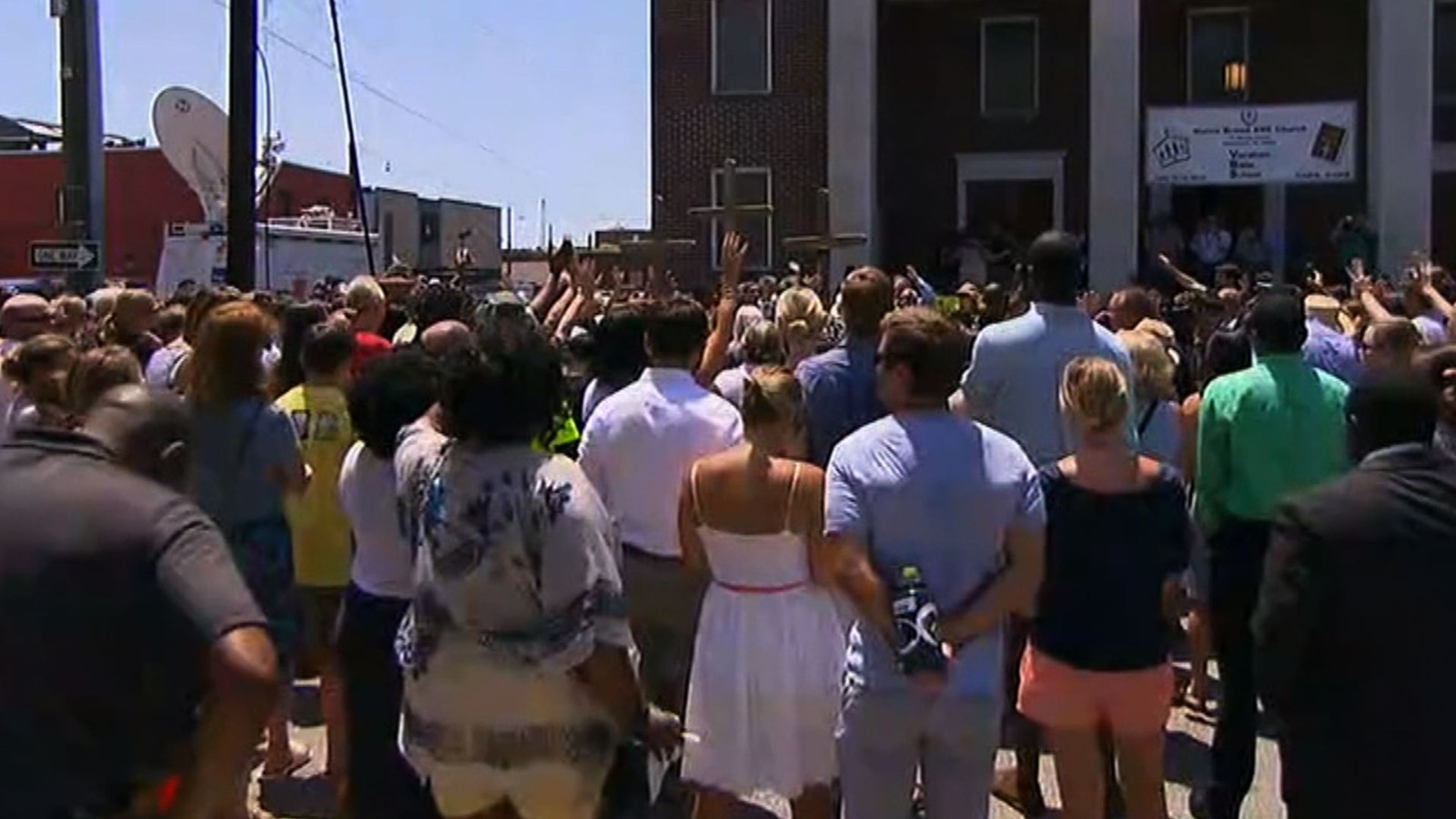
This act of grace profoundly impacted the city’s reaction. Rather than erupting in civil unrest, Charleston saw a massive outpouring of unity. The phrase "Charleston Strong" became a symbol of this resilience. In the days following the attack, thousands of people of all races joined hands across the Arthur Ravenel Jr. Bridge in a "Bridge to Peace" march.
The Mother Emanuel Memorial
By 2026, the Mother Emanuel Memorial has become a site of pilgrimage and reflection. Designed to honor the "Emanuel Nine," the memorial features two "fellowship benches" facing each other, symbolizing the welcome the parishioners extended to the shooter. A marble fountain inscribed with the names of the victims sits at the center.
The memorial serves not only as a place of mourning but as an educational tool. It provides context on the history of the AME church and the systemic issues that led to the tragedy. It is maintained by the Mother Emanuel Memorial Foundation, which works to ensure that the lives of the nine individuals are remembered for their contributions rather than just their deaths.
Legal and Security Changes for Houses of Worship
The SC church shooting changed how religious organizations approach security. In the years following 2015, the Department of Homeland Security (DHS) and the FBI increased outreach to houses of worship. Many churches now utilize "Nonprofit Security Grants" to install cameras, reinforced doors, and active shooter training programs.
However, the AME denomination has struggled with the balance between maintaining an "open door" policy—central to their Christian mission—and ensuring the safety of their congregants. The 2015 event proved that even the most sacred spaces are not immune to extremist violence.
Frequently Asked Questions
What is the "Charleston Loophole"?
The Charleston Loophole refers to a provision in the Brady Handgun Violence Prevention Act that allows a gun sale to proceed if a background check is not completed within three business days. In the case of the SC church shooting, the FBI needed more time to investigate Dylann Roof's record, but because the three days passed, the dealer sold him the weapon legally.
Is Dylann Roof still on death row in 2026?
Yes. As of 2026, Dylann Roof remains on federal death row at the Terre Haute Federal Correctional Complex. While his legal team has filed various appeals regarding his mental competency and the nature of the federal charges, his death sentence has been upheld by the appellate courts.
How did the shooting affect the Confederate flag in South Carolina?
The shooting was the direct catalyst for the removal of the Confederate battle flag from the South Carolina State House grounds. Then-Governor Nikki Haley signed the bill into law in July 2015, less than a month after the shooting, stating that the flag had been hijacked by a "sick and twisted" ideology.
Who were the victims of the Mother Emanuel shooting?
The nine victims, known as the Emanuel Nine, were Clementa C. Pinckney, Cynthia Marie Graham Hurd, Susie Jackson, Ethel Lee Lance, Depayne Middleton-Doctor, Tywanza Sanders, Daniel L. Simmons, Sharonda Coleman-Singleton, and Myra Thompson. They ranged in age from 26 to 87.
What is the significance of the Mother Emanuel AME Church?
Founded in 1816, Mother Emanuel is the oldest AME church in the South. It has a long history of civil rights activism and resistance against slavery and Jim Crow laws. Its historical importance made it a specific target for the racially motivated attack in 2015.
Final Recommendations for Further Action
For those looking to honor the memory of the victims or support the community, several avenues exist. Visiting the Mother Emanuel Memorial in Charleston provides a direct way to pay respects and learn about the "Emanuel Nine." Contributions to the Mother Emanuel Hope Fund support the ongoing needs of the survivors and the families of the deceased.
On a broader scale, staying informed about hate crime legislation and advocating for policies that address the "Charleston Loophole" are practical steps toward preventing future tragedies. Engaging with local interfaith and interracial organizations can also help foster the unity and understanding that the Charleston community demonstrated in the wake of June 17, 2015.
Image Gallery
Select an image to open it in a new tab.



Lars Thomsen
Global Labor Markets and Economic Strategy Editor
