
Organizational governance is the framework of rules, practices, and processes by which an organization is directed, controlled, and held accountable. It encompasses the internal policies and external regulations that balance the interests of stakeholders—such as shareholders, management, customers, suppliers, financiers, and the community—while ensuring the entity achieves its strategic objectives with transparency and ethical integrity.
The Core Components of Organizational Governance
At its most fundamental level, organizational governance functions as the "nervous system" of an entity. It defines who has the authority to make decisions, who is accountable for those decisions, and the mechanisms by which performance is measured and corrected. Unlike management, which focuses on the day-to-day operations required to achieve goals, governance focuses on the high-level oversight that ensures those operations remain aligned with the organization’s mission and legal obligations.
Effective governance is built upon several foundational pillars:
- Accountability: The obligation of those in power to provide an account of their actions and accept responsibility for them.
- Transparency: The clarity with which an organization’s actions, financial status, and decision-making processes are communicated to stakeholders.
- Fairness: Ensuring that all stakeholders are treated equitably and that the rights of minority interests are protected.
- Responsibility: The duty of the organization to comply with applicable laws, regulations, and ethical standards that govern its industry.
These pillars serve to mitigate agency problems—the conflicts of interest that arise when those managing the company (agents) do not act in the best interests of those who own or have a stake in the company (principals).
The Distinction Between Governance and Management
A common point of confusion for leaders and stakeholders is the blurred line between governance and management. To understand organizational governance, one must recognize that it is a supervisory function rather than an executive one.
- Governance (The Board Level): The board of directors or governing body defines the organization's vision, sets the risk appetite, selects and oversees the CEO, and ensures long-term viability. They ask, "Are we doing the right things?"
- Management (The Executive Level): The leadership team, including the CEO and C-suite, executes the strategy, manages assets, and oversees operational teams. They ask, "Are we doing things right?"
When a board interferes in daily operations, it risks "micromanagement," which can lead to a loss of objectivity. Conversely, when management fails to follow the governance framework, it creates an environment ripe for ethical breaches, financial irregularities, and operational inefficiency.
Regulatory Requirements and Frameworks
Organizational governance does not exist in a vacuum. It is heavily influenced by the legal and regulatory environment of the jurisdiction in which the entity operates. For publicly traded companies, governance is often mandated by securities regulators. For example, in the United States, the Sarbanes-Oxley Act (SOX) of 2002 was a landmark piece of legislation that significantly tightened governance standards regarding financial disclosures and audit committees following major corporate scandals.
In 2026, organizations are increasingly subject to Environmental, Social, and Governance (ESG) reporting standards. While once voluntary, many jurisdictions now require companies to disclose their impact on climate, labor practices, and board diversity. Organizations must integrate these requirements into their governance structure, ensuring that ESG metrics are treated with the same rigor as financial performance.
Structural Mechanisms: How Governance is Enforced
To put the definition into practice, organizations employ several structural mechanisms that serve as checks and balances:
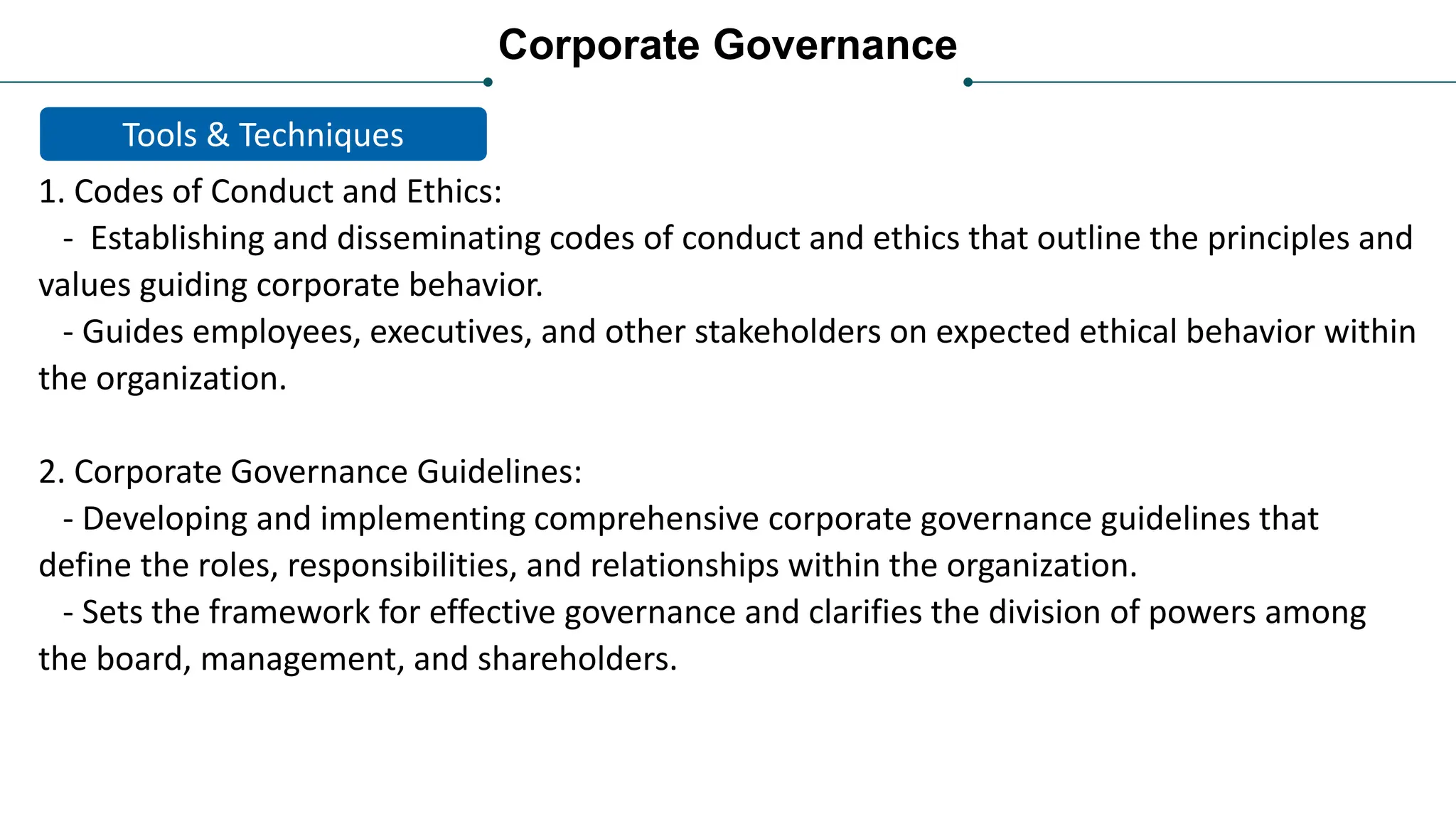
- Board Committees: Boards often delegate oversight to specialized committees, such as the Audit Committee (financial oversight), the Compensation Committee (executive pay), and the Nominating/Governance Committee (board recruitment).
- Internal Controls: These are the systems and processes put in place to ensure data integrity, prevent fraud, and comply with laws. This includes internal audits and risk management protocols.
- The Charter and Bylaws: These are the formal legal documents that dictate how an organization must be run, including voting rights, the frequency of board meetings, and the process for removing directors.
- Whistleblower Policies: Robust governance requires a mechanism for employees and stakeholders to report misconduct without fear of retaliation. This is a critical component of institutional integrity.
Comparing Governance Models
The way an organization approaches governance often depends on its size, industry, and legal structure. The following table highlights common differences in governance focus:
| Feature | For-Profit Corporation | Non-Profit Organization | Government/Public Sector |
|---|---|---|---|
| Primary Goal | Shareholder value/profit | Mission fulfillment | Public service/policy goals |
| Key Stakeholders | Shareholders, investors | Donors, beneficiaries, public | Taxpayers, citizens |
| Accountability | Market performance, regulators | Donors, regulatory filings | Voters, public law, oversight bodies |
| Governance Focus | Financial growth, risk | Ethical impact, mission reach | Public welfare, budget efficiency |
Prerequisites for Strong Governance
Building a strong governance culture requires more than just a set of bylaws. It requires the right "tone at the top." An organization cannot govern effectively if its leadership does not prioritize integrity over short-term gains.
- Board Independence: A majority of the board should consist of independent members—individuals who do not have a material financial or employment relationship with the organization. This ensures that their oversight is objective.
- Continuous Education: Board members must stay current with industry-specific regulations and evolving governance best practices. By 2026, this increasingly includes technological literacy regarding artificial intelligence and cybersecurity oversight.
- Defined Risk Appetite: The organization must have a clear understanding of the level of risk it is willing to accept to pursue its strategic goals. Governance is essentially the process of managing that risk within those established parameters.
Common Governance Failures and How to Avoid Them
Even with robust frameworks, organizations often experience governance failures. Recognizing these patterns is the first step toward effective remediation.
1. Dominant CEO Syndrome When a single executive exercises excessive control over the board, the system of checks and balances collapses. This often leads to a "rubber-stamp" board, where directors fail to challenge the executive's decisions.
- Solution: Separate the roles of Board Chair and CEO to ensure independent leadership at the board level.
2. Lack of Diverse Perspectives Groupthink is a significant risk in governance. When all members of a board have the same background or tenure, they may fail to spot unconventional risks or miss opportunities to innovate.
- Solution: Prioritize board diversity—including cognitive, professional, and demographic diversity—to challenge prevailing assumptions.
3. Ignoring Non-Financial Risks Many governance frameworks focus too heavily on financial audits and ignore "soft" risks like corporate culture, cybersecurity posture, and environmental impact.
- Solution: Conduct regular, integrated risk assessments that evaluate both traditional financial risks and emerging operational or reputational risks.
The Role of Technology in Modern Governance
By 2026, technology has become an inextricable part of the governance toolkit. Governance, Risk, and Compliance (GRC) software platforms allow organizations to track regulatory changes, manage policy documentation, and automate audit reporting. These tools provide a "single source of truth," which is essential for ensuring that all stakeholders—from the board to the front-line staff—are operating based on the same set of rules and data.
However, technology also introduces new risks. Governance now requires overseeing data privacy, algorithmic bias, and digital transformation initiatives. A board that is technologically illiterate is, in 2026, a board that is failing in its fiduciary duty to protect the organization from modern existential threats.
Frequently Asked Questions
What is the difference between organizational governance and corporate governance? Corporate governance is a specific subset of organizational governance that pertains to the structures and processes of corporations. While the terms are often used interchangeably, "organizational governance" is the broader term that applies to non-profits, governments, and smaller entities that may not follow the strict corporate regulatory framework of a public company.
Why is board independence considered a gold standard? Board independence ensures that oversight is not compromised by conflicts of interest. When a director has no financial stake in the outcome of an executive’s decision, they are better positioned to offer objective, critical feedback that protects the organization’s long-term interests over the CEO's personal gain.
How does an organization measure the effectiveness of its governance? Effectiveness is measured through performance indicators such as the results of independent external audits, the stability of the leadership team, the organization's ability to navigate crises, and its compliance record. Boards should perform an annual "Board Self-Assessment" to evaluate their own efficiency and collective competence.
What should a new board member prioritize to ensure good governance? A new board member should prioritize understanding the organization’s legal charter, its current risk register, and the cultural dynamics of the board. Asking probing questions about the process—rather than the content of daily decisions—is the most effective way to uphold governance duties.
Can governance stifle innovation? While critics argue that too many rules lead to bureaucracy, effective governance is actually an enabler of innovation. By providing a clear "playing field" and defined risk appetite, governance gives management the security to innovate safely without fearing that the organization will collapse under uncontrolled risks.
Final Recommendation for Implementation
If you are tasked with auditing or building an organizational governance framework, start by reviewing your entity’s governing documents against the current regulatory requirements for your specific sector. Perform a gap analysis to identify where your oversight mechanisms—such as audit committees or risk management workflows—might be weak. In 2026, prioritize integrating digital risk management into your board’s agenda. Governance is an iterative process; schedule biannual reviews of your framework to ensure it evolves alongside the changing legal and technological landscape, rather than becoming a static, outdated document.
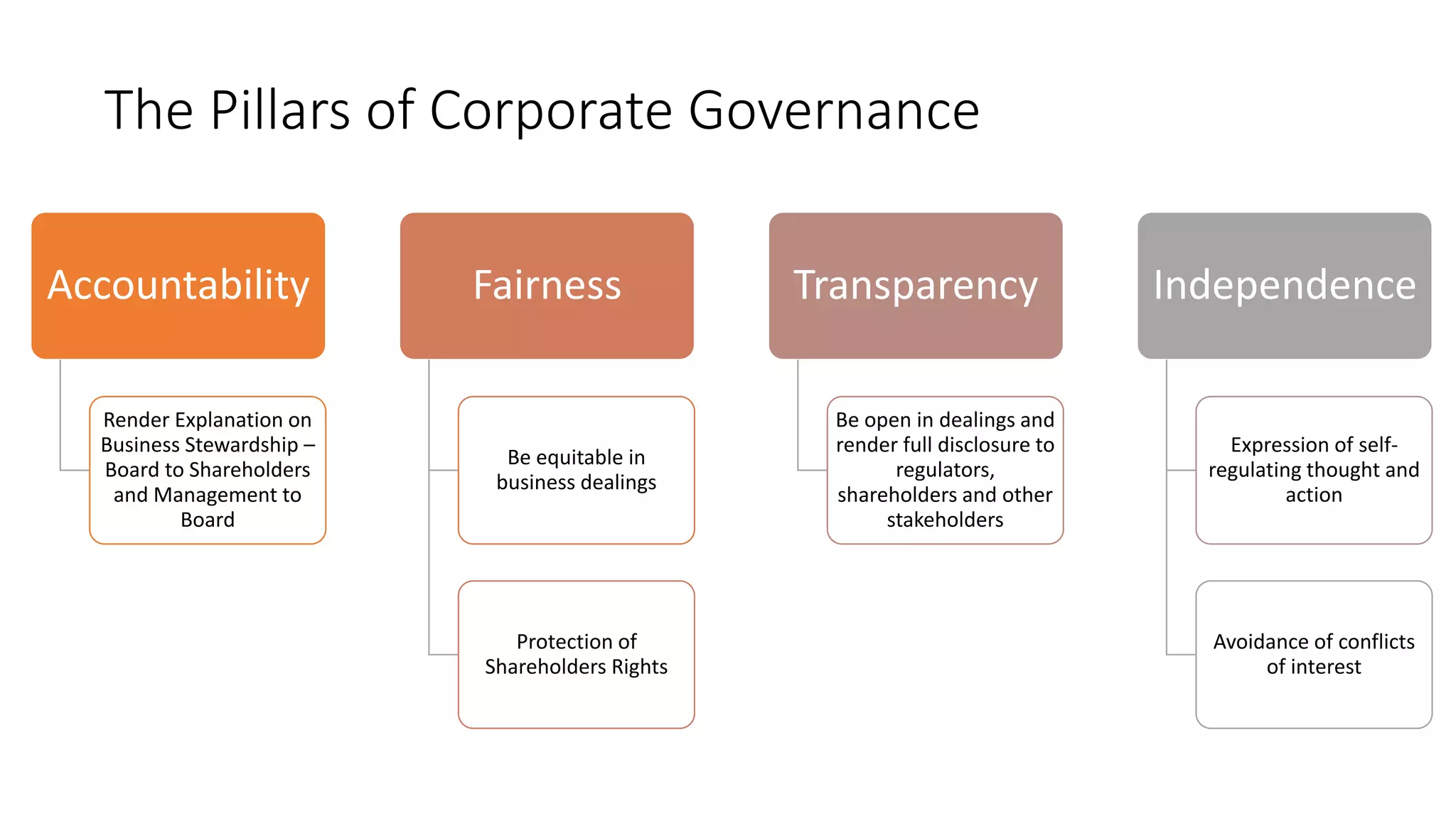
Image Gallery
Select an image to open it in a new tab.


Simon Caldwell
Enterprise Technology and Systems Editor
