King Salman International Airport: How Saudi Arabia’s New Megaproject is Reshaping Regional Travel in 2026

King Salman International Airport (KSIA) is a cornerstone of Saudi Arabia’s Vision 2030, transforming Riyadh into a preeminent global logistics and tourism hub. By integrating six parallel runways and massive sustainable infrastructure, it challenges established regional aviation strongholds, drastically increasing passenger capacity and streamlining transit across the Middle East.
As of 2026, the landscape of Middle Eastern aviation is undergoing a seismic shift. For decades, the regional "hub-and-spoke" model was dominated by Dubai International (DXB) and Doha’s Hamad International (DOH). However, the rapid development of King Salman International Airport in Riyadh has introduced a third, massive pillar to this network. This project is not merely an expansion of existing facilities but a ground-up reimagining of what an "aerotropolis"—a city built around an airport—can achieve in the 21st century.
The Vision Behind King Salman International Airport (KSIA)
Announced by His Royal Highness Crown Prince Mohammed bin Salman bin Abdulaziz in late 2022, KSIA was designed to serve as a bridge connecting the East and the West. The project is a primary vehicle for the Kingdom’s National Transport and Logistics Strategy, which aims to position Saudi Arabia as a global logistics hub. By 2026, the structural progress of the airport has become a testament to the speed of the Saudi Vision 2030 realization.
The airport is managed by the Public Investment Fund (PIF), which has ensured that the project integrates seamlessly with the launch of Riyadh Air, the nation’s newest premium carrier. The goal is to handle 120 million passengers by 2030 and eventually 185 million by 2050. This ambition is rooted in the Kingdom's geographical advantage: approximately 80% of the world’s population lives within an eight-hour flight of Riyadh.
Engineering and Scale: Defining the Aerotropolis
The sheer scale of King Salman International Airport distinguishes it from any other aviation project currently under construction. Spanning approximately 57 square kilometers, the site encompasses the existing King Khalid International Airport (KKIA) terminals but expands far beyond them.
Six Parallel Runways
The most striking technical feature is the plan for six parallel runways. In aviation, the number of parallel runways determines the maximum hourly throughput of aircraft. While most major international airports operate with two or four, the six-runway configuration at KSIA allows for simultaneous take-offs and landings without the restrictive "wake turbulence" separations required on intersecting or closely spaced runways. This ensures that even during peak hours, congestion is virtually non-existent, a major pain point for older hubs in Europe and Asia.
Sustainable Infrastructure and LEED Integration
In line with the Saudi Green Initiative, the airport is designed to achieve LEED Platinum certification. This is being accomplished through:
- Renewable Energy Integration: Large-scale solar arrays integrated into the terminal roofs and surrounding grounds provide a significant portion of the facility's power.
- Water Conservation: Advanced greywater recycling systems are used for the extensive landscaping that characterizes the "green" interior of the terminals.
- Sustainable Materials: The use of locally sourced materials and high-efficiency cooling systems reduces the carbon footprint of the massive structure.

Regional Competition: Shifting the Center of Gravity
The emergence of KSIA has forced a recalibration of regional travel patterns. For years, travelers between Europe and Asia or Africa and Asia almost exclusively transitioned through Dubai or Doha. Saudi Arabia is now capturing a significant share of this transit traffic by offering more direct routes and competitive transit times.
The competition is not just about passenger numbers; it is about the "stopover" economy. The Saudi government has introduced streamlined transit visas and integrated the airport with the Riyadh Metro, allowing passengers with long layovers to visit the city’s new landmarks, such as Diriyah and the Mukaab, within minutes. This integration of the airport into the city’s fabric is what differentiates the "aerotropolis" concept from a standard transit hub.
Riyadh Air: The Catalyst for Growth
The airport's success is inextricably linked to Riyadh Air, which began operations with a focus on digital-first passenger experiences. By 2026, Riyadh Air has established a robust network of over 100 destinations, utilizing the state-of-the-art facilities at KSIA.
Unlike older airlines that rely on legacy IT systems, Riyadh Air and KSIA share a unified digital backbone. This allows for:
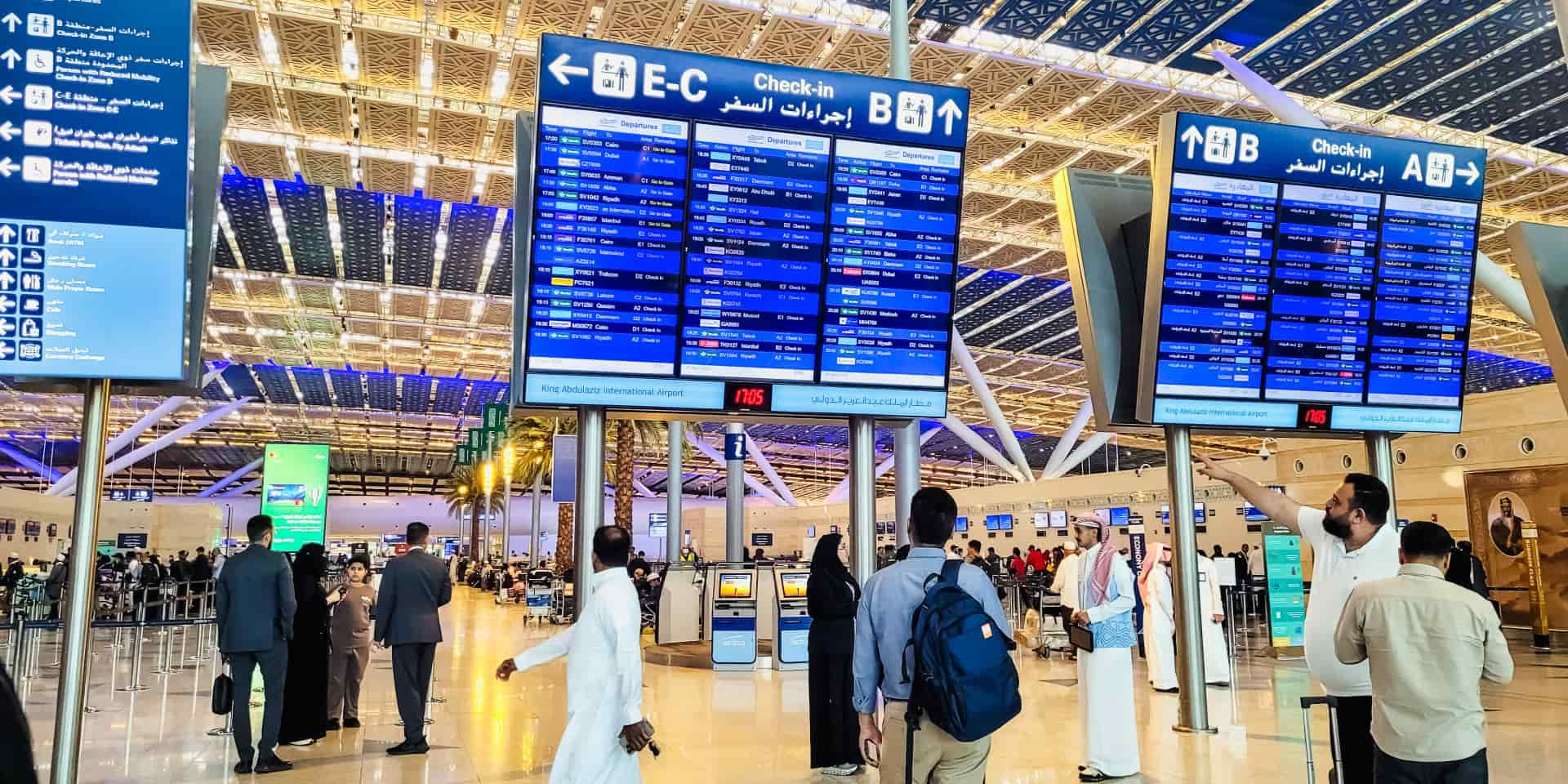
- Biometric Transit: Passengers can move from the curb to the gate using facial recognition, eliminating the need for physical passports or boarding passes at multiple checkpoints.
- Predictive Baggage Handling: Using AI-driven logistics, the airport has achieved one of the lowest "mishandled bag" rates in the industry, even with the high volumes of transit luggage.
- Seamless Connectivity: The terminal design minimizes walking distances between gates, a common complaint at larger airports like Istanbul or Dubai.
Logistics and Global Trade Connectivity
Beyond passengers, KSIA is a cornerstone of the Global Supply Chain Resilience Initiative. Saudi Arabia aims to increase its air cargo capacity to 4.5 million tons annually by 2030. The airport features a massive dedicated cargo zone that acts as a "Special Integrated Logistics Zone" (SILZ).
This zone allows multinational corporations to assemble, manufacture, and distribute products with tax incentives and simplified customs procedures. By 2026, several global tech and pharmaceutical firms have established distribution centers within the KSIA perimeter, utilizing Riyadh as a "central warehouse" for the Middle East and Africa. This shift is reshaping how regional retailers manage their inventory, moving away from sea-freight reliance toward high-speed air logistics.
Comparison of Major Regional Aviation Hubs (2026 Estimates)
The following table compares the projected and current capacities of the leading regional hubs to illustrate the impact of KSIA.
| Feature | King Salman International (KSIA) | Dubai International (DXB) | Hamad International (DOH) |
|---|---|---|---|
| Total Land Area | ~57 sq km | ~29 sq km | ~22 sq km |
| Runways | 6 Parallel (Planned) | 2 Parallel | 2 Parallel |
| 2030 Passenger Goal | 120 Million | ~100 Million+ | ~70 Million |
| Primary Focus | Aerotropolis / Multi-modal | Global Transit Hub | Premium Transit Hub |
| Sustainability | LEED Platinum Targeted | Retrofitted Green Tech | GSAS Certified |
| Metro Link | Direct (Riyadh Metro) | Direct (Dubai Metro) | Direct (Doha Metro) |
The Passenger Experience in 2026
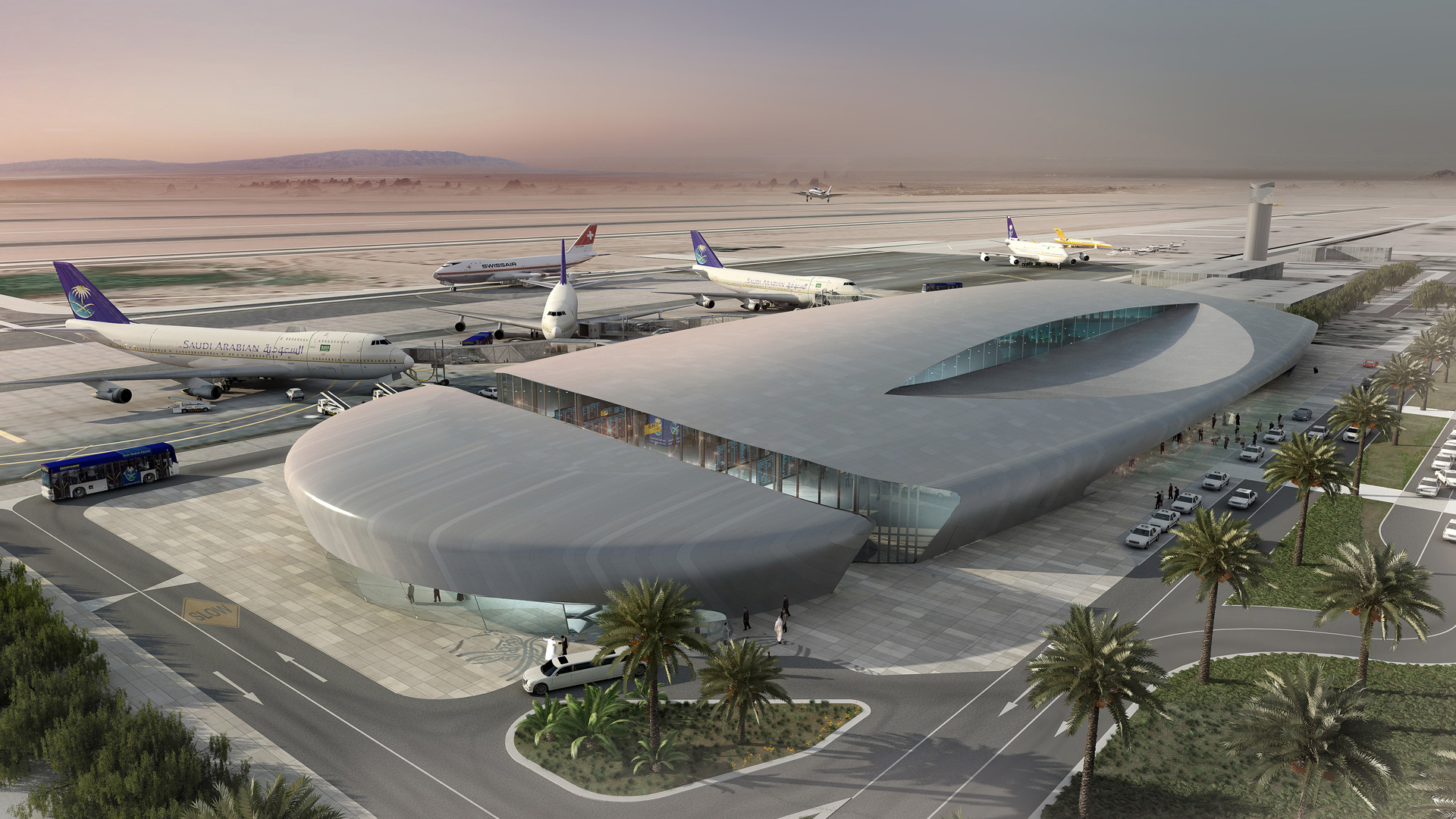
For the traveler, the new airport represents a departure from the "mall-centric" airport design of the 1990s and 2000s. The architectural design, led by Foster + Partners, focuses on natural light and "human-scale" spaces.
Architectural Identity
The terminal designs evoke the natural landscape of the Arabian Peninsula while providing ultra-modern amenities. High ceilings and the use of "smart glass" regulate temperature and glare, creating a comfortable environment even in the peak of the Saudi summer.
Retail and Hospitality
The "airport city" includes 12 square kilometers of support facilities, residential areas, and recreational spaces. This means the airport is no longer just a place to wait for a flight; it is a destination for dining, luxury shopping, and even business meetings for those who do not wish to enter the city center. Several five-star hotel brands have integrated properties directly into the terminal structures, catering to the "bleisure" (business and leisure) traveler.
Challenges and Operational Milestones
Despite the rapid progress, the scale of KSIA presents unique operational challenges. Managing the transition from the old King Khalid International Airport infrastructure to the new integrated KSIA systems requires precision.
- Airspace Management: With the increase in traffic, the General Authority of Civil Aviation (GACA) has implemented a new "Advanced Air Traffic Management System" to handle the high density of flights.
- Workforce Training: The airport and Riyadh Air have launched massive recruitment and training programs to ensure that the "Saudi Hospitality" brand is maintained at every touchpoint, employing tens of thousands of Saudi nationals in high-tech aviation roles.
Frequently Asked Questions
What will happen to the existing King Khalid International Airport?
King Khalid International Airport (KKIA) is being absorbed into the much larger King Salman International Airport complex. The existing terminals are undergoing extensive renovation to match the technological and aesthetic standards of the new development, ensuring a seamless experience across the entire 57-square-kilometer site.
Is the airport fully open in 2026?
By 2026, significant portions of the new infrastructure are operational, particularly those supporting Riyadh Air’s expanding fleet. However, like all megaprojects of this scale, KSIA is being delivered in phases. The initial phases focus on increasing runway capacity and cargo logistics, with the full 185-million passenger capacity targeted for 2050.
How does KSIA benefit the local Saudi economy?
The airport is expected to contribute approximately SAR 27 billion (USD 7.2 billion) annually to non-oil GDP. It is projected to create 103,000 direct and indirect jobs by 2030, ranging from aviation engineering and air traffic control to hospitality and retail management.
How does the airport integration with Riyadh city work?
The airport is a key node on the Riyadh Metro network. This allows passengers to travel from the terminal to the heart of the King Abdullah Financial District (KAFD) or other major city centers in under 30 minutes. Additionally, the "aerotropolis" design includes residential and office spaces, making the airport a self-sustaining economic zone.
What makes the "six runways" so significant?
In traditional hub airports, runway congestion is the primary cause of flight delays. By having six parallel runways, KSIA can handle a much higher volume of aircraft movements per hour. This reduces "taxi times" and eliminates the need for aircraft to circle in "holding patterns," which also saves fuel and reduces carbon emissions.
Does the airport offer special facilities for business travelers?
Yes, KSIA features dedicated "Innovation Hubs" and business lounges that go beyond standard airport seating. These include high-speed 6G connectivity, private meeting rooms, and "pod" hotels for short-term rest, specifically designed for the modern global executive who needs to remain productive during transit.
Practical Recommendations for Travelers and Businesses
For travelers planning to visit or transit through Saudi Arabia in 2026, it is highly recommended to use the Riyadh Air app or the official KSIA portal to pre-register biometric data. This will allow you to bypass traditional immigration queues and move through the "Smart Gates" in seconds.
For businesses looking to expand into the Middle East, investigating the Special Integrated Logistics Zone (SILZ) at KSIA is essential. The tax incentives and proximity to the world’s most advanced air-cargo infrastructure provide a significant competitive advantage for companies involved in e-commerce, electronics, or high-value manufacturing.
Image Gallery
Select an image to open it in a new tab.
Zara El-Hashem
Sociocultural Dynamics and Academics Writer
