The Marriage Equality Supreme Court Decision: A Comprehensive Guide to Obergefell v. Hodges

The landmark marriage equality Supreme Court decision is Obergefell v. Hodges, handed down on June 26, 2015. In a 5-4 ruling, the Court held that the Fourteenth Amendment requires all states to grant marriage licenses to same-sex couples and to recognize same-sex marriages validly performed in other jurisdictions.
The journey toward national marriage equality in the United States was a decades-long legal and social movement that culminated in one of the most significant civil rights rulings of the 21st century. As of 2026, the precedent set by the Supreme Court remains the law of the land, reinforced by subsequent federal legislation designed to protect these rights against potential judicial shifts. Understanding this decision requires an analysis of the legal theories used, the specific benefits it unlocked, and the current legislative safeguards that exist today.
Historical Context and the Road to the High Court
Before the 2015 ruling, the legal landscape for same-sex couples was a "patchwork" of state laws. Some states allowed marriage, others offered civil unions or domestic partnerships, and many had constitutional bans on any form of legal recognition for same-sex relationships.
The Defense of Marriage Act (DOMA)
Passed in 1996, the Defense of Marriage Act (DOMA) was a federal law that defined marriage as the legal union between one man and one woman for all federal purposes. This prevented same-sex couples, even those legally married in states like Massachusetts (the first to legalize it in 2004), from accessing federal benefits such as Social Security survivor benefits, joint tax filing, and immigration protections.
United States v. Windsor (2013)
The first major crack in the federal prohibition came with United States v. Windsor. The Supreme Court ruled that Section 3 of DOMA—the portion defining marriage—was unconstitutional under the Due Process Clause of the Fifth Amendment. While this allowed the federal government to recognize same-sex marriages from states where they were already legal, it did not require states with bans to change their laws. This discrepancy created significant legal hurdles for couples who moved between states.
The Obergefell v. Hodges Ruling Explained
In 2015, several cases from Ohio, Michigan, Kentucky, and Tennessee were consolidated into Obergefell v. Hodges. The plaintiffs, including James Obergefell, argued that state bans on same-sex marriage violated the Fourteenth Amendment.
The Majority Opinion
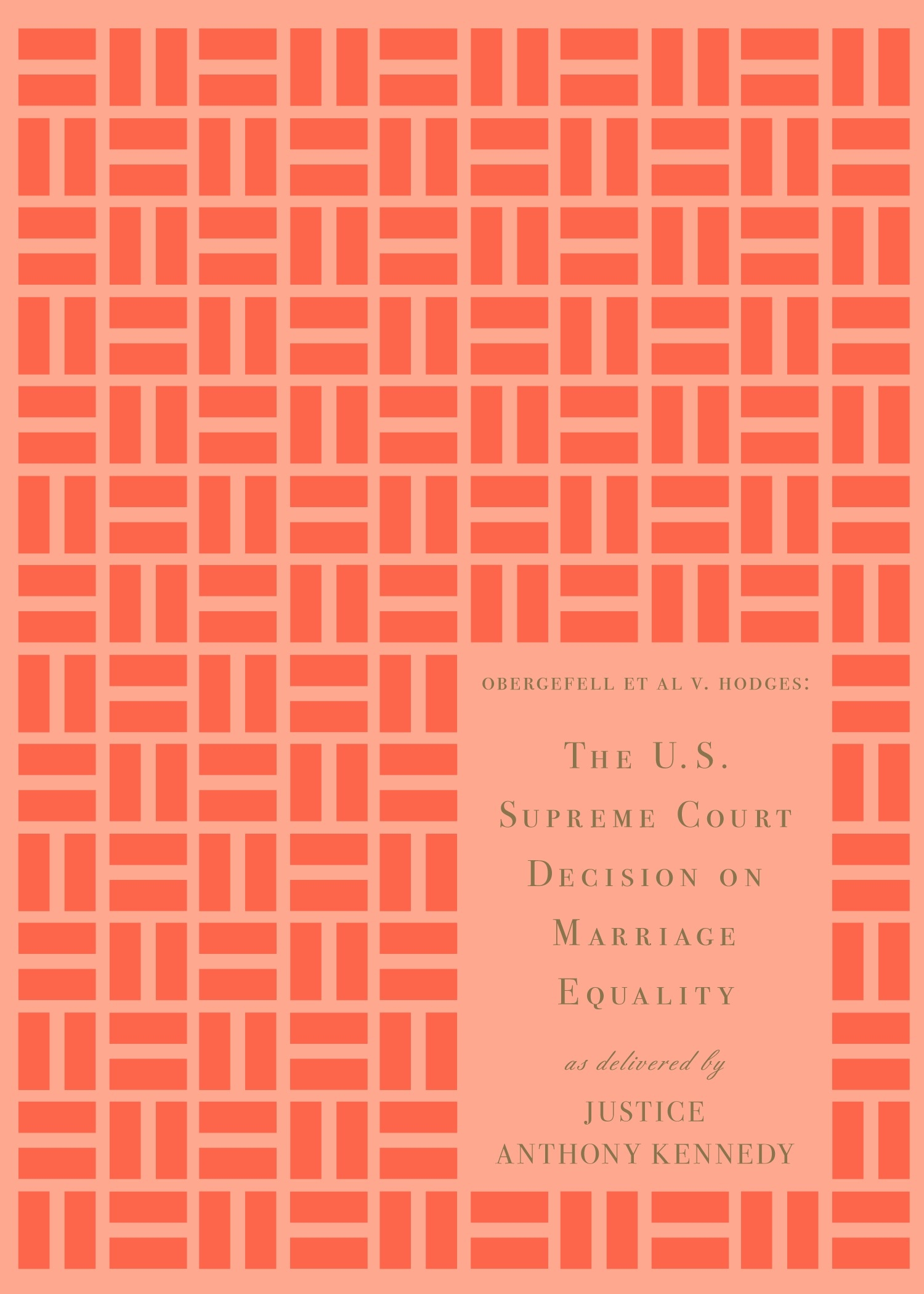
Justice Anthony Kennedy wrote the majority opinion, joined by Justices Ginsburg, Breyer, Sotomayor, and Kagan. The Court identified four distinct principles and traditions that demonstrate why the right to marry is fundamental and applies to same-sex couples:
- Individual Autonomy: The right to personal choice regarding marriage is inherent in the concept of individual autonomy.
- Unique Union: Marriage supports a two-person union unlike any other in its importance to the committed individuals.
- Safeguarding Children: The right to marry safeguards children and families, providing stability and recognition for the homes in which children are raised.
- Social Order: Marriage is a keystone of the nation’s social order, and there is no difference between same-sex and opposite-sex couples with respect to this principle.
The Court concluded that "the right to marry is a fundamental right inherent in the liberty of the person, and under the Due Process and Equal Protection Clauses of the Fourteenth Amendment, couples of the same-sex may not be deprived of that right and that liberty."
The Dissenting Arguments
The four dissenting justices (Roberts, Scalia, Thomas, and Alito) focused primarily on the role of the judiciary versus the legislature. Chief Justice John Roberts argued that the Constitution does not define marriage and that the decision should have been left to the democratic process within the states. Justice Scalia’s dissent was particularly sharp, criticizing the majority for what he viewed as "judicial activism" and an overreach of the Court's authority.
The Role of the Fourteenth Amendment
The decision rested on two pillars of the Fourteenth Amendment: the Due Process Clause and the Equal Protection Clause.
Due Process Clause
This clause prohibits the government from depriving any person of "life, liberty, or property, without due process of law." The Court has long held that this includes certain "unenumerated" fundamental rights not specifically listed in the Constitution, such as the right to privacy and the right to marry. The Obergefell decision affirmed that the liberty protected by the Due Process Clause extends to certain personal choices central to individual dignity and autonomy, including intimate association.
Equal Protection Clause
This clause mandates that no state shall deny to any person within its jurisdiction "the equal protection of the laws." The Court found that denying same-sex couples the same legal marriage recognition afforded to opposite-sex couples created a system of inequality that devalued the lives and families of LGBTQ+ individuals. By excluding them from a fundamental institution, states were essentially branding their relationships as "lesser."
Practical Impacts: Benefits, Taxes, and Legal Rights
The Obergefell decision triggered an immediate shift in the practicalities of daily life for hundreds of thousands of couples. By 2026, these impacts have become deeply integrated into the American economic and legal systems.
Federal and State Benefits
Marriage equality granted access to over 1,100 federal statutory provisions in which marital status is a factor. These include:
- Social Security: The ability to receive survivor benefits and spousal benefits.
- Taxation: The right to file joint federal and state income tax returns, which often results in lower tax liability for many couples.
- Healthcare: The right to be included on a spouse’s employer-provided health insurance plan and the right to make medical decisions for an incapacitated spouse.
- Immigration: The ability for U.S. citizens to sponsor a foreign-born spouse for a green card.
Parental and Inheritance Rights
Prior to the decision, non-biological parents in same-sex relationships often had no legal standing regarding their children unless they completed an expensive second-parent adoption process. Obergefell simplified legal parentage, ensuring that both spouses could be listed on birth certificates and have equal custody and visitation rights. It also protected inheritance rights, allowing property to pass to a surviving spouse without the burden of heavy inheritance taxes or the risk of relatives contesting the estate in the absence of a will.
The Respect for Marriage Act (2022)
In the years following Obergefell, particularly after the 2022 Dobbs v. Jackson decision (which overturned Roe v. Wade), concerns grew that the Supreme Court might reconsider other substantive due process precedents, including marriage equality.
To mitigate this risk, Congress passed the Respect for Marriage Act (RFMA) in late 2022. As we look at the landscape in 2026, the RFMA serves as a critical statutory backstop.
What the RFMA Does:
- Statutory Requirement for Recognition: It requires the federal government and all states to recognize any marriage that was valid in the state where it was performed.
- Repeal of DOMA: It officially repealed the 1996 Defense of Marriage Act, which had remained on the books despite being unenforceable.
- Interstate Comity: If a state were to stop issuing same-sex marriage licenses in the future (due to a potential reversal of Obergefell), that state would still be legally required to recognize a same-sex marriage performed in another state where it remains legal.
What the RFMA Does Not Do:
- National Licensing Requirement: It does not technically require every state to issue same-sex marriage licenses if Obergefell were overturned. It only mandates the recognition of valid licenses from other states.
Comparison of Legal Rights Pre- and Post-Obergefell
| Feature | Pre-2015 (State-Dependent) | Post-2015 (National Standard) |
|---|---|---|
| Marriage Licensing | Prohibited in 13+ states; varied by region. | Mandatory in all 50 states and D.C. |
| Federal Recognition | Limited (only after 2013 Windsor ruling). | Full recognition for all federal purposes. |
| Interstate Validity | Not guaranteed (non-recognition states). | Guaranteed by Obergefell and RFMA. |
| Joint Tax Filing | Often prohibited at the state level. | Available for federal and all state returns. |
| Parental Rights | Fragile; required second-parent adoption. | Presumptive legal parentage in marriage. |
| Hospital Visitation | Frequently denied or required legal POA. | Protected as a fundamental marital right. |
Frequently Asked Questions
Does the decision force religious institutions to perform same-sex marriages?
No. The First Amendment protects the rights of religious organizations to decide which marriages they will solemnize according to their own doctrines. The Obergefell decision applies to civil marriage—the legal contract recognized by the government—and does not infringe upon the internal religious practices or beliefs of any church, mosque, synagogue, or other religious body.
Can a state currently refuse to issue a marriage license to a same-sex couple?
As of 2026, no state can refuse to issue a marriage license to a same-sex couple. The Obergefell precedent remains active and binding on all state officials. Any official who refuses to issue a license based on the gender of the applicants would be in violation of the U.S. Constitution and could face federal lawsuits and civil rights claims.
What happens if the Supreme Court overturns Obergefell?
If the Supreme Court were to overturn Obergefell, the authority to issue marriage licenses would return to the individual states. Some states would likely keep marriage equality, while others might revert to bans. However, under the Respect for Marriage Act of 2022, even if a state stops issuing new licenses, it must continue to recognize existing marriages and any new marriages performed in states where they remain legal.
How does this affect international marriages?
The U.S. government recognizes all same-sex marriages performed abroad, provided they were legal in the jurisdiction where they occurred. Similarly, many foreign countries recognize U.S. same-sex marriages for immigration and legal purposes, though this varies by country and depends on local laws and international treaties.
Are there still legal challenges to marriage equality?
While the core right to marry is established, there are ongoing legal debates regarding "religious freedom" exemptions. These cases typically involve private businesses (like bakers or photographers) who argue that they should not be required to provide services for same-sex weddings if it violates their religious beliefs. The Supreme Court has addressed several of these cases, such as Masterpiece Cakeshop and 303 Creative LLC, often siding with the business owners on First Amendment free speech grounds without overturning the underlying right to marry.
Moving Forward: Verification and Next Steps
For couples seeking to exercise their rights or verify their legal status in 2026, the following steps are recommended:
- Obtain an Official License: Ensure your marriage is documented through a county clerk or appropriate state agency. A religious ceremony alone does not grant the legal protections afforded by the Obergefell decision.
- Update Federal Records: Notify the Social Security Administration (SSA) and the Internal Revenue Service (IRS) of your marital status to ensure you are receiving appropriate benefits and filing correctly.
- Review Estate Plans: While marriage provides many default protections, it is still advisable to have a will, power of attorney, and healthcare proxy in place to ensure your wishes are honored across all jurisdictions.
- Consult Legal Counsel for Complex Issues: If you are navigating international adoption, surrogacy, or multi-state property ownership, consult with an attorney specializing in LGBTQ+ family law to navigate the nuances of state-specific statutes that may still exist.
The Obergefell v. Hodges decision fundamentally changed the legal architecture of the American family. While legislative efforts like the Respect for Marriage Act provide additional security, the 2015 Supreme Court ruling remains the cornerstone of marriage equality in the United States.
Image Gallery
Select an image to open it in a new tab.


Celine Dubois
Contemporary Living and Global Arts Columnist
