
Life insurance payouts in Michigan are generally exempt from federal and state income taxes when received as a lump sum by a named beneficiary, though estate taxes, inheritance rules, and policy cash value withdrawals can introduce complex tax liabilities depending on how the contract is structured.
Navigating the financial landscape of life insurance requires an understanding of how both federal regulations and Michigan-specific state laws treat various types of policy transactions. Whether you are planning your estate, reviewing an existing policy, or expecting to receive a death benefit, knowing when and how life insurance becomes taxable prevents unexpected financial surprises. This guide breaks down the tax treatment of life insurance death benefits, cash value growth, policy loans, surrenders, and estate considerations under Michigan jurisdiction.
The Core Rule: Income Tax Exemption on Death Benefits
For the vast majority of beneficiaries, the primary question centers on whether the money received after a loved one passes away will be subject to income tax. Under both United States federal tax law (Internal Revenue Code Section 101(a)) and Michigan tax statutes, life insurance death benefits paid out as a lump sum are generally 100% income tax-free.
When a policyholder dies, the insurance company disburses the face value of the policy to the designated beneficiaries. This money is viewed by tax authorities as a replacement for lost economic support rather than as earned income. Consequently, you do not need to report a standard lump-sum death benefit as taxable income on your federal or Michigan individual income tax returns.
Exceptions to the Lump-Sum Income Tax Exemption
While the general rule exempts death benefits from income tax, several important exceptions can trigger taxation:
- Interest-Option Payouts: If the beneficiary chooses not to take a lump sum and instead leaves the death benefit with the insurance company to collect interest over time, the interest earned on that principal is treated as taxable income.
- Transfer-for-Value Rule: If a life insurance policy is sold or transferred to another party for valuable consideration (money or other assets) before the insured’s death, a portion of the death benefit may lose its tax-exempt status. Only the consideration paid plus any subsequent premiums paid by the new owner remain tax-free; the rest can be taxed as ordinary income.
- Employer-Owned Policies: Specific federal rules apply to policies owned by businesses on the lives of employees. If notice and consent requirements under IRC Section 101(j) are not properly met, the death benefit may become subject to income taxation.
Taxation of Life Insurance Cash Value While Living
Permanent life insurance policies—such as Whole Life, Universal Life, and Variable Life—accumulate a cash value component over time alongside the death benefit. The tax treatment of this cash value while the policyholder is still alive depends heavily on how the money is accessed.
1. Cash Value Growth
The interest, dividends, and investment gains that accumulate inside a permanent life insurance policy grow on a tax-deferred basis. As long as the money stays inside the policy and is not withdrawn, the policyholder does not pay annual income taxes on the growth. This is similar to the tax-deferred status found in traditional retirement accounts like traditional IRAs or 401(k)s.
2. Policy Withdrawals (FIFO Rule)
Policyholders can often withdraw cash from their permanent policies. When a withdrawal is made, the IRS applies the First-In, First-Out (FIFO) accounting rule.
- This means the withdrawals are treated as a return of the principal you paid in through premiums (your "cost basis") first.
- Because you already paid those premiums with after-tax dollars, these withdrawals are income tax-free.
- Once your withdrawals exceed your total cost basis, any additional money withdrawn is considered policy gain and is taxed as ordinary income.
3. Policy Loans
Instead of making an outright withdrawal, many policyowners borrow against their cash value. Generally, policy loans are not considered taxable income, even though you are borrowing against your own accumulated value. The insurance company uses your cash value as collateral for the loan, charging interest.
However, you must manage policy loans carefully. If the policy lapses or is surrendered while an outstanding loan balance exceeds your cost basis, the IRS treats the forgiven loan amount as a taxable distribution (known as "phantom income"), which can create an unexpected tax bill.
4. Policy Surrender
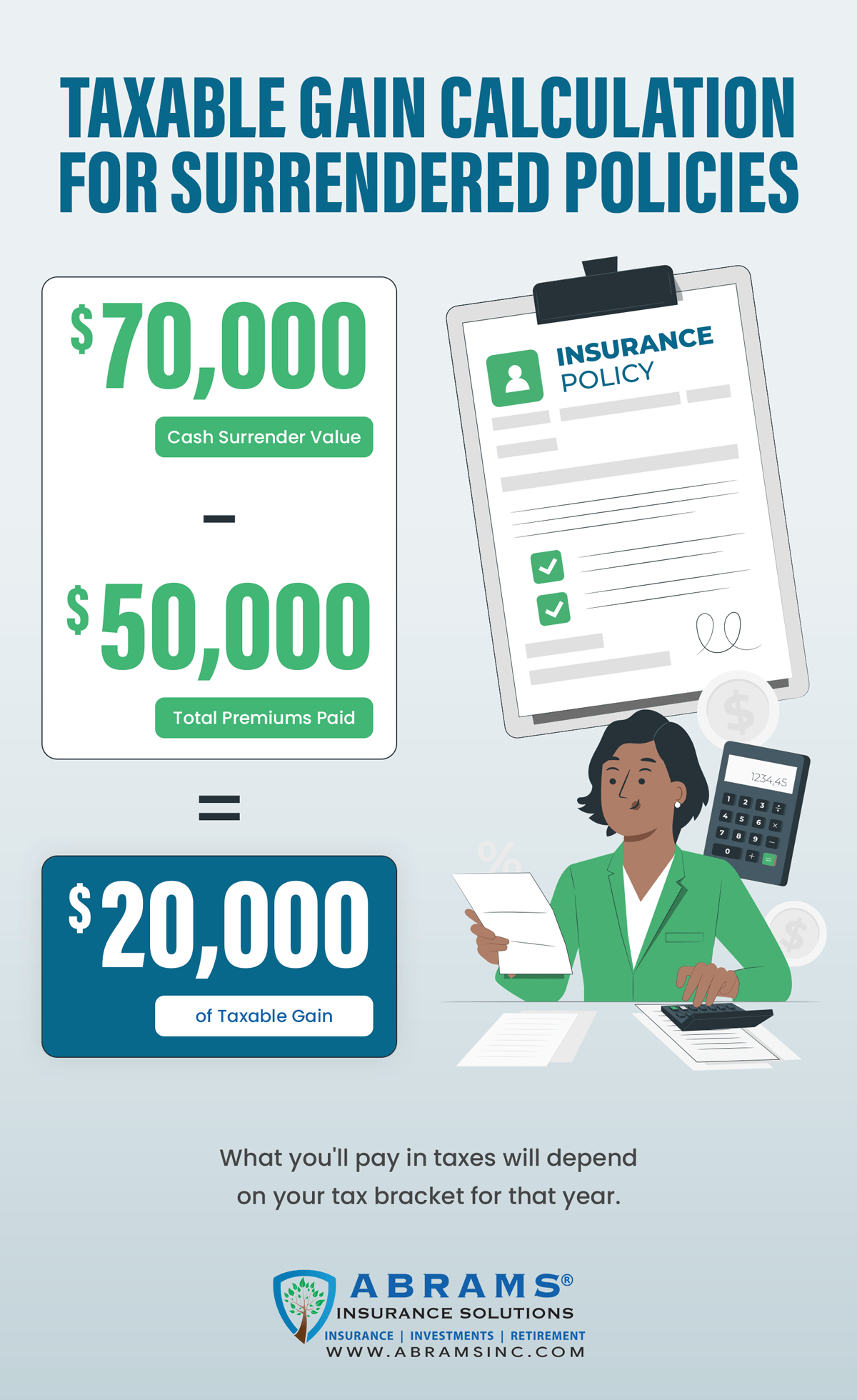
If you decide to cancel or surrender your permanent life insurance policy entirely, the insurance company will pay you the accumulated cash surrender value minus any surrender charges or outstanding loans.
- You will owe income tax only on the portion of the payout that exceeds your cost basis (total premiums paid minus any previous tax-free withdrawals).
- If the cash surrender value is less than the total premiums you paid, the loss is generally not tax-deductible.
| Policy Action | Tax Treatment in Michigan | Key Conditions |
|---|---|---|
| Lump-Sum Death Benefit | Tax-Free | Must be paid to a named beneficiary; interest options are excluded. |
| Cash Value Accumulation | Tax-Deferred | Growth is not taxed annually while remaining inside the policy. |
| Policy Withdrawals | Tax-Free up to Basis | Follows FIFO rule; amounts exceeding total premiums paid are taxed as ordinary income. |
| Policy Loans | Tax-Free | Must remain active; lapsing a policy with an outstanding loan triggers taxable gain. |
| Policy Surrender | Partially Taxable | Only the amount exceeding the total cost basis is subject to income tax. |

Michigan Estate Tax and Inheritance Tax Considerations
Beyond income tax, individuals often worry about estate and inheritance taxes when passing down wealth through life insurance.
At the state level, Michigan has no state estate tax and no state inheritance tax. Michigan repealed its pick-up estate tax to align with federal changes, meaning beneficiaries do not pay a state tax simply for inheriting assets, and estates are not taxed by the state government upon death.
At the federal level, the estate tax exemption is historically high, meaning very few estates owe federal estate taxes. However, it is a common misconception that life insurance death benefits are automatically excluded from an estate just because they are income tax-free.
Gross Estate Inclusion
Even though a death benefit is not subject to income tax, it can be included in the deceased person's gross estate for federal estate tax purposes if the insured retained "incidents of ownership" over the policy at the time of death. Incidents of ownership include:
- The right to change beneficiaries.
- The right to surrender or cancel the policy.
- The right to assign the policy or borrow against its cash value.
If the insured owned the policy directly, the full death benefit is counted toward the total value of their estate when calculating potential federal estate taxes.
Using an Irrevocable Life Insurance Trust (ILIT)
To prevent a large life insurance death benefit from bloating a taxable estate, high-net-worth individuals often utilize an Irrevocable Life Insurance Trust (ILIT). By transferring ownership of the policy to an ILIT during the insured’s lifetime, the insured legally gives up all incidents of ownership. When the insured passes away, the death benefit is paid directly to the trust for the benefit of the heirs. Because the insured did not own the policy at death, the proceeds are excluded from the gross estate, protecting the assets from federal estate taxation.
Common Mistakes and Misconceptions Regarding Life Insurance Taxation
Navigating insurance taxation involves intricate legal definitions. Avoiding common pitfalls ensures you do not trigger unintended tax penalties.
- Assuming Beneficiary Designations Do Not Matter: Leaving a life insurance policy payable to "Estate" rather than a named individual or trust is a frequent error. When a death benefit is paid to an estate, it must go through probate and can become subject to claims from creditors, potentially complicating tax execution.
- Ignoring Modified Endowment Contract (MEC) Rules: If you pump too much money into a permanent life insurance policy too quickly within a seven-year testing period, the IRS reclassifies it as a Modified Endowment Contract. Once a policy becomes an MEC, any withdrawals or loans are taxed on a Last-In, First-Out (LIFO) basis—meaning earnings come out first and are immediately taxed as ordinary income, often accompanied by a 10% IRS penalty if the owner is under age 59½.
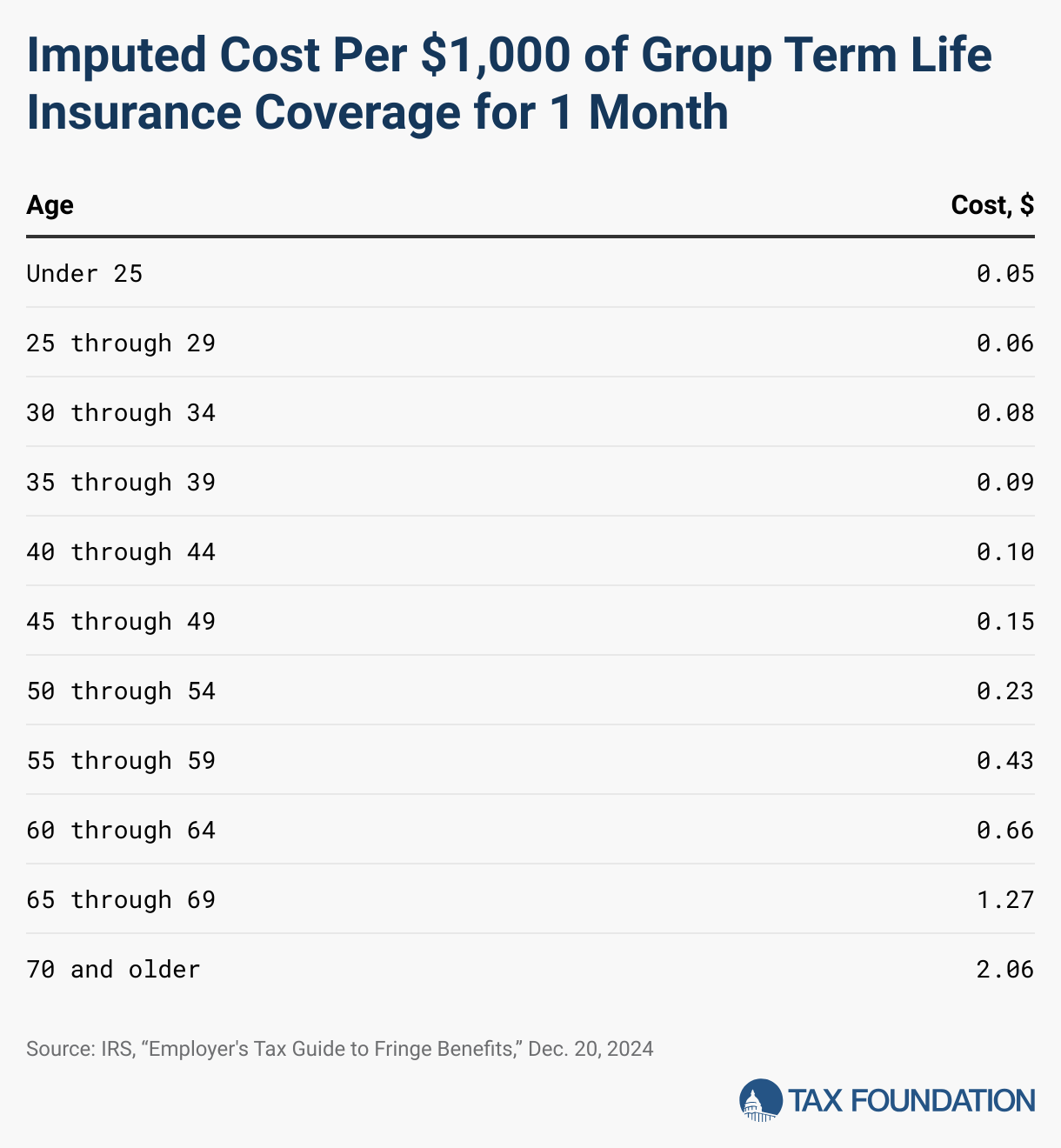
- Forgetting About Group-Term Life Insurance Limits: Under IRS Section 79, if an employer provides group-term life insurance coverage exceeding $50,000, the cost of the coverage provided by the employer that exceeds that threshold is considered taxable fringe benefit income. This amount, known as "imputed income," will show up on your W-2 form and be subject to payroll taxes in Michigan.
Frequently Asked Questions
Do I need to report a life insurance payout on my Michigan state tax return?
No. Because standard lump-sum death benefits are exempt from federal income tax, they are similarly excluded from Michigan individual income tax. You do not need to list a standard death benefit as taxable revenue on your state tax forms.
Are life insurance dividends taxable in Michigan?
Generally, no. Dividends paid by mutual life insurance companies are typically treated by the IRS and the state as a return of a portion of the premium you previously paid. Therefore, they are considered tax-free up to the point where total dividends exceed your total cumulative cost basis. Once dividends surpass your cost basis, any additional payouts are taxable.
What happens if I cash out my life insurance policy while living in Michigan?
If you surrender your permanent life insurance policy for its cash value, you will owe ordinary income tax on the portion of the payout that exceeds your cost basis (the total amount of premiums you paid into the policy). The insurance company will typically issue a Form 1099-R detailing the taxable gain, which you must report on your tax returns.
Can Michigan creditors seize life insurance proceeds for debt?
Under Michigan Compiled Laws (MCL 500.2207), life insurance proceeds and cash values are generally protected from the creditors of the insured, provided the policy is made payable to a spouse, child, or dependent. This statutory asset protection makes life insurance a valuable tool for estate preservation in Michigan.
Are accelerated death benefits taxable?
Accelerated death benefits—which allow term or permanent policyholders diagnosed with a terminal or chronic illness to access a portion of their death benefit while still alive—are generally received income tax-free, provided they meet specific health-related criteria outlined in federal tax code regulations.
Practical Next Steps
If you are a Michigan resident managing an existing policy, planning an estate, or expecting a payout, taking a structured approach ensures full compliance and optimal financial protection:
- Locate Policy Documents: Review your policy contract to verify ownership, beneficiary designations, and whether the policy is term or permanent.
- Calculate Your Cost Basis: For permanent policies, request an in-force ledger from your insurer to determine your total premiums paid versus your current cash value.
- Consult a Professional: Because tax laws interact dynamically with federal codes and individual financial situations, consult a certified public accountant (CPA), estate planning attorney, or financial advisor licensed in Michigan before executing large policy loans, surrenders, or trust transfers.
Image Gallery
Select an image to open it in a new tab.





Mateo Castillo
Decentralized Finance and E-Payments Strategist
