
Danny DeVito played the Penguin, also known as Oswald Cobblepot, in the 1992 film Batman Returns, directed by Tim Burton. His portrayal remains one of the most famous and visually striking interpretations of a comic book villain, characterized by its grotesque makeup, tragic backstory, and animalistic behavior.
As we look back from the perspective of 2026, Danny DeVito’s performance as the Penguin stands as a pivotal moment in the history of superhero cinema. It was a role that challenged the boundaries of how "dark" a blockbuster could be and redefined a character who had previously been seen as a somewhat campy gentleman thief. To understand the full scope of DeVito's contribution to the Batman mythos, one must examine the casting, the grueling physical transformation, and the cultural shockwaves the film sent through the industry in the early 1990s.
The Origins of Danny DeVito’s Penguin
When Tim Burton signed on to direct a sequel to his 1989 smash hit Batman, he was granted significant creative freedom. Burton wanted to move away from the traditional "gentleman of crime" depiction of the Penguin found in the early DC Comics and famously portrayed by Burgess Meredith in the 1960s television series. Instead, Burton and screenwriter Daniel Waters envisioned Oswald Cobblepot as a literal "bird-man," a tragic figure abandoned by his wealthy parents due to his physical deformities.
Danny DeVito was not the only actor considered for the role. Names like Dustin Hoffman and Marlon Brando were reportedly discussed, but it was DeVito’s unique physicality and his ability to balance menace with a strange, pathetic vulnerability that secured him the part. DeVito was already a major star, known for Taxi and Twins, but the Penguin allowed him to disappear into a role unlike anything he had ever attempted.
The Gothic Reimagining of Oswald Cobblepot
In Batman Returns, the Penguin’s backstory is reimagined as a Gothic nightmare. Born into the aristocratic Cobblepot family, Oswald is thrown into the sewers of Gotham City as an infant because of his beak-like nose and flipper-like hands. Raised by penguins in the depths of the zoo, he emerges decades later as a "freak show" attraction turned criminal mastermind. This version of the character was designed to be a mirror image of Bruce Wayne—another orphan of Gotham, but one who was shaped by rejection rather than privilege.
The Transformation: Stan Winston’s Makeup and Prosthetics
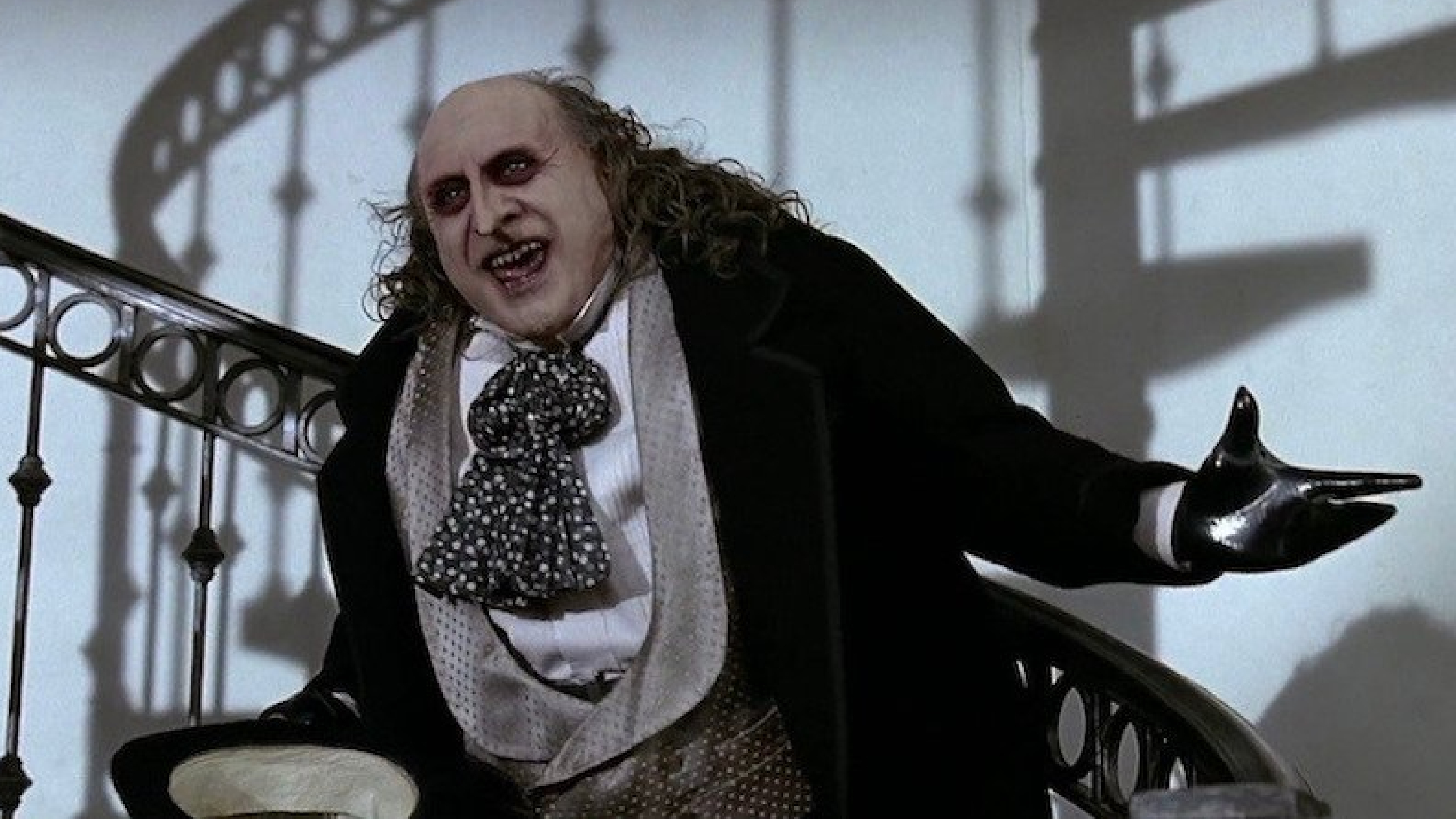
One of the most legendary aspects of DeVito’s role was the physical transformation required to bring the Penguin to life. The legendary special effects artist Stan Winston was responsible for the makeup and character design. Winston’s team spent months developing the look, which included a bulbous prosthetic nose, a pale, sickly complexion, and hand-sculpted flipper gloves.
The Daily Grind of the Makeup Chair
For Danny DeVito, the role was a test of endurance. Each day of filming required between three and four hours in the makeup chair. The process involved:
- Prosthetic Application: Layers of foam latex were applied to his face to create the signature nose and brow.
- Dental Work: DeVito wore rotted-looking dentures to complete the character's unhygienic appearance.
- The Black Bile: To simulate the Penguin's internal corruption, DeVito frequently used a mixture of mouthwash and food coloring, which he would let ooze from his mouth during intense scenes.
DeVito has often spoken about the isolation the makeup provided. He remained in character for much of the day, partly because the prosthetics made it difficult to communicate normally, and partly to maintain the character’s aggressive, outsider energy. The results were so convincing that even his co-star, Michael Keaton, remarked on how unsettling it was to be on set with him.
A Departure from Comic Book Tradition
Before 1992, the Penguin was primarily known as a character who wore a tuxedo, carried trick umbrellas, and spoke with a sophisticated, albeit criminal, flair. DeVito’s version stripped away the refinement. His Penguin was feral, frequently seen eating raw fish and possessing a vocabulary that was as sharp as it was vulgar.
This shift was polarizing. Purists argued that the character was unrecognizable from the source material. However, over time, the "Burton-esque" Penguin became its own standard. The tragic element—the man who simply wanted to find his parents and be accepted by Gotham high society—added a layer of psychological depth that had been missing from previous iterations. The film explores his failed attempt to run for Mayor of Gotham, a plot orchestrated by the corrupt businessman Max Shreck (played by Christopher Walken), which highlights the Penguin's desire for legitimacy.
Comparing the Penguins: A Multiverse of Oswald Cobblepots
In the decades following Batman Returns, several other actors have taken on the mantle of the Penguin. Each has brought a different flavor to the character, ranging from grounded mobsters to campy villains. As of 2026, the contrast between DeVito and his successors is more apparent than ever.
| Actor | Project | Style/Tone | Key Characteristics |
|---|---|---|---|
| Burgess Meredith | Batman (1966) | Campy / Classic | Gentleman thief, "Quack-quack" laugh, signature cigarette holder. |
| Danny DeVito | Batman Returns (1992) | Gothic / Grotesque | Animalistic, flipper hands, tragic backstory, sewer-dweller. |
| Robin Lord Taylor | Gotham (2014) | Realistic / Ambitious | Young, calculating, rises through the ranks of the mob. |
| Colin Farrell | The Batman (2022) / The Penguin (2024) | Gritty / Noir | Italian-American mobster vibe, heavy facial scarring, no "bird" traits. |
While Colin Farrell’s portrayal in the mid-2020s has been praised for its realism and "Tony Soprano-esque" depth, DeVito’s version remains the most visually iconic. It represents a time when superhero movies were comfortable being surreal and operatic, rather than strictly grounded in reality.
Behind the Scenes: DeVito’s Method and Dedication
Danny DeVito’s commitment to the role extended beyond the makeup chair. He famously insisted on performing many of his own stunts, including the scenes involving the "Red Triangle Circus Gang" and his interaction with live penguins.
Working with Live Animals
The production of Batman Returns used a combination of animatronic penguins (created by Stan Winston), people in suits, and actual live King and Emperor penguins. DeVito had to spend significant time around the live birds, which required the sets to be kept at a frigid 45 degrees Fahrenheit (approx. 7 degrees Celsius) to ensure the animals' comfort. While the crew shivered in heavy coats, DeVito was often comfortable, as his thick padded costume and heavy makeup provided natural insulation.
The Costume and Gadgets
The Penguin’s wardrobe in 1992 was a warped version of Victorian formalwear. He wore oversized coats with fur collars and a "onesie" style undergarment that gave him his rotund, bird-like shape. His umbrellas were also upgraded for the big screen, functioning as machine guns, helicopter blades, and flame-throwers. These gadgets allowed the character to remain a formidable physical threat to Batman, despite his limited mobility.
The Controversy of Batman Returns
It is impossible to discuss Danny DeVito’s Penguin without mentioning the cultural backlash the film faced upon release. Warner Bros. had marketed the movie heavily to children, including a major partnership with McDonald’s for "Happy Meal" toys.
When parents took their children to see the film, many were horrified by DeVito’s performance. Scenes of the Penguin biting a man’s nose, oozing black liquid, and making suggestive remarks to Catwoman (Michelle Pfeiffer) were deemed too intense for a "family" movie. The outcry was so significant that McDonald’s eventually pulled the promotion, and Warner Bros. pressured Tim Burton to step down from the third film, leading to the more colorful and kid-friendly Batman Forever.
However, in the years since, this "darkness" has become the film's greatest legacy. Fans now celebrate Batman Returns as a unique piece of auteur filmmaking, with DeVito’s Penguin as its crown jewel.
Danny DeVito’s Continued Connection to the Character
Even decades after the film’s release, Danny DeVito has remained remarkably fond of the Penguin. Unlike some actors who distance themselves from early genre roles, DeVito has embraced his place in Batman history.
In 2021, DeVito even returned to the character in a literary capacity. He wrote a short story titled "Bird Cat Love" for the DC Comics anthology Gotham City Villains Anniversary Giant #1. The story celebrated the relationship between the Penguin and Catwoman, proving that DeVito still had a deep understanding of Oswald Cobblepot’s inner workings.
When asked in recent years (leading up to 2026) about Colin Farrell’s take on the character, DeVito has been nothing but supportive, though he playfully maintains that "his" Penguin will always be his favorite. This passing of the torch has allowed new generations of fans to rediscover the 1992 classic.
Frequently Asked Questions
Did Danny DeVito wear a suit or was it all makeup?
Danny DeVito wore a combination of heavy prosthetic makeup and a "fat suit" to achieve the Penguin's unique silhouette. The facial prosthetics were made of foam latex and took hours to apply each morning. The suit itself was designed to give him a rotund, penguin-like shape while allowing for the limited movement required by the script.
Why did Danny DeVito's Penguin have black blood?
The "black bile" or liquid that frequently leaked from the Penguin's mouth was a creative choice by Tim Burton and Danny DeVito to emphasize the character's physical and moral decay. It was not technically blood, but rather a representation of the "sewer sludge" and corruption within him. It was made from a combination of food coloring and mouthwash.
Was the Penguin in Batman Returns based on the comics?
While the name Oswald Cobblepot and the umbrella gadgets came from the comics, the character's backstory and "monster" appearance were original inventions for the film. In the comics at that time, the Penguin was usually a sane, albeit eccentric, criminal who operated out of the Iceberg Lounge. The 1992 film turned him into a tragic, deformed outcast.
How did they film the scenes with the penguin army?
The production used a mix of three methods: real penguins from a sanctuary, sophisticated animatronic penguins controlled by puppeteers, and actors of short stature in penguin suits. For the wide shots of the penguin army with rockets on their backs, CGI was used, which was quite advanced for 1992.
Is Danny DeVito in the new Penguin series?
As of 2026, Danny DeVito does not appear in the Max series The Penguin. That series is a spin-off of Matt Reeves’ The Batman (2022) and stars Colin Farrell. However, DeVito's 1992 performance is frequently cited as a major influence on how audiences perceive the character's potential for menace.
Practical Recommendation for Fans
If you are looking to experience Danny DeVito’s legendary performance, the best way to do so is via the Batman Returns 4K Ultra HD restoration. The high dynamic range (HDR) in this version highlights the incredible detail of Stan Winston’s makeup work and the intricate textures of the Gotham City sets.
For those interested in the technical side of the film, the "Shadows of the Bat" documentary series (often included in home media releases) provides a deep dive into the prosthetic process and DeVito's time on set. Watching his portrayal alongside the more recent 2024 series The Penguin offers a fascinating look at how cinematic storytelling and character design have evolved over three decades.
Image Gallery
Select an image to open it in a new tab.

Simon Caldwell
Enterprise Technology and Systems Editor
