Comparing Hurricane and Tornado Wind Speeds: Understanding Atmospheric Intensity

While both hurricanes and tornadoes are violent, rotating weather systems capable of causing catastrophic damage, they differ fundamentally in their structure, scale, and wind speed profiles. Hurricanes are large-scale tropical cyclones driven by heat energy from the ocean, while tornadoes are localized, intense vertical vortices. Although the highest-recorded wind speeds in extreme tornadoes exceed those found in most hurricanes, hurricanes maintain destructive wind speeds over a much larger area and for a significantly longer duration.
The Nature of Atmospheric Vortices: Hurricanes vs. Tornadoes
To understand the comparison between hurricane and tornado wind speeds, one must first recognize the distinct physical mechanisms that produce these winds. Hurricanes, scientifically categorized as tropical cyclones, are synoptic-scale systems. They develop over warm ocean waters, fueled by the release of latent heat as water vapor condenses into clouds. Because they are massive—often spanning hundreds of miles in diameter—their wind fields are broad, creating sustained impacts across vast geographic regions.
Conversely, a tornado is a mesoscale or even microscale phenomenon. It is a violently rotating column of air extending from a thunderstorm to the ground. Unlike the hurricane, which is a heat engine, a tornado is a localized concentration of vorticity, often triggered by severe thunderstorm cells (supercells) where wind shear—a change in wind speed and direction with height—causes the air to rotate. This fundamental difference in scale dictates how wind speeds are measured, sustained, and experienced.
Measuring Hurricane Intensity: The Saffir-Simpson Scale
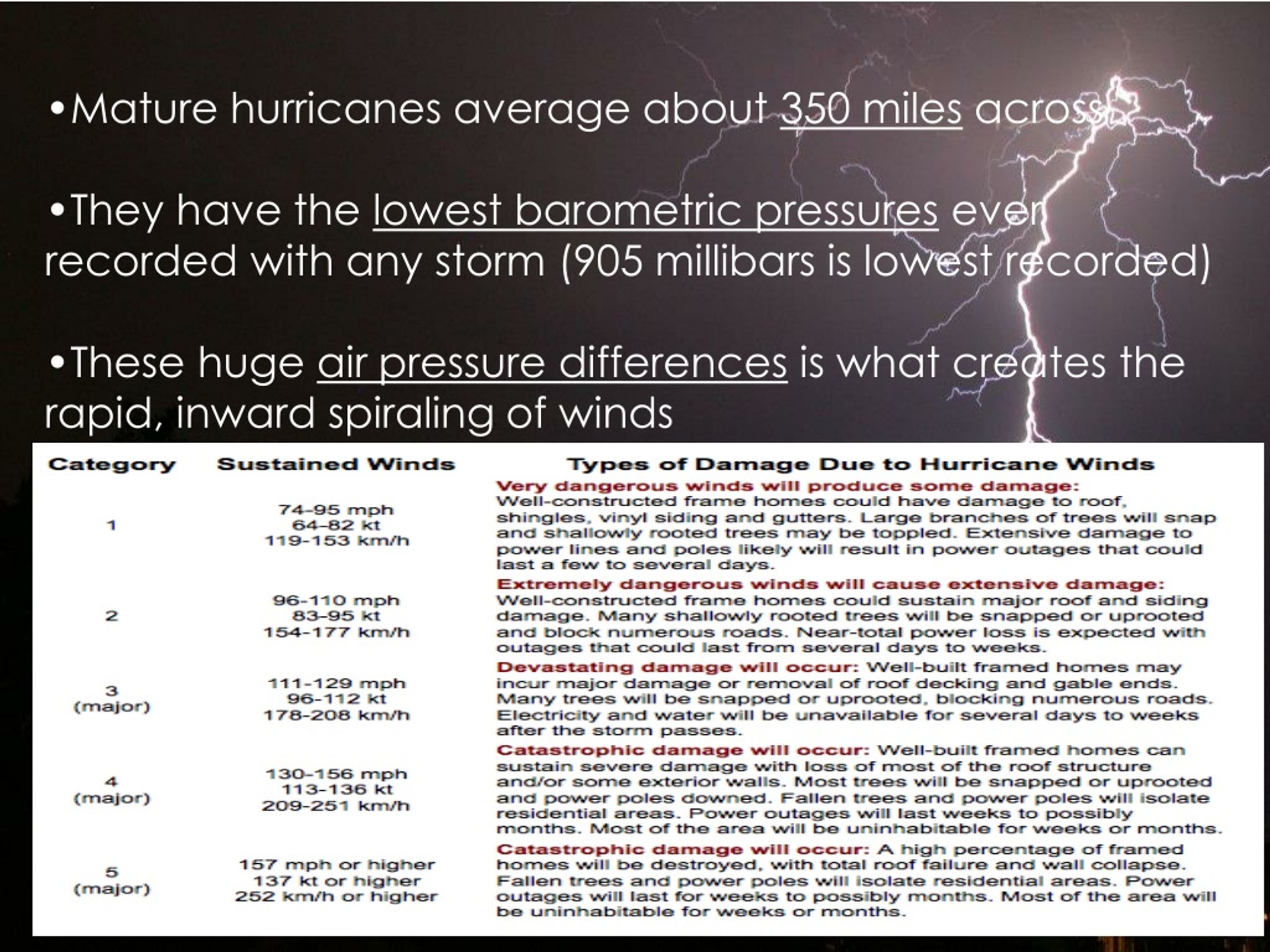
Hurricane intensity is classified using the Saffir-Simpson Hurricane Wind Scale. This scale ranges from Category 1 to Category 5 and is based strictly on a hurricane’s sustained wind speed. In meteorology, "sustained wind" refers to the one-minute average wind speed measured at an elevation of 10 meters (approximately 33 feet) above the surface.
- Category 1: 74–95 mph (64–82 knots)
- Category 2: 96–110 mph (83–95 knots)
- Category 3: 111–129 mph (96–112 knots)
- Category 4: 130–156 mph (113–136 knots)
- Category 5: 157 mph or higher (137 knots or higher)
It is critical to note that the Saffir-Simpson scale only considers wind speed. It does not account for storm surge, rainfall, or flooding, which are often the deadliest components of a landfalling hurricane. Even a "low-end" Category 1 hurricane produces wind speeds that can cause substantial damage to unsecured mobile homes, trees, and power lines. A Category 5 hurricane represents the upper bound of consistent sustained tropical cyclone winds, capable of catastrophic destruction.

Evaluating Tornado Intensity: The Enhanced Fujita (EF) Scale
Because tornadoes are short-lived and often occur in areas without direct instrumentation, meteorologists use the Enhanced Fujita (EF) Scale to estimate wind speeds. This scale correlates the wind speeds required to cause specific degrees of damage to various structures, such as residential homes, barns, and transmission towers.
- EF0: 65–85 mph
- EF1: 86–110 mph
- EF2: 111–135 mph
- EF3: 136–165 mph
- EF4: 166–200 mph
- EF5: Over 200 mph
The EF Scale allows experts to estimate the intensity of a tornado after the fact by surveying the path of destruction. While an EF5 tornado is statistically rare, its wind speeds can significantly exceed the 157 mph minimum threshold of a Category 5 hurricane. However, the spatial footprint of these extreme winds in a tornado is minuscule compared to the sprawling, circular wind field of a hurricane.
Direct Comparison of Wind Characteristics
When comparing these two phenomena, the primary differentiator is the "width of the wind field" and the "duration of impact."
Wind Speed Distribution
In a hurricane, the highest wind speeds are typically confined to the eyewall. Even within a Category 5 hurricane, the area experiencing 157+ mph winds is relatively small compared to the total size of the storm. In a tornado, the peak wind speeds are the defining characteristic of the funnel, but they are concentrated in an extremely narrow path, often only a few hundred yards wide.
Duration of Impact
A hurricane may affect a single location with gale-force winds for 12 to 24 hours or longer, depending on the storm's forward speed. This sustained pressure leads to structural fatigue, as buildings are hammered repeatedly. A tornado, by contrast, usually passes over a single point in a matter of seconds or, at most, a few minutes. While the peak wind force of a tornado can be higher, the total "impulse" or kinetic energy transferred to a structure over time may actually be lower than that of a long-duration hurricane.
Comparison Matrix
| Feature | Hurricane | Tornado |
|---|---|---|
| Primary Driver | Latent heat from ocean waters | Wind shear in thunderstorms |
| Wind Duration | Hours to days | Seconds to minutes |
| Scale/Width | 100 to 500+ miles | 50 yards to 2 miles |
| Measurement Tool | Saffir-Simpson (Sustained winds) | Enhanced Fujita (Damage-based) |
| Max Wind Speed | Typically 150–190 mph | Can exceed 200–300 mph |
| Predictability | High (days in advance) | Low (minutes in advance) |
The Impact of Surface Friction and Environment
Atmospheric conditions influence how these winds interact with the surface. When a hurricane makes landfall, it encounters surface friction from trees, buildings, and terrain, which causes the storm to lose intensity rapidly. The lack of the primary energy source—warm ocean water—is the main reason for the decline, but friction significantly disrupts the wind flow.
Tornadoes, however, are essentially surface-based vortices. They interact violently with the ground, picking up debris that effectively acts as projectiles. This makes the wind speed in a tornado more destructive per square foot than the wind in a hurricane, as the debris adds a "sandblasting" effect to the high-velocity air.
Safety Considerations and Preparations
Understanding the wind speed differences is essential for emergency planning. For hurricanes, the threat is broad and long-lasting; evacuation orders are based on the risk of storm surge and sustained wind damage across entire counties or regions. The strategy is to move out of the path of the storm entirely.
For tornadoes, the speed of onset is the primary challenge. Because wind speeds can escalate from zero to 200 mph in seconds, there is rarely time for evacuation. The strategy for tornadoes is to seek immediate shelter in the lowest level of a sturdy structure, moving to an interior room or a reinforced "safe room." Understanding that a tornado can produce winds higher than any hurricane reminds us that the primary goal during a tornado is physical shielding from debris, not just structural bracing against wind pressure.
Frequently Asked Questions
Is a Category 5 hurricane stronger than an EF5 tornado?
"Stronger" depends on the metric. In terms of absolute peak wind speed, an EF5 tornado can produce faster winds than a Category 5 hurricane. However, in terms of total destructive capacity, storm duration, and geographic footprint, a Category 5 hurricane is a much more powerful and dangerous weather system.
Can a hurricane create a tornado?
Yes, hurricanes often spawn tornadoes in their outer rainbands, especially after making landfall. These tornadoes are typically smaller and shorter-lived than those formed by supercell thunderstorms, but they can still reach EF1 to EF3 intensity, posing a significant secondary threat during a landfalling hurricane.
Why do we measure hurricane winds as a "1-minute average"?
Meteorologists use a one-minute average for hurricane wind speeds to smooth out the gustiness of the wind. Using a very short measurement, such as a 3-second gust, would result in misleadingly high numbers that don't reflect the structural stress placed on buildings by a sustained tropical system.
Are hurricane wind speeds recorded while they are over the ocean?
Measuring hurricane wind speeds over the open ocean is difficult. Meteorologists rely on "Hurricane Hunter" aircraft that fly into the storm and drop sensors called dropsondes, as well as satellite imagery and remote sensing technology to estimate sustained winds when the storm is far from land-based radar.
What is the difference between sustained wind and a gust?
A sustained wind is the speed of air moving over a fixed interval, such as one minute. A wind gust is a sudden, short-lived increase in wind speed, usually lasting less than 20 seconds. Tornadoes are characterized by extreme, localized gusts that can cause sudden structural failure.
Final Recommendation: Prioritize Local Alerts
While understanding the physics of hurricane and tornado wind speeds is valuable for science, your safety depends on situational awareness. Whether facing a tropical cyclone or a supercell, always prioritize official guidance from the National Weather Service. Do not compare the "category" of the storm against your property's history; assume that any tornado-rated or hurricane-rated wind event requires immediate adherence to established safety protocols and evacuation orders.
Image Gallery
Select an image to open it in a new tab.

Zara El-Hashem
Sociocultural Dynamics and Academics Writer
