
Selecting the right water softener for a condominium requires balancing strict space limitations, complex plumbing regulations, and the unique legal requirements of multi-unit living. Homeowners must prioritize non-permanent installation methods, high-efficiency resin capacity, and compatibility with localized water hardness levels to ensure effective mineral removal without violating building association bylaws or risking internal leaks.
Understanding the Condo-Specific Challenge
Living in a condominium introduces constraints that do not exist in detached single-family homes. When choosing a water softener, your primary challenge is not just the chemistry of water treatment, but the physical and legal architecture of your unit.
Space and Footprint Constraints
Condo utility closets are notoriously small. A traditional, tank-based salt-exchange softener system typically requires a large brine tank and a separate mineral tank. Before purchasing, measure your available square footage. You must account for not only the footprint of the units but also the "service clearance"—the space required to open the lid for salt replenishment and access the bypass valves. If your utility closet is shared with a water heater or HVAC unit, check your local building codes regarding clearance distances between electrical or heating equipment and water-bearing components.
Building Bylaws and Legal Requirements
Most condominium boards have strict rules regarding "common elements." Because water lines inside a condo often tie into the building’s main plumbing infrastructure, any modification can be considered a liability risk. Improper installation that leads to a leak could result in significant financial liability for the unit owner. Before installation, confirm:
- Permit Requirements: Does your local municipality or the condo board require a plumbing permit?
- Approval Authority: Do you need architectural or management approval for mechanical modifications?
- Insurance Coverage: Does your homeowner’s insurance policy cover damage caused by "add-on" water filtration systems?
Assessing Your Water Quality
Before selecting a specific unit, you must verify the hardness levels of your municipal water. Hardness is measured in grains per gallon (GPG) or milligrams per liter (mg/L). You can usually find a water quality report on your local utility provider’s website.
If your water is "slightly hard" (1–3.5 GPG), you may be able to use a smaller, scale-inhibiting conditioning system. If your water is "very hard" (over 10.5 GPG), a high-capacity salt-based ion exchange system is likely the only effective solution. Do not rely on marketing claims alone; verify your hardness level to avoid buying a unit that is either underpowered or unnecessarily large for your space.
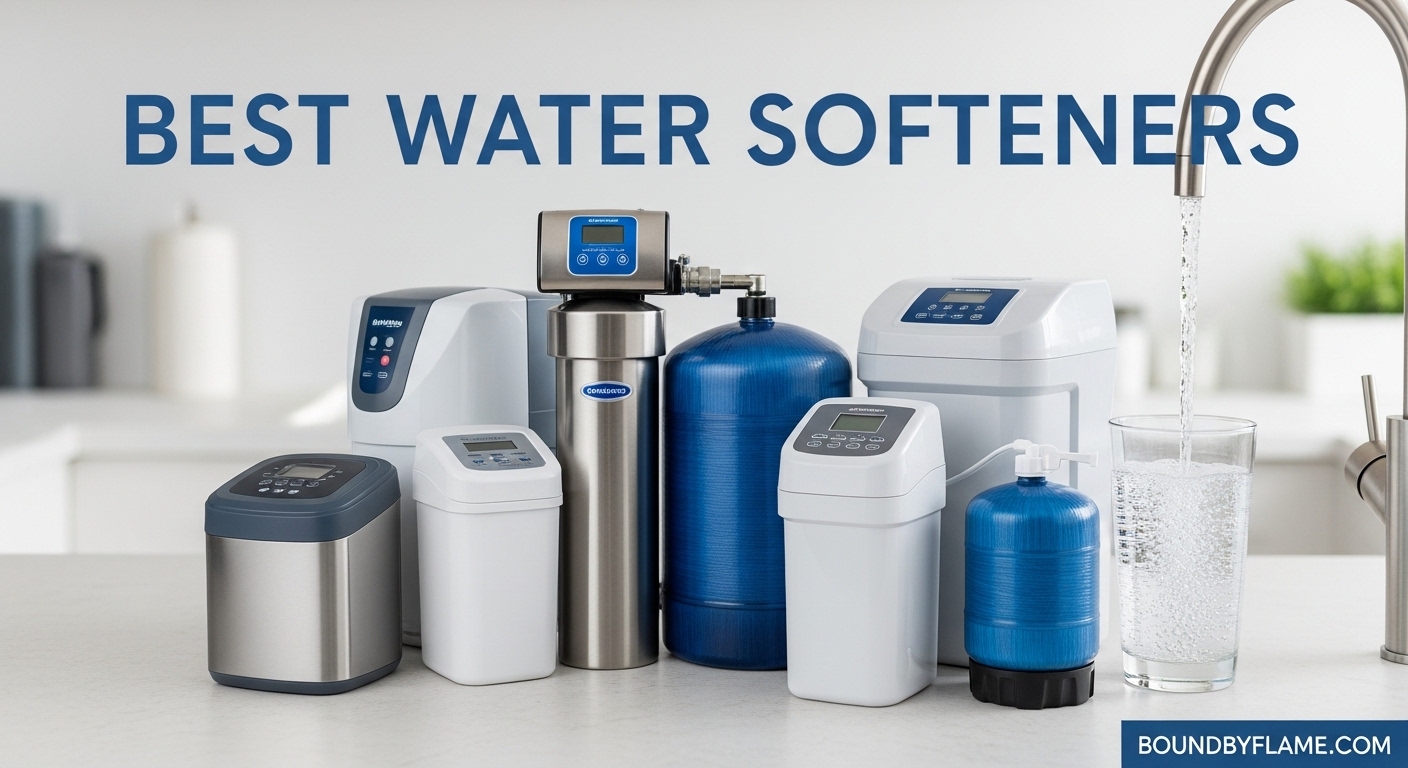
Types of Softening and Conditioning Systems
There is a fundamental technical distinction between "softening" and "conditioning." Understanding this difference will prevent you from choosing a product that fails to meet your expectations.
Ion Exchange Systems (True Softeners)
These systems use a resin bed to physically swap calcium and magnesium ions for sodium or potassium ions. These are the only systems that scientifically remove hardness minerals.
- Pros: Truly removes soap-scum buildup, extends the life of appliances like dishwashers and water heaters, and results in softer skin and hair.
- Cons: Requires regular salt replenishment; produces wastewater (brine) that must be drained; bulky footprint.
Template Assisted Crystallization (TAC)
TAC systems do not remove minerals; instead, they change the structure of the minerals so they do not adhere to surfaces.
- Pros: No electricity, no salt, no drain line needed; compact design.
- Cons: Does not technically "soften" the water; minerals remain present; may be less effective in extremely high-hardness environments.
Magnetic or Electronic Descalers
These are often marketed toward condo owners because they are easy to install. However, their efficacy is widely debated among water treatment professionals.
- Pros: Extremely compact; often non-invasive installation.
- Cons: Generally not considered a substitute for a mechanical softening system in high-hardness areas.
Comparison of Softener Categories
| Feature | Ion Exchange | TAC System | Electronic Descaler |
|---|---|---|---|
| Mineral Removal | Yes | No (Conditioning only) | No (Conditioning only) |
| Requires Drain | Yes | No | No |
| Requires Salt | Yes | No | No |
| Footprint | Large | Compact | Very Small |
| Best Use Case | Hard water solutions | Preventing scale | Minor maintenance |
Installation and Plumbing Logistics
In a condo, you rarely have access to the main water supply line before it enters your individual unit’s hot water heater. Most condos utilize copper or PEX piping.
The Bypass Valve Necessity
Always purchase a unit that includes a built-in bypass valve. This allows you to divert water away from the softener if the unit requires maintenance or if you need to provide hard water for outdoor balcony plants, which may not thrive on salt-softened water.
Discharge and Wastewater Concerns
Ion exchange systems require a drain for backwashing. If your condo’s utility closet does not have a floor drain or a connection to the sanitary sewer line, you cannot install a traditional salt-based softener. You would be restricted to tankless conditioning systems or salt-free alternatives that do not produce backwash. Never attempt to route a discharge line into a standard kitchen or bathroom sink drain without a proper air gap, as this can lead to cross-contamination of your water supply.
Maintenance Requirements
When living in a high-rise or a multi-unit complex, maintenance is critical to preventing floods.
- Salt Replenishment: If you choose a salt-based unit, you must be physically able to haul heavy salt bags through your building to your unit. Consider the logistical difficulty of transport via elevators and hallways.
- Resin Cleaning: Over time, the resin beads in a softener can become fouled by iron or silt. Use a specialized resin cleaner once or twice a year, as directed by the manufacturer, to ensure longevity.
- Leak Detection: Because you are in a building with neighbors below you, invest in a smart leak detector. These small sensors sit on the floor near your softener and will alert your smartphone if a leak is detected, potentially saving you thousands in property damage claims.
Frequently Asked Questions
Can I install a water softener in a condo if there is no drain?
No, you cannot use an ion-exchange softener without a drain because these systems require periodic backwashing to clear trapped minerals. If your utility closet lacks a drain, you must choose a salt-free conditioning system or an electronic descaler, noting that these will not remove minerals but will help manage scale buildup.
How much space do I need for a small condo softener?
A compact "cabinet" style softener usually requires an area roughly 12 inches wide by 20 inches deep. However, you must also add 6–8 inches of vertical space for plumbing connections and access to the valve head. Always check the manufacturer's technical specifications for "minimum installation height."
Does a water softener increase my water bill?
Most ion-exchange softeners use a small amount of water for the regeneration cycle—typically 20 to 50 gallons per cycle. If your unit is set to regenerate once a week, the impact on your water bill is generally negligible for an individual unit.
Will the condo board object to a salt-based system?
Board objections usually stem from concerns about potential leaks and the storage of salt bags in common areas. You can mitigate these concerns by providing them with a copy of your professional installation contract and proof that your chosen unit includes an automatic shut-off valve to prevent flooding.
Can I take the water softener with me if I move?
Yes, provided you had the unit professionally installed with a bypass valve and flexible supply lines. If you own the unit, it is considered personal property. However, you will need to pay a plumber to disconnect it and cap the pipes in the walls, as you would have done when the system was originally installed.
Professional Advice and Recommendation
If you are uncertain about the plumbing configuration of your condominium, do not attempt a DIY installation. Consult with a licensed plumber who has specific experience in multi-unit, high-rise buildings. They will understand the intricacies of pressure-reducing valves (PRVs) and local backflow prevention requirements.
For the average condo owner, the best path forward is to start by requesting the building’s "Mechanical Specifications" from your management office. Once you have confirmed the type of piping and the availability of a drain, choose a high-efficiency cabinet-style ion-exchange system if your water is very hard, or a high-quality TAC system if you only need to manage scale. Always prioritize a unit with a built-in leak-detection alarm to protect your unit and your neighbors from the risks associated with pressurized water systems.
Image Gallery
Select an image to open it in a new tab.


Vivian Cho
Executive IT and Emerging Technologies Reporter
