
A teaching professor is a specialized faculty member at a college or university whose primary professional focus is classroom instruction, curriculum development, and pedagogical innovation rather than traditional academic research and publishing. While conventional tenure-track professors must balance teaching with securing research grants, conducting laboratory experiments, and publishing in peer-reviewed journals, teaching professors dedicate the vast majority of their workload to student engagement, course design, and educational leadership. This career path has evolved to bridge the gap between burgeoning undergraduate enrollments and the need for high-quality, specialized instruction in higher education institutions worldwide.
To fully understand what a teaching professor is, one must examine how academic roles have diversified over the past few decades. Historically, the archetype of a university professor combined deep scholarly research with lecturing. However, as universities grew larger and the demands of external research funding increased, many institutions recognized that exceptional classroom teachers were being undervalued under traditional tenure systems, which heavily weighed publication records.
In response, higher education systems—particularly in North America, the United Kingdom, and parts of Europe—developed dedicated teaching-focused tracks. These positions offer legitimate, long-term academic careers with opportunities for promotion, job security, and institutional leadership, all centered on educational excellence rather than grant acquisition.
The Core Responsibilities of a Teaching Professor
The daily life of a teaching professor revolves heavily around the student experience. While exact expectations vary significantly by institution, several core responsibilities define the role across almost all collegiate settings.
Classroom Instruction and Pedagogy
The most visible aspect of a teaching professor's role is direct instruction. They typically teach a heavier course load than their research-focused counterparts. This might involve teaching large undergraduate lecture halls, leading specialized seminars, or guiding interactive laboratory sessions. Because teaching is their primary metric of success, they are often at the forefront of adopting evidence-based pedagogical strategies, such as active learning, flipped classrooms, and inclusive teaching practices designed to support diverse student populations.
Curriculum Development and Program Leadership
Beyond the physical or virtual classroom, teaching professors play a pivotal role in shaping academic programs. They design new courses, update legacy syllabi to reflect modern industry standards, and coordinate multi-section foundational classes. Many serve as directors of undergraduate studies, chair curriculum committees, or lead departmental initiatives aimed at improving student retention and graduation rates.
Academic Advising and Mentorship
Teaching professors frequently act as primary academic advisors and career mentors for students. Because they spend more time in direct contact with undergraduates, they build deep professional relationships that extend beyond graduation. They write letters of recommendation for graduate school, connect students with internship opportunities, and guide them through complex academic pathways.
Pedagogical Research and Scholarship
Although they are not expected to run traditional research labs or publish discipline-specific empirical studies, many teaching professors engage in the Scholarship of Teaching and Learning (SoTL). This specialized form of research investigates the most effective ways to teach particular subjects, evaluates the impact of new educational technologies, and contributes peer-reviewed insights to the broader field of higher education pedagogy.
Academic Ranks and Career Progression
Just like traditional faculty tracks, teaching-focused positions typically follow a structured hierarchy of academic ranks. However, the nomenclature varies wildly depending on whether the institution uses a tenure system, a continuing-appointment model, or contractual agreements.
| Rank Level | Typical Title Variants | Primary Focus and Expectations |
|---|---|---|
| Entry Level | Lecturer, Assistant Professor of Teaching, Assistant Teaching Professor | Focus on executing assigned courses, developing introductory curricula, and demonstrating effective classroom management. |
| Mid Level | Senior Lecturer, Associate Professor of Teaching, Associate Teaching Professor | Demonstrates sustained excellence in teaching, takes on administrative or curriculum leadership roles, and often achieves job security or tenure. |
| Advanced Level | Principal Lecturer, Professor of Teaching, Full Teaching Professor | Recognized leaders in pedagogy, departmental administration, or institutional policy; mentors junior teaching faculty. |
The Tenure Debate: Teaching-Stream vs. Tenure-Track
A crucial distinction in modern academia is the difference between tenure-track research positions and teaching-stream positions. In some universities, teaching professors are appointed to non-tenure-track contracts that are renewed periodically.
However, a growing number of prestigious research universities—such as the University of California system, the University of Toronto, and various private institutions—have established formal, professorial ranks for teaching faculty that include security of employment (tenure) equivalent to traditional research professors. These positions provide academic freedom and long-term stability, ensuring that teaching faculty can innovate without fear of institutional reprisal.

Qualifications and Requirements for the Role
Securing a position as a teaching professor requires a distinct combination of advanced academic credentials and demonstrated educational expertise. Committees hiring for these roles look for markers that prove an applicant can manage heavy teaching loads while continuously improving the student learning experience.
- Advanced Degrees: Most institutions require a terminal degree in the discipline—such as a Ph.D., Ed.D., M.F.A., or professional doctorate—though some applied fields accept master's degrees coupled with extensive industry experience.
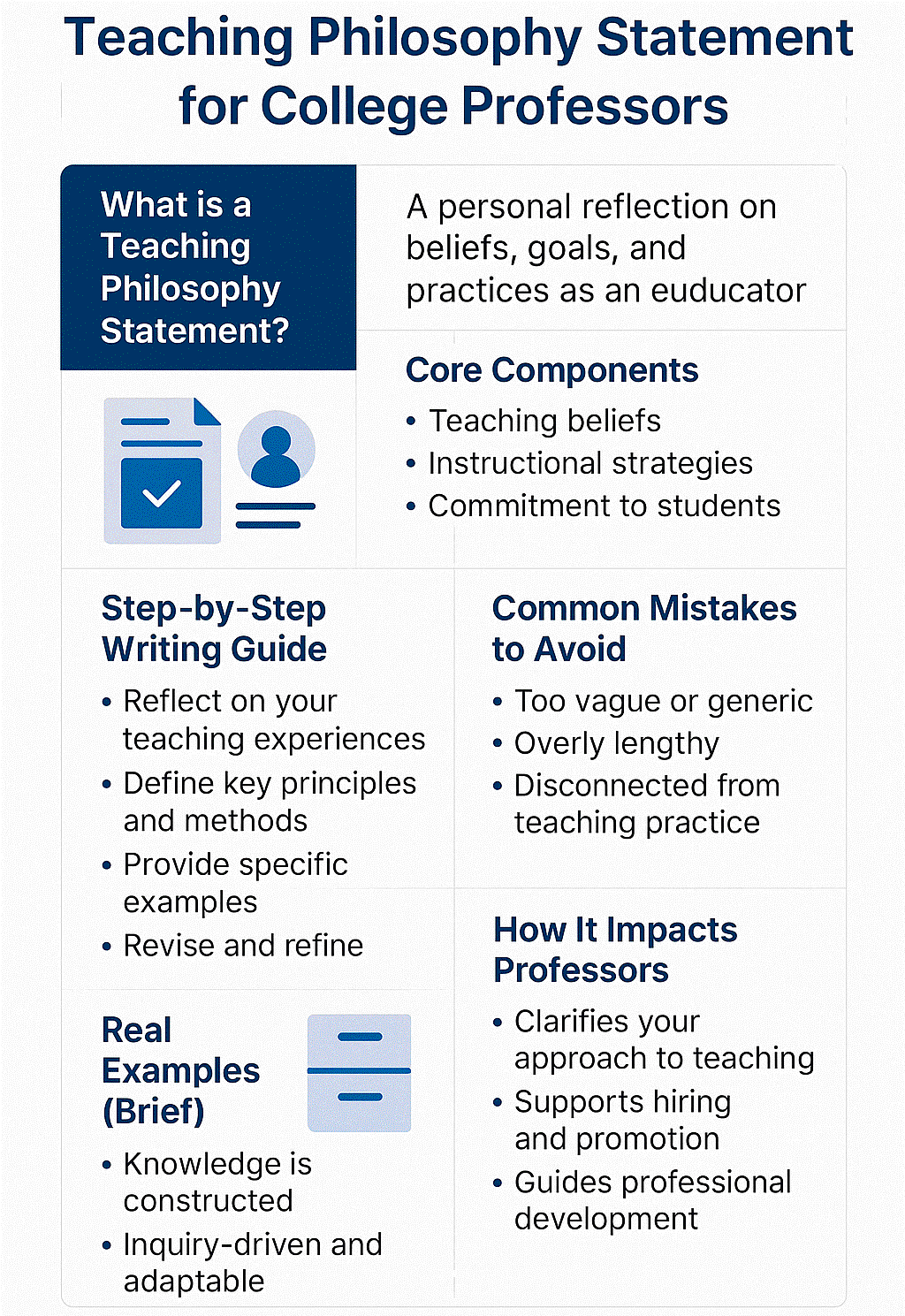
- Demonstrated Teaching Excellence: Candidates must provide a comprehensive teaching portfolio, including student evaluations, sample syllabi, and a philosophy of teaching statement that highlights modern pedagogical techniques.
- Classroom Experience: Previous experience as an instructor of record, adjunct professor, or postdoctoral teaching fellow is almost always required.
- Commitment to Diversity and Inclusion: Modern search committees place high value on an applicant's ability to create inclusive learning environments that welcome students from varied socioeconomic, cultural, and educational backgrounds.
Advantages and Challenges of the Teaching Professorship
Like any career path, the teaching professorship comes with distinct professional rewards and operational hurdles. Understanding these dynamics is essential for graduate students and early-career academics deciding which path to pursue.
The Benefits
- Mission Alignment: For individuals whose primary passion is mentoring students and refining course design, this role eliminates the pressure to secure external grant funding or prioritize niche research over pedagogy.
- Clear Work-Life Boundaries: While grading and course preparation are demanding, teaching professors generally face more predictable schedules compared to researchers tied to continuous lab experiments or high-stakes publication deadlines.
- Professional Respect: As universities increasingly prioritize student satisfaction and retention, teaching professors are gaining institutional clout, higher salary ceilings, and formal pathways to university governance.
The Challenges
- Heavy Grading and Workloads: Because teaching professors often handle multiple sections with large enrollments, the sheer volume of grading, office hours, and student communication can lead to professional burnout.
- Institutional Hierarchy: At traditional research-intensive universities, teaching faculty sometimes face a legacy culture that views education as secondary to grant generation and publication prestige.
- Promotion Hurdles: Documenting excellence in teaching for promotion dossiers can be more subjective and difficult to quantify than counting published journal articles or grant dollars.
Frequently Asked Questions
Is a teaching professor considered a "real" professor?
Yes. At universities that utilize this track, individuals hold formal professorial titles (e.g., Assistant, Associate, or Full Professor of Teaching) and possess terminal degrees. They are full members of the faculty with voting rights in departmental governance, differing primarily in their job description rather than their academic standing.
Do teaching professors do any research?
While they do not run traditional research labs or pursue disciplinary breakthroughs as their core duty, many engage in pedagogical research (the Scholarship of Teaching and Learning). This involves studying how students learn specific subjects and publishing findings in educational journals.
Can a teaching professor achieve tenure?
It depends entirely on the institution. Some universities offer a permanent, non-tenure-track lecturer model with multi-year contracts, while many major research universities have established tenured or continuing-appointment tracks specifically for teaching professors to ensure academic freedom.
How does a teaching professor differ from an adjunct instructor?
While both focus primarily on teaching, adjunct instructors are typically part-time, contingent workers hired on a course-by-course basis with low pay, few benefits, and little job security. A teaching professor is a full-time, permanent member of the faculty with benefits, governance responsibilities, and career advancement pathways.
Why do universities create teaching professor positions?
Universities create these roles to professionalize undergraduate education. By separating teaching excellence from research output, institutions can reward exceptional educators and ensure that large undergraduate programs receive dedicated, high-quality instruction.
Conclusion and Next Steps
The role of the teaching professor represents a vital evolution in higher education, offering a dedicated pathway for scholars whose passion lies in pedagogy, curriculum design, and student mentorship. For prospective graduate students and early-career academics, exploring this path requires building a robust teaching portfolio, gaining independent classroom experience, and staying informed about modern educational technologies. To pursue this career, review faculty postings at research universities that explicitly advertise for teaching-stream or pedagogical faculty lines, and tailor your academic CV to highlight your instructional achievements.
Image Gallery
Select an image to open it in a new tab.

Simon Caldwell
Enterprise Technology and Systems Editor
