
Cutting hair at home is a practical skill that combines precision, patience, and the right equipment to achieve a clean, intentional result. For beginners, the process begins with selecting high-quality grooming tools, establishing a well-lit workspace, and mastering foundational techniques like sectioning and tension control to ensure consistent length and shape across the head.
Preparing Your Workspace and Tools
Before making a single cut, you must establish an environment that facilitates accuracy. Professional stylists emphasize that a haircut is only as good as the preparation that precedes it.
Essential Equipment Checklist
You do not need a full salon inventory, but you do need professional-grade tools. Attempting to cut hair with household craft or kitchen scissors will damage the hair cuticle and lead to split ends, as these tools are not designed for the specific density and texture of human hair.
- Professional Hairdressing Shears: Look for stainless steel shears with a sharp, convex edge. These are distinct from thinning shears or general-purpose scissors.
- Clippers with Guard Attachments: If you are performing a taper or fading, a set of electric clippers with a full range of magnetic or snap-on guards (usually 1 through 8) is essential.
- Fine-Tooth and Wide-Tooth Combs: A fine-tooth comb is necessary for precise parting and tension, while a wide-tooth comb is useful for detangling wet hair.
- Sectioning Clips: Use these to isolate segments of hair. Keeping unworked hair out of the way prevents accidental cuts and allows you to focus on the current section.
- Mirror Setup: A large wall mirror combined with a handheld mirror is critical. This "triangulation" allows you to see the back of your head, which is where most home-cutting errors occur.
Lighting and Ergonomics
Avoid cutting hair in dimly lit bathrooms. Natural light or bright LED overhead lighting is necessary to see the hair's natural fall and identify uneven patches. Additionally, ensure your chair is at a height where the subject’s head is level with your chest. If you are standing, ensure you have room to move around the chair freely; never force yourself into an awkward position that causes your hands to shake or your perspective to skew.
Fundamental Principles of Haircutting
Understanding how hair behaves when wet versus dry is the first technical hurdle for beginners.
Wet vs. Dry Cutting
- Wet Cutting: Hair is more elastic when wet. If you cut wet hair, you must account for "shrinkage"—the tendency of hair to appear shorter as it dries and curls back up. For beginners, wet cutting is standard for precision cuts (like blunt bobs) because it holds tension better.
- Dry Cutting: Best for curly or textured hair where the natural pattern needs to be visible. Dry cutting allows you to see the shape of the cut in its finished state, reducing the risk of cutting too much off.
The Importance of Tension
Tension refers to how tightly you hold a section of hair between your fingers while cutting. If you pull too hard, the hair will "snap back" after you cut it, resulting in a length that is shorter than you intended. Use consistent, gentle tension, and always cut at the same angle relative to the head.
Step-by-Step Execution for Beginners
To achieve a balanced cut, follow a systematic approach. Never attempt to "freehand" the entire process without a guide.
- Sectioning: Divide the hair into four main quadrants: front-left, front-right, back-left, and back-right. Pin these sections up.
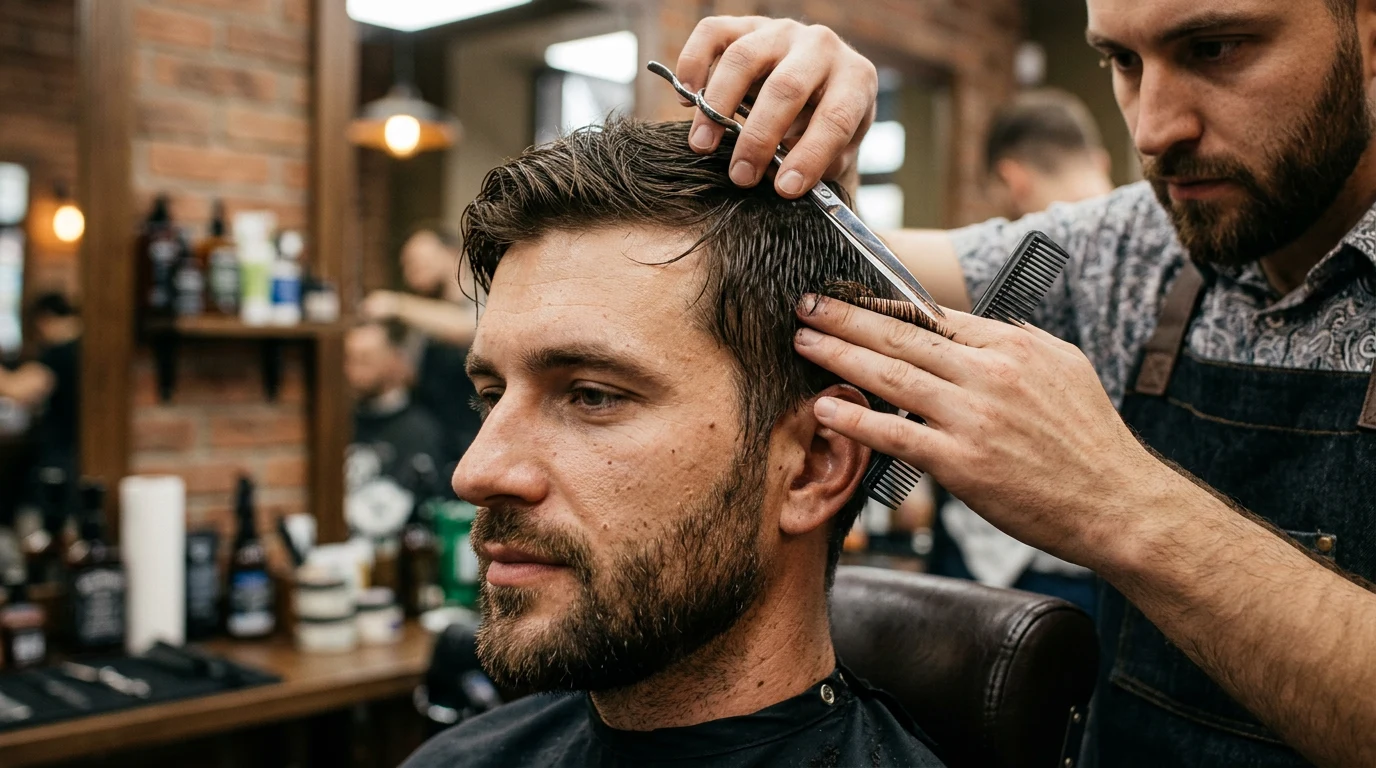
- Creating the Guide: Start at the nape of the neck. Take a small, thin horizontal section, comb it down, and cut to your desired length. This is your "traveling guide."
- Following the Guide: As you move up the head, take a new section of hair and include a sliver of the previously cut section. The previously cut hair is your guide; ensure the new section matches the length of the guide before cutting.
- Checking for Symmetry: Periodically stop and bring both sides of the front sections together in front of the chin. If one side is longer than the other, adjust carefully.
- Refining: Once the main length is established, use "point cutting"—snipping into the ends of the hair vertically rather than cutting straight across—to soften the edges and remove the "blunt" look.
Comparison of Cutting Methods
| Method | Best For | Complexity Level | Risk Factor |
|---|---|---|---|
| Clipper Guard | Short, uniform lengths | Low | Low (if guards used) |
| Scissor-over-comb | Tapered sides/blending | High | High |
| Point Cutting | Softening blunt ends | Medium | Low |
| Section-by-Section | Maintaining length/layers | Medium | Moderate |
Troubleshooting Common Mistakes
Even with careful planning, mistakes happen. The most common error for beginners is "over-cutting," which usually stems from uneven tension or moving too quickly.
- The Uneven Back: If the back is uneven, do not try to fix it by cutting deeper into the hair. Instead, section the hair again, find your shortest point, and use that as the new reference length to bring the rest of the hair into alignment.
- "Step" Lines: These appear when you don't blend the layers sufficiently. To fix this, lift the hair at a 90-degree angle from the head and use thinning shears or point-cutting to soften the harsh transition line.
- Accidental Gouges: If you accidentally cut a patch too short with clippers, the only solution is to transition the surrounding area to that length. Do not try to "patch" it; blend it.
Frequently Asked Questions
How often should I sharpen my hairdressing shears? Shears should be professionally sharpened every 6 to 12 months, depending on usage frequency. You can test sharpness by cutting a single layer of wet tissue paper; if the blade snags or folds the tissue rather than slicing cleanly, it is time for professional servicing.
Is it necessary to use professional hair products? While you do not need salon-brand chemicals, using a proper detangling spray or light styling cream helps the comb glide through the hair, preventing the breakage that often occurs when dry-combing tangled strands.
What is the safest way to trim bangs at home? Always cut bangs on dry hair. If you cut them while wet, they will inevitably shrink and look shorter than expected. Use a fine-tooth comb to isolate only the hair intended for the bangs, pin the rest back, and cut slightly longer than your target length, refining upward millimeter by millimeter.
Can I use thinning shears to fix a bad haircut? Thinning shears should be used sparingly. They are designed to remove bulk, not to correct length errors. Overusing them can result in "frizzy" hair or visible gaps. Use them only on the ends of thick sections to add texture.
What should I do if I cut myself? Keep a basic first-aid kit nearby. A small cut is common in professional environments; keep the wound clean, apply pressure to stop bleeding, and apply an antiseptic. If the cut is deep, stop the procedure immediately and seek medical attention.
Next Steps for Beginners
Start by practicing on a mannequin head or by simply trimming split ends on a small, inconspicuous section of hair. By focusing on maintaining consistent tension and using a clear guide, you can successfully maintain a basic haircut between professional appointments. If you are attempting a complete style change, it is advisable to consult with a professional stylist first to ensure the cut suits your face shape and hair texture.
Image Gallery
Select an image to open it in a new tab.
Zara El-Hashem
Sociocultural Dynamics and Academics Writer
