The Three Downton Abbey Movies Explained: Plot, Timeline, and Character Arcs

The three Downton Abbey movies—released in 2019, 2022, and 2025—continue the saga of the Crawley family and their dedicated staff. These films transition the narrative from the late 1920s into the 1930s, resolving long-standing character arcs, addressing the modernization of the British aristocracy, and providing a definitive conclusion to the beloved franchise.
The journey of Downton Abbey from a prestigious television series to a cinematic trilogy represents a unique evolution in modern media. While the original six-season run (2010–2015) focused on the family’s survival through the sinking of the Titanic, World War I, and the early 1920s, the films shift the focus toward the "twilight" of the great estates. By 2026, looking back at the complete trilogy, we can see how creator Julian Fellowes used the medium of film to provide the scale and emotional finality that the television format could only hint at.
The Bridge from Television to Cinema
Before diving into the movies, it is essential to understand where the series left off. The television finale, set on New Year’s Eve 1925, saw Mary Crawley firmly in control of the estate’s management, Edith Crawley becoming a Marchioness, and the Dowager Countess Violet Crawley begrudgingly accepting that the world was changing.
The movies pick up shortly after this, moving the timeline into an era where the financial burden of maintaining a house like Downton became the central antagonist. The films are not merely "extended episodes"; they are thematic bookends that address whether Downton Abbey can—or should—survive in a rapidly democratizing Britain.
1. Downton Abbey (2019): The Royal Visit
The first feature film, titled simply Downton Abbey, is set in 1927. The central plot revolves around a royal visit from King George V and Queen Mary. This event serves as a catalyst for both "upstairs" and "downstairs" conflicts, forcing every character to evaluate their loyalty to the crown and their role within the house.
The Upstairs Conflict: The Burden of Legacy
Lady Mary, now the primary decision-maker of the estate, faces a crisis of confidence. The sheer effort required to host the King and Queen makes her wonder if Downton has become an outdated relic. This internal struggle is a recurring theme throughout the trilogy. Her husband, Henry Talbot, is often away on business (due to actor scheduling, which was woven into the plot), leaving Mary to handle the logistical nightmare of the royal protocols alone.
The Downstairs Conflict: The Servant Rebellion
The most significant subplot involves the Downton staff being displaced by the Royal Household's own retinue. The King’s butler, chef, and pages arrive with an air of arrogance, effectively "sacking" the Downton staff for the duration of the visit. Led by Anna Bates and a retired Mr. Carson—who is brought back specifically for the event—the Downton servants stage a "palace coup" to reclaim their right to serve the royals. This provides much of the film's levity and emphasizes the pride the staff takes in their profession.
Major Character Resolutions
- Tom Branson: The former chauffeur and Irish republican finds himself in a position to protect the King from an assassination attempt, further cementing his place as a trusted member of the Crawley family. He also begins a romantic connection with Lucy Smith.
- Thomas Barrow: The under-butler finally finds a moment of personal liberation. While exploring the underground gay scene in York, he is arrested but ultimately finds a sense of community, a rare "happy" beat for a character who spent the series as a tragic antagonist.
- Violet Crawley: The Dowager Countess enters a legal battle with Lady Bagshaw (played by Imelda Staunton) over an inheritance issue, which is eventually revealed to be a secret family connection involving Tom Branson's new love interest, Lucy.

2. Downton Abbey: A New Era (2022)
The second film, released in 2022, takes the family into 1928 and 1929. It is characterized by two distinct, parallel storylines: one involving the "invasion" of modern technology at Downton and the other a journey to the South of France to uncover a secret from the Dowager’s past.
The "Talkies" Come to Downton
To fund the much-needed repairs to the roof, Mary agrees to allow a film crew to use the house as a location for a silent film called The Gambler. This plotline serves as a brilliant metaphor for the transition of the era. Mid-production, the studio demands the film be turned into a "talkie" (a sound film) to compete with The Jazz Singer.
The Downton staff and family are pulled into the production, with Mary even providing the voice-over for the lead actress, whose thick Cockney accent is unsuitable for the sophisticated role. This sequence highlights the fragility of fame and the ruthless pace of technological progress.
The Mystery of the Villa
Simultaneously, the family learns that a French Marquis has left Violet Crawley a villa in the South of France. This leads Lord Grantham (Robert), Cora, Edith, and Bertie to travel to the Riviera. The mystery involves why a man Violet knew briefly decades ago would leave her such a valuable asset. The resolution is poignant: it reveals a fleeting, chaste romance from 1864, emphasizing that even the sternest traditionalist once had a life of passion and adventure.
The End of an Era: The Death of Violet Crawley
The emotional core of the second movie is the passing of the Dowager Countess. As she succumbs to her illness, the family gathers around her. Her death represents the literal end of the Victorian and Edwardian influence on the house. She leaves the villa to her great-granddaughter, Sybbie (Tom and Sybil’s daughter), ensuring that the branch of the family with the least "landed" security is taken care of.
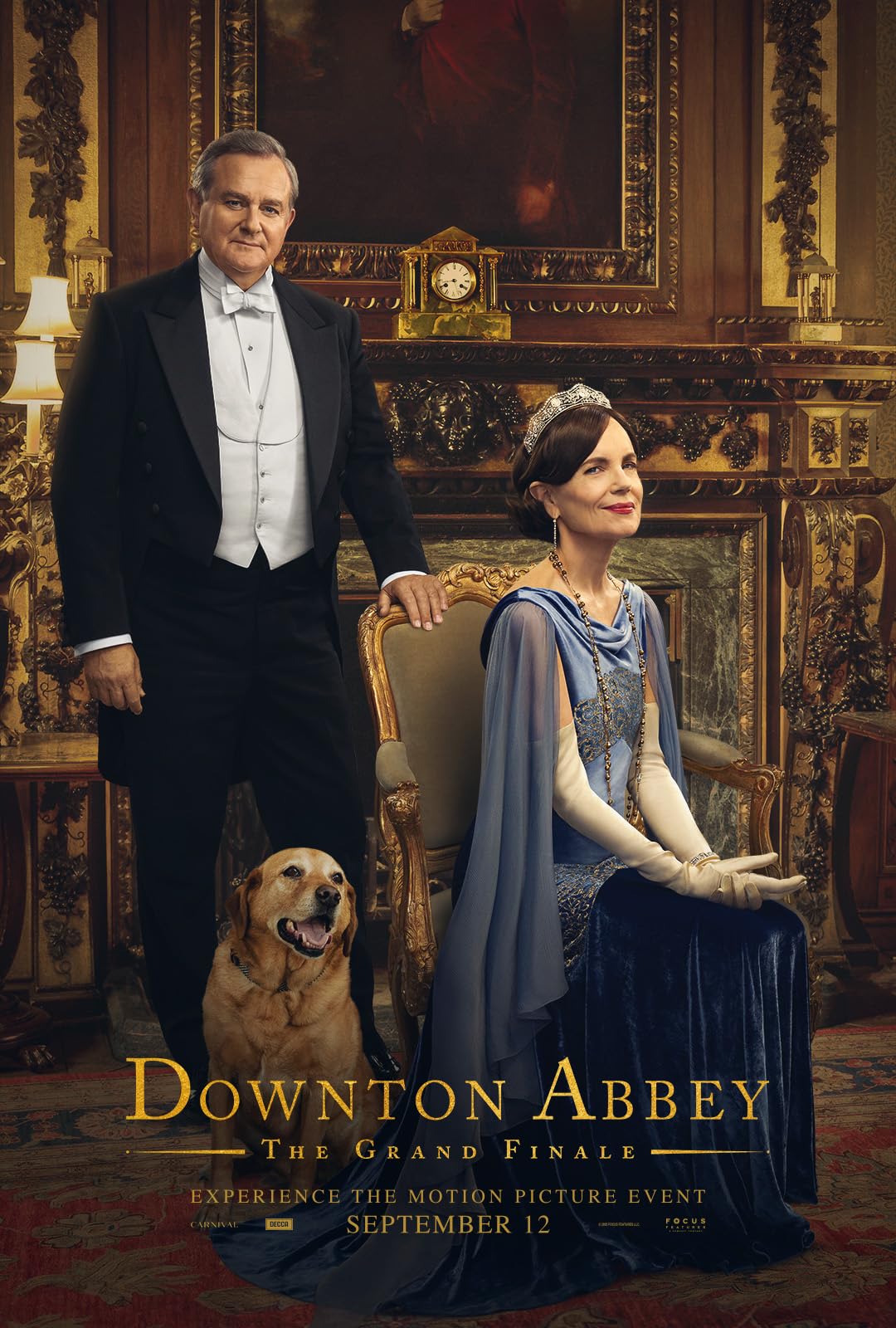
3. Downton Abbey 3 (2025): The Final Chapter
The third film, released in late 2025, serves as the definitive conclusion to the saga. Set in the early 1930s (roughly 1930–1931), it deals with the global shifts following the 1929 stock market crash and the inevitable transition of the estate to the next generation.
The Plot: A New Generation Takes the Helm
By the time of the third movie, the focus shifts toward George Crawley (Mary’s son) and the other children of the family. The estate faces its most significant financial threat yet, mirroring the real-world historical decline of many great British country houses during the Great Depression. Unlike previous entries, the third movie focuses less on "grand events" and more on the personal choices of the family members to adapt or depart.
Key Developments in the Third Movie
- The Departure of Thomas Barrow: Following the events of the second film, Barrow’s move to America (or his transition into a new life) is finalized, representing the "downstairs" staff finding lives independent of service.
- Mary’s Leadership: Mary is no longer just the manager; she is the undisputed matriarch. Her relationship with the changing world is solidified as she makes the difficult decision to modernize parts of the estate into a more commercial enterprise to ensure George’s inheritance.
- The Final Scene: True to the franchise’s roots, the film concludes with a major family gathering—likely a wedding or a christening—that symbolizes the continuity of life at Downton despite the disappearance of the world that created it.
Chronological Timeline of the Downton Abbey Movies
To understand the flow of the movies, it is helpful to see them in the context of the historical years they inhabit.
| Film Title | Year Set | Primary Historical Backdrop | Central Conflict |
|---|---|---|---|
| Downton Abbey (2019) | 1927 | Royal Visit of King George V | Royal protocol vs. local staff pride |
| A New Era (2022) | 1928–1929 | Transition from Silent Film to "Talkies" | Preservation of the house vs. modernization |
| Downton Abbey 3 (2025) | 1930–1931 | The Great Depression / Early 30s Shift | The final transition of leadership to the heirs |
Thematic Analysis: Why the Movies Matter
The trilogy of Downton Abbey movies "explains" the slow death of a social hierarchy. While the TV show was about the resistance to change, the movies are about the acceptance of change.
Tradition vs. Utility
In the first film, tradition is a source of conflict (the royal visit). In the second, it is a source of mystery (the French villa). In the third, it becomes a memory that must be managed. The films argue that for Downton to survive, it cannot remain a museum; it must become a living, breathing part of the 20th century. This is why Mary allows film crews and modernizes the farm—she recognizes that the "glory days" are over, but the "legacy" can remain if it provides value.
The Evolution of Service
One of the most profound "explanations" provided by the films is the changing nature of service. By 2026, when we view these films as a complete set, we see the servants moving from being "invisible" background figures to individuals with their own agency. Daisy goes from a kitchen maid to a confident woman with her own home and opinions. Molesley goes from a struggling footman to a successful screenwriter. The movies explain that while the house stays the same, the people within it are no longer bound by their birth.
How the Movies Handle Major Characters
For many viewers, the movies are about checking in with "family." Here is a summary of how the trilogy concludes the arcs for the main cast:
- Lord and Lady Grantham: Robert and Cora move into a supportive role. Robert eventually accepts that Mary is the true engine of the estate, while Cora continues her work in local healthcare, bridging the gap between the aristocracy and the community.
- Lady Mary: Her arc is one of hardening and then softening. She becomes the "new Violet," taking on the Dowager’s mantle of sharp-tongued protector of the family, though she is far more progressive in her business dealings.
- Lady Edith: After years of being the "forgotten" sister, Edith thrives in her role as a Marchioness and a journalist. The movies treat her as an equal to Mary, ending the sibling rivalry that defined the early years of the show.
- Tom Branson: Tom serves as the moral compass. His marriage to Lucy Smith in the second film brings him full circle—he is part of the "landed" class now, but he remains the bridge between the radical world and the conservative estate.
- Mr. Carson and Mrs. Hughes: They remain the bedrock of the house. Carson’s struggle with palsy and his eventual full retirement in the third film marks the final "passing of the torch" to the younger staff.
Frequently Asked Questions
Do I need to watch the TV show before the movies?
While the first movie provides enough context for new viewers to follow the "Royal Visit" plot, the emotional impact of the second and third movies relies heavily on the decade-long history established in the series. It is highly recommended to at least watch a series summary before starting the films.
Is the third movie the final one?
As of 2026, Downton Abbey 3 is marketed as the final cinematic chapter. Julian Fellowes has indicated that while the world of Downton is rich, the narrative has reached a natural conclusion with the transition of the estate to the next generation in the 1930s.
Why was Henry Talbot (Matthew Goode) missing from the movies?
Matthew Goode’s absence in the first and second movies was primarily due to scheduling conflicts with his work on A Discovery of Witches. The writers explained his absence by stating his character was traveling for his car business, which actually reinforced the theme of Mary having to manage the estate independently.
Who inherits Downton Abbey at the end of the movies?
George Crawley, the son of Mary and the late Matthew Crawley, remains the heir to the Earldom and the estate. The movies conclude with the understanding that George will eventually take over a very different, more modernized version of Downton than the one his grandfather inherited.
Is Downton Abbey a real place?
The movies are filmed at Highclere Castle in Hampshire, England. While the characters are fictional, the struggles of the Carnarvon family (the real owners of Highclere) with death duties and estate maintenance mirror many of the plot points seen in the films.
Practical Recommendations for Fans
If you are planning a marathon of the Downton Abbey trilogy, consider the following:
- Watch in Chronological Order: The character growth of Daisy, Andy, and the Crawley children is subtle but rewarding when viewed in sequence.
- Pay Attention to the Production Design: The films had a significantly higher budget than the TV show. The costume detail in the 1929 French scenes and the 1930s sequences in the third film are historically exceptional.
- Explore the History: Understanding the 1929 stock market crash and the subsequent "Great Depression" in Britain adds a layer of tension to the third movie that might be missed by casual viewers.
The Downton Abbey movies succeed because they do not try to reinvent the formula; they simply allow the characters we love to grow old with dignity in a world that is moving on without them.
Image Gallery
Select an image to open it in a new tab.


Omar Farooq
EdTech Innovation and Virtual Pedagogy Journalist
