The amount of money you can make from trading depends on three primary factors: your starting capital, your risk management strategy, and your level of skill. While professional traders often target consistent monthly returns of 2% to 5%, most retail traders lose money. Your actual earnings are a function of your account size and your ability to execute a strategy with a statistical edge over thousands of trades.
Understanding the Reality of Trading Income in 2026
To understand how much you can make from trading, you must first distinguish between "income" and "wealth accumulation." Unlike a salaried job, trading does not offer a guaranteed paycheck. In fact, many months can result in a net loss. As we look at the landscape in 2026, the integration of advanced artificial intelligence (AI) tools and high-frequency trading (HFT) has made the markets more efficient, meaning that "easy money" is a relic of the past.
For a retail trader, the question isn't just "how much can I make," but "how much can I afford to lose to stay in the game." Most financial experts and institutional data suggest that the "90-90-90 rule" still holds true for many: 90% of retail traders lose 90% of their money within the first 90 days. However, those who treat trading as a professional business rather than a gamble can find a path to sustainable profitability.
The variance in potential earnings is massive. A trader with a $5,000 account might struggle to pay a single monthly utility bill even with a great performance, while a trader managing a $1,000,000 portfolio can generate a substantial six-figure income with a relatively conservative strategy. Therefore, the discussion of "how much" must always be framed by "with how much."
The Mathematical Foundation: Capital and Compound Interest
The primary constraint on your trading income is your account balance. In the financial world, performance is measured in percentages (Return on Investment or ROI), but bills are paid in dollars.
The Importance of Starting Capital
If you have a $1,000 account and you are an exceptional trader who manages a 10% return in a month—a feat that is incredibly difficult to sustain—you have made $100. For most people, $100 does not cover the cost of the professional data feeds, charting software, and high-speed internet required to trade effectively.
Conversely, if you are trading a $500,000 account, a much more modest and sustainable 2% monthly return yields $10,000. This highlights the "capital gap" that many new traders face. Attempting to "grow a small account fast" usually leads to over-leveraging, which is the fastest way to lose the entire account.
The Role of Leverage
Leverage allows a trader to control a large position with a small amount of money. In 2026, regulatory bodies like the Securities and Exchange Commission (SEC) in the U.S. and the European Securities and Markets Authority (ESMA) maintain strict limits on leverage for retail traders to prevent catastrophic losses. While leverage can turn a 1% market move into a 10% gain for your account, it can just as easily wipe out your capital on a 1% move in the wrong direction. Professional traders use leverage sparingly to manage their "buying power" rather than to gamble on high-risk setups.

Factors That Determine Your Monthly Earnings
Several variables dictate where you will fall on the spectrum of profitability. It is a combination of market environment, technical proficiency, and emotional discipline.
1. Risk Management (The 1% Rule)
The most successful traders rarely risk more than 1% to 2% of their total account balance on a single trade. If you have a $50,000 account and risk 1%, your maximum loss per trade is $500. This ensures that even a string of five or ten losses—which is statistically inevitable over time—does not result in a "margin call" or the total destruction of your capital. Your earnings are essentially a byproduct of how well you manage your downside.
2. Win Rate vs. Risk-to-Reward Ratio
You do not need to be right all the time to make a lot of money. Many professional trend-followers have a win rate of only 30% to 40%. They make money because their average winning trade is three or four times larger than their average losing trade.
- High Win Rate/Low Reward: Common in scalping. You might win 80% of the time, but one large loss wipes out ten small wins.
- Low Win Rate/High Reward: Common in swing trading. You lose frequently but "hit home runs" that cover all losses and provide profit.
3. Strategy and Asset Class
The market you choose to trade significantly impacts your potential returns and the hours you need to put in.
- Equities (Stocks): Generally offer more stability and are influenced by fundamental earnings.
- Foreign Exchange (Forex): Highly liquid and allows for 24/5 trading, but can be influenced by unpredictable geopolitical events.
- Cryptocurrencies: In 2026, crypto remains the most volatile asset class. While it offers the highest potential for "explosive" gains, it also carries the highest risk of total capital loss.
- Options and Futures: These derivatives allow for complex strategies (like selling volatility) that can provide consistent income but require a high degree of technical knowledge.
Comparison of Potential Trading Outcomes by Account Size
The following table illustrates realistic monthly earnings based on different account sizes and performance levels. These figures assume professional risk management and do not account for taxes or platform fees.
| Account Size | Conservative (1% / mo) | Moderate (3% / mo) | Aggressive (7% / mo) | Annual Income (at 3%/mo) |
|---|---|---|---|---|
| $10,000 | $100 | $300 | $700 | $3,600 |
| $50,000 | $500 | $1,500 | $3,500 | $18,000 |
| $100,000 | $1,000 | $3,000 | $7,000 | $36,000 |
| $250,000 | $2,500 | $7,500 | $17,500 | $90,000 |
| $1,000,000 | $10,000 | $30,000 | $70,000 | $360,000 |
Note: Achieving a consistent 7% monthly return is considered world-class and is extremely rare over long periods. Most professional hedge funds target 15-25% per year.
The Hidden Costs: What You Actually Take Home
When calculating how much you can make, you must subtract the costs of doing business. Trading is an overhead-heavy profession.
Taxes
In many jurisdictions, trading profits are treated as short-term capital gains, which are often taxed at the same rate as ordinary income. In the United States, for example, the Internal Revenue Service (IRS) applies different rates depending on how long you hold the asset. Short-term traders can see 20% to 37% of their profits disappear to taxes.
Commissions and Fees
While many brokers offered "zero-commission" trading for stocks in the early 2020s, hidden costs remain. These include the "bid-ask spread" (the difference between the price you buy at and the price you sell at), exchange fees, and regulatory fees. For high-frequency traders, these small costs can add up to thousands of dollars per month.
Software and Data
Professional-grade tools are not free. Access to real-time Level 2 market data, news squawks (like Bloomberg or Reuters), and advanced charting platforms (like TradingView or NinjaTrader) can cost between $200 and $2,000 per month. If you are trading a small account, these fixed costs can make it mathematically impossible to be profitable.
The Prop Firm Alternative: Trading Other People's Money
For many traders in 2026, the answer to "how much can I make" has shifted toward proprietary trading firms (prop firms). These organizations provide capital to traders who can prove their skill through a rigorous "evaluation" or "challenge."
If you pass the evaluation, the firm may grant you access to a funded account of $100,000 or even $500,000. In exchange, the firm takes a small percentage of the profits (usually 10% to 20%), while you keep the rest. This model allows talented traders with low personal capital to earn a professional income without risking their own life savings. However, these firms have very strict "drawdown" rules; if you lose a certain percentage of the firm's money, your account is immediately closed.
Common Pitfalls That Prevent Profitability
Most traders do not fail because their strategy is bad; they fail because of psychological and operational errors.
- Overtrading: Feeling the need to be in the market every hour. This leads to taking low-quality setups and paying excessive commissions.
- Revenge Trading: Trying to "win back" money immediately after a loss. This usually leads to larger, emotional bets that end in disaster.
- Lack of a Trading Plan: Entering the market without a predefined entry price, exit price, and stop-loss.
- Ignoring Macro Events: In 2026, central bank decisions (like those from the Federal Reserve) and inflation data continue to cause massive volatility that can blow through technical stop-losses.
Frequently Asked Questions
Can I quit my job to trade with $10,000?
It is highly inadvisable to quit a full-time job with only $10,000 in trading capital. Even a top-tier trader making 5% a month would only earn $500, which is below the cost of living in most developed nations. Most professionals recommend having at least 12 months of living expenses saved separately, plus a trading account of at least $50,000 to $100,000, before considering full-time trading.
How long does it take to become profitable?
Statistics from professional trading academies suggest it takes the average person 2 to 5 years of consistent practice to reach a state of "unconscious competence." During this period, most traders lose money or "break even" as they pay their "market tuition."
Is day trading more profitable than swing trading?
Not necessarily. Day trading involves more transactions and higher stress, which can lead to more mistakes. Swing trading (holding positions for days or weeks) allows for larger price moves and lower commission costs. The "most profitable" style is the one that aligns with your personality and schedule.
How much do professional Wall Street traders make?
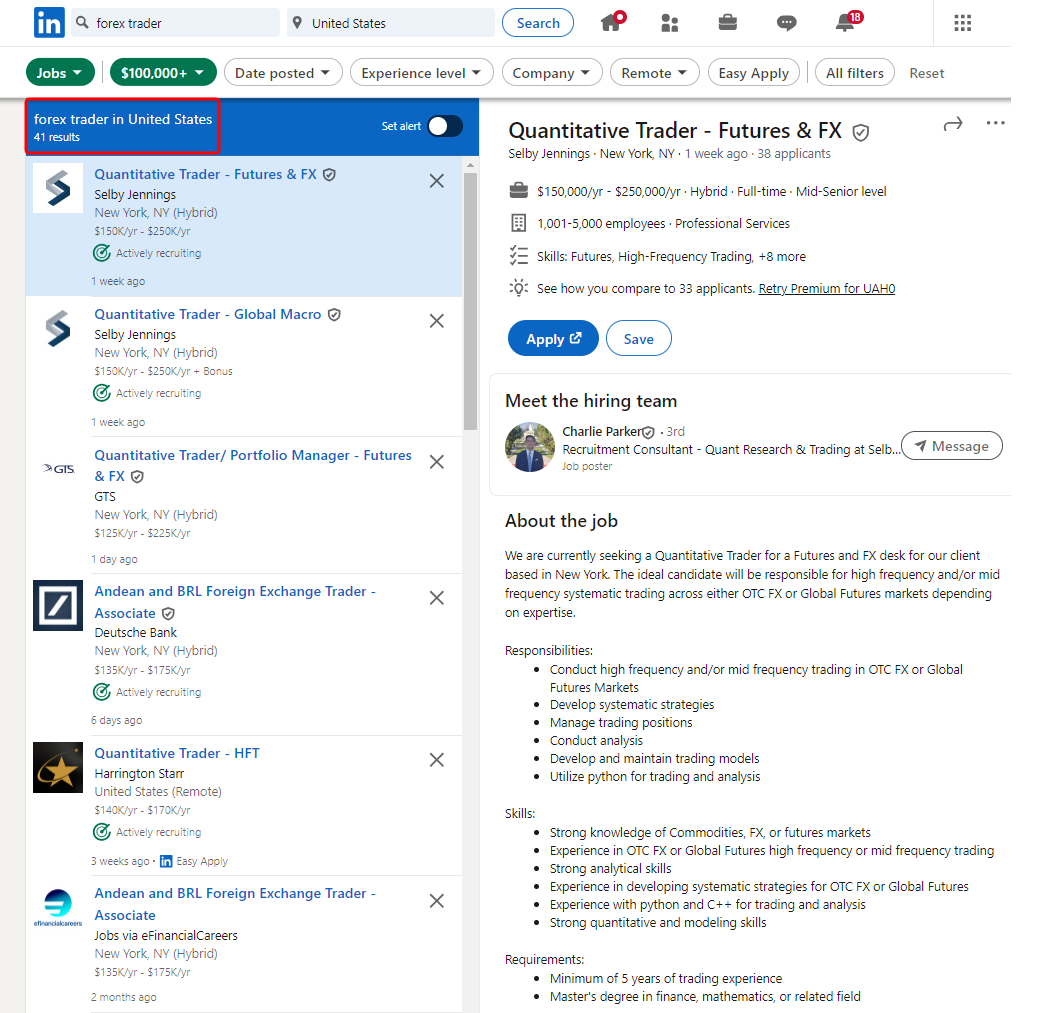
Institutional traders at banks or hedge funds usually receive a base salary (ranging from $100,000 to $250,000) plus a performance bonus. The bonus is typically a percentage of the "P&L" (profit and loss) they generate for the firm, which can range from hundreds of thousands to millions of dollars for top performers.
Can AI trade for me and make a guaranteed income?
While AI tools in 2026 are highly advanced, there is no such thing as a "guaranteed income" in the markets. AI can help identify patterns and manage data, but it cannot predict "black swan" events or shifts in global sentiment. Any service promising guaranteed returns through automated trading is likely a scam.
Practical Recommendation: Your Next Steps
If you are serious about making money from trading, stop focusing on the potential profit and start focusing on the process. Begin by trading in a "paper" (simulated) account for at least six months to prove that your strategy works in different market conditions.
Simultaneously, focus on increasing your primary source of income so you can fund a larger trading account. Trading with "scared money"—money you need for rent or groceries—is the fastest way to make emotional mistakes that lead to losses. Aim to build an account large enough that a 2% monthly return is meaningful, or use your proven track record to apply for a funded position at a reputable proprietary trading firm.
Image Gallery
Select an image to open it in a new tab.



Akira Tanaka
International Academic Trends Correspondent
