
The longest confirmed sniper kill using the .338 Lapua Magnum cartridge was achieved by Corporal of Horse Craig Harrison of the British Army in November 2009. Shooting from a distance of 2,475 meters (2,707 yards), Harrison neutralized two Taliban machine gunners in Afghanistan's Helmand Province using an L115A3 Long Range Rifle.
The feat performed by Craig Harrison remains one of the most significant milestones in the history of precision marksmanship. While longer shots have since been recorded using larger calibers like the .50 BMG and specialized 12.7mm wildcat cartridges, Harrison’s engagement stands as the definitive benchmark for the .338 Lapua Magnum (8.6×70mm) platform. As of 2026, this record continues to be cited in military ballistics training as the ultimate example of maximizing a medium-bore cartridge’s potential under combat conditions. Understanding how this shot was achieved requires a deep dive into the ballistics of the .338 Lapua, the engineering of the Accuracy International L115A3, and the extreme environmental variables present in the Afghan theater.
The Context of the 2009 Helmand Engagement
In November 2009, Corporal of Horse Craig Harrison, a member of the Blues and Royals of the British Household Cavalry, was providing overwatch for a combined British and Afghan National Army patrol. The patrol came under intense fire from a Taliban machine-gun position. Utilizing an L115A3 Long Range Rifle, Harrison identified two insurgents operating a PKM machine gun.
The distance was staggering: 2,475 meters. To put this in perspective, this distance is more than 900 meters beyond the L115A3’s stated effective range of approximately 1,500 meters. The engagement lasted several minutes as Harrison used successive shots to find his range, eventually striking both insurgents and the machine gun itself. This event was not a "lucky shot" but a calculated exercise in extreme long-range ballistics, involving the compensation for massive bullet drop and wind drift.
Technical Specifications of the .338 Lapua Magnum
The .338 Lapua Magnum was specifically designed in the 1980s as a dedicated long-range sniper cartridge. It was intended to fill the gap between the .308 Winchester (7.62×51mm NATO), which lacks energy at extreme ranges, and the .50 BMG (12.7×99mm NATO), which is often housed in rifles too heavy for agile infantry operations.
Ballistic Performance and Energy
The .338 Lapua typically fires a 250-grain or 300-grain Scenar or Sierra MatchKing bullet. At the muzzle, these projectiles travel at approximately 825 to 915 meters per second (2,700 to 3,000 feet per second). The key to the .338’s success at 2,400+ meters lies in its high Ballistic Coefficient (BC). A high BC means the bullet is exceptionally aerodynamic, allowing it to retain velocity and resist wind drift more effectively than smaller calibers.
As of 2026, modern refinements in propellant and projectile manufacturing have further stabilized the .338 Lapua, but in 2009, Harrison was using standard-issue military match ammunition. At the 2,475-meter mark, the bullet had slowed significantly, likely entering the transonic or even subsonic range. When a bullet transitions from supersonic to subsonic speeds, it encounters turbulence that can destabilize its flight path. Harrison’s ability to predict this transition was critical to the success of the shots.
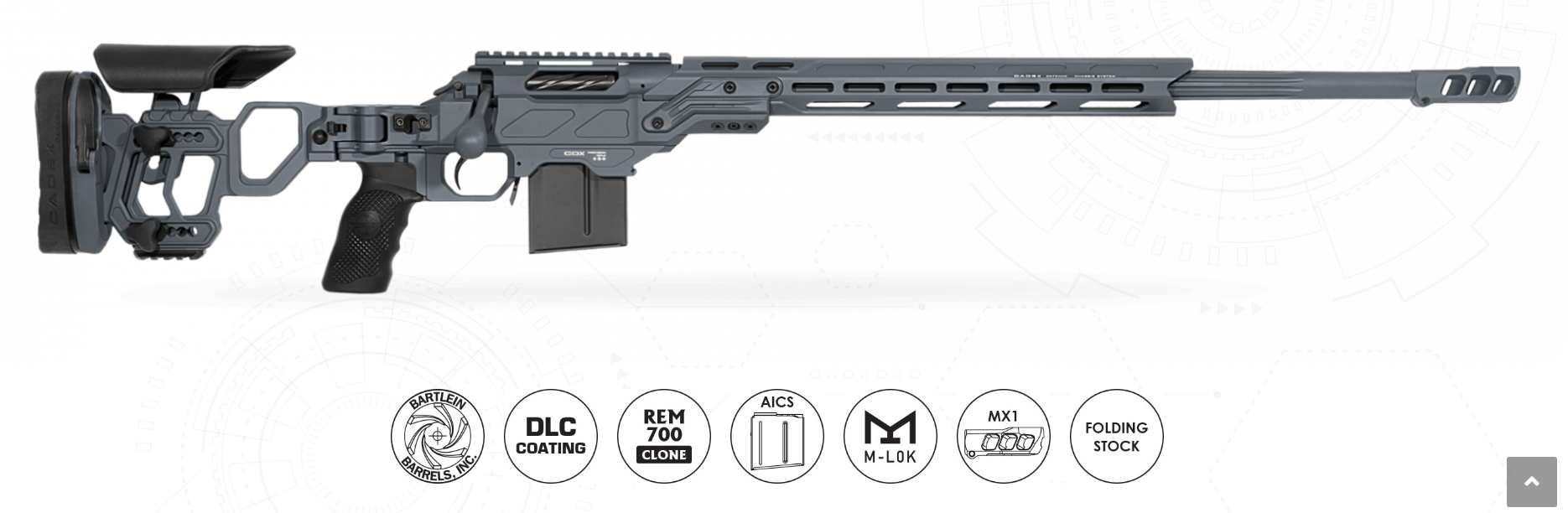
The Equipment: The L115A3 Long Range Rifle
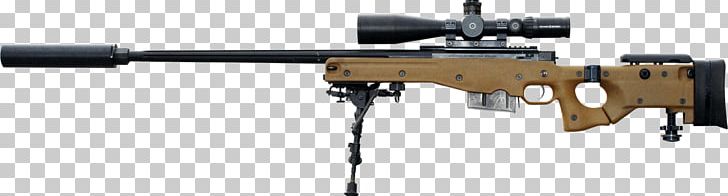
The L115A3 is the British military designation for the Accuracy International AWM (Arctic Warfare Magnum). It is widely regarded as one of the most rugged and precise sniper rifles ever produced.
Precision Engineering
The rifle features a bolt-action design with a stainless steel barrel and a unique chassis system that isolates the action from the stock, ensuring that thermal expansion or mechanical stress does not shift the point of aim. For the 2009 record, the rifle was equipped with a Schmidt & Bender 5-25×56 PM II telescopic sight.
This optic provided the magnification necessary to see the targets at nearly 2.5 kilometers, but it did not have enough internal elevation adjustment to compensate for the massive bullet drop at that distance. Harrison reportedly had to "hold over" his target—aiming at a point significantly above the insurgents—because the scope's physical adjustment dials had reached their limit.
The Physics of a 2,475-Meter Shot
To appreciate the difficulty of Harrison’s record, one must analyze the external ballistics involved in the flight of a .338 Lapua bullet over such a distance.
Bullet Drop and Flight Time
At a range of 2,475 meters, the bullet drop is monumental. Depending on the specific load and local atmospheric conditions, the bullet likely dropped between 110 and 125 meters (360 to 410 feet) during its flight. This means Harrison had to aim the equivalent of a 30-story building above his target.
Furthermore, the "time of flight" was approximately 2.6 to 3.0 seconds. During those three seconds, the bullet is entirely at the mercy of the atmosphere. Any slight change in wind speed or direction—even a breeze the shooter cannot feel but exists halfway to the target—will push the bullet meters away from the point of impact.
Environmental Variables
The high altitude and dry air of Afghanistan actually aided the shot. In thinner mountain air, there is less aerodynamic drag on the projectile, allowing it to maintain velocity longer and drop less than it would at sea level. However, Harrison also had to account for the Coriolis effect—the rotation of the Earth moving the target beneath the bullet while it is in flight—and the Spin Drift caused by the bullet’s clockwise rotation.
| Variable | Impact at 2,475 Meters (Approximate) |
|---|---|
| Bullet Drop | ~120 Meters (394 Feet) |
| Flight Time | ~2.64 Seconds |
| Wind Drift (5 mph crosswind) | ~9.2 Meters (30 Feet) |
| Remaining Velocity | Subsonic (~300 m/s) |
| Remaining Energy | ~800 Joules (comparable to a .357 Magnum at the muzzle) |
Comparison with Other Long-Range Records
While Harrison’s shot is the longest for the .338 Lapua, it has been surpassed in the overall category by larger platforms. In 2017, a Canadian JTF2 sniper used a McMillan TAC-50 (.50 BMG) to hit a target at 3,540 meters. More recently, in late 2023, a Ukrainian sniper using a specialized 12.7x114mm "Lord of the Horizon" rifle reportedly struck a target at 3,800 meters.
However, these records involve significantly larger, heavier weapon systems. The .338 Lapua Magnum remains the "sweet spot" for mobile sniper teams. It provides extreme range without the 30-pound weight penalty of a .50 caliber rifle. As of 2026, the .338 Lapua is still the primary long-range choice for UK Special Forces and many NATO partners, precisely because of the capability demonstrated by Harrison.
Training and the Role of the Spotter
A common misconception is that a sniper works alone. Craig Harrison’s record was a team effort. The spotter provides the range calculations, monitors wind cycles, and observes the "trace"—the disturbance in the air caused by the bullet’s passage—to help the shooter walk their rounds onto the target.
In the 2009 engagement, the first few shots were used to gauge the exact environmental conditions. In extreme long-range shooting, the first shot rarely hits because the mathematical models (ballistic calculators) often struggle with the complexity of the transonic zone. The ability of the sniper and spotter to communicate and adjust after a miss is what distinguishes an elite marksman from a casual shooter.
The Legacy of the .338 Lapua in 2026
In the current landscape of 2026, the .338 Lapua Magnum is facing competition from newer cartridges like the .300 PRC (Precision Rifle Cartridge) and the .375 CheyTac. While the .300 PRC offers similar performance in a smaller package, and the .375 CheyTac offers superior range, the .338 Lapua remains the most widely adopted "super-magnum" in military inventories.
The cartridge has benefited from decades of combat data, much of it stemming from the lessons learned during the 2009 Helmand engagement. It remains a staple for law enforcement counter-sniping and military long-range interdiction because it strikes an ideal balance between portability, recoil, and terminal energy at distance.
Frequently Asked Questions
Is the .338 Lapua Magnum still the record holder for the longest kill?
No, the .338 Lapua Magnum does not hold the overall world record. That record is currently held by a Ukrainian sniper (3,800 meters) using a 12.7x114mm rifle. However, Craig Harrison’s 2,475-meter shot remains the longest confirmed kill specifically for the .338 Lapua caliber.
How much does a .338 Lapua bullet drop at 2,500 meters?
At approximately 2,500 meters, a .338 Lapua Magnum projectile will drop between 115 and 130 meters, depending on the air density and the specific bullet weight. This requires the shooter to aim nearly 400 feet above the target if their optic is not zeroed for that distance.
Why is the .338 Lapua preferred over the .50 BMG for some snipers?
The .338 Lapua is significantly lighter. A rifle like the L115A3 weighs roughly 15-16 pounds, whereas a .50 BMG rifle like the Barrett M82 or McMillan TAC-50 can weigh 30 pounds or more. The .338 provides sufficient "stopping power" for human targets at extreme ranges while being much easier to carry on long patrols.
Was Craig Harrison's shot "confirmed" by GPS?
Yes, the distance was verified using GPS coordinates of both the sniper's position and the target's position. This was later corroborated by British military officials through atmospheric data and the timing of the engagement recorded in patrol logs.
Can a civilian shoot a .338 Lapua at these distances?
While the rifle and ammunition are available to civilians in many jurisdictions, shooting at 2,475 meters requires specialized ranges that are rare. Most civilian long-range shooting occurs at 1,000 to 1,600 meters. Shooting beyond 2,000 meters requires extreme proficiency in ballistic software and high-end optics.
Practical Recommendation for Long-Range Interest
For those interested in the capabilities of the .338 Lapua Magnum, it is recommended to first master the fundamentals of marksmanship with a smaller caliber like the .308 Winchester or 6.5 Creedmoor. The .338 Lapua is an expensive cartridge to fire and requires significant recoil management skills. If you are pursuing extreme long-range shooting (ELR), ensure you invest in high-quality ballistic calculators (such as Kestrel with Applied Ballistics) and understand the nuances of the transonic flight zone, as these were the tools and concepts that allowed Craig Harrison to make history.
Image Gallery
Select an image to open it in a new tab.



Declan O'Connor
Higher Education and Campus Culture Reporter
