
Harland David Sanders (1890–1980) was the American entrepreneur, restaurateur, and founder of Kentucky Fried Chicken (KFC). Though many today recognize him as a stylized logo, he was a real person who became an honorary Kentucky Colonel. He revolutionized the fast-food industry through a unique pressure-frying technique and a proprietary blend of 11 herbs and spices.
The figure behind the white suit was a complex, persistent businessman whose success came late in life. To understand who the KFC Colonel is, one must look past the caricature and into the history of a man who failed at dozens of professions before becoming a global icon of American franchising.
The Early Life and Hardships of Harland Sanders
Harland David Sanders was born on September 9, 1890, in Henryville, Indiana. His early life was characterized by labor and responsibility, which ultimately shaped his work ethic. When Sanders was only five years old, his father passed away, forcing his mother to find work in a tomato cannery. This left young Harland to care for his younger siblings and cook the family meals. By the age of seven, he was reportedly proficient in cooking regional vegetables and meats—skills that would eventually form the foundation of his multi-billion dollar empire.
Sanders' early professional life was a series of trials. He dropped out of school in the seventh grade and left home shortly after to escape a difficult relationship with his stepfather. Before finding his calling in the kitchen, Sanders held an exhaustive list of jobs that read like a history of early 20th-century industry. He worked as a farmhand, a streetcar conductor, a teamster in the Army (stationed in Cuba), a railroad fireman, a blacksmith’s helper, and even an aspiring lawyer.
His foray into law ended abruptly after a courtroom brawl with his own client, a testament to the fiery personality that would later define his relationship with the KFC corporate offices. He also sold insurance, operated a ferry boat, and manufactured acetylene lamps. By the time he reached his 40s, Sanders was operating a service station in North Corbin, Kentucky, where he began cooking for hungry travelers. This humble roadside stop is where the "Colonel" persona was truly born.
The Birth of the "Original Recipe" and Pressure Frying
In the 1930s, Sanders began serving meals at his service station table because there was no actual restaurant on site. His fried chicken became so popular that he eventually moved to a larger location across the street, which became the Sanders Court & Cafe. It was during this period that he developed two critical components of his future success: the "Secret Recipe" and the use of the pressure fryer.
The 11 Herbs and Spices
Sanders was a perfectionist regarding flavor. He spent years experimenting with different seasonings, eventually landing on a blend of 11 herbs and spices. To this day, the recipe remains one of the most closely guarded trade secrets in the food industry. As of 2026, the original handwritten recipe is stored in a high-security vault at the KFC headquarters in Louisville, Kentucky, with different portions of the recipe produced at separate locations to ensure no single supplier has the full list of ingredients.
The Innovation of the Pressure Fryer
During the 1930s, pan-frying chicken took approximately 35 minutes—too long for a "fast" meal for travelers. Deep-frying was faster but resulted in dry, unevenly cooked meat. Sanders observed the development of the pressure cooker, which was then used primarily for vegetables. He modified a pressure cooker into a pressure fryer, which allowed the chicken to cook in about nine minutes. This technical innovation preserved the moisture of the meat while sealing in the flavors of his spice blend, providing a competitive edge that his rivals could not match.
Understanding the "Colonel" Title
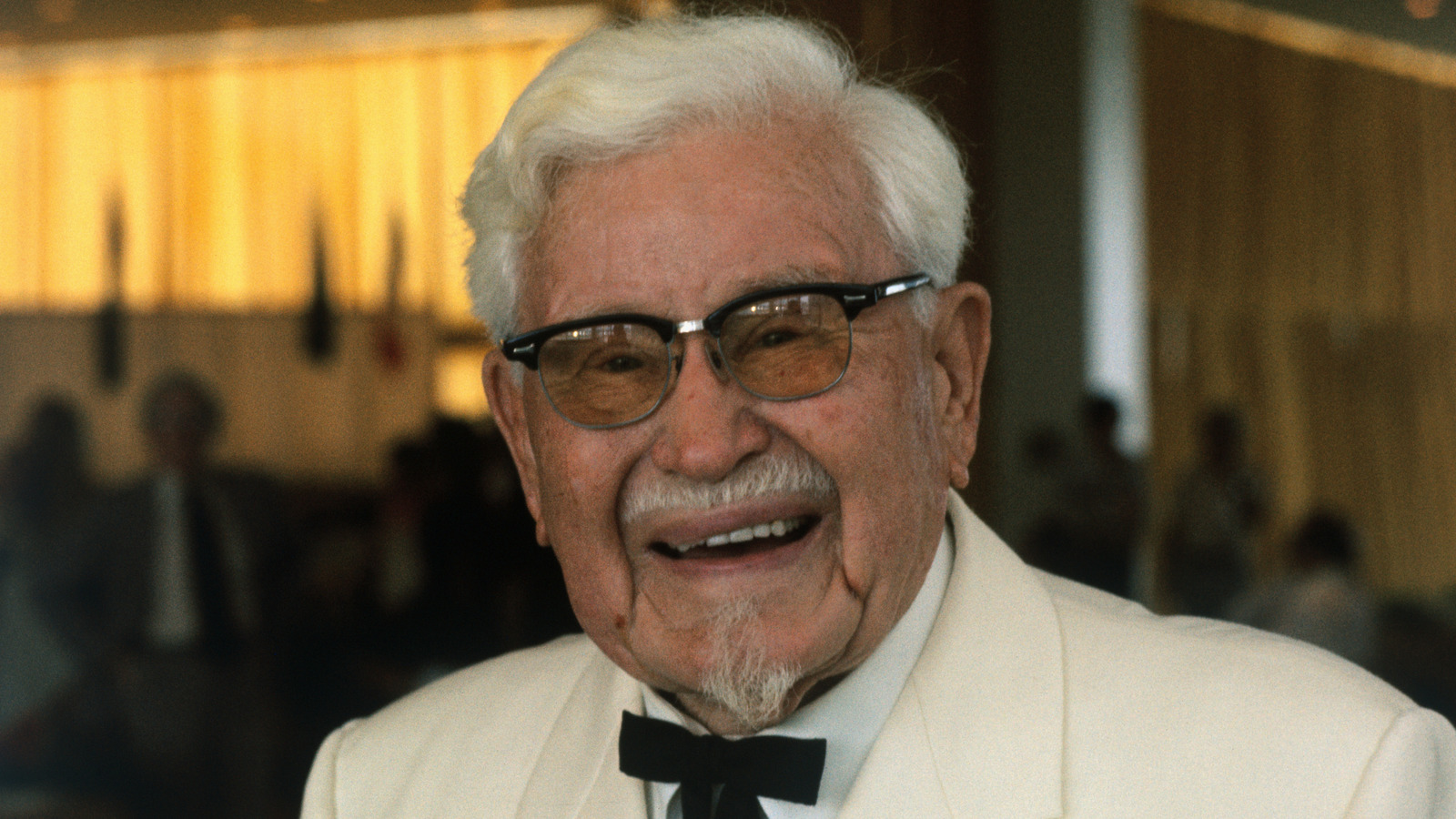
One of the most common points of confusion regarding Harland Sanders is his military rank. In reality, Sanders did not reach the rank of Colonel in the United States Army. His title is a "Kentucky Colonel," which is the highest honor of merit bestowed by the Commonwealth of Kentucky.
The title was first granted to him in 1935 by Governor Ruby Laffoon in recognition of his contributions to the state's cuisine. He was recommissioned in 1950 by Governor Lawrence Wetherby. It was after this second commission that Sanders began to lean into the persona. He grew his signature goatee, bleached his facial hair white to match the hair on his head, and began wearing his iconic white suit and black string tie.
The "Colonel" became more than a title; it was a marketing masterstroke. In an era before massive digital advertising budgets, Sanders understood that a distinct, recognizable personal brand was essential for expansion. He became a living trademark, traveling the country to promote his "Finger Lickin' Good" chicken.
The Hard Road to Global Franchising
The success of the Sanders Court & Cafe was nearly derailed in the early 1950s when a new interstate highway (I-75) bypassed the town of North Corbin, causing a massive drop in customer traffic. At age 65, Sanders was forced to sell his restaurant at a loss and was left living on a monthly Social Security check of $105.
Instead of retiring, Sanders took his pressure fryer and his 11 herbs and spices on the road. His business model was simple yet revolutionary: he would travel to different restaurants, cook chicken for the owners, and if they liked it, he would enter into a handshake agreement. The restaurant owners would pay him a nickel for every chicken sold using his recipe and process.
The first official franchise was established in 1952 with Pete Harman in Salt Lake City, Utah. Harman was actually the person who coined the name "Kentucky Fried Chicken" and hired a sign painter to create the first iterations of the logo. By 1963, there were over 600 KFC outlets across the United States and Canada, making it the largest fast-food operation in the world at the time.
Selling the Empire and the "Quality Control" Years
In 1964, overwhelmed by the sheer scale of the business, the 73-year-old Sanders sold the Kentucky Fried Chicken corporation for $2$ million (roughly $19$ million in 2026 currency) to a group of investors led by John Y. Brown Jr. and Jack C. Massey. The deal allowed Sanders to retain the Canadian franchises and provided him with a lifetime salary as a brand ambassador and quality controller.
However, the relationship between the Colonel and the new owners was often contentious. Sanders was famously critical of the corporate changes made to the food to increase profit margins. He was particularly vocal about the gravy, which he once described as "wallpaper paste" after the company moved away from his labor-intensive traditional recipe.
His dedication to quality was so intense that he would frequently visit KFC locations unannounced. If the chicken or gravy didn't meet his standards, he would reportedly throw it on the floor or scold the operators. Despite these friction points, the company knew that the Colonel's image was their greatest asset, and they continued to use him as the face of the brand until his death in 1980 at the age of 90.
Comparative History of the KFC Colonel Persona
The following table outlines the major shifts in how the Colonel has been represented from his lifetime through the present day (2026).
| Era | Primary Representation | Key Characteristics | Brand Strategy |
|---|---|---|---|
| 1952–1964 | The Living Founder | Handshake deals, traveling in his Cadillac, personal cooking demos. | Grassroots growth and authenticity. |
| 1964–1980 | Brand Ambassador | TV commercials, talk show appearances, quality control critic. | Establishing the Colonel as a global icon. |
| 1981–2014 | The Animated/Logo Era | Focus shifted to the "KFC" acronym; the Colonel was primarily a logo. | Modernization and corporate streamlining. |
| 2015–2024 | The Celebrity Colonel | Actors like Darrell Hammond, Norm Macdonald, and Reba McEntire playing the role. | Irony, nostalgia, and viral marketing. |
| 2025–2026 | The Digital & Legacy Icon | AI-integrated branding and a return to "Original Recipe" historical roots. | Balancing high-tech delivery with 1950s heritage. |
Modern Interpretations: The "New" Colonels
Starting in 2015, KFC launched a marketing campaign that saw a "revolving door" of actors playing the Colonel. This was a response to internal research showing that younger generations didn't realize Harland Sanders was a real person. By using various celebrities—ranging from Rob Lowe to Jason Alexander—KFC successfully re-introduced the character into the cultural zeitgeist.
In the current landscape of 2026, the Colonel remains a central figure in the brand's identity, though the approach has shifted toward celebrating his historical tenacity. The brand frequently highlights his "never too late" success story to appeal to entrepreneurs and modern consumers who value authenticity. While the actors who play him change, the outfit—the white double-breasted suit, the black string tie, and the cane—remains a rigid requirement for the character's appearance.
The Legacy of Harland Sanders
When Colonel Sanders died in 1980, he was one of the most recognized people in the world. He was buried in his signature white suit and black string tie at Cave Hill Cemetery in Louisville, Kentucky. His legacy is not just a fast-food chain, but a testament to the power of personal branding and the refusal to accept defeat in the face of poverty and age.
The "Colonel" is now a permanent fixture of Americana. While the company has grown into a massive subsidiary of Yum! Brands, the core of the business still rests on the foundation Sanders built in a small gas station in Kentucky: a specific technical process (pressure frying) and a secret blend of spices that remains a benchmark for the industry.
Frequently Asked Questions
Was Colonel Sanders a real military colonel?
No, Harland Sanders did not hold the rank of Colonel in the military. He was a "Kentucky Colonel," an honorary title bestowed by the Governor of Kentucky for his contributions to the state's culture and economy. He did serve briefly in the U.S. Army as a teamster in Cuba, but he was honorably discharged as a private.
Who owns KFC now?
KFC is owned by Yum! Brands, Inc., a Fortune 500 company based in Louisville, Kentucky. Yum! Brands also owns Pizza Hut, Taco Bell, and The Habit Burger Grill. The company was originally a spin-off of PepsiCo.
Are the 11 herbs and spices really a secret?
Yes. The exact proportions and ingredients of the Original Recipe are among the most famous trade secrets in the world. Only a few high-level executives know the full recipe, and the production process is split between different companies to prevent any single entity from discovering the complete formula.
Why did the Colonel wear a white suit?
Sanders initially began wearing a white suit because it helped hide flour stains during his cooking demonstrations. As he became more famous, he adopted the look as a professional uniform to maintain his image as a "Southern Gentleman." He eventually committed to the look year-round, wearing a heavy wool suit in the winter and a lighter linen version in the summer.
Is the original KFC location still open?
The original site of Sanders’ restaurant, known as the Sanders Court & Cafe in North Corbin, Kentucky, is now a museum and a functioning KFC restaurant. It is listed on the National Register of Historic Places and allows visitors to see the original kitchen where the Colonel developed the pressure-frying method.
Final Recommendation for Enthusiasts
For those interested in the authentic history of the KFC Colonel, the best next action is to visit the KFC Global Support Center in Louisville, Kentucky, or the Sanders Cafe and Museum in Corbin. These locations offer a look at the actual artifacts of his life, including his original pressure fryers and early marketing materials. Understanding the Colonel as a man—rather than just a logo—provides a fascinating case study in American grit and the evolution of the global food industry.
Image Gallery
Select an image to open it in a new tab.


Mateo Castillo
Decentralized Finance and E-Payments Strategist
