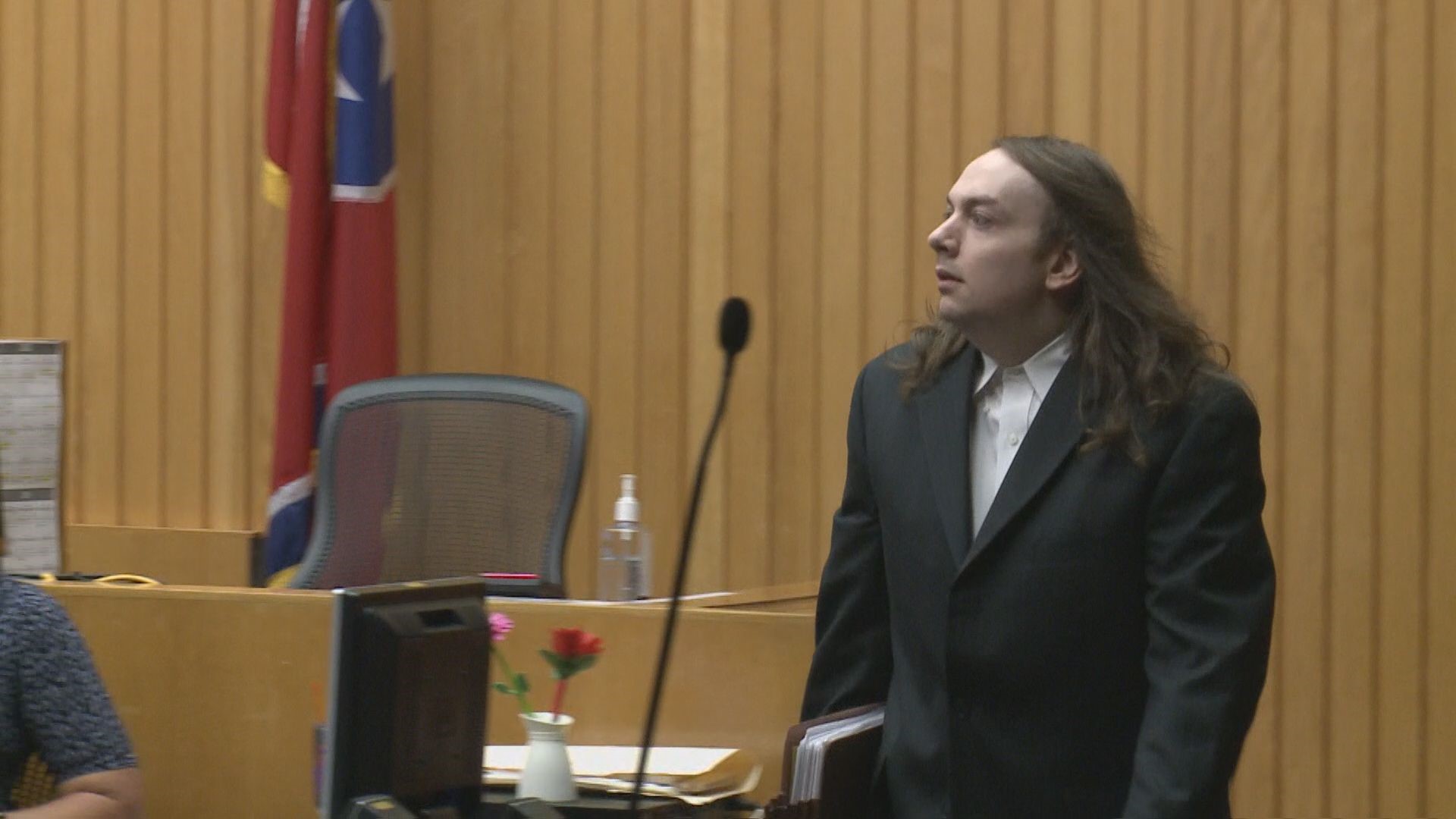
Joel Michael Guy Jr.: A Comprehensive Case Study of the 2016 Knoxville Parricide and Legal Proceedings

Joel Michael Guy Jr. is a convicted murderer currently serving multiple life sentences for the 2016 killing and dismemberment of his parents, Joel Guy Sr. and Lisa Guy. The case, which took place in Knoxville, Tennessee, remains one of the most documented instances of financial parricide in modern American criminal history.
The case of Joel Michael Guy Jr. represents a intersection of forensic complexity, premeditated intent, and psychological abnormality. As of 2026, the case serves as a primary reference point for criminal justice students and forensic investigators due to the overwhelming volume of physical evidence and the discovery of a handwritten "premeditation manual" that detailed the crimes before they occurred. Understanding the trajectory of this case requires an analysis of the family dynamics, the timeline of the 2016 Thanksgiving weekend, the forensic investigation, and the subsequent legal outcomes that led to his permanent incarceration.
Background and Financial Motive
The tragic events of November 2016 were not the result of a sudden impulse but were the culmination of a long-standing state of financial dependency. Joel Michael Guy Jr. (born 1988) had spent approximately nine years as a student at Louisiana State University (LSU). During this entire period, he was entirely supported by his parents, Joel Sr. and Lisa Guy. He did not have a history of steady employment and relied on his parents for housing, tuition, and living expenses.
In late 2016, Joel Sr. and Lisa Guy decided to retire. They had recently sold their home in Knoxville and planned to move to a smaller property in Surgoinsville, Tennessee. As part of this transition into retirement, they communicated to their children—including Joel Jr.—that they would be ending their financial support. This "cutting off" of funds is widely cited by the Knox County District Attorney’s office as the primary catalyst for the murders. Evidence presented at trial suggested that Joel Jr. believed he would inherit a significant portion of his parents' assets and life insurance policies if they died before the financial support officially ceased.
The Psychology of Financial Parricide
Parricide—the killing of one's parents—is a rare subset of homicide. In this specific case, the motive aligns with "proactive" rather than "reactive" violence. Unlike cases where a child reacts to abuse, Joel Guy Jr.’s actions were categorized by the prosecution as a calculated business decision. The objective was the preservation of a lifestyle that was threatened by his parents' retirement. This makes the case a significant study in predatory criminal behavior within a domestic setting.
Timeline of the November 2016 Incident
The crimes occurred during the Thanksgiving holiday weekend, a time when the family had gathered for one final celebration in their Knoxville home before the move.
- Wednesday, November 23, 2016: Joel Guy Jr. arrives in Knoxville from Baton Rouge, Louisiana, to spend Thanksgiving with his family.
- Thursday, November 24, 2016: The family celebrates Thanksgiving. According to testimony from half-siblings, the atmosphere appeared normal, though Joel Jr. remained somewhat distant.
- Friday, November 25, 2016: This is the date forensic experts believe the murders began. Joel Sr. was attacked first in the upstairs exercise room, followed by Lisa Guy, who was attacked upon her return from a grocery store.
- Saturday-Sunday, November 26–27, 2016: Joel Jr. remained in the house with the remains of his parents. During this time, he attempted to dismember the bodies and dissolve them in a corrosive chemical solution—a mixture of lye, sewer line cleaner, and other household acids—to hide the evidence.
- Monday, November 28, 2016: After Lisa Guy failed to show up for her job at Jacobs Engineering, her supervisor contacted the authorities. The Knox County Sheriff’s Office conducted a welfare check and discovered the horrific scene.
Joel Guy Jr. had already departed for Baton Rouge by the time the police arrived. He was seeking medical treatment for significant lacerations on his hands, which he had sustained during the struggle with his father.

The Forensic Investigation and the "Manual of Murder"
The crime scene at the Guy residence was described by veteran investigators as one of the most "diabolical" they had ever encountered. The forensic complexity of the case was a major hurdle for the prosecution, as the use of chemicals had significantly degraded the biological evidence. However, the sheer volume of physical evidence left behind by the perpetrator proved insurmountable for the defense.
The Notebook: A Blueprint for Murder
The most damning piece of evidence was a 57-page handwritten notebook found in a backpack in the guest bedroom where Joel Jr. had stayed. This notebook, referred to during the trial as the "Manual of Murder," contained a step-by-step guide on how to carry out the killings. The notes included:
- The Attack: Instructions to "get him from behind" and "kill him with the knife."
- The Cleanup: Details on using bleach and corrosive chemicals to "melt" the remains.
- The Motive: Notes regarding his father's life insurance and the need to make the deaths look like a disappearance or an accident.
- Forensic Countermeasures: Reminders to "bring a change of clothes" and to "check for fingerprints."
The existence of this notebook removed any doubt regarding premeditation. It transformed the case from a circumstantial one into a clear-cut example of first-degree murder.
Biological and Chemical Evidence
The Knox County Sheriff’s Office Forensic Unit documented the dismemberment process. Portions of the victims' remains were found in plastic bins filled with a "biological soup" of chemicals. Notably, the head of Lisa Guy was found in a stockpot on the stove. DNA evidence, blood spatter patterns, and the presence of Joel Jr.'s fingerprints on the chemical containers linked him directly to the scene. Furthermore, receipts from local stores showed Joel Jr. purchasing the bins and chemicals used in the attempted disposal of the bodies.
Legal Proceedings and Trial (2020)
The trial of Joel Michael Guy Jr. (State of Tennessee v. Joel Michael Guy Jr.) began in late September 2020. The prosecution, led by Leslie Nassios and Hector Sanchez, presented a harrowing array of evidence over several days.
| Feature | Details |
|---|---|
| Court Location | Knox County Criminal Court, Tennessee |
| Presiding Judge | Steven Sword |
| Primary Charges | Two counts of First-Degree Murder, Three counts of Felony Murder, Two counts of Abuse of a Corpse |
| Defense Strategy | No witnesses called; focused on challenging the search warrant's validity |
| Verdict | Guilty on all counts (October 2, 2020) |
| Sentencing | Two consecutive life sentences plus 4 years for abuse of a corpse |
The defense team did not call any witnesses and did not allow Joel Guy Jr. to testify. Their strategy primarily rested on trying to suppress the evidence found in the home, arguing that the initial welfare check and subsequent search were conducted without a valid warrant. Judge Steven Sword denied these motions, ruling that the "exigent circumstances" of a welfare check justified the initial entry.
Sentencing Phase
On October 2, 2020, the jury deliberated for approximately three hours before returning a verdict of guilty on all counts. During the sentencing hearing in November 2020, Judge Sword remarked on the "calculated and cold-blooded" nature of the crime. He ordered that the two life sentences for the murders be served consecutively, meaning one after the other, rather than concurrently. This effectively ensured that Joel Guy Jr. would never be eligible for parole during his lifetime.
Status in 2026 and Post-Conviction Developments
As of 2026, Joel Michael Guy Jr. remains incarcerated within the Tennessee Department of Correction (TDOC) system. He is currently 38 years old. His legal status has largely shifted from the trial phase to the appellate and post-conviction relief phase.
Appeals Process
Following his conviction in 2020, Guy filed several appeals. The Tennessee Court of Criminal Appeals reviewed the case, focusing on the defense's claims regarding the legality of the search and the admission of the notebook into evidence. By 2023, the higher courts had upheld the conviction, affirming that the trial court acted within the law.
In 2026, any remaining legal actions would typically involve "post-conviction petitions," where a defendant argues that their original trial counsel was ineffective. Given the overwhelming evidence—including the handwritten confession in the notebook—legal experts suggest that the likelihood of a conviction being overturned is statistically negligible.
Prison Life and Public Interest
Joel Guy Jr. has reportedly maintained a low profile within the prison system. Unlike some high-profile inmates who seek media attention, he has not participated in televised interviews or granted access to true-crime biographers. The case, however, continues to be a staple of investigative programming on networks such as Oxygen and Investigation Discovery, often cited as a benchmark for the use of digital and physical forensics in solving "inside" family murders.
The Impact on Criminal Jurisprudence
The Guy case has had a lasting impact on how "welfare checks" are viewed legally in Tennessee. It reinforced the "community caretaker" exception to the Fourth Amendment, which allows police to enter a residence without a warrant if they have a reasonable belief that someone inside is in immediate danger.
Additionally, the case highlighted the importance of "pre-offense behavior" tracking. The fact that Joel Guy Jr. was able to purchase large quantities of corrosive chemicals and surgical tools without raising red flags has been discussed in legislative circles regarding the monitoring of precursor materials, though no major policy changes have been implemented as a direct result.
FAQ: Common Questions Regarding the Joel Guy Jr. Case
Why did Joel Guy Jr. leave the notebook behind?
While it seems counterintuitive to leave a 57-page confession at a crime scene, forensic psychologists suggest this may have been due to several factors: the physical exhaustion of the three-day "cleanup" process, the pain from his hand injuries, or a degree of arrogance. He may have believed that the chemical dissolution of the bodies would be so complete that the notebook would never be scrutinized, or he simply panicked when he realized the "acid bath" was not working as quickly as he had planned.
Is Joel Guy Jr. eligible for parole?
Technically, a life sentence in Tennessee carries the possibility of parole after 51 to 60 years. However, because Judge Steven Sword ordered the sentences to be served consecutively, Guy would have to serve the first 51-year minimum for his father's murder before even beginning the 51-year minimum for his mother's murder. Effectively, he is sentenced to over 100 years of incarceration, making parole impossible.
What happened to the Guy family home in Knoxville?
The house where the murders occurred was eventually sold. In many high-profile murder cases, "stigma" laws require real estate agents to disclose the history of the property to potential buyers. The house was renovated and has since been occupied by new owners, though it remains a destination for "true crime tourists," much to the dismay of the local community.
Were there any other suspects in the case?
No. From the onset of the investigation, all evidence pointed exclusively to Joel Guy Jr. His sisters (half-siblings) were cleared immediately, as they were not in the Knoxville area at the time of the murders and had no motive or physical connection to the crime scene. The forensic evidence—specifically the DNA on the knives and the fingerprints on the chemical bins—confirmed Guy as the sole perpetrator.
What was the specific cause of death for the parents?
The medical examiner testified that both victims suffered multiple "sharp force" injuries. Joel Guy Sr. suffered at least 42 stab wounds, while Lisa Guy suffered approximately 31. Many of these wounds were inflicted with extreme force, resulting in broken ribs and severe internal damage. The dismemberment occurred post-mortem.
Final Summary and Next Actions
The case of Joel Michael Guy Jr. is a harrowing reminder of the complexities of domestic violence and the lengths to which individuals may go for perceived financial gain. The meticulous planning documented in his notebook stands as a chilling artifact of premeditated murder.
For those researching this case for academic or legal purposes, the following actions are recommended:
- Review the Trial Transcripts: The Knox County Criminal Court archives contain the full testimony of the forensic experts, which provides a masterclass in the analysis of bloodstain patterns and chemical degradation.
- Study Tennessee Parricide Statutes: Analyze the sentencing guidelines that allowed for consecutive life terms, which is a critical deterrent and punitive measure in Tennessee law.
- Monitor TDOC Records: For the most current status of his incarceration and facility location, the Tennessee Department of Correction's "FELONY OFFENDER INFORMATION" (FOIL) search is the official source of record.
Image Gallery
Select an image to open it in a new tab.