Who Were the Four Assassinated Presidents? A History of Presidential Regicide in the United States
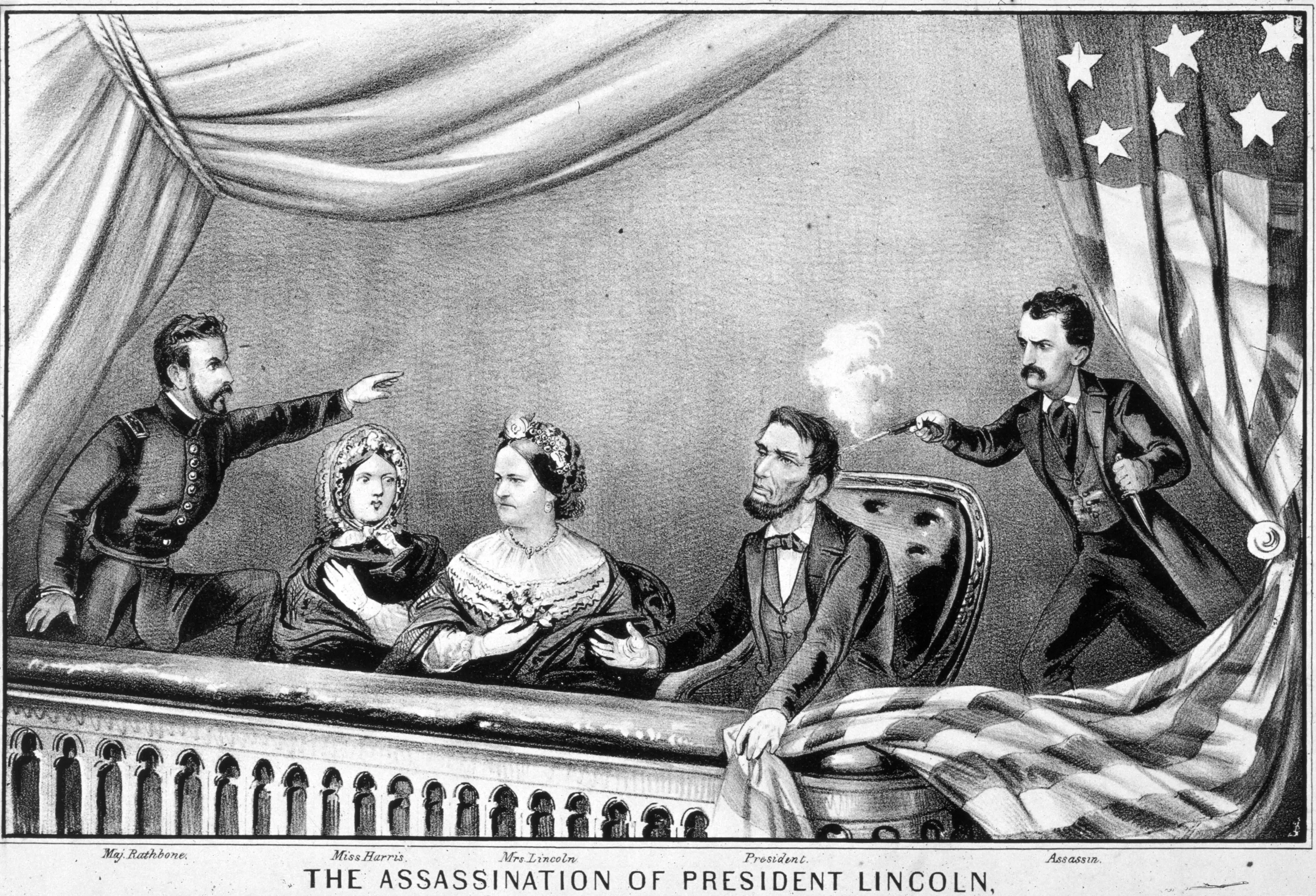
Four United States presidents have been assassinated while serving in office: Abraham Lincoln (1865), James A. Garfield (1881), William McKinley (1901), and John F. Kennedy (1963). These tragic events not only resulted in the loss of national leaders but also fundamentally transformed the nature of executive security and the role of the U.S. Secret Service.
The history of the American presidency is marked by periods of immense progress and moments of profound national trauma. Among the most destabilizing events in the nation's history are the four successful assassinations of sitting presidents. Each of these murders occurred during a time of significant social or political upheaval, reflecting the deep-seated tensions of their respective eras. Understanding who these four presidents were, the circumstances of their deaths, and the motivations of their assassins provides essential context for the evolution of the modern American state.
Abraham Lincoln: The First Presidential Assassination (1865)
Abraham Lincoln, the 16th President of the United States, was the first American president to be assassinated. His death occurred on April 14, 1865, just days after the surrender of Confederate General Robert E. Lee at Appomattox Court House, signaling the effective end of the American Civil War.
The Setting and the Act
Lincoln was attending a performance of the comedy Our American Cousin at Ford’s Theatre in Washington, D.C. He was seated in the state box with his wife, Mary Todd Lincoln, and two guests, Major Henry Rathbone and Clara Harris. During the third act of the play, John Wilkes Booth, a well-known actor and Confederate sympathizer, slipped into the box and shot Lincoln in the back of the head with a .44-caliber derringer.
Booth’s escape was theatrical and chaotic; he jumped from the box onto the stage, shouting "Sic semper tyrannis!" (Thus always to tyrants), the state motto of Virginia. Despite breaking his leg during the fall, Booth managed to flee the theater on horseback.
The Motivations and Conspiracy
Booth was not a lone actor in the broader sense; he was part of a larger conspiracy to revive the Confederate cause by decapitating the Union government. The plot originally intended to kill Lincoln, Vice President Andrew Johnson, and Secretary of State William Seward simultaneously. While an associate, Lewis Powell, severely wounded Seward, the attempt on Johnson’s life failed when the designated assassin lost his nerve.
Lincoln was carried across the street to the Petersen House, where he remained in a coma until his death at 7:22 a.m. on April 15, 1865. His death plunged a nation that was just beginning to celebrate peace back into a state of mourning and uncertainty regarding the Reconstruction of the South.
James A. Garfield: The Tragedy of Medical Incompetence (1881)
The assassination of James A. Garfield, the 20th President, is often cited by historians as one of the most unnecessary deaths in presidential history. Shot only four months into his term, Garfield’s death was as much a result of the primitive medical practices of the time as it was the assassin’s bullet.
The Shooting at Baltimore and Potomac Station
On July 2, 1881, Garfield was at the Baltimore and Potomac Railroad Station in Washington, D.C., preparing to travel to his alma mater, Williams College. Charles J. Guiteau, a mentally unstable lawyer and "disappointed office seeker," approached the President from behind and fired two shots. One bullet grazed Garfield’s arm, while the other lodged in his back, missing his spinal cord and vital organs.
Guiteau believed that by killing Garfield and allowing Vice President Chester A. Arthur to take office, he would be rewarded with a federal appointment—specifically a consulship in Paris—under the "spoils system" of political patronage.
The Long Decline
Garfield did not die immediately. He lived for 79 days following the shooting. During this time, he was subjected to repeated, agonizing examinations by doctors who did not yet believe in or practice Joseph Lister’s theories on antisepsis. Surgeons used unwashed fingers and non-sterile instruments to probe the wound in search of the bullet, leading to a massive, systemic infection.
Alexander Graham Bell even attempted to use a primitive metal detector to locate the bullet, but the device was reportedly interfered with by the metal springs in Garfield's bed. Garfield eventually died of septicemia and a ruptured splenic artery aneurysm on September 19, 1881. His death accelerated the passage of the Pendleton Civil Service Reform Act, which aimed to curb the very patronage system that Guiteau had sought to exploit.

William McKinley: The Anarchist Threat (1901)
By the turn of the 20th century, the United States was emerging as a global power. William McKinley, the 25th President, was overseeing this expansion when he became the third president to fall to an assassin’s bullet.
The Pan-American Exposition
On September 6, 1901, McKinley was attending the Pan-American Exposition in Buffalo, New York. While greeting the public at the Temple of Music, he was approached by Leon Czolgosz, a self-proclaimed anarchist. Czolgosz had his right hand wrapped in a bandage, which concealed a .32-caliber Iver Johnson revolver. As McKinley reached out to shake his hand, Czolgosz fired two shots into the President’s abdomen.
Aftermath and the Rise of Theodore Roosevelt
McKinley initially appeared to be recovering after surgery. However, like Garfield before him, he succumbed to gangrene caused by the internal wounds. He died on September 14, 1901.
Czolgosz’s motivation was rooted in the anarchist movements of the era, which viewed heads of state as symbols of oppression. The assassination shocked the nation and led directly to the U.S. Secret Service being formally tasked with the full-time protection of the President. McKinley’s death also propelled Vice President Theodore Roosevelt into the presidency, ushering in the Progressive Era and a more assertive American foreign policy.
John F. Kennedy: The Modern Media Tragedy (1963)
The assassination of John F. Kennedy, the 35th President, remains one of the most analyzed and debated events in American history. Occurring in the height of the Cold War and the burgeoning Civil Rights Movement, his death was captured in a way no previous assassination had been.
Dealey Plaza
On November 22, 1963, Kennedy was traveling in an open-top motorcade through Dealey Plaza in Dallas, Texas, as part of a trip to shore up political support for the 1964 election. At approximately 12:30 p.m., shots were fired from the Texas School Book Depository. Kennedy was struck in the neck and the head. He was rushed to Parkland Memorial Hospital, where he was pronounced dead at 1:00 p.m.
The Investigation and Controversy
Lee Harvey Oswald, a former U.S. Marine who had previously defected to the Soviet Union, was arrested for the murder of Dallas police officer J.D. Tippit and subsequently charged with Kennedy’s assassination. Two days later, while being transferred to the county jail, Oswald was shot and killed by nightclub owner Jack Ruby on live national television.
The Warren Commission, established by President Lyndon B. Johnson to investigate the assassination, concluded in 1964 that Oswald had acted alone. However, the House Select Committee on Assassinations (HSCA) concluded in 1979 that there was a "high probability" of a second gunman, a claim that continues to fuel various conspiracy theories. As of 2026, many government documents related to the event have been declassified, though the "lone gunman" vs. "conspiracy" debate remains a fixture of American cultural discourse.
Summary of Presidential Assassinations
The following table provides a quick reference for the four successful assassinations in U.S. history.
| President | Date of Assassination | Location | Assassin | Weapon Used |
|---|---|---|---|---|
| Abraham Lincoln | April 14, 1865 | Ford's Theatre, Washington, D.C. | John Wilkes Booth | .44-caliber Derringer |
| James A. Garfield | July 2, 1881 | Baltimore & Potomac Station, D.C. | Charles J. Guiteau | .44-caliber British Bull Dog |
| William McKinley | September 6, 1901 | Temple of Music, Buffalo, NY | Leon Czolgosz | .32-caliber Iver Johnson |
| John F. Kennedy | November 22, 1963 | Dealey Plaza, Dallas, TX | Lee Harvey Oswald | 6.5mm Carcano Rifle |
The Evolution of Presidential Protection
Before the assassination of Abraham Lincoln, there was no permanent security detail for the President of the United States. Lincoln famously dismissed his lone guard on the night he was killed. Even after Garfield’s death in 1881, the concept of a dedicated protection force was not immediately implemented.
It was the death of William McKinley in 1901 that served as the final catalyst for change. The U.S. Secret Service, which was originally created in 1865 to combat the counterfeiting of U.S. currency, was informally asked to protect McKinley's successor, Theodore Roosevelt. By 1906, Congress passed legislation that formally mandated the Secret Service to protect the President at all times.
In the years since the Kennedy assassination, protection protocols have become exponentially more sophisticated. Today, the Secret Service utilizes advanced intelligence, electronic surveillance, and specialized tactical units to prevent further tragedies. The legacy of these four assassinated presidents is visible in every armored limousine, perimeter sweep, and background check performed by modern security forces.
Failed Attempts and "Near Misses"
While only four presidents have been killed in office, many others have faced credible threats or survived assassination attempts. These "near misses" highlight the constant danger associated with the office.
- Andrew Jackson (1835): The first attempted assassination of a sitting president occurred when Richard Lawrence tried to shoot Jackson at the Capitol. Both of Lawrence's pistols misfired, and Jackson famously beat the assailant with his cane.
- Franklin D. Roosevelt (1933): Weeks before his inauguration, Giuseppe Zangara fired shots at FDR in Miami. Roosevelt was unharmed, but Chicago Mayor Anton Cermak was killed.
- Harry S. Truman (1950): Puerto Rican nationalists Oscar Collazo and Griselio Torresola attempted to storm Blair House to kill Truman. A White House police officer, Leslie Coffelt, was killed in the gunfight.
- Gerald Ford (1975): Ford survived two separate attempts on his life within three weeks, both in California—one by Lynette "Squeaky" Fromme and another by Sara Jane Moore.
- Ronald Reagan (1981): John Hinckley Jr. shot Reagan outside a Washington hotel. The bullet lodged near his heart, but he survived after emergency surgery, becoming the first sitting president to survive being wounded in an assassination attempt.
Frequently Asked Questions
Which president was assassinated first?
Abraham Lincoln was the first U.S. president to be assassinated. He was shot on April 14, 1865, and died the following morning. Before this, several presidents had died in office from natural causes (such as William Henry Harrison and Zachary Taylor), but Lincoln’s death was the first resulting from a deliberate act of violence.
Did any of the assassins survive their trials?
None of the four successful assassins lived long after their crimes. John Wilkes Booth was shot and killed by Union soldiers in a tobacco barn in Virginia 12 days after Lincoln’s death. Charles J. Guiteau (Garfield’s assassin) and Leon Czolgosz (McKinley’s assassin) were both tried, convicted, and executed—Guiteau by hanging in 1882 and Czolgosz by the electric chair in 1901. Lee Harvey Oswald was murdered by Jack Ruby before he could stand trial.
Why was the Secret Service not protecting these presidents?
The Secret Service was not officially tasked with presidential protection until after the third assassination (McKinley). For most of the 19th century, the American public and political leaders were resistant to the idea of a guarded presidency, as it was seen as "monarchical" and contrary to the democratic ideal of an accessible leader. It took three deaths in 36 years to overcome this cultural resistance.
Are there any similarities between the four assassinations?
While each occurred in different centuries or decades, some commonalities exist. Three of the four (Lincoln, Garfield, and McKinley) were shot at close range during public events or social gatherings. In all four cases, the vice president immediately took the oath of office to ensure the continuity of government (Andrew Johnson, Chester A. Arthur, Theodore Roosevelt, and Lyndon B. Johnson).
How did these deaths change the U.S. Constitution?
The assassinations, along with various presidential illnesses, led to the ratification of the 25th Amendment in 1967. This amendment clarified the procedures for presidential succession and disability, ensuring that there would never be a "power vacuum" if a president was killed or incapacitated.
Recommendations for Further Research
To gain a deeper understanding of these historical events, citizens and students are encouraged to utilize official archives and primary source documents.
- The National Archives: Explore the official reports of the Warren Commission and documents related to the Lincoln assassination.
- The Library of Congress: Access digital collections of 19th-century newspapers that captured the immediate public reaction to the deaths of Lincoln, Garfield, and McKinley.
- Presidential Sites: Visiting Ford’s Theatre in D.C., the McKinley Presidential Library in Ohio, or the Sixth Floor Museum at Dealey Plaza in Dallas provides a tangible connection to the physical locations where history was altered.
Understanding the lives and deaths of these four men is essential for any study of American history. Their assassinations represent the ultimate intersection of political ideology, personal pathology, and national security—lessons that remain relevant in the modern political landscape of 2026.
Image Gallery
Select an image to open it in a new tab.

Celine Dubois
Contemporary Living and Global Arts Columnist
