
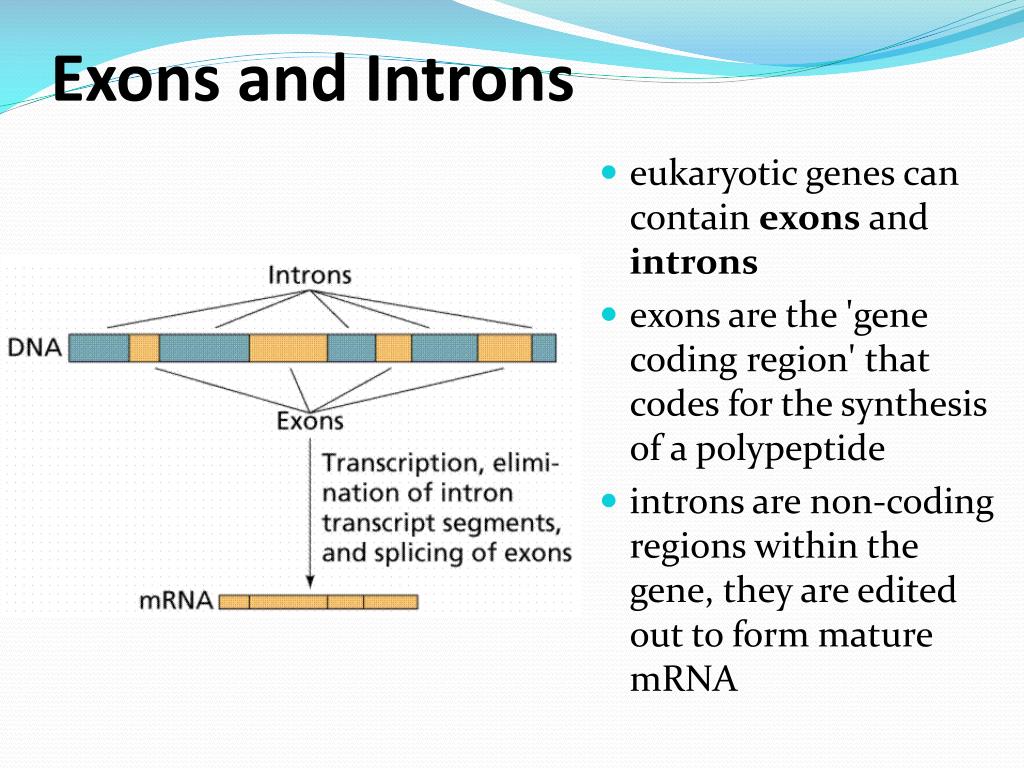
Exons and introns are distinct functional segments of a genetic sequence. Exons are the "expressed" regions that carry the code for protein synthesis and remain in the mature messenger RNA (mRNA), while introns are intervening, non-coding sequences that are removed during a process called splicing before the protein is built.
In the study of molecular biology, few concepts are as fundamental to understanding eukaryotic life as the distinction between exons and introns. While both are composed of nucleotide sequences within a gene, their roles in the "Central Dogma" of biology—the flow of genetic information from DNA to RNA to protein—are diametrically opposed. To the casual observer, the presence of non-coding "filler" inside a gene might seem like biological inefficiency. However, as of 2026, genomic research continues to prove that the relationship between these two entities is the foundation of biological complexity, allowing a limited number of genes to produce a vast array of functional proteins.
The Structural Anatomy of a Gene
To understand why exons and introns are not the same, one must first look at the structure of a eukaryotic gene. Unlike the streamlined genes of bacteria, eukaryotic genes are "split." They are organized like a film reel that contains the actual movie scenes (exons) interspersed with strips of blank leader tape or behind-the-scenes footage (introns) that must be edited out before the final screening.
What are Exons?
The term exon refers to "expressed sequences." These are the segments of the DNA sequence that are transcribed into pre-mRNA and subsequently retained in the mature mRNA transcript. In the majority of cases, exons provide the triplet codons that the ribosome reads to assemble amino acids into a polypeptide chain.
However, it is a common misconception that all exons code for proteins. While most do, some exons constitute the untranslated regions (UTRs) at the 5' and 3' ends of the mRNA. These non-coding exons are vital for the stability of the mRNA molecule and provide binding sites for proteins that regulate how efficiently the message is translated.
What are Introns?
The term intron stands for "intervening sequences." These segments are transcribed into the initial RNA strand (pre-mRNA) but are strictly removed during RNA processing. Because they do not appear in the final mature mRNA used for translation, they do not directly contribute to the primary sequence of the protein.
For decades, introns were dismissively labeled as "junk DNA." In 2026, this term is largely considered obsolete in professional genomics. We now understand that introns are essential for gene regulation, harboring enhancers, silencers, and even small functional RNA molecules like microRNAs (miRNAs) and small nucleolar RNAs (snoRNAs).
The Biological Mechanism: RNA Splicing
The physical separation of exons and introns occurs through a complex molecular editing process known as RNA splicing. This process is what effectively differentiates the two segments in a functional context.
The Role of the Spliceosome
The removal of introns is governed by a massive molecular machine called the spliceosome. The spliceosome is composed of five small nuclear ribonucleoproteins (snRNPs, often pronounced "snurps") and hundreds of auxiliary proteins.
The spliceosome must operate with pinpoint accuracy. If it shifts its cutting site by even a single nucleotide, the "reading frame" of the exons is thrown off, leading to a frameshift mutation. This usually results in a non-functional protein or a premature stop codon, which can cause severe genetic disorders.
Splicing Signals
How does the cell know where an exon ends and an intron begins? The boundaries are marked by specific, highly conserved nucleotide sequences:
- 5' Splice Site (Donor Site): Usually starts with the nucleotides GU.
- 3' Splice Site (Acceptor Site): Usually ends with the nucleotides AG.
- Branch Point: An adenine residue located roughly 15 to 45 nucleotides upstream of the 3' end of the intron.
The spliceosome recognizes these markers, loops the intron into a structure called a lariat, cuts the RNA, and ligates (glues) the two flanking exons together.
Key Differences Between Exons and Introns
While both are parts of the same DNA strand, their characteristics vary significantly across several metrics, including length, conservation, and fate.
| Feature | Exons | Introns |
|---|---|---|
| Primary Function | Coding for proteins and UTRs | Gene regulation and splicing control |
| Fate in Processing | Retained in mature mRNA | Removed during splicing |
| Average Length | Relatively short (approx. 150 bp) | Can be very long (thousands of bp) |
| Evolutionary Conservation | Highly conserved (stable across species) | Low conservation (evolve rapidly) |
| Presence in Prokaryotes | Present (the entire gene) | Rare/Absent in most bacteria |
| Sequence Start/End | No universal start/end signal | Usually start with GU and end with AG |
Why Introns Matter: The Power of Alternative Splicing
The most significant reason exons and introns are not the same lies in the flexibility they provide the cell. If genes consisted only of exons, one gene would equal exactly one protein. Because of introns, eukaryotes can perform alternative splicing.
Alternative splicing is a process where different combinations of exons from the same gene are joined together. By selectively skipping certain exons or retaining specific introns, a single gene can produce multiple distinct mRNA transcripts, which in turn produce different protein isoforms.
In humans, it is estimated that over 95% of multi-exon genes undergo alternative splicing. This is why humans can function with only approximately 20,000 genes while maintaining a proteome (total set of proteins) that is vastly more complex. For example, the Dscam gene in fruit flies can produce 38,016 different protein versions through alternative splicing—far more than the total number of genes in the fly's entire genome.
Evolutionary Perspectives: Why Keep the "Extra" DNA?
From an energy standpoint, introns seem like a burden. The cell must spend significant ATP (energy) to transcribe long stretches of intronic DNA, only to chop it out and degrade it seconds later. Why has evolution preserved this system for billions of years?
The Exon Shuffling Theory
Introns act as "buffers" or "flexible spacers" between exons. This facilitates a process called exon shuffling, where exons can be swapped or duplicated between different genes over evolutionary timescales. This allows for the "modular" evolution of new proteins. Instead of waiting for a million random point mutations to create a new enzyme, evolution can simply "copy and paste" a functional exon (representing a protein domain) into a new genomic context.
Regulatory Complexity
Introns allow for "nested genes" and complex feedback loops. Many introns contain regulatory elements that control the timing and location of gene expression. Without introns, the sophisticated "on/off" and "dimmer" switches required for the development of complex multi-cellular organisms might not have evolved.
Medical Significance and Splicing Errors
The distinction between exons and introns is not merely academic; it is a matter of human health. Mutations in exons often change the amino acid sequence of a protein, but mutations in introns can be just as devastating.
Splicing Mutations: If a mutation occurs at the GU or AG splice sites within an intron, the spliceosome may fail to recognize the boundary. This can lead to:
- Exon Skipping: A vital coding exon is accidentally removed.
- Intron Retention: A non-coding intron is left in the final mRNA, usually introducing a premature stop codon.
- Cryptic Splice Site Activation: The spliceosome uses a "near-match" sequence inside an exon or intron, cutting the RNA in the wrong place.
As of 2026, many modern therapies focus on these differences. Antisense Oligonucleotides (ASOs) are now used to "mask" splice sites, forcing the cell to skip mutated exons in conditions like Duchenne Muscular Dystrophy (DMD) or to include exons in Spinal Muscular Atrophy (SMA). Understanding that exons and introns are not the same is the literal foundation for these life-saving genomic medicines.
Frequently Asked Questions
Do all genes have introns?
No. While most eukaryotic genes are split into exons and introns, there are "intronless genes." In humans, examples include many histone genes (which package DNA) and certain G-protein coupled receptors. These genes are transcribed and translated much faster because they do not require the time-consuming splicing step.
Can an intron ever become an exon?
Yes, through a process known as exonization. Over evolutionary time, a mutation might create a new splice site within an intron, causing a piece of that intron to be treated as an exon and included in the mRNA. Additionally, some "exitrons" are sequences that function as introns in some tissues but are retained as coding exons in others.
What is the average size difference between them?
In the human genome, introns are typically much longer than exons. The average exon is about 150 base pairs (bp) long, while introns can range from 50 bp to over 800,000 bp. The massive size of introns means that the majority of a human gene's physical length on the chromosome is actually made of non-coding intronic DNA.
Are introns present in bacteria?
True "spliceosomal" introns are absent in prokaryotes (bacteria and archaea). However, bacteria do possess "self-splicing" introns (Group I and Group II introns), which are ribozymes capable of removing themselves from an RNA strand without the help of a protein spliceosome.
Why is it called "pre-mRNA" when introns are still present?
Pre-mRNA (precursor messenger RNA) is the immediate product of transcription. It is a direct "mirror" of the DNA sequence, containing both exons and introns. It only becomes "mature mRNA" after the introns are removed (splicing), a 5' cap is added, and a poly-A tail is attached to the 3' end.
Practical Guidance for Students and Researchers
When analyzing genetic data or using bioinformatics tools, always verify whether you are looking at genomic DNA (gDNA) or complementary DNA (cDNA).
- gDNA contains both exons and introns; if you are trying to predict a protein sequence from gDNA, you must use a "gene finder" tool to identify the splice sites.
- cDNA is synthesized from mature mRNA and therefore contains only the exons. This is the preferred format for cloning genes and expressing proteins in laboratory settings, as bacteria lack the machinery to splice out human introns.
If you are investigating a genetic disease and find no mutations in the exons, your next step should always be to sequence the intron-exon boundaries. Splicing defects account for up to 15-50% of all disease-causing mutations in humans, proving once and for all that while exons and introns are not the same, they are equally important to the blueprint of life.
Image Gallery
Select an image to open it in a new tab.


Vivian Cho
Executive IT and Emerging Technologies Reporter
