
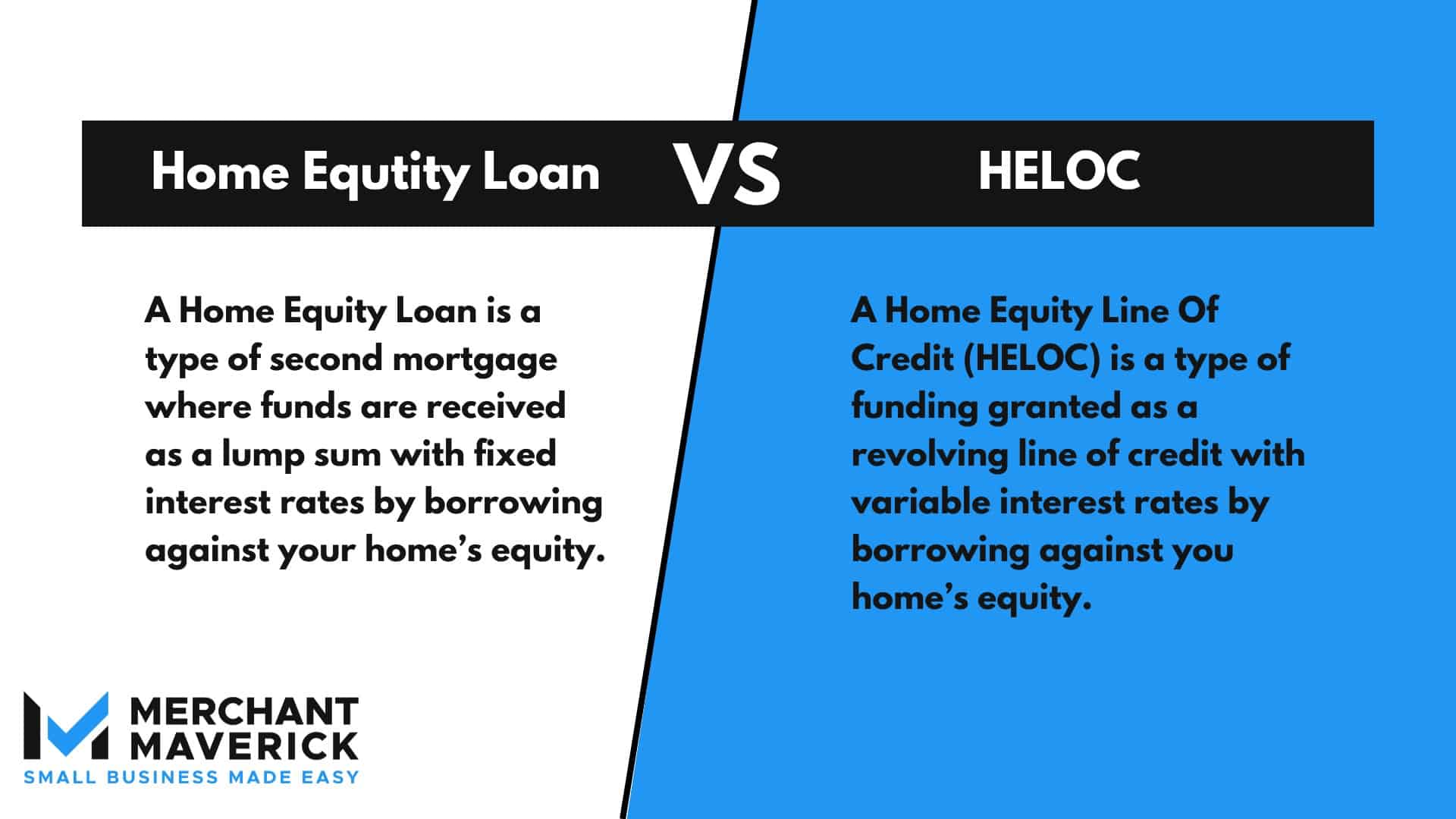
Deciding between a Home Equity Line of Credit (HELOC) and a home equity loan depends primarily on how you plan to use the funds and your preference for interest rate stability. A HELOC offers a flexible, revolving credit line with variable rates, ideal for ongoing projects. In contrast, a home equity loan provides a one-time lump sum with a fixed interest rate, making it better for specific, large expenses and predictable monthly budgeting.
As we navigate the financial landscape of 2026, homeowners continue to leverage their property value to fund significant life transitions, from home improvements to debt consolidation. With home values having seen a steady trajectory over the last several years, the "second mortgage" market remains a primary tool for wealth management. However, the choice between these two products is not merely a matter of preference but a strategic decision that impacts your long-term financial health and the safety of your primary asset: your home.
Understanding the Fundamentals of Home Equity
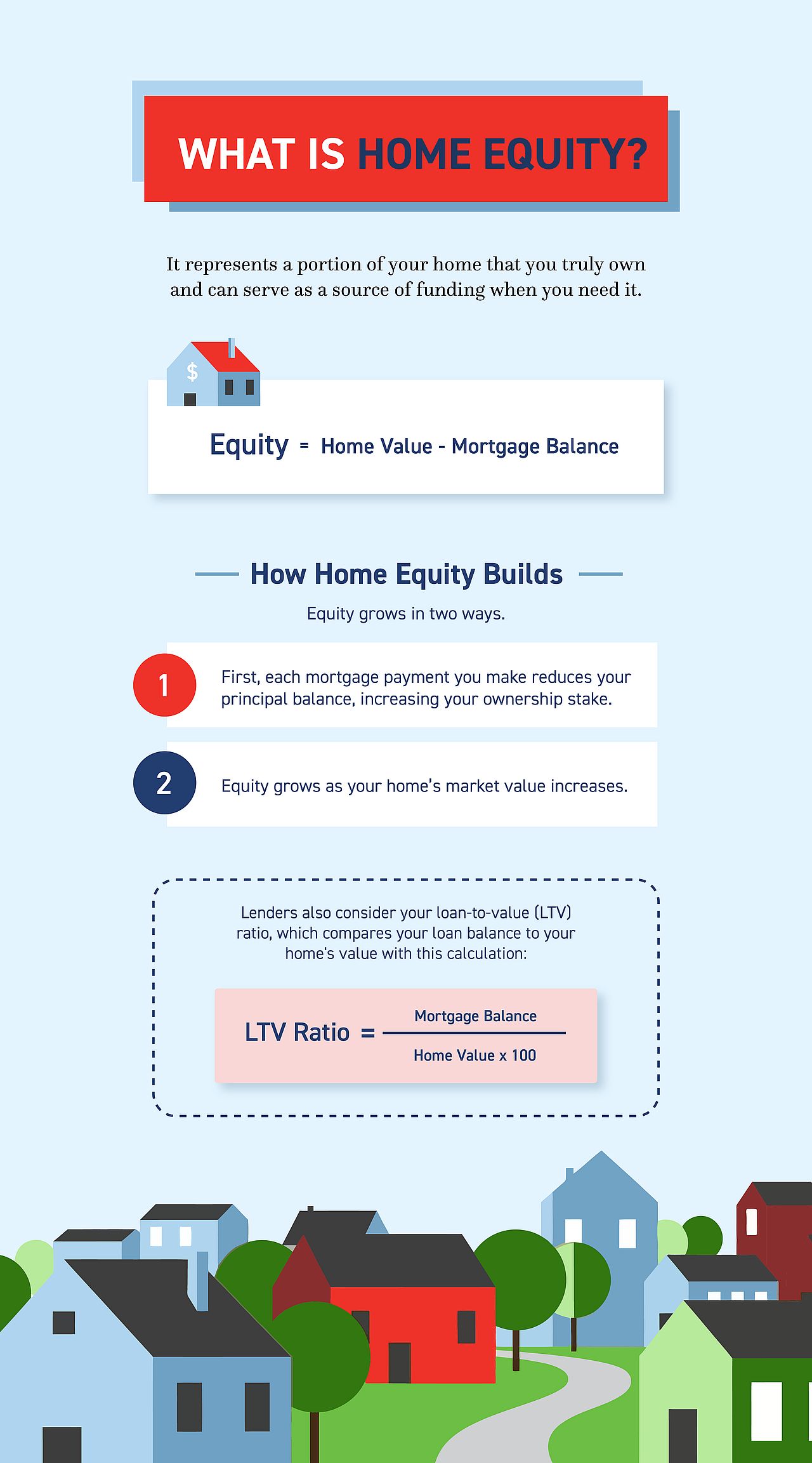
Before weighing the two options, it is essential to define what equity represents and how lenders calculate your borrowing power. Home equity is the difference between the current market value of your property and the remaining balance on your primary mortgage. If your home is valued at $500,000 and you owe $300,000, you have $200,000 in equity.
Lenders typically allow you to borrow against this value using a metric called the Combined Loan-to-Value (CLTV) ratio. Most financial institutions in 2026 cap the CLTV at 80% to 85%. This means the total of your first mortgage and your equity loan/line cannot exceed that percentage of the home’s value. Understanding your CLTV is the first step in determining eligibility and the potential size of your loan.
The Mechanics of a Home Equity Line of Credit (HELOC)
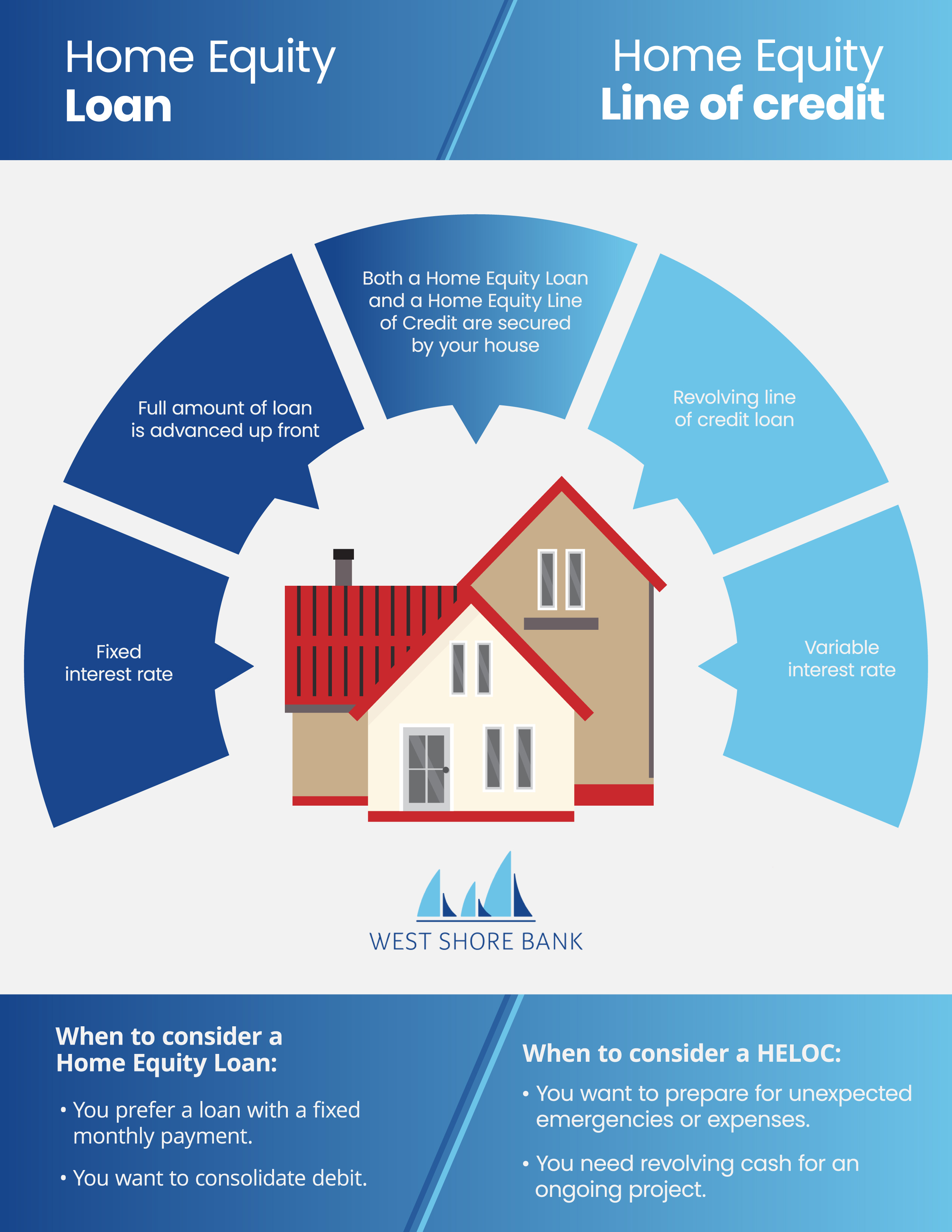
A HELOC functions similarly to a credit card but is secured by your home. It provides a credit limit that you can draw from as needed during a specific timeframe.
The Draw Period
The draw period is the initial phase of a HELOC, typically lasting 10 years. During this time, you can withdraw funds up to your limit, pay them back, and withdraw them again. Most lenders require only interest payments during this phase, which can keep initial costs low. This flexibility is the primary draw for homeowners who have unpredictable expenses or projects that will be completed in phases over several years.
The Repayment Period
Once the draw period ends, the line of credit "closes," and you enter the repayment period, often lasting 20 years. During this stage, you can no longer withdraw funds, and your monthly payments will increase significantly because you are now paying back both the principal and the interest. One of the most common mistakes homeowners make is failing to prepare for the "payment shock" that occurs when the draw period transitions into the repayment period.
Variable Interest Rates
Most HELOCs come with variable interest rates tied to an index, such as the U.S. Prime Rate. In 2026, while the extreme volatility of the early 2020s has stabilized, variable rates still fluctuate based on Federal Reserve policy. This means your monthly payment could change throughout the life of the loan. Some lenders now offer "fixed-rate partitions" within a HELOC, allowing you to lock in a portion of your balance at a fixed rate, providing a hybrid solution.
The Mechanics of a Home Equity Loan
Often referred to as a "second mortgage," a home equity loan is a much more straightforward installment loan.
Lump-Sum Disbursement
When you close on a home equity loan, the lender provides the entire amount in a single payment. This is ideal for situations where you know the exact cost of your expenditure upfront, such as paying off a specific amount of high-interest credit card debt or a contractor’s final bill for a kitchen remodel.
Fixed Interest Rates and Predictability
The hallmark of the home equity loan is its fixed interest rate. Your rate is locked at the time of closing and will never change, regardless of how the broader economy performs. This provides a high level of predictability for household budgeting. You will know exactly when the loan will be paid off and how much your payment will be every month for the duration of the term, which typically ranges from 5 to 30 years.
Amortization
Unlike a HELOC, which may allow interest-only payments during the draw period, a home equity loan is fully amortized from the first payment. Every check you write covers a portion of the principal and a portion of the interest. This ensures that you are building equity back into your home from day one.
Comparing HELOCs and Home Equity Loans: Key Differences
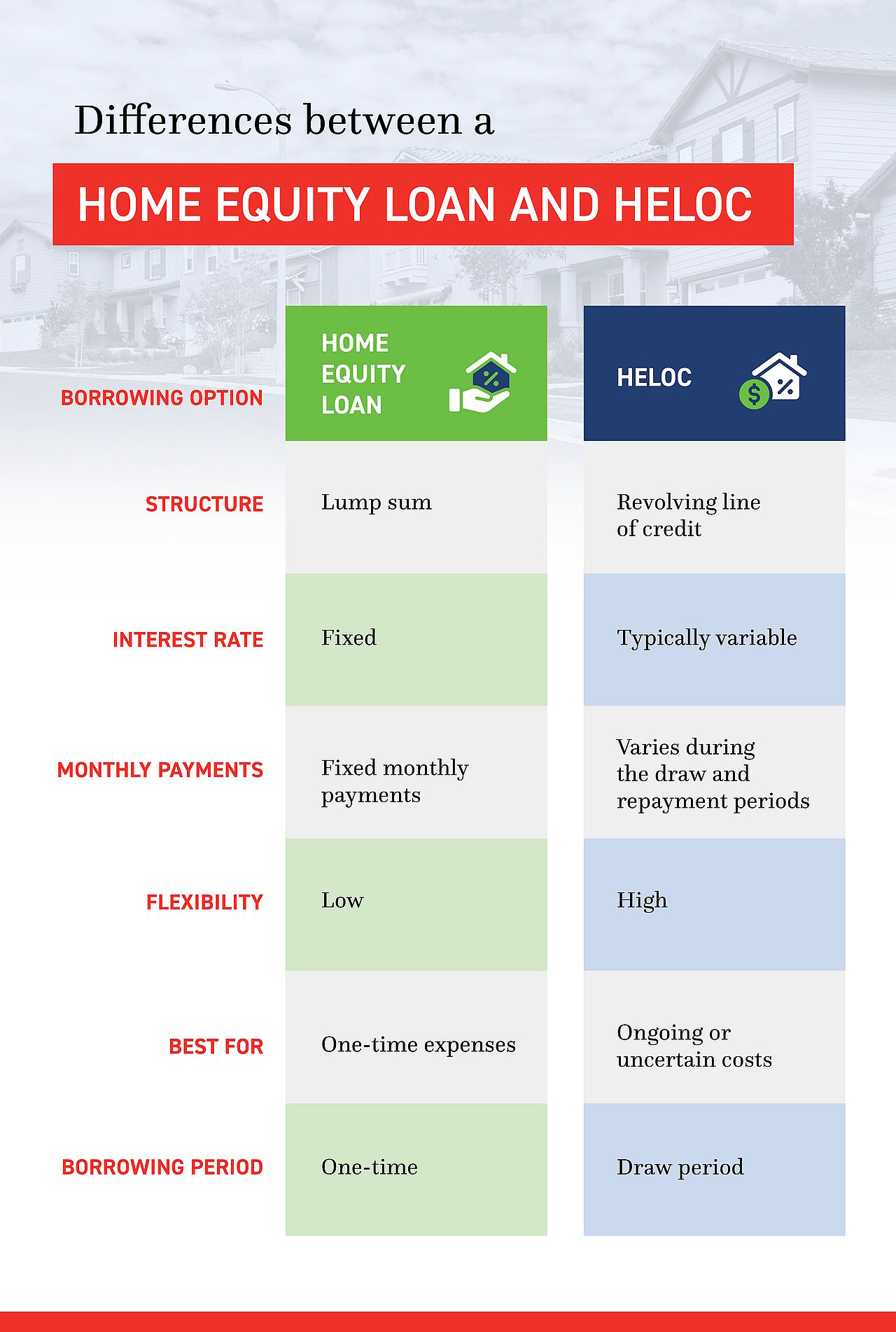
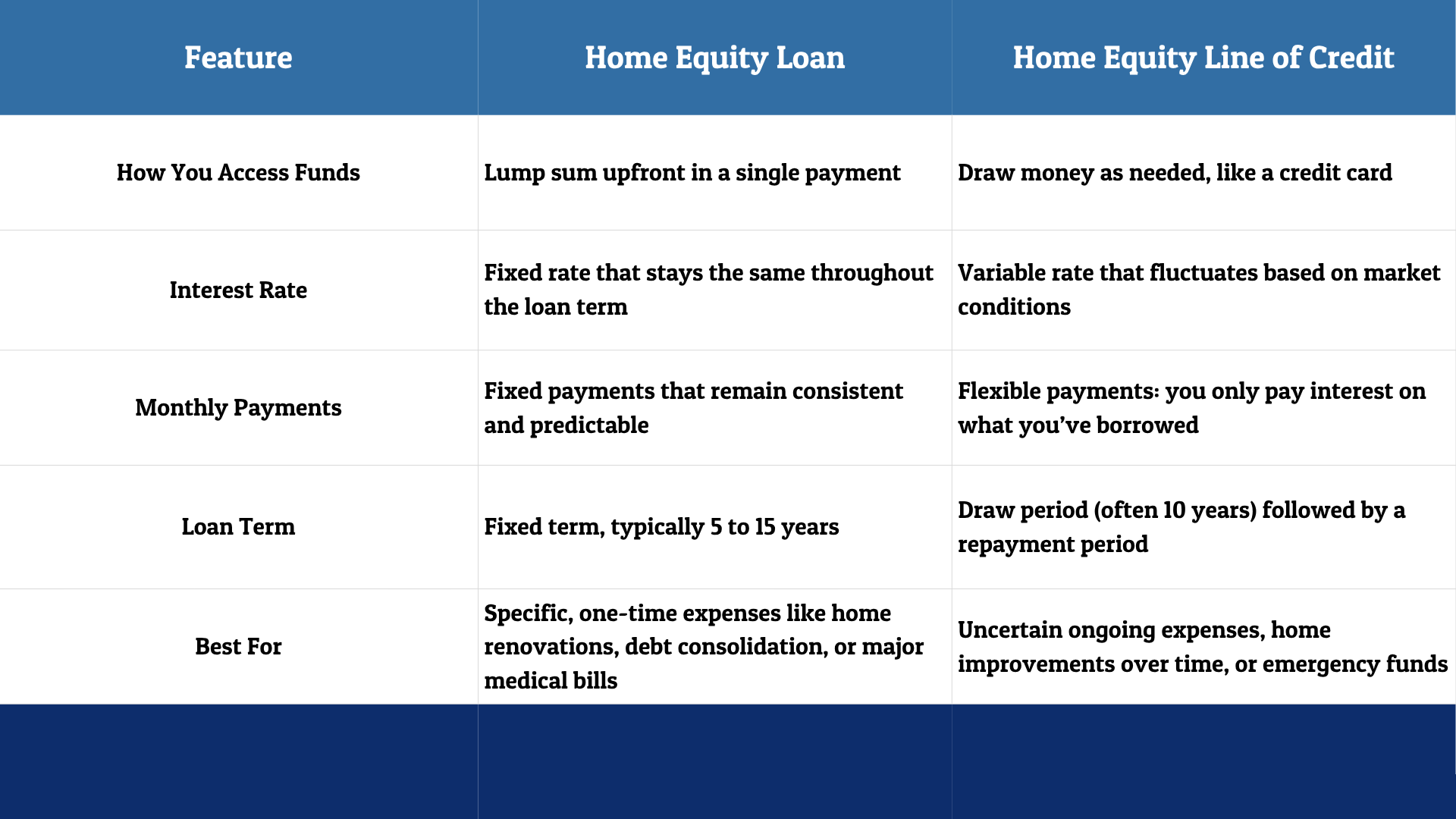
To make an informed choice, it is helpful to see how these two products compare across the most critical financial dimensions.
| Feature | Home Equity Line of Credit (HELOC) | Home Equity Loan |
|---|---|---|
| Disbursement | Flexible; draw funds as needed | Lump sum; entire amount at once |
| Interest Rate | Variable (usually tied to Prime Rate) | Fixed (locked at closing) |
| Monthly Payment | Fluctuates based on balance and rates | Steady, predictable payments |
| Payment Structure | Interest-only options during draw phase | Principal and interest from the start |
| Borrowing Term | Usually 10-year draw, 20-year repay | 5 to 30 years |
| Closing Costs | Often low or waived by lenders | Similar to a primary mortgage (2%–5%) |
| Ideal For | Ongoing costs, emergency funds, DIY | Major one-time repairs, debt consolidation |
Decision Factors: How to Choose
The "better" option depends entirely on your specific financial goals and your tolerance for risk. Consider the following scenarios to guide your decision.
1. The Nature of Your Project
If you are planning a massive home addition where you have a set contract price, a home equity loan is likely the better choice. You can secure the funds at once and lock in your rate. If you are doing a gradual renovation—perhaps remodeling a bathroom this year and finishing the basement next year—a HELOC allows you to only pay interest on the money you have actually spent, rather than the full amount.
2. Interest Rate Outlook in 2026
In 2026, market analysts monitor the Federal Reserve closely. If you believe interest rates are likely to drop in the coming years, a HELOC’s variable rate could actually work in your favor as your payments might decrease. However, if you are debt-averse and prefer the security of knowing your rate will never rise, the home equity loan is the safer bet.
3. Your Monthly Cash Flow
Homeowners with tight monthly budgets often prefer the home equity loan because the fixed payment is easier to manage. Those with fluctuating incomes or significant savings who just need a "safety net" often prefer the HELOC, as it provides access to cash without the obligation of a monthly payment until the funds are actually drawn.
4. Tax Deductibility
Under current IRS guidelines in 2026 (following the frameworks established by the Tax Cuts and Jobs Act), interest paid on home equity debt is generally only deductible if the funds are used to "buy, build, or substantially improve" the home that secures the loan. If you use the money to pay for a wedding or consolidate credit card debt, the interest is typically not tax-deductible. Always consult a tax professional to verify how current year regulations apply to your specific filing status.
Costs and Fees to Anticipate
Both products come with costs that can eat into your total equity. While some lenders offer "no-cost" HELOCs, these often come with slightly higher interest rates.
- Appraisal Fees: The lender must verify the current value of your home. This can range from $300 to $700.
- Origination Fees: Some lenders charge a fee to process the loan, usually a percentage of the total loan amount.
- Annual Fees: Many HELOCs carry an annual participation fee, often around $50 to $100, just to keep the line open.
- Inactivity Fees: Some HELOC providers may charge a fee if you do not use the line of credit within a certain timeframe.
- Closing Costs: For home equity loans, these can be significant, mirroring the costs of your original mortgage (title search, attorney fees, etc.).
Common Mistakes and Risks
The most significant risk for both products is that your home serves as collateral. If you default on the payments, the lender has the right to initiate foreclosure proceedings.
Over-Borrowing
Because equity is "hidden" wealth, it can be tempting to treat it like a bank account. Borrowing more than you need, especially with a HELOC, can lead to a debt spiral. In 2026, lenders have maintained relatively strict standards to prevent the over-leveraging seen in decades past, but the ultimate responsibility lies with the borrower.
Ignoring the Variable Rate Cap
If you choose a HELOC, pay close attention to the "lifetime cap." This is the maximum interest rate the lender can charge, no matter how high market rates go. If the cap is 18% and the current rate is 7%, ensure your budget can handle the "worst-case scenario" payment if rates spike.
Debt Shifting Without Behavior Change
Using a home equity loan for debt consolidation is a popular strategy because the interest rates are significantly lower than credit cards. However, if you do not change the spending habits that led to the credit card debt, you risk "double-loading" your debt—owing the home equity loan while also running up new balances on your cards.
Frequently Asked Questions
Can I have both a HELOC and a home equity loan at the same time?
Technically, yes, if you have enough equity to support both and your debt-to-income ratio allows it. However, most lenders are hesitant to sit in a "third lien" position. Usually, it is more financially sound to choose one product that meets your needs or to refinance an existing equity product into a new one.
How long does it take to get approved and receive funds?
In 2026, the process is faster than it used to be due to automated appraisal models and digital document verification. Generally, you can expect the process to take between two and six weeks. Home equity loans typically take slightly longer than HELOCs because of more rigorous closing requirements.
Will a HELOC or home equity loan affect my credit score?
Yes, both will impact your credit score. Applying for either results in a "hard inquiry," which can cause a temporary dip. Once the loan is active, it appears as a new debt. For HELOCs, the credit utilization ratio is also a factor; if you have a $50,000 limit and you have used $45,000, your score might decrease due to high utilization, similar to a credit card.
What happens if I sell my house before the loan is paid off?
Both HELOCs and home equity loans are secured by the property. When you sell the home, the remaining balance of the equity loan or line must be paid in full from the proceeds of the sale before you receive any cash.
Are there any alternatives to these equity products?
Yes. If you have significant equity and want a lower interest rate on your primary mortgage, a cash-out refinance is an option. However, if your current primary mortgage has a very low interest rate (like those from the 2020-2021 period), it is usually better to keep that mortgage and use a separate home equity product to avoid losing your low primary rate. Personal loans are another option, though they usually carry higher interest rates and are not tax-deductible.
Final Recommendations for 2026 Homeowners
To make the final call, perform a "stress test" on your finances. If you are leaning toward a HELOC, calculate what your monthly payment would be if interest rates rose by 2% or 3%. If that number makes you uncomfortable, the fixed-rate stability of a home equity loan is likely your best path.
Conversely, if you are unsure of the total cost of a project and want to avoid paying interest on money you haven't used yet, the HELOC provides a level of financial agility that a standard loan cannot match. Always compare offers from at least three different lenders—including credit unions and online banks—to ensure you are getting the most competitive margins and the lowest fee structures available in the current market.
Image Gallery
Select an image to open it in a new tab.




Vivian Cho
Executive IT and Emerging Technologies Reporter
