
The characters of The Wild Robot represent a diverse ecosystem of biological and mechanical entities that navigate themes of motherhood, survival, and identity. Central to the narrative is Roz, a robot who transcends her programming to raise Brightbill, a gosling, while forming a complex community with the island's wary animal inhabitants.
The Evolution of Roz: ROZZUM Unit 7134
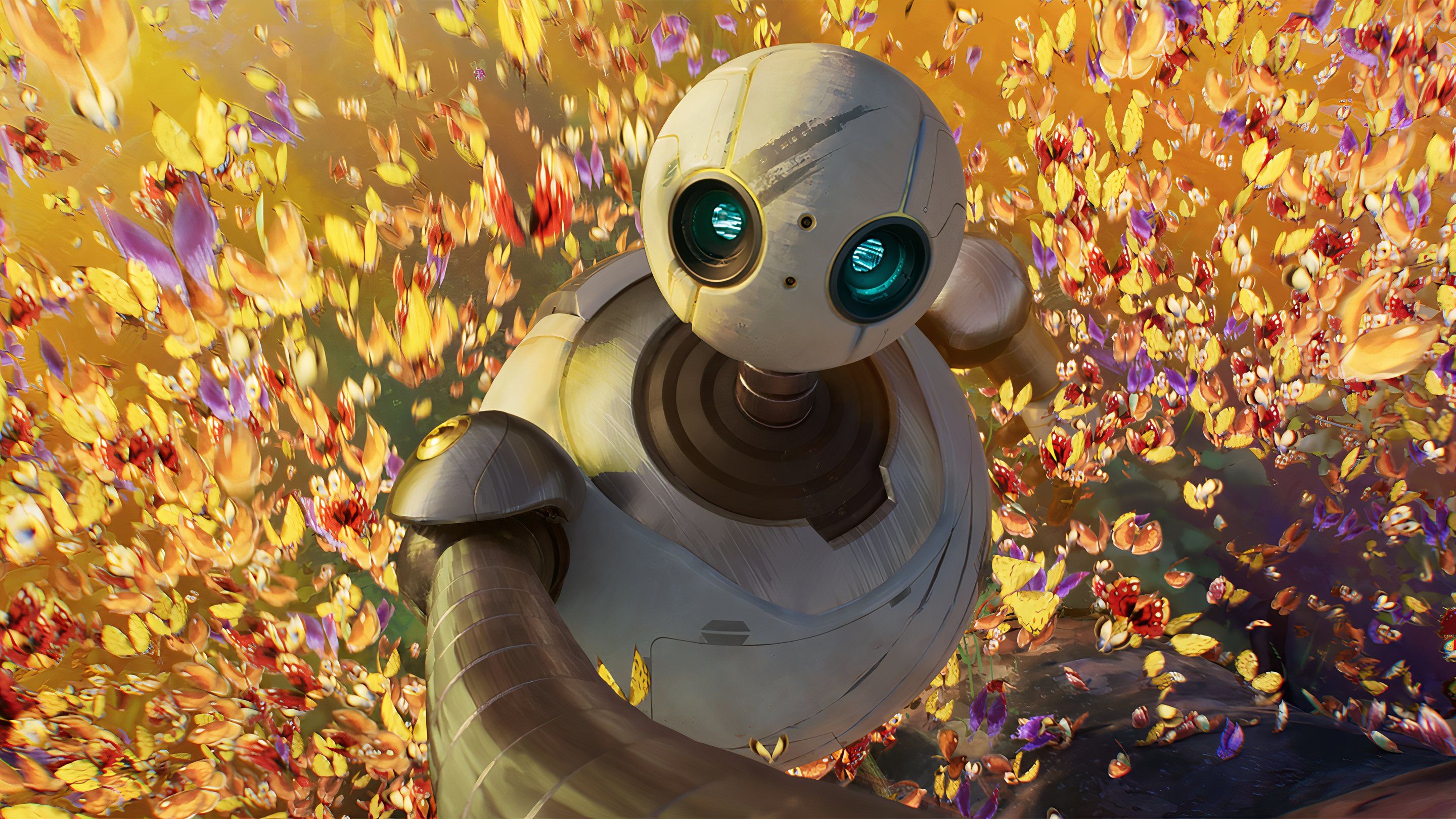
At the heart of the series is Roz, short for ROZZUM unit 7134. She is not a sentient being by design but becomes one through a series of "accidental" adaptations following a shipwreck. Roz’s character arc is a profound exploration of how environment and social bonds can rewrite fundamental nature. Initially, Roz is a blank slate, a machine designed for task completion and efficiency. When she activates on the remote island, her primary objective is survival.
Roz’s character depth comes from her observation of the island's wildlife. To survive the harsh terrain and the hostility of the animals, she learns to camouflage herself and, more importantly, to understand the languages of the different species. This "language of the wild" is the first step in her transformation from an alien object to a vital member of the ecosystem.
Her most significant character development occurs through the role of a surrogate mother. After an accident leads to the death of a family of geese, leaving only one egg, Roz’s logic dictates that she must care for the survivor. This act of caregiving is what truly "breaks" her original programming, replacing sterile efficiency with empathy and sacrifice. By 2026, Roz has become an icon of "mechanical motherhood," illustrating that the capacity to love and protect is not limited to biological life.
Brightbill: The Bridge Between Two Worlds
Brightbill is the runt of a goose brood and the emotional anchor of the story. As Roz’s adopted son, he faces a unique identity crisis: he is a goose who views a machine as his mother. This relationship defines his character growth throughout the books and the 2024 cinematic adaptation.
Brightbill’s development is characterized by his physical and social challenges. Because he was raised by a robot, he lacks the natural instincts usually taught by goose parents. However, Roz compensates for this by seeking help from the island community, which forces the animals to interact with her. Brightbill eventually becomes a leader among his kind, using the "unnatural" wisdom he gained from Roz—such as problem-solving and technical observation—to lead his flock through dangerous migrations. He serves as the bridge that validates Roz’s place in the natural world.
Fink the Fox: From Cynic to Companion
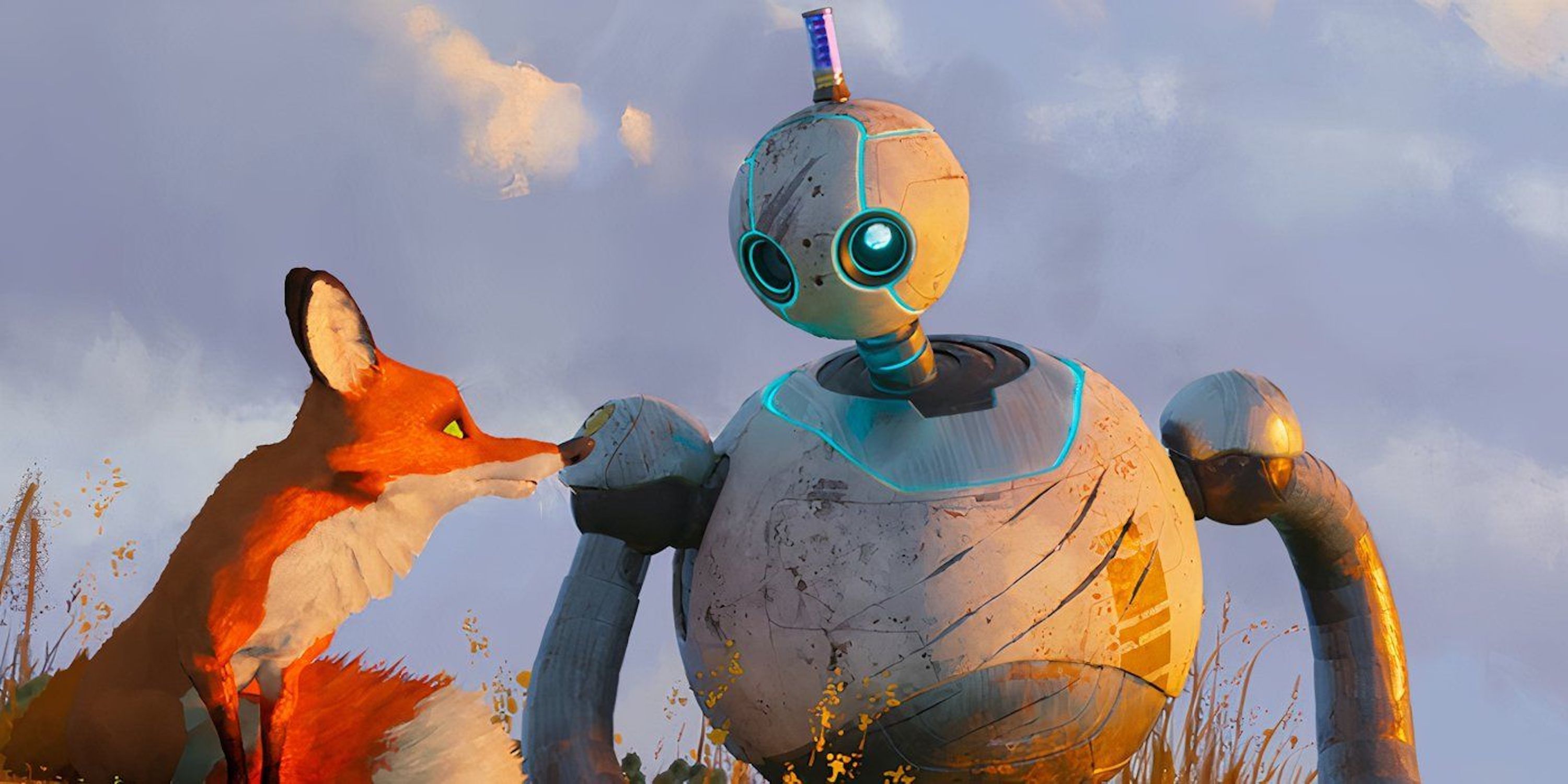
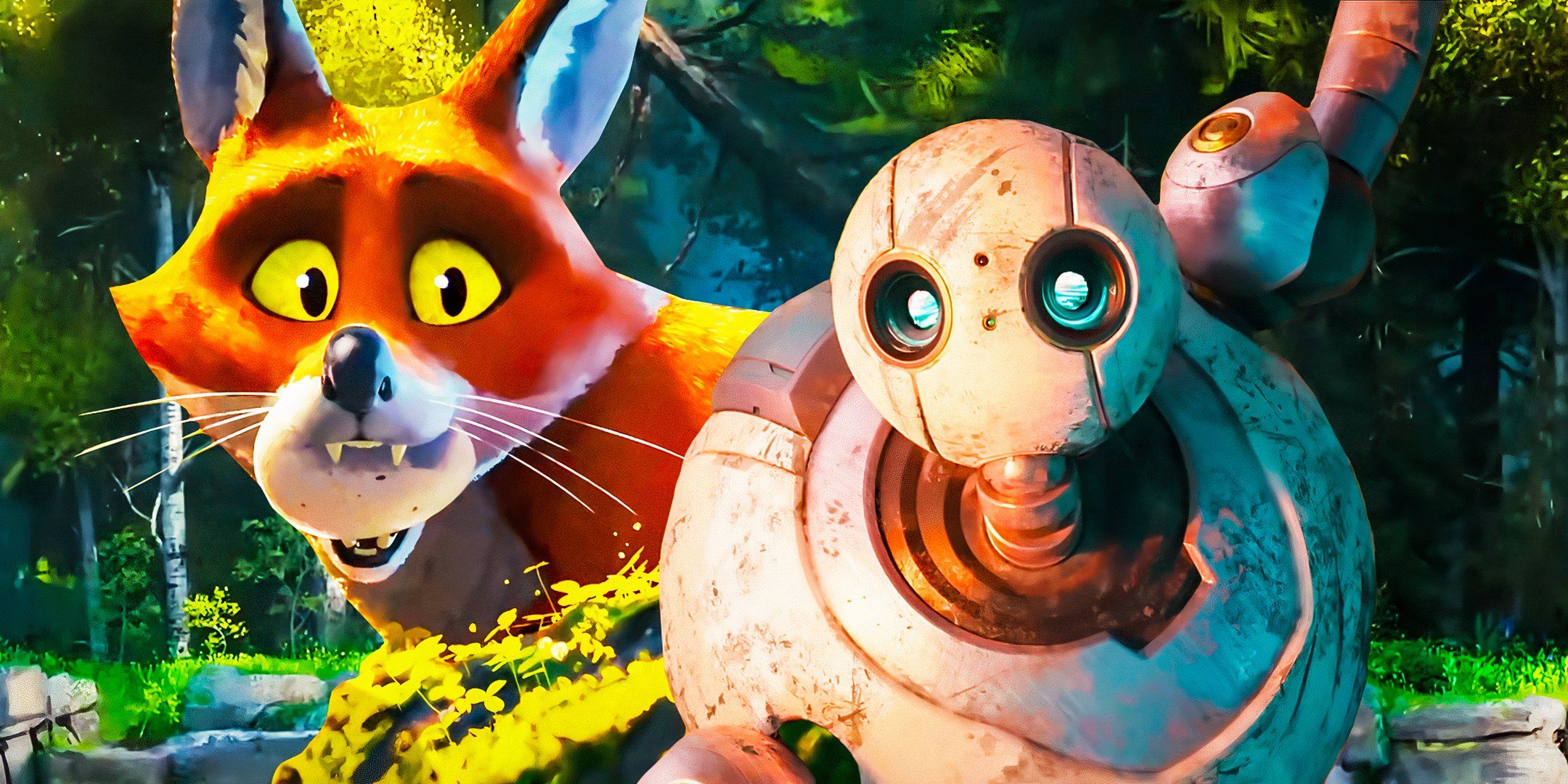
In the DreamWorks film adaptation, Fink (voiced by Pedro Pascal) takes on a more prominent role than in the early chapters of Peter Brown’s first novel. Fink represents the "outsider" perspective within the island's predator-prey dynamic. Initially, Fink is a cynical, self-serving fox who views Roz as either a threat or a tool.
Fink’s character evolution mirrors Roz’s in many ways. While Roz learns to be "wild," Fink learns to be "communal." He moves from being a loner who follows the law of the woods to a protective friend who helps Roz raise Brightbill. His character provides much of the narrative's humor and grounded realism, reminding the audience of the inherent dangers and "harshness" of nature that Roz is trying to navigate.
Pinktail and the Lessons of Motherhood
Pinktail, an opossum, serves as one of Roz’s earliest and most vital mentors. As a mother herself, Pinktail provides Roz with the practical advice needed to raise a child in the wild. Pinktail’s character is defined by her "performance"—the ability to play dead and use deception to survive.
She teaches Roz that survival isn't just about strength; it is about adaptability and sometimes "acting" a part until it becomes reality. This advice is instrumental for Roz, as the robot must "act" like a mother until the bond with Brightbill becomes authentically real. Pinktail represents the pragmatic, weary, yet enduring spirit of the wild.
The Island Community: Supporting Animal Characters
The island is populated by a wide cast of characters, each representing different aspects of the natural order that Roz must integrate into.
- Loudwing: A wise old goose who helps Roz understand how to care for Brightbill. She is the first to suggest that Roz should give the gosling a name and provides the necessary biological context that Roz lacks.
- Thorn and Nettle: A pair of bear siblings who initially serve as antagonists. They represent the raw, unthinking power of nature. Their eventually peaceful relationship with Roz signifies her total acceptance into the island’s hierarchy.
- Chit: A squirrel who represents the frantic, high-energy side of forest life. Interactions with Chit highlight Roz’s patience and her growing ability to communicate with even the most erratic creatures.
- Mr. and Mrs. Beaver: These characters are essential for the "building" phase of Roz’s life. They assist in creating the "Nest," the home where Roz and Brightbill live. They represent the industrious, engineering side of nature that mirrors Roz’s own mechanical origins.
The RECO Robots: Mechanical Antagonists
The primary conflict in The Wild Robot arises from the RECOs (Recovery Robots). These units—RECO 1, 2, and 3—are the "dark mirrors" of what Roz could have remained. They are sleek, efficient, and entirely devoid of the personality and empathy Roz has developed.
The RECOs represent the "Corporation" (Vacu-Pack) and the cold, unyielding nature of technology when divorced from environment and community. Their arrival on the island shifts the story from a survival drama to a defensive war. The contrast between Roz’s "weathered" appearance and the RECOs’ polished exterior is a visual representation of the difference between living and merely functioning. In the film version, the character Vontra serves as a sophisticated psychological antagonist, attempting to lure Roz back to her original purpose by highlighting her "malfunctions."
Character Comparisons and Roles
To better understand the dynamics within the story, the following table breaks down the primary characters and their narrative functions.
| Character | Species/Type | Core Motivation | Primary Relationship |
|---|---|---|---|
| Roz (7134) | ROZZUM Robot | Survival and Motherhood | Brightbill (Son) |
| Brightbill | Canada Goose | Identity and Belonging | Roz (Mother) |
| Fink | Red Fox | Companionship/Survival | Roz (Ally) |
| Pinktail | Opossum | Raising her young | Roz (Mentor) |
| Loudwing | Canada Goose | Flock Safety | Brightbill (Protege) |
| The RECOs | ROZZUM Robots | Retrieval of Property | Roz (Target) |
| Thorn | Grizzly Bear | Dominance | Nettle (Sibling) |
The Philosophy of Character Design in The Wild Robot
The brilliance of the characters in The Wild Robot lies in their rejection of typical tropes. Usually, a robot character in fiction is either a cold villain or a Pinocchio-type figure who wants to be "real." Roz does not necessarily want to be a biological human or animal; she simply wants to fulfill her chosen purpose.
The animal characters are also written with a degree of biological accuracy that makes their "personification" more meaningful. They don't just act like humans in fur suits; they eat, hunt, and hibernate. Their acceptance of Roz is not immediate. It is earned through her utility and her willingness to help the community during the "Great Winter." This adds a layer of depth to the characters: their relationships are built on mutual survival and respect rather than sentimentality.
Themes Reflected Through Characters
Every character in the story serves as a vessel for the narrative's core themes.
Motherhood and Choice
Roz’s motherhood is a choice, not an instinct. This distinguishes her from the animals. By choosing to be a mother, she proves that family is a social construct that can be built through dedication. Brightbill’s acceptance of a "metal mother" reinforces the idea that love is defined by actions rather than biology.
Nature vs. Nurture
The characters frequently grapple with their nature. Brightbill is "nurtured" by a robot, leading him to swim and walk in ways that are slightly different from other geese. Roz is "nurtured" by the island, leading her to develop a personality that her creators never intended. This theme suggests that environment and relationships are more powerful than "programming" (or DNA).
The Power of Community
Initially, the characters are isolated by the food chain. The "Shedding" (the seasonal change and the threat of the RECOs) forces them into a community. Roz becomes the catalyst for this change. Her presence as an "outsider" allows the animals to break their traditional roles and work together, suggesting that a diverse community is a resilient one.
Frequently Asked Questions
Who is the main antagonist in The Wild Robot?
The main antagonists are the RECO robots and the corporation that created Roz. In the book, the RECOs are sent to retrieve Roz because she is considered "damaged" due to her developed personality. In the film, Vontra acts as a more direct emotional and physical antagonist, representing the cold efficiency of the robot's manufacturers.
Does Roz actually feel emotions?
This is a central question of the series. While Roz begins with only programming, she develops "simulated" responses that eventually become indistinguishable from real emotions. By the time she is raising Brightbill, her concern for his safety and her grief during separations suggest that her "software" has evolved into a form of genuine sentience.
Why does the island's wildlife initially hate Roz?
The animals view Roz as a "monster" because she does not fit into the natural order. She doesn't smell like an animal, she doesn't eat, and she doesn't die. They are naturally afraid of things they don't understand. It is only when Roz saves various animals and helps the community survive the winter that they begin to see her as a "Wild Robot" rather than a mechanical intruder.
How does Brightbill's character change in the sequels?
In the sequels, The Wild Robot Escapes and The Wild Robot Protects, Brightbill grows into a more mature and protective role. He becomes the one searching for Roz when she is taken back to the "civilized" world, and he eventually helps her navigate the complexities of her dual identity as a machine and a wild creature.
What happened to Roz’s creators?
Roz’s creators are part of a high-tech human society that uses ROZZUM units for labor. They view Roz as property rather than a person. Their characters represent the human tendency to over-rely on technology while remaining disconnected from the natural world that the technology often displaces.
Practical Next Steps for Fans
If you are interested in exploring the characters further, the best approach is to compare the characterizations in the original novel by Peter Brown with the DreamWorks film. You will find that while the film heightens the roles of characters like Fink for cinematic pacing, the books provide a deeper, more internal look at Roz’s "thought" processes and her slow-burn integration into the island's culture. For those studying the literature, focusing on the dialogue between Roz and Pinktail offers the best insight into the book's themes of adaptation and survival.
Image Gallery
Select an image to open it in a new tab.



Celine Dubois
Contemporary Living and Global Arts Columnist
