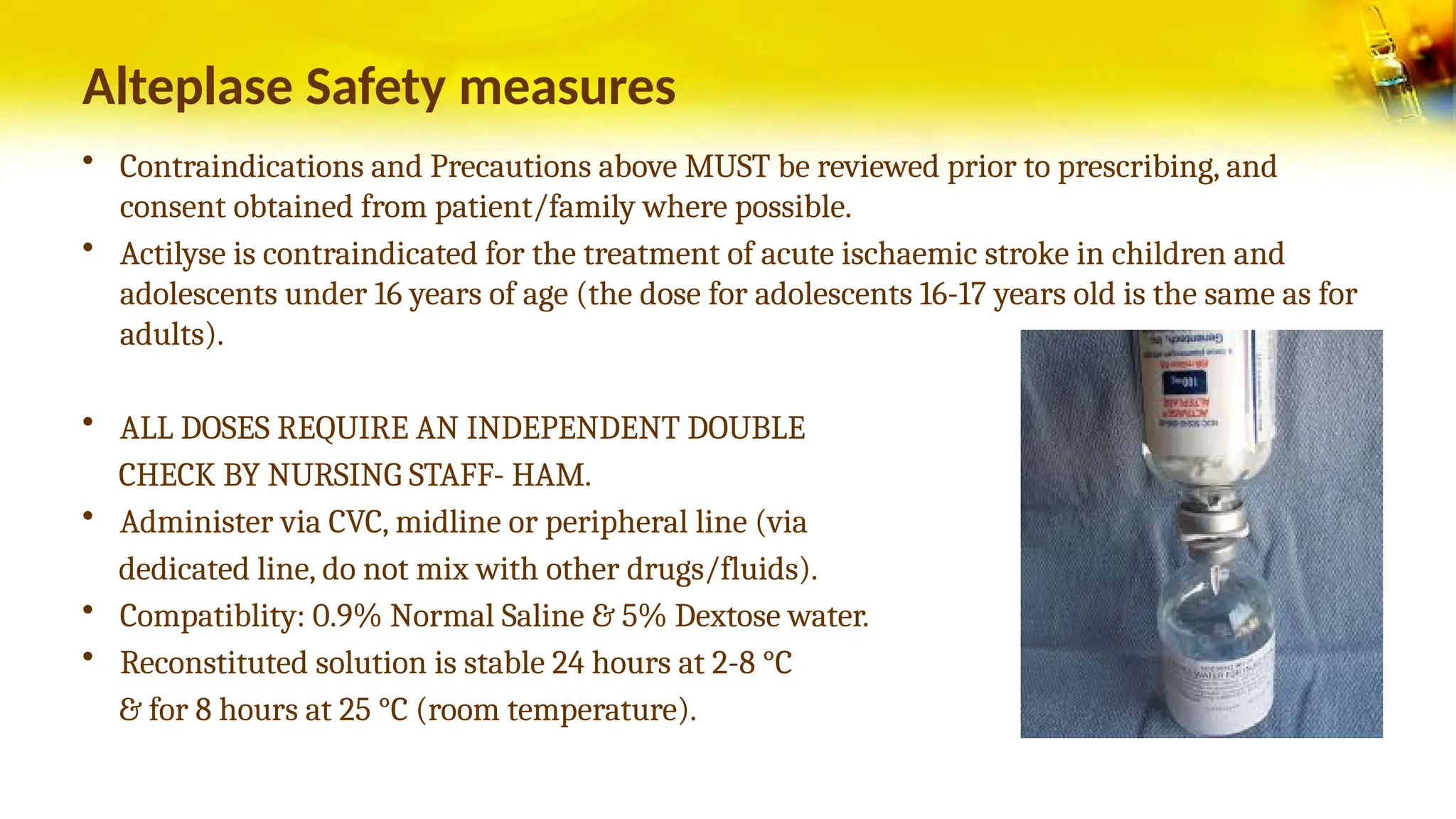
Alteplase, known pharmacologically as recombinant tissue plasminogen activator (rt-PA), is a potent thrombolytic medication used in acute clinical settings to dissolve life-threatening blood clots. Its primary applications include the emergency treatment of acute ischemic stroke, myocardial infarction, and massive pulmonary embolism, where rapid restoration of blood flow is critical to preventing permanent tissue damage or death.
Pharmacological Mechanism of Action
To understand the clinical utility of alteplase, one must first grasp its role in human physiology. Alteplase is a synthesized version of the human protein tissue plasminogen activator. Under normal biological conditions, the body initiates fibrinolysis—the breakdown of fibrin clots—by converting plasminogen into plasmin, an enzyme that degrades the fibrin matrix of a thrombus.
Alteplase acts as a catalytic agent that binds specifically to fibrin within a clot. Once bound, it converts the entrapped plasminogen into plasmin. Because of its high fibrin specificity, alteplase minimizes systemic activation of plasminogen, which theoretically reduces the risk of widespread bleeding compared to older thrombolytic agents. However, the drug remains a powerful anticoagulant intervention, and its administration necessitates rigorous patient screening and clinical monitoring to mitigate risks of hemorrhage, particularly intracranial bleeding.
Primary Clinical Indications
Acute Ischemic Stroke
The most recognizable application of alteplase is in the treatment of acute ischemic stroke (AIS). In the context of a stroke, a clot obstructs blood flow to a portion of the brain. If not cleared rapidly, the affected brain tissue undergoes necrosis, leading to permanent neurological deficit.
Current medical guidelines establish a critical "window of opportunity" for alteplase administration, typically within 3 to 4.5 hours of symptom onset. During this time, clinicians must verify that the patient’s stroke is ischemic (clot-based) rather than hemorrhagic (bleed-based) using non-contrast computed tomography (CT) or magnetic resonance imaging (MRI). The administration of alteplase during this narrow window is designed to restore perfusion to the ischemic penumbra—the area of salvageable brain tissue surrounding the core infarction.
Acute Myocardial Infarction
In cases of acute myocardial infarction (heart attack), alteplase is employed when primary percutaneous coronary intervention (PCI)—the mechanical opening of the artery via angioplasty and stenting—is not immediately available. The objective here is "pharmacological reperfusion." By injecting alteplase, clinicians aim to dissolve the thrombus occluding a coronary artery, thereby restoring oxygenated blood flow to the cardiac muscle and limiting the extent of myocardial necrosis.
Massive Pulmonary Embolism
Pulmonary embolism (PE) occurs when a blood clot, often originating in the deep veins of the legs, travels to the lungs and lodges in the pulmonary arteries. A "massive" PE is defined by systemic hypotension or shock. In these life-threatening scenarios, alteplase serves as a vital intervention to rapidly reduce clot burden, lower pulmonary vascular resistance, and improve right ventricular function.

Prerequisites and Eligibility Screening
The administration of alteplase is not a routine procedure and involves significant risk profiles. Because it dissolves clots, the drug cannot distinguish between a "bad" clot causing an obstruction and a "good" clot responsible for sealing a surgical wound or stopping a minor hemorrhage.
Key Exclusion Criteria
Clinicians conduct an extensive checklist before initiating alteplase. Common contraindications include:
- Evidence of intracranial hemorrhage: Always confirmed via neuroimaging.
- Recent surgery or trauma: Major surgery within the last 14 days or serious head trauma within the last 3 months.
- Coagulopathy: Patients with active internal bleeding or known bleeding disorders (e.g., thrombocytopenia or history of clotting factor deficiency).
- Uncontrolled hypertension: Extremely high blood pressure increases the risk of stroke conversion to hemorrhage.
- Current anticoagulant use: Patients already taking high-dose blood thinners may be ineligible due to the multiplicative risk of systemic bleeding.
Comparison of Thrombolytic Interventions
Alteplase is often compared to other clot-dissolving agents such as tenecteplase and reteplase. While they share the same fundamental goal, their pharmacokinetic profiles differ.
| Agent | Fibrin Specificity | Half-Life | Administration Method |
|---|---|---|---|
| Alteplase | High | Short (approx. 5 min) | Continuous intravenous infusion |
| Tenecteplase | Very High | Longer | Single intravenous bolus |
| Reteplase | Moderate | Intermediate | Two-bolus injection |
The short half-life of alteplase is a strategic feature in the emergency department. If a patient experiences a complication, such as a localized or systemic bleed, the therapeutic effect of the drug wanes quickly once the infusion is stopped.
Risks and Adverse Effects
The most significant and feared adverse effect of alteplase therapy is symptomatic intracranial hemorrhage (sICH). While rare when protocols are strictly followed, the risk is statistically significant. Other potential adverse effects include:
- Orolingual Angioedema: A rare but documented reaction, particularly in patients concurrently taking ACE inhibitors.
- Systemic Bleeding: Oozing from intravenous sites, gums, or gastrointestinal mucosa.
- Reperfusion Arrhythmias: During the restoration of blood flow to cardiac tissue, abnormal heart rhythms may occur.
Practical Management and Monitoring
When a medical facility prepares for the administration of alteplase, the environment is typically highly controlled. A typical workflow involves:
- Baseline neurological and hemodynamic assessment: Utilizing scales like the NIH Stroke Scale (NIHSS) to measure impairment severity.
- Laboratory verification: Rapid assessment of blood glucose (to rule out "stroke mimics" like hypoglycemia), platelet counts, and coagulation studies (INR/PTT).
- Weight-based dosing: The dosage of alteplase is calculated precisely based on the patient's body weight to ensure therapeutic efficacy without excessive dosage.
- Continuous Monitoring: During the one-hour infusion period, the patient is monitored every 15 minutes for neurological changes, blood pressure spikes, or signs of bleeding.
Frequently Asked Questions
Is alteplase effective for all types of strokes?
No. Alteplase is only indicated for acute ischemic strokes. If it is administered to a patient experiencing a hemorrhagic stroke (a brain bleed), it can exacerbate the bleeding, leading to severe outcomes or death. This is why diagnostic imaging is a mandatory prerequisite.
Can alteplase be given after the 4.5-hour window?
Standard clinical protocols generally restrict alteplase to a window of 3 to 4.5 hours from the last known well time. Beyond this, the risks of hemorrhage often outweigh the potential benefits of reperfusion. Emerging protocols sometimes use advanced imaging to identify "tissue at risk" even in later windows, but these are highly specialized clinical practices.
Why is blood pressure control so important during treatment?
Hypertension is the strongest independent predictor of symptomatic intracranial hemorrhage after alteplase administration. Clinicians often use antihypertensive medications (such as labetalol or nicardipine) to keep blood pressure below a specific threshold (e.g., 185/110 mmHg) before and during the infusion.
Does alteplase require a hospital stay?
Yes. Due to the high risk of secondary complications and the need for frequent neuro-observation, alteplase is administered exclusively in intensive care units or specialized stroke units. Patients typically remain under close observation for at least 24 hours post-infusion.
What is the difference between alteplase and thrombectomy?
While alteplase is a chemical intervention (a "clot-buster" drug), mechanical thrombectomy is a surgical procedure where a specialist uses a catheter to physically remove the clot. In many modern stroke centers, patients may receive both: alteplase to dissolve smaller clots and assist in distal vessel patency, followed by mechanical removal of the primary large-vessel blockage.
Professional Advice Limitation
This article is for informational purposes and does not constitute medical advice, diagnosis, or treatment. Medical protocols regarding thrombolytic therapy are complex and subject to change based on new clinical trial data and hospital-specific guidelines. Always consult with a board-certified physician or emergency medical professional regarding the use of, or potential reactions to, pharmacological interventions. If you suspect an individual is suffering from a stroke, heart attack, or pulmonary embolism, contact local emergency services immediately rather than relying on written information.
Image Gallery
Select an image to open it in a new tab.


Akira Tanaka
International Academic Trends Correspondent
