
Alberto Santos-Dumont’s heavier-than-air flights in Paris during 1906 matter because they provided the first publicly verified, officially observed, and unassisted takeoffs and landings of an airplane in Europe, fundamentally shifting the global understanding of powered flight independent of hidden catapult systems.
The Historical Context of Early Aviation in 1906
At the dawn of the twentieth century, the quest to conquer the skies occupied the minds of engineers, inventors, and daredevils across Europe and North America. In the United States, the Wright brothers had achieved motorized, controlled flights beginning in December 1903 at Kitty Hawk, North Carolina. However, the Wright brothers operated in relative secrecy, relying on a weight-dropped launching rail system and refusing public demonstrations until they had secured patents and binding purchase contracts. This veil of secrecy generated profound skepticism among European aviation enthusiasts and scientific societies, many of whom doubted whether the Wright flyer could truly take off under its own power without external mechanical assistance.
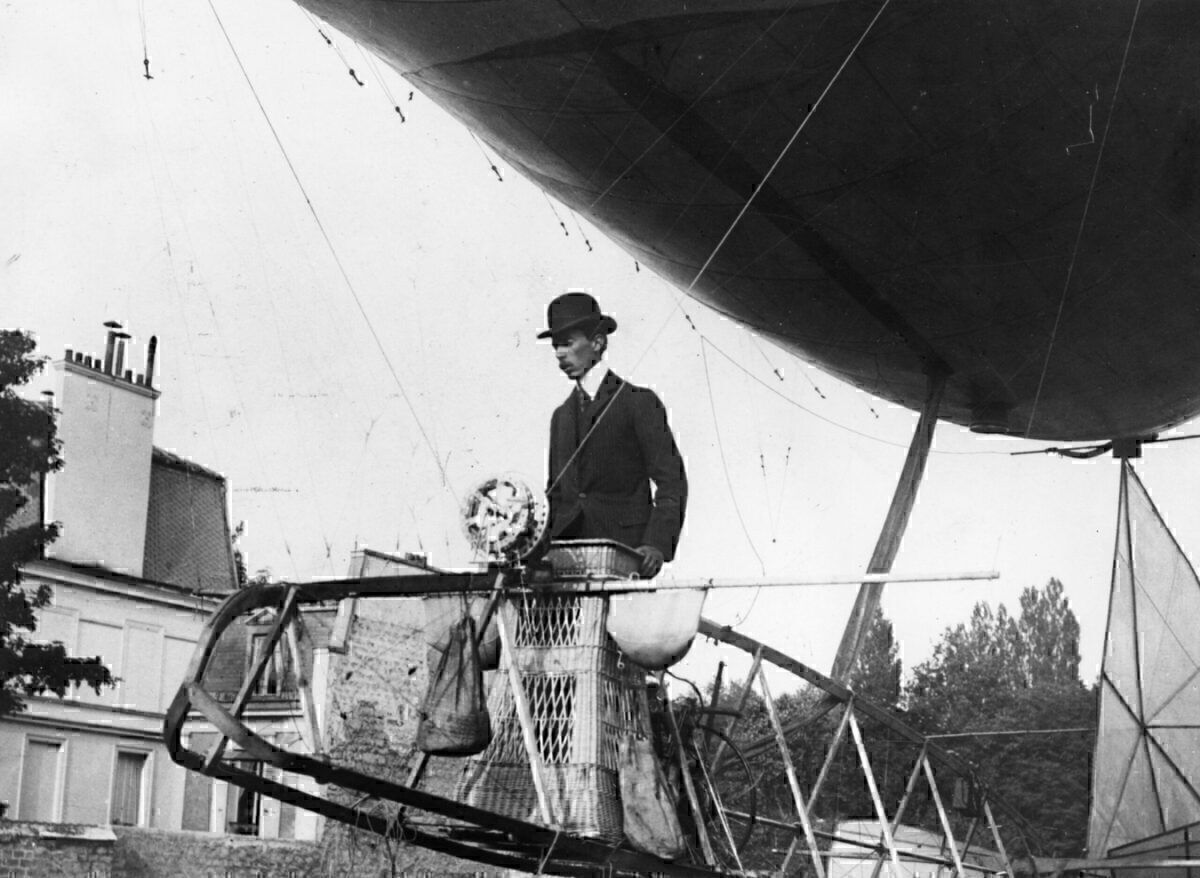
Into this atmosphere of doubt and fierce international competition stepped Alberto Santos-Dumont, a wealthy Brazilian coffee heir living in Paris who had already achieved international renown as a pioneering aeronaut of non-rigid airships. Santos-Dumont recognized that if humanity was to embrace heavier-than-air flight, the machine had to prove its autonomy openly in front of scientific bodies, journalists, and the general public. His work in 1906 bridged the gap between private experimentation and public validation, capturing the imagination of the world and establishing Paris as the undeniable epicenter of early aeronautical development.
Anatomy and Engineering of the 14-Bis
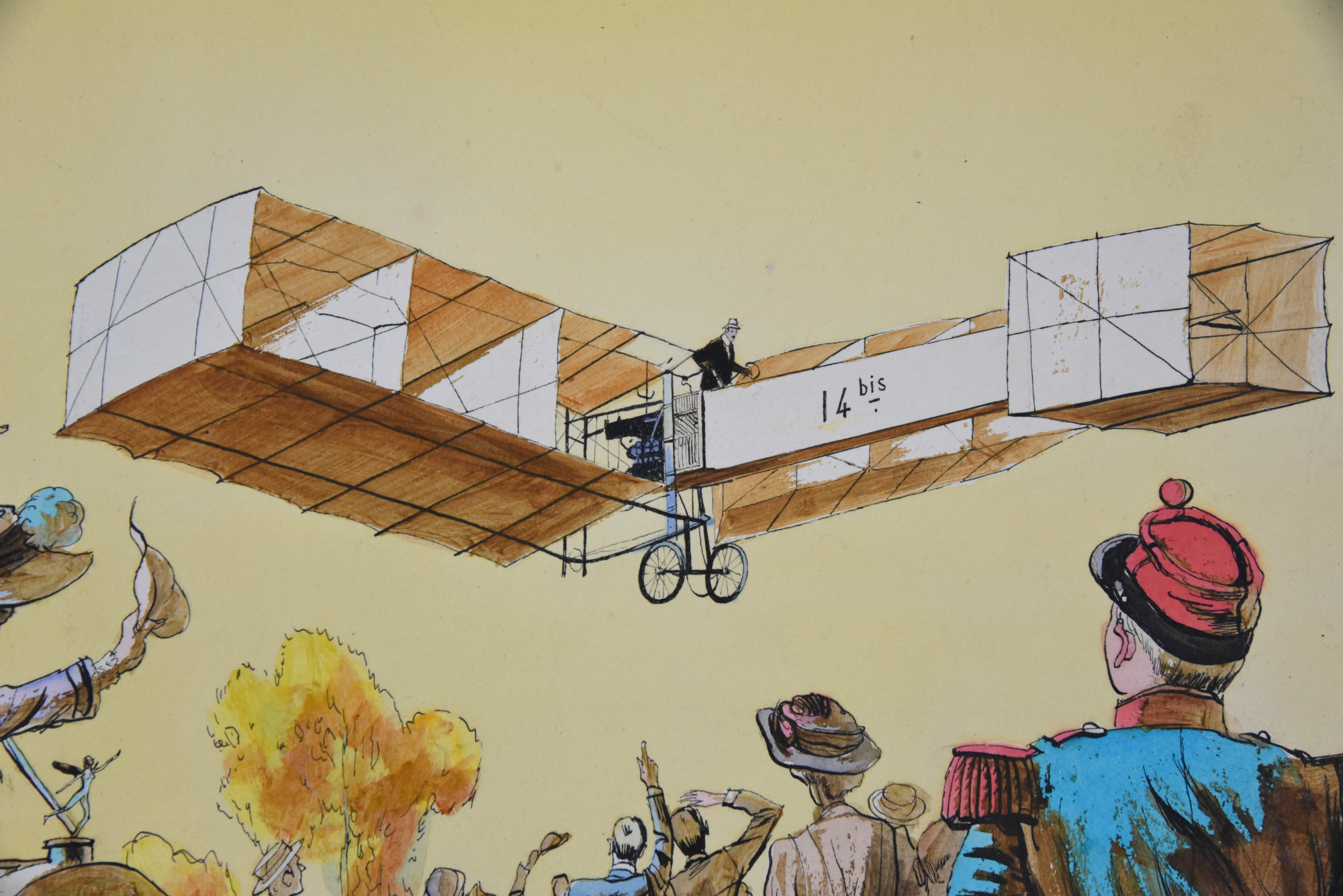
To understand why the Alberto Santos-Dumont airplane matters, one must examine the engineering specifics of his most famous aircraft, known officially as the 14-Bis, or the Oiseau de Proie (Bird of Prey). Built in the workshops of Gabriel Voisin in Paris, the 14-Bis broke radically from contemporary aerodynamic designs by utilizing a cellular box-kite configuration arranged in a configuration that resembled a massive, tailless box kite flying backward relative to traditional biplane layouts.
| Specification | Detail |
|---|---|
| Configuration | Cellular box-kite biplane (canard layout) |
| Wingspan | 9.72 meters (31.9 feet) |
| Total Length | 9.50 meters (31.2 feet) |
| Wing Area | 52 square meters (560 square feet) |
| Powerplant | Antoinette V8 engine (24 to 50 hp) |
| Propeller | Aluminum, fixed-pitch, front-mounted |
| Weight | Approximately 160 kg (350 lbs) empty |
Unlike modern aircraft or the Wright Flyer, which positioned horizontal control surfaces forward or aft in conventional configurations, the 14-Bis featured a box-kite cell at the front that acted simultaneously as an elevator and a rudder. The pilot stood upright in a wicker basket suspended within the fuselage structure, giving him a direct, unobstructed view of the terrain below and the airspace ahead.
Powering this unusual contraption was an Antoinette engine—initially a 24-horsepower V8, later upgraded to a 50-horsepower version designed by Léon Levavasseur. The engine drove a front-mounted propeller, making the 14-Bis a tractor configuration, which contrasted with the pusher propellers utilized by the Wright brothers. This combination of cellular kite construction, forward control surfaces, and a front-mounted powerplant made the 14-Bis an intensely scrutinized marvel of engineering that forced contemporary designers to rethink stability, control, and structural integrity.

The Milestone Flights at Bagatelle and Château de Bagatelle
The true significance of the Alberto Santos-Dumont airplane crystallizes when examining the specific, verified public flights executed at the Bagatelle polo field in the Bois de Boulogne near Paris. On September 13, 1906, Santos-Dumont attempted to fly the 14-Bis before a small gathering. While the aircraft suffered minor damage during rough taxiing and brief hops, it demonstrated that the machine could generate sufficient lift to leave the ground momentarily.
The watershed moment occurred on October 23, 1906. Before official commissioners of the Aéro-Club de France—the governing body authorized to validate aviation records—Santos-Dumont successfully piloted the 14-Bis over a measured distance of 60 meters (nearly 200 feet) at a height of two to three meters. This flight was witnessed by hundreds of spectators, journalists, and aviation pioneers such as Ernest Archdeacon and Louis Blériot. Crucially, the aircraft launched entirely under its own power without any catapults, rails, or external assistance, landing safely without structural failure.
| Date | Achievement |
|---|---|
| September 13, 1906 | First brief public hops at Bagatelle |
| October 23, 1906 | First officially observed flight (60m) |
| November 12, 1906 | Multiple sustained flights, winning the Deutsch-Archdeacon Prize (220m) |
On November 12, 1906, Santos-Dumont surpassed his previous achievement by flying 220 meters in 21.5 seconds, securing the coveted Prix Deutsch-Archdeacon for the first officially observed heavier-than-air flight of over 100 meters. He also captured the Aviation Coupe Ernest Archdeacon for the first powered flight in Europe. These demonstrations were certified by immutable public record, eliminating any lingering doubts regarding the feasibility of sustained, heavier-than-air motorized flight.
Scientific and Public Impact on Global Aviation
The impact of Santos-Dumont’s flights extended far beyond European borders, fundamentally altering how humanity perceived travel, geography, and military strategy. Prior to October 1906, many newspapers and scientific institutes treated claims of powered flight with extreme skepticism, often dismissing them as sensationalist rumors or optical illusions. By flying openly in the center of Paris, Santos-Dumont democratized aviation knowledge.
His decision to publish his designs and share his technical insights inspired a generation of European engineers. Gabriel Voisin, Henri Farman, and Louis Blériot closely studied the mechanics of the 14-Bis, incorporating its lessons into their own designs. Blériot, who would later achieve historical immortality by crossing the English Channel in 1909, openly acknowledged the profound influence that Santos-Dumont’s public exhibitions exerted on the French aerospace industry.
Furthermore, the public nature of these flights cemented the airplane as a cultural symbol of modernity. While the Wright brothers maintained tight legal and operational control over their patents, Santos-Dumont viewed aviation as a gift to humanity rather than a commercial commodity to be hoarded. This open philosophy accelerated research, fostered international collaboration, and transformed aviation from an eccentric backyard hobby into an organized scientific discipline.
Comparing Early Aviation Pioneers: Santos-Dumont vs. The Wright Brothers
To fully grasp why the Alberto Santos-Dumont airplane matters, historians often contrast his approach with that of Orville and Wilbur Wright. While both parties solved the fundamental problem of powered flight, their methodologies and public impacts diverged sharply.
| Attribute | Santos-Dumont | Wright Brothers |
|---|---|---|
| Primary Location | Paris, France | Kitty Hawk, USA |
| Launch Method | Unassisted wheels | Weight-dropped rail |
| Verification | Public/Official | Private/Affidavits |
| Design Philosophy | Open source | Patented/Secret |
| Propeller Layout | Tractor (Front) | Pusher (Rear) |
The Wright brothers achieved sustained, fully controlled, and aerodynamically sophisticated flight earlier (1903) and mastered banked turns long before European aviators. However, their insistence on secrecy meant that European scientists viewed their claims with suspicion until 1908. Conversely, Santos-Dumont operated entirely in the open from day one. His 14-Bis utilized wheels rather than skids, allowing for standard ground operations that mirrored modern aviation protocols.
While the 14-Bis was notoriously difficult to maneuver laterally—suffering from a lack of effective ailerons, which Santos-Dumont later added in modified versions—its historic value lies precisely in its public validation. It proved to the European scientific establishment that heavier-than-air flight was an undeniable reality happening in the present, sparking an immediate, unhindered surge in global aeronautical investment.
Legacy and Commemoration
Alberto Santos-Dumont’s contributions were not limited to fixed-wing aircraft; his earlier work with non-rigid airships like the No. 6 made him a Parisian celebrity who navigated the skies around the Eiffel Tower. Yet, the 14-Bis remains his most enduring technological legacy because it marked the definitive transition from lighter-than-air balloons and airships to motorized heavier-than-air machines.
In Brazil, Santos-Dumont is revered as the Father of Aviation, a national hero whose birthday is celebrated as the Day of the Brazilian Aviator. Globally, aviation historians recognize that while multiple inventors contributed crucial pieces to the puzzle of flight, Santos-Dumont provided the vital catalyst of public proof. By stepping into the skies above Bagatelle in 1906, he erased all doubt, united the international scientific community, and propelled humanity into the aerial age.
Frequently Asked Questions
Why is the Alberto Santos-Dumont airplane often called the 14-Bis?
The aircraft was named 14-Bis because Santos-Dumont initially tested it by suspending it beneath his 14th airship (Dirigeable No. 14). When he separated the cellular flying machine from the airship envelope and mounted an engine directly to it, the modification was designated as the second version, or "Bis," resulting in the name 14-Bis.
Did Alberto Santos-Dumont fly before the Wright brothers?
No. The Wright brothers achieved the first motorized, controlled, heavier-than-air flights in December 1903 in Kitty Hawk, North Carolina. Santos-Dumont’s famous flights with the 14-Bis occurred in Paris in late 1906, nearly three years later.
Why were Santos-Dumont’s 1906 flights so significant in Europe?
Prior to October 1906, European aviation enthusiasts and scientific societies were deeply skeptical of American claims regarding powered flight due to the secrecy maintained by the Wright brothers. Santos-Dumont provided the first publicly verified, officially observed, and unassisted takeoff and landing in Europe, proving beyond doubt that powered flight was achievable.
What kind of engine did the 14-Bis use?
The 14-Bis was powered by an Antoinette V8 internal combustion engine designed by Léon Levavasseur. It initially delivered 24 horsepower and was later upgraded to 50 horsepower to provide sufficient thrust for longer sustained flights.
How did the 14-Bis take off without a launching rail?
Unlike early American aircraft that relied on weights, towers, or wooden launching rails, the 14-Bis was equipped with a landing gear wheel system. Santos-Dumont simply rolled the aircraft across the grass polo field at Bagatelle, allowing it to accelerate and lift off entirely under its own engine power.
Practical Next Actions for Aviation Researchers
- Examine Primary Records: Review the archived reports and homologation documents published by the Aéro-Club de France from 1906 to verify official flight measurements and witness testimonies.
- Visit Collections: Explore the collection at the Musée de l'Air et de l'Espace in Le Bourget, France, and the Museu Aeroespacial in Rio de Janeiro to view replicas and historical artifacts related to Santos-Dumont.
- Read Technological Analyses: Consult specialized aeronautical engineering journals that evaluate the aerodynamic properties of cellular box-kite aircraft designs from the pioneer era.
Image Gallery
Select an image to open it in a new tab.



Lars Thomsen
Global Labor Markets and Economic Strategy Editor
