USDA loans handle closing costs much like standard conventional mortgages, meaning borrowers are typically responsible for appraisal fees, title searches, loan origination fees, and escrow setup. However, the Single Family Housing Guaranteed Loan Program administered by the United States Department of Agriculture offers unique provisions—such as the ability to finance closing costs when a home appraises for more than the purchase price—alongside strict rules regarding seller concessions and gift funds that can significantly reduce out-of-pocket expenses.
Securing a mortgage through the USDA Section 502 Guaranteed Loan Program provides rural and suburban homebuyers with zero-down-payment financing, making homeownership accessible to low- to moderate-income households. While eliminating the traditional 3% to 20% down payment removes the largest financial barrier to entry, aspiring homeowners must still address closing costs. Understanding how the USDA program treats these expenses helps buyers plan their finances, negotiate purchase contracts effectively, and avoid last-minute funding surprises at the closing table.
Understanding USDA Closing Costs and Fees
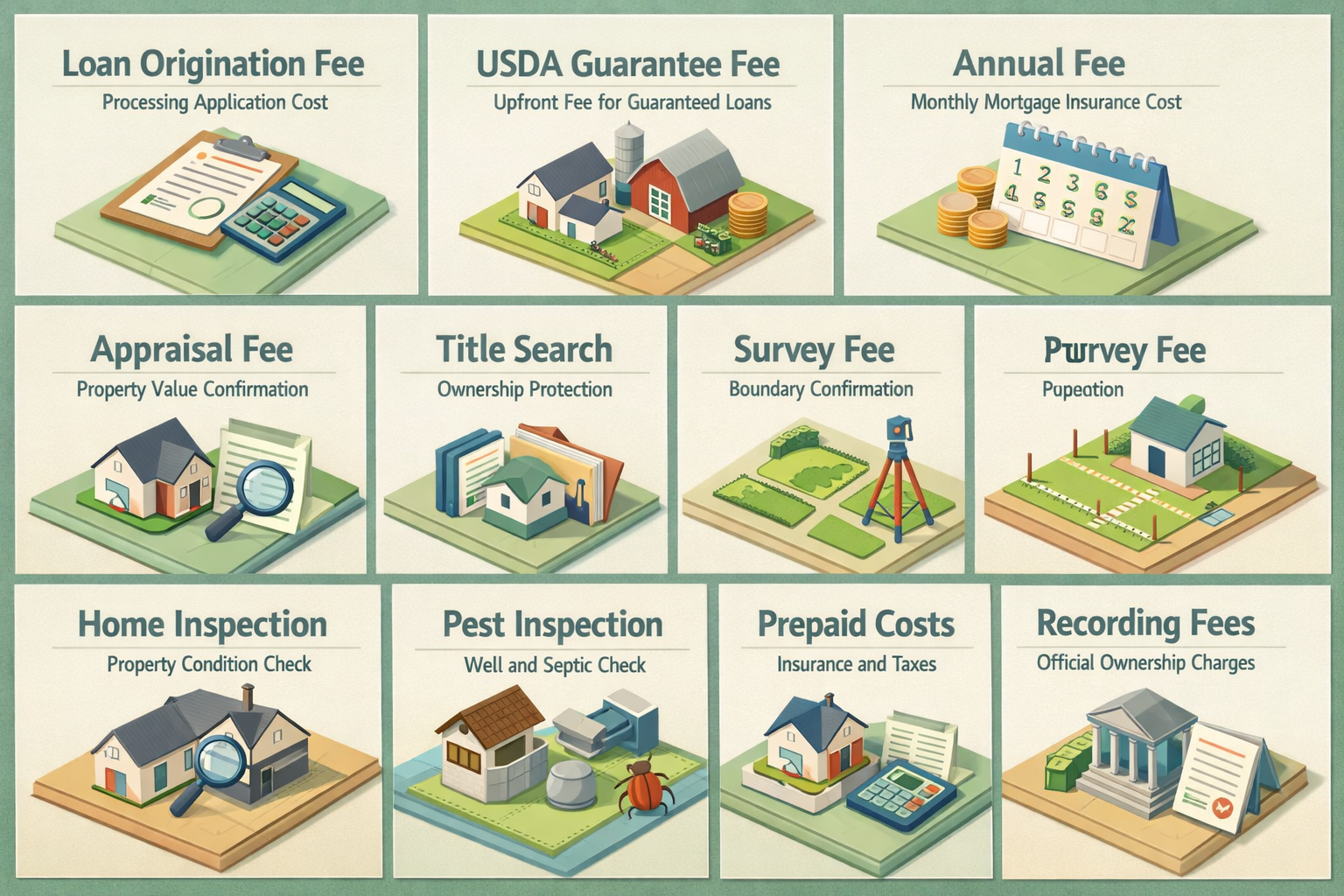
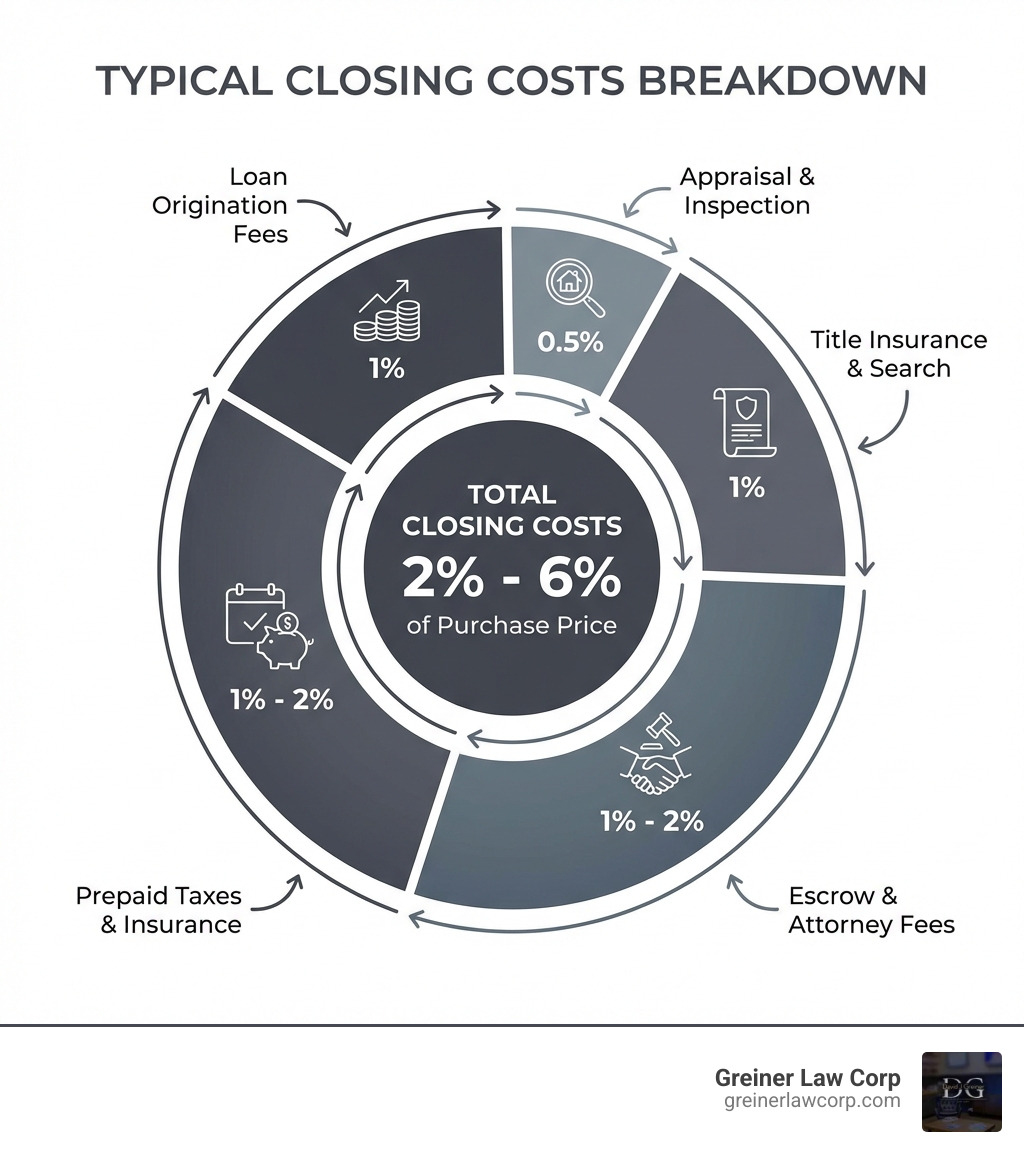
Every real estate transaction involves transaction fees, administrative charges, and prepaid items required to legally transfer property ownership and establish the mortgage. USDA loans are no exception. These fees are split into two primary categories: lender-charged fees and third-party fees.
Lender fees include loan origination charges, underwriting fees, and processing fees. Third-party fees cover independent services required to underwrite and secure the loan safely. These typically include:
- Appraisal Fees: Paid to a certified appraiser to determine the market value and ensure the property meets USDA minimum property requirements (MPRs).
- Title Search and Insurance: Ensures the property title is free of liens and protects the lender and buyer against future ownership disputes.
- Credit Report Fees: Charges to pull credit histories for all borrowers.
- Recording Fees: Local government charges for recording the new deed and mortgage.
- Survey and Inspection Fees: Environmental, structural, or boundary checks requested by the lender or buyer.
In addition to these standard closing expenses, USDA loans carry unique government-mandated fees designed to sustain the program. Borrowers must pay an upfront guarantee fee and an annual fee.
The upfront guarantee fee—frequently set at 1% of the loan amount—is assessed at closing. Fortunately, the USDA allows borrowers to finance this fee by rolling it directly into the total loan amount, meaning it does not have to be paid in cash at the closing table. The annual fee, which functions similarly to private mortgage insurance (PMI) on conventional loans, is calculated as a percentage of the remaining principal balance and is divided into monthly installments added to the mortgage payment.
Strategies for Managing Closing Costs in USDA Transactions
Because cash reserves are often limited for households utilizing the USDA zero-down-payment advantage, several distinct financing and negotiation mechanisms exist to cover closing costs. Buyers must work closely with an experienced lender to determine which strategy aligns with their financial profile and local market conditions.
Financing Closing Costs via Appraised Value
One of the most distinctive features of a USDA loan is the potential to finance closing costs when the appraised value of the home exceeds the agreed-upon purchase price. For example, if a home is purchased for $250,000, but the official USDA-approved appraisal comes back at $258,000, the borrower may increase the loan amount up to the appraised value.
This surplus can be used to cover allowable closing costs and upfront guarantee fees. However, this strategy relies entirely on market valuation. If the home appraises at or below the purchase price, this option is unavailable, and other funding sources must be utilized.
Seller Concessions and Contributions
Sellers are legally permitted to contribute toward a buyer's closing costs, a mechanism known as seller concessions. Under USDA guidelines, sellers can contribute up to 6% of the total property purchase price toward the buyer’s closing costs, prepaid items, and lender fees.
In competitive real estate markets, asking for seller concessions requires careful negotiation. Buyers often offer a slightly higher purchase price to offset the concession for the seller, provided the home appraises for that higher figure. These concessions cannot be used for the buyer's down payment (though down payments are $0 for USDA loans anyway) or for personal debts, but they are fully applicable to standard closing expenses.
Gift Funds and Down Payment Assistance
Borrowers can also utilize monetary gifts from family members, non-profit organizations, or government entities to cover closing costs. The USDA allows 100% of closing costs and prepaid items to be paid via gift funds, provided the funds come from an acceptable source.
An acceptable gift donor includes relatives, close friends with a clearly demonstrated interest in the buyer, labor unions, or charitable organizations. The lender will require a signed gift letter stating that the funds are a true gift and do not represent a concealed loan that must be repaid. Furthermore, down payment assistance (DPA) programs offered by state and local housing finance agencies can frequently be layered with USDA loans to cover remaining out-of-pocket expenses.

Comparison of Closing Cost Funding Options for USDA Loans
| Funding Method | Maximum Limit | Key Requirement | Potential Risk |
|---|---|---|---|
| Financing via Appraised Value | Up to the appraised market value | Home must appraise higher than the purchase price | Relies on a high appraisal; increases total debt |
| Seller Concessions | Up to 6% of the purchase price | Must be written into the purchase contract | May weaken the purchase offer in competitive markets |
| Gift Funds | Up to 100% of closing costs | Must provide a signed gift letter and paper trail | Funds cannot originate from an undisclosed loan |
| DPA Programs | Varies by program guidelines | Must meet agency-specific income and loan rules | Additional paperwork and potential processing delays |
Preparing for Out-of-Pocket Expenses: Earnest Money and Inspections
Even with zero-down financing and various cost-covering strategies, buyers should be aware that obtaining a USDA loan requires some upfront cash out of pocket before reaching the closing table. These preliminary expenses cannot typically be financed into the mortgage and must be paid by the buyer at the time services are rendered.
Earnest money deposits are typically required when submitting a purchase offer to demonstrate good faith to the seller. This money is held in an escrow account and is credited back to the buyer at closing, but the cash must be available immediately when signing the initial contract.
Similarly, home inspections and independent pest inspections (often required for rural properties) are paid directly to the inspector at the time of service. While these inspections protect the buyer from purchasing a defective property, they represent immediate out-of-pocket costs that range from several hundred dollars depending on the size and location of the property.
Step-by-Step Guide to Managing Closing Costs
Navigating the financial obligations of a USDA loan requires a structured approach from pre-approval to the final closing day.
- Obtain Mortgage Pre-Approval: Work with a USDA-approved lender to evaluate your debt-to-income (DTI) ratio, credit score, and household income limits to ensure you qualify for the program.
- Request a Detailed Loan Estimate: Once under contract on a property, review the Loan Estimate (LE) provided by your lender within three business days. This document itemizes all estimated closing costs and lender fees.
- Evaluate Appraisal Results: Monitor the appraisal process closely. If the home value comes in higher than the purchase price, discuss with your loan officer whether rolling closing costs into the loan is mathematically advantageous.
- Negotiate Concessions Early: If cash reserves are tight, ensure your real estate agent includes a request for seller concessions in the initial purchase agreement rather than trying to add them later.
- Review the Closing Disclosure (CD): Compare the final Closing Disclosure received at least three business days prior to closing against your initial Loan Estimate to verify that all credits, seller contributions, and financed fees are accurately represented.
Frequently Asked Questions
Can I roll all my closing costs into a USDA loan?
You can only finance closing costs if the home appraises for more than the purchase price, and the total loan amount cannot exceed that appraised value. If the appraisal matches the purchase price exactly, you cannot finance closing costs through the loan amount and must use alternative methods like seller concessions or gift funds.
What is the USDA upfront guarantee fee, and can it be financed?
The upfront guarantee fee is a government fee charged on all USDA loans to offset default risks. It is currently set at 1% of the loan amount. This fee is almost always financed directly into the total mortgage amount, meaning you do not have to pay it in cash at closing.
Are closing costs higher for USDA loans than conventional loans?
Closing costs for USDA loans are generally comparable to conventional loans because third-party fees—such as title searches, recording fees, and home inspections—are determined by local service providers rather than the loan type. However, the addition of the USDA upfront guarantee fee can make the initial gross balance slightly higher, though it is financed.
Can I use a personal loan to pay for my USDA closing costs?
No. Lenders strictly prohibit unsecured personal loans or cash advances to cover closing costs or upfront expenses for a government-backed mortgage because it increases your overall debt-to-income ratio without the lender's knowledge. All funds must be sourced and verified, coming from savings, approved gifts, or seller concessions.
How much cash should I save when buying a home with a USDA loan?
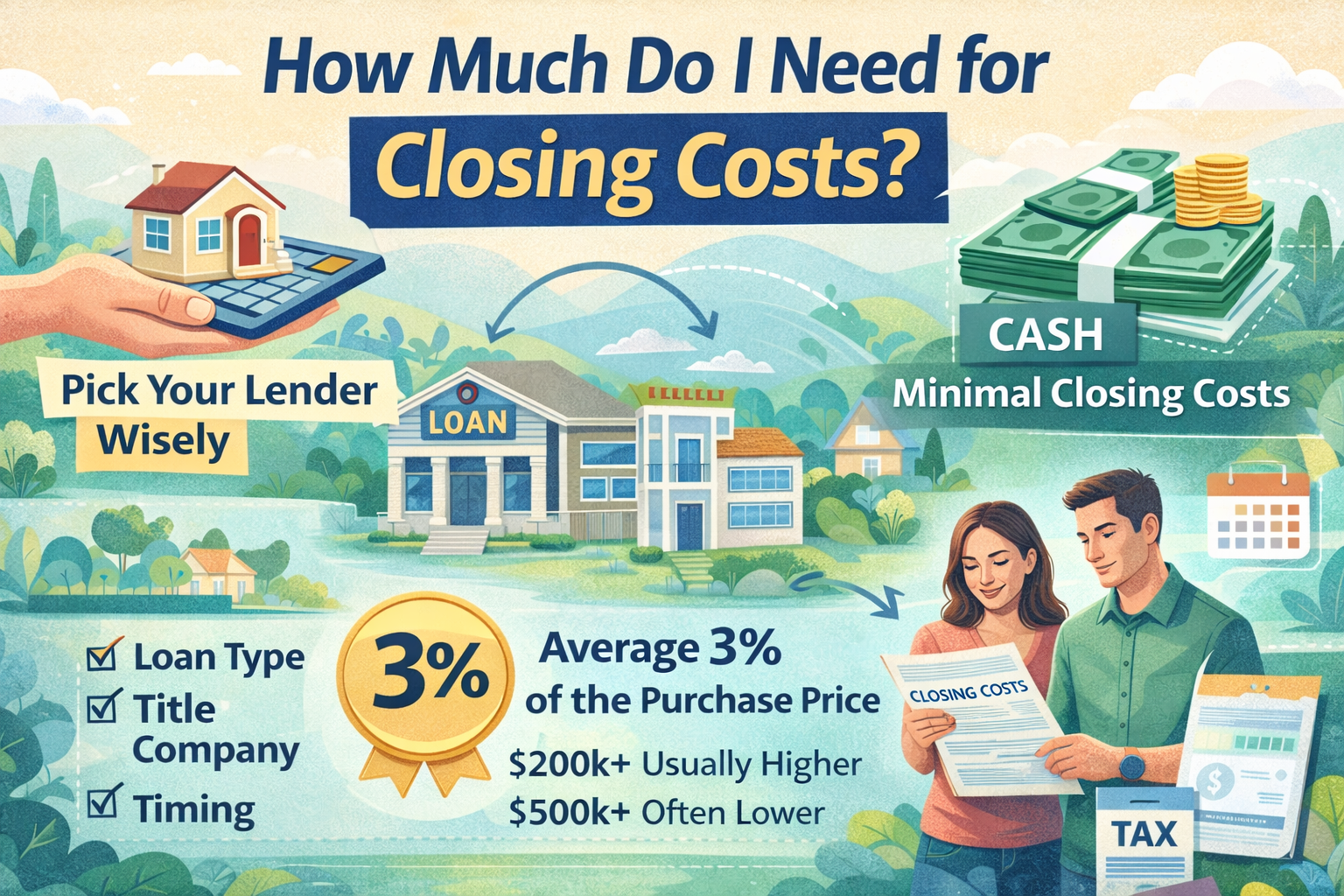
Even though the down payment is 0%, financial advisors recommend saving at least 2% to 5% of the purchase price for upfront out-of-pocket expenses. This cash reserve covers earnest money deposits, independent home inspections, appraisals, and any unexpected closing adjustments that cannot be covered by concessions or financing.
Conclusion and Next Actions
Successfully managing closing costs on a USDA loan requires proactive financial planning and clear communication with your lender and real estate agent. While the program eliminates the traditional down payment barrier, expenses such as inspections, appraisals, and government guarantee fees require attention. To ensure a smooth transaction, obtain a comprehensive pre-approval, discuss seller concession strategies with your agent early in the home-buying process, and review your Closing Disclosure meticulously before signing final loan documents.
Image Gallery
Select an image to open it in a new tab.


Vivian Cho
Executive IT and Emerging Technologies Reporter
