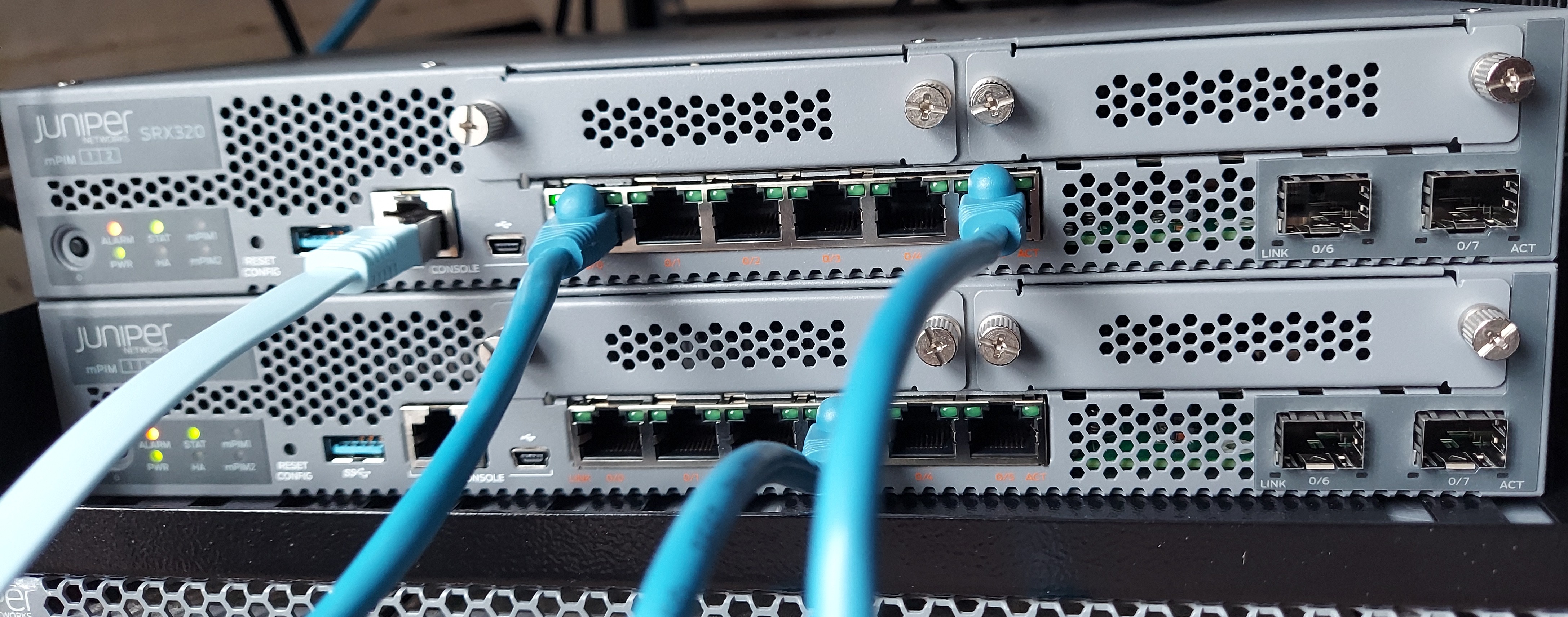
The Juniper firewall landscape centers on the SRX Series, a unified security platform powered by the Junos operating system that spans physical, virtual, and containerized environments. In 2026, this ecosystem emphasizes AI-native operations through Juniper Mist, providing automated threat response and simplified management across distributed enterprises, cloud-native workloads, and high-scale data centers.
The Architecture of Juniper Security: Junos OS and the SRX Series
To understand the Juniper firewall landscape, one must first recognize the foundational role of Junos OS. Unlike many competitors that use different operating systems for different product lines, Juniper utilizes a single, consistent OS across its routing, switching, and security portfolios. This architectural consistency is a primary differentiator, reducing the learning curve for network engineers and ensuring that security policies are applied uniformly across the entire infrastructure.
The hardware manifestation of this landscape is the SRX Series Services Gateway. These are not merely firewalls but integrated security devices that combine routing, switching, and security into a single chassis. The architecture is built on a separation of the control plane and the data plane. The control plane handles management tasks and routing protocols, while the data plane uses specialized silicon—often Juniper’s own programmable chips—to perform high-speed packet inspection and forwarding.
In 2026, the SRX series has evolved to handle the massive throughput requirements of modern networks, with high-end models supporting 400G and 800G interfaces. This performance is critical for data centers and service providers who cannot afford for security to become a bottleneck. Furthermore, the integration of Junos OS Evolved into the higher-end SRX platforms has introduced a microservices-based architecture, which enhances system resiliency and allows for individual software components to be updated without rebooting the entire device.
Navigating the Physical SRX Portfolio
The physical firewall landscape is divided into three primary segments: branch, mid-range/campus, and high-end/data center. Selecting the right hardware requires an understanding of both raw throughput and the "inspection depth" required for specific traffic.
Branch Firewalls (SRX300 and SRX1500 Series)
For small to medium-sized branches, the SRX300 line remains the workhorse of the Juniper landscape. These devices are designed for cost-effectiveness and quiet operation, often featuring fanless designs for office environments. By 2026, even these entry-level devices include integrated LTE/5G support and Wi-Fi options, serving as all-in-one edge devices. They are particularly favored for SD-WAN deployments where secure connectivity to the cloud is a primary requirement.
Mid-Range and Campus Firewalls (SRX4000 Series)
The SRX4100 and SRX4200 models cater to large branch offices and enterprise campuses. These devices bridge the gap between simple edge security and high-density data center requirements. They offer significant jumps in MACsec encryption support and deep packet inspection (DPI) capabilities. In a campus setting, these firewalls often act as the primary gateway, enforcing Zero Trust policies for users and IoT devices before they access internal resources.
High-End and Data Center Firewalls (SRX5000 Series)
The SRX5400, SRX5600, and SRX5800 are modular chassis designed for the most demanding environments. These systems are defined by their scalability; administrators can add Service Processing Cards (SPCs) and Input/Output Cards (IOCs) to increase capacity as traffic grows. In 2026, these platforms are frequently deployed in "security-as-a-wire" configurations, where they provide ultra-low latency inspection for high-frequency trading or large-scale service provider cores.

The Shift to Virtualization: vSRX and cSRX
The landscape extends beyond physical hardware into the realm of software-defined security. As organizations move workloads to the cloud, the need for consistent security policies between on-premises and multi-cloud environments has led to the rise of virtualized firewalls.
vSRX Virtual Firewall provides the same features as the physical SRX but runs as a virtual machine (VM) on hypervisors like VMware ESXi, KVM, or Microsoft Hyper-V. It is also available as a native instance in public clouds such as AWS, Azure, and Google Cloud Platform (GCP). The vSRX is notable for its ability to scale horizontally, allowing organizations to spin up new firewall instances dynamically to meet traffic demands.
cSRX Container Firewall represents the most granular level of the Juniper landscape. Designed specifically for Kubernetes environments, cSRX provides security for "East-West" traffic—traffic that moves between microservices within a data center. Because cSRX is a container itself, it has an incredibly small footprint and can be deployed in seconds, providing Layer 7 visibility and protection for containerized applications that traditional perimeter firewalls often miss.
AI-Native Security and Mist Integration
Perhaps the most significant development in the 2026 Juniper landscape is the full integration of Mist AI. Juniper has shifted from reactive security to proactive, AI-driven operations. This transition is managed through the Mist Cloud, which uses machine learning to analyze telemetry data from SRX firewalls.
Mist AI provides what Juniper calls "Security Intelligence" (SecIntel). This feature automatically feeds curated threat intelligence from Juniper’s Threat Labs directly to the firewalls. If a new malicious domain is identified globally, every SRX connected to the Mist Cloud is updated in real-time without manual intervention.
The AI component also simplifies troubleshooting. Through the Marvis Virtual Network Assistant, administrators can use natural language queries—such as "Why is the VPN slow for the Chicago branch?"—to identify configuration errors or ISP issues. This reduces the Mean Time to Repair (MTTR) and allows security teams to focus on strategic initiatives rather than log hunting.
Security Director Cloud: The Single Pane of Glass
Managing a hybrid landscape of physical, virtual, and containerized firewalls requires a centralized management platform. Security Director Cloud serves as this unified interface. It allows for a "write once, apply everywhere" policy model. A security policy created in the cloud can be pushed simultaneously to an on-prem SRX300, a vSRX in AWS, and a cSRX in a local Kubernetes cluster.
Key capabilities of Security Director Cloud in 2026 include:
- Unified Policy Management: Consistent enforcement across diverse environments.
- Zero Trust Awareness: Integration with identity providers to enforce access based on user identity rather than just IP addresses.
- Visibility and Analytics: Aggregated logging that provides a holistic view of the organization’s security posture.
- Automated Compliance: Tools that audit configurations against industry standards like PCI-DSS or HIPAA.
Advanced Security Services and Features
The Juniper landscape is defined by a suite of advanced services that go beyond simple stateful packet inspection. To effectively secure a modern enterprise, these features are often bundled into "Software Premium" or "Advanced" subscriptions.
| Feature | Description | Primary Benefit |
|---|---|---|
| IPS (Intrusion Prevention) | Signature-based and anomaly-based detection of attacks. | Prevents exploitation of known vulnerabilities. |
| AppSecure | Application-level visibility and control (Layer 7). | Blocks specific app features (e.g., Facebook chat) while allowing the app. |
| Sky ATP / Advanced Threat Prevention | Cloud-based sandboxing for zero-day malware detection. | Identifies and blocks previously unknown malware threats. |
| Encrypted Traffic Insights (ETI) | Analysis of encrypted traffic without full SSL decryption. | Detects threats in HTTPS traffic while maintaining user privacy. |
| SecIntel | Real-time threat feeds (C&C, GeoIP, malicious URLs). | Provides proactive blocking of known bad actors. |
| Adaptive Threat Profiling | Creates custom threat feeds based on local network behavior. | Tailors security to the specific threats facing your unique network. |
Strategic Comparison: Why Choose Juniper?
When evaluating the Juniper landscape against competitors like Cisco, Fortinet, or Palo Alto Networks, several factors stand out. Juniper’s strength lies in its networking DNA. Because the SRX is built on a routing heritage, it handles complex networking tasks—like BGP (Border Gateway Protocol) or OSPF (Open Shortest Path First)—far more robustly than "security-first" appliances.
Furthermore, Juniper’s commitment to open standards and APIs makes it a preferred choice for organizations with a heavy DevOps focus. The ability to manage SRX firewalls through automation tools like Ansible, Terraform, or Python is deeply integrated into the Junos OS, allowing for automated security provisioning as part of a CI/CD pipeline.
However, the landscape also requires careful planning regarding licensing. Juniper’s move toward a subscription-based model (Juniper Flex Licensing) means that organizations must account for ongoing operational costs to keep advanced AI and threat intelligence features active. In 2026, the licensing is tiered primarily by the level of AI integration and the volume of threat intelligence required.
Common Implementation Mistakes
Despite the power of the Juniper ecosystem, certain pitfalls can undermine a deployment. One common mistake is neglecting the Junos OS version consistency. While Junos is unified, running vastly different versions across a fleet can lead to discrepancies in how certain security features behave.
Another frequent error is the misconfiguration of Security Zones. Juniper firewalls are zone-based, meaning all interfaces must belong to a zone, and policies are applied to traffic moving between these zones. Failing to properly segment traffic into functional zones (e.g., Trust, Untrust, DMZ, IoT) can lead to overly permissive policies that negate the benefits of a modern firewall.
Finally, many organizations fail to fully utilize Encrypted Traffic Insights (ETI). As of 2026, over 95% of web traffic is encrypted. Relying on traditional inspection without ETI or full SSL proxying leaves a massive blind spot in the network defenses.
FAQ: Frequently Asked Questions
Does Juniper offer a SASE (Secure Access Service Edge) solution?
Yes. Juniper’s SASE approach, often referred to as Juniper Secure Edge, integrates the SRX’s security capabilities with SD-WAN and cloud-delivered security services. This allows remote users to connect securely to applications without backhauling traffic through a central data center, leveraging the same Junos-based security policies in a cloud-resident format.
How does the HPE acquisition affect the Juniper firewall landscape?
Following the acquisition by Hewlett Packard Enterprise (HPE), the Juniper firewall landscape has been integrated into the HPE Aruba networking portfolio. By 2026, this has resulted in tighter integration between Aruba’s ClearPass identity management and Juniper’s SRX firewalls, creating a more cohesive end-to-end security fabric from the edge to the data center.
Is the CLI still relevant in a Mist AI-driven landscape?
While Mist AI and Security Director Cloud provide powerful graphical interfaces and automation, the Junos CLI (Command Line Interface) remains a critical tool for advanced troubleshooting and granular configuration. Juniper maintains a "CLI-first" philosophy for its OS development, ensuring that every feature available in the GUI is also accessible and scriptable via the command line.
Can I run vSRX on my own hardware?
Yes, vSRX is hypervisor-agnostic. You can deploy it on standard x86 servers running VMware ESXi or KVM. This is a common choice for organizations looking to build their own "private cloud" or for service providers offering managed security services using their own infrastructure.
What is the difference between "Flow Mode" and "Packet Mode"?
This is a critical distinction in the Juniper landscape. Flow Mode enables the full suite of security features (IPS, UTM, AppSecure) by performing stateful inspection. Packet Mode essentially turns the SRX into a high-performance router, bypassing the security processing to reduce latency. Most modern deployments use Flow Mode by default to ensure security enforcement.
Practical Recommendation: Your Next Steps
For organizations looking to modernize their security posture within the Juniper landscape, the first step is a comprehensive audit of the current network edge. In 2026, the shift toward AI-driven security is no longer optional; it is a necessity for managing the volume and speed of modern threats.
Start by evaluating your need for cloud integration. If your workloads are split between on-prem and AWS/Azure, prioritize a management platform like Security Director Cloud to ensure policy parity. For branch offices, consider upgrading to the latest SRX models that support Mist AI, as the operational savings from automated troubleshooting often outweigh the initial hardware investment. Finally, ensure that your security team is trained not just in firewall rules, but in the AI-native workflows that now define the Juniper ecosystem.
Image Gallery
Select an image to open it in a new tab.


Vivian Cho
Executive IT and Emerging Technologies Reporter
