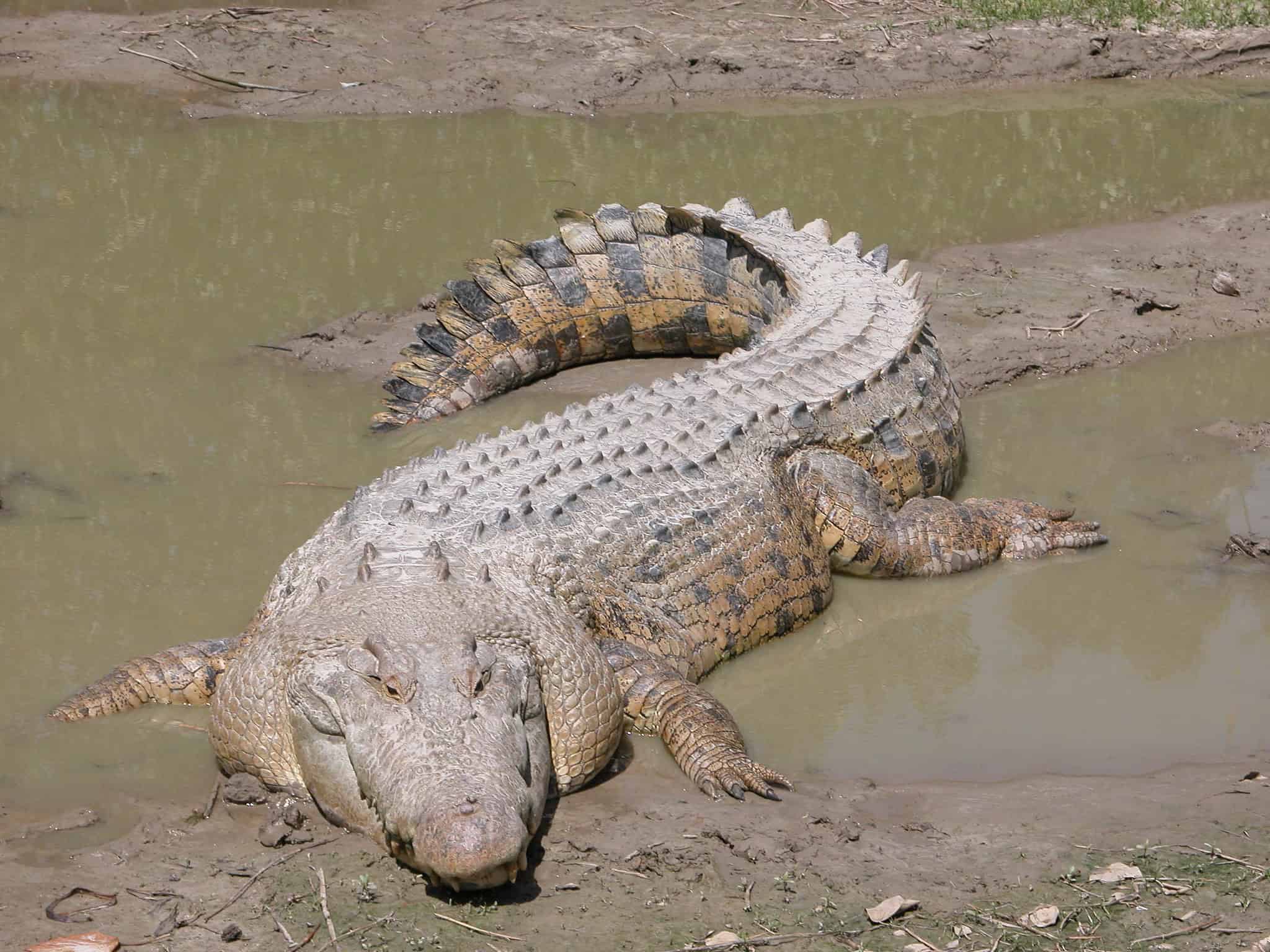
Florida is the only state in the United States with a significant native population of crocodiles. The American crocodile (Crocodylus acutus) is found primarily in the southern tip of the Florida peninsula, including the Florida Keys, the Everglades, and coastal areas of Miami-Dade, Monroe, and Collier counties.
While many people associate the southeastern United States with large reptiles, there is often confusion between the American alligator and the American crocodile. While alligators are found in abundance across ten states—from Texas to North Carolina—the American crocodile is far more specialized in its habitat requirements and much rarer. As of 2026, Florida remains the exclusive stronghold for this species within the U.S. borders, housing a population that has made a remarkable recovery from the brink of extinction over the last five decades.
Florida: The Exclusive Home of the American Crocodile
The geographic distribution of the American crocodile is a fascinating study in environmental limits. Unlike the American alligator, which can tolerate freezing temperatures for short periods by brumating (a state of dormancy), the American crocodile is a tropical species. It lacks the physiological adaptations to survive prolonged cold spells. Consequently, its range in the United States is strictly limited to the subtropical climate of South Florida.
The population is primarily concentrated in coastal areas, as crocodiles have a much higher tolerance for saltwater than alligators. This salt tolerance is due to specialized lingual salt glands on their tongues, which allow them to excrete excess salt from their bodies. This adaptation enables them to thrive in mangrove swamps, salt marshes, and even the open ocean near the coast, whereas alligators are generally restricted to freshwater lakes, rivers, and swamps.
Current Population Estimates and Distribution
As of 2026, wildlife biologists estimate the adult population of American crocodiles in Florida to be approximately 2,000 individuals. This number excludes hatchlings and juveniles, which face high mortality rates in the wild. While 2,000 might seem like a small number compared to Florida’s population of over 1.3 million alligators, it represents a massive conservation success. In the mid-1970s, the population was estimated to be as low as 200 to 300 individuals, leading to the species being listed as Endangered under the Endangered Species Act.
The core of this population is found in three specific regions:
- Everglades National Park: The brackish waters along the southern tip of the mainland provide ideal nesting and foraging grounds.
- The Florida Keys: Specifically Key Largo, which hosts the Crocodile Lake National Wildlife Refuge.
- Biscayne Bay and the Turkey Point Power Plant: The cooling canal system at the Turkey Point nuclear facility has unintentionally created a massive, protected habitat where crocodiles thrive and nest in high densities.
The Difference Between Alligators and Crocodiles
To understand why Florida is the only state with a significant crocodile population, one must distinguish them from their more common cousins. Florida is famously the only place on Earth where both alligators and crocodiles coexist in the wild.
The American alligator (Alligator mississippiensis) is a generalist. It is found in Louisiana (which often rivals Florida for the highest alligator population), Georgia, Alabama, Mississippi, South Carolina, North Carolina, Texas, Oklahoma, and Arkansas. The American crocodile, however, is a specialist. It requires the warm, brackish, and saltwater environments found only at the southern edge of the Floridian plateau.
Key Physical and Behavioral Differences
| Feature | American Alligator | American Crocodile |
|---|---|---|
| Snout Shape | Broad, U-shaped (rounded) | Narrow, V-shaped (tapered) |
| Teeth Visibility | Lower teeth are hidden when mouth is closed | Fourth lower tooth is visible when mouth is closed |
| Coloration | Dark blackish-grey | Pale brownish or grayish-green |
| Salt Tolerance | Low (prefers freshwater) | High (thrives in brackish and saltwater) |
| Temperament | Generally cautious around humans | Shy and reclusive (contrary to "aggressive" myths) |
| Maximum Size | 13–15 feet | 15–20 feet (though rarely over 14 feet in FL) |
Habitat Requirements: Why Crocodiles Stay South
The American crocodile's presence in Florida is determined by three critical factors: temperature, salinity, and nesting substrate.
Thermal Constraints
Crocodiles are ectothermic, meaning they rely on external heat sources to regulate their body temperature. South Florida represents the northernmost limit of the American crocodile's global range, which extends through the Caribbean, Mexico, Central America, and northern South America. In Florida, a severe cold front can be fatal to crocodiles. They typically require water temperatures to remain above 60°F (15.5°C). While alligators can survive in North Carolina winters by sticking their snouts through the ice to breathe while their bodies remain in a dormant state, crocodiles would succumb to the cold.
The Role of Salinity
The ability to process salt is the crocodile's greatest competitive advantage over the alligator. While both species may meet in the "ecotone"—the transition zone between freshwater and saltwater—the crocodile dominates the coast. This preference for brackish water (a mix of fresh and salt) is why they are so prevalent in the mangrove estuaries of the Florida Bay. The mangroves provide cover for juveniles and a rich hunting ground for adults, who feed on fish, crabs, birds, and small mammals.
Nesting and Reproduction
Crocodiles are also specific about where they lay their eggs. Unlike alligators, which build large mounds of rotting vegetation to incubate their eggs, American crocodiles often dig holes in sandy or marl (clay-like) beaches. Because much of the Florida coast has been developed for human use, natural nesting sites are limited. This is why the Turkey Point Power Plant and the Crocodile Lake National Wildlife Refuge are so vital; they provide protected, elevated earthen berms that stay above the high-tide line, ensuring the eggs do not drown.
Conservation Status and Recovery
The story of the American crocodile in Florida is one of the most successful wildlife recovery efforts in U.S. history. In 1975, the U.S. Fish and Wildlife Service (USFWS) listed the species as Endangered. At that time, habitat loss due to coastal development and historical overhunting had nearly wiped them out.
From Endangered to Threatened
By 2007, the population had stabilized and grown significantly enough that the USFWS downlisted the Florida population from Endangered to Threatened. This change reflected the reality that the species was no longer at immediate risk of extinction in the U.S., though it still required federal protection. In 2026, they remain under "Threatened" status.
Conservation efforts have focused on:
- Habitat Protection: Establishing the Crocodile Lake National Wildlife Refuge in 1980.
- Monitoring: Extensive tagging and tracking by the Florida Fish and Wildlife Conservation Commission (FWC) and the University of Florida's "Croc Docs."
- Nesting Site Creation: Building and maintaining nesting berms in areas like Turkey Point to compensate for lost natural beaches.
Are There Crocodiles in Other States?
It is technically possible for a crocodile to wander. There have been sporadic, unconfirmed reports of sightings in extreme southern Texas or the coastal islands of Georgia, but these are almost always cases of misidentification. Alligators are frequently mistaken for crocodiles by tourists and residents unfamiliar with the subtle differences in snout shape and color.
There is no evidence of a breeding population of American crocodiles anywhere in the United States outside of Florida. Some suggest that as climate change leads to warmer winters, the species might slowly expand its range northward along the Gulf and Atlantic coasts. However, for the foreseeable future, Florida remains the only state where you can find these prehistoric reptiles in their natural habitat.
The Spectacled Caiman
Another source of confusion is the Spectacled Caiman (Caiman crocodilus). Caimans are a separate genus within the alligator family. They are native to Central and South America but were introduced to Florida through the exotic pet trade in the mid-20th century. While a small population exists in the canals of South Florida, they are an invasive species and are not the same as the native American crocodile.
Safety and Coexistence: Living with Crocodiles
Because the crocodile population has grown and human development in Florida continues to expand, encounters between the two are becoming more common. Crocodiles have been spotted in residential canals in Miami, on golf courses in the Keys, and even sunning themselves on boat docks.
Understanding Crocodile Behavior
Despite their fearsome reputation, American crocodiles are notoriously shy. They are significantly less aggressive toward humans than the infamous Nile or saltwater crocodiles of Africa and Australia. In the United States, there has never been a documented human fatality caused by an American crocodile, though there have been a few non-fatal bites, usually occurring when humans were swimming in areas where crocodiles were being fed (which is illegal) or where nests were present.
Best Practices for Residents and Visitors
If you find yourself in South Florida's coastal areas, the Florida Fish and Wildlife Conservation Commission (FWC) recommends the following:
- Keep Your Distance: Never approach a crocodile. If you see one, maintain at least 15 to 20 feet of space.
- Swim in Designated Areas: Avoid swimming in brackish or saltwater canals, especially at night or during dusk and dawn when crocodiles are most active.
- Never Feed Wildlife: Feeding crocodiles is a felony in Florida. It causes the animals to lose their natural fear of humans and associate people with food, which leads to "nuisance" behavior and eventually requires the animal to be removed or euthanized.
- Keep Pets on Leash: Small pets are the size of a crocodile’s natural prey. Keep them away from the water’s edge in known crocodile habitats.
The Ecological Importance of Crocodiles
Crocodiles are an "apex predator," meaning they sit at the top of the food chain. Their presence is a sign of a healthy ecosystem. By preying on fish, birds, and smaller reptiles, they help maintain a balance in the mangrove and estuarine environments.
Furthermore, crocodiles are considered "ecosystem engineers." During the dry season, the paths they wear through the mud and the holes they dig for nesting can create small pools of water that provide a refuge for fish and aquatic invertebrates. This, in turn, supports the larger food web of the Everglades.
Frequently Asked Questions
Is Florida the only state with crocodiles?
Yes, Florida is the only state in the U.S. with a native, breeding population of American crocodiles. While alligators are found in many states, crocodiles are restricted to the southern part of Florida due to their need for warm, tropical climates and brackish water.
Are crocodiles more dangerous than alligators?
In a global context, some crocodile species are very dangerous. However, the American crocodile found in Florida is generally more reclusive and shy than the American alligator. While they should always be treated with respect and caution, they are not prone to unprovoked attacks on humans.
How many crocodiles live in Florida?
As of 2026, there are approximately 2,000 adult American crocodiles in Florida. This population is centered in Miami-Dade and Monroe counties, with smaller numbers in Collier and Broward counties.
Can crocodiles live in freshwater?
Yes, American crocodiles can live in freshwater, but they prefer the brackish water found in coastal estuaries. Their ability to process saltwater through lingual glands gives them an advantage over alligators in coastal habitats, which is why they are rarely found deep inland in freshwater-only systems.
Where is the best place to see a crocodile in the wild?
The best places to safely view American crocodiles in their natural habitat include Everglades National Park (specifically the Flamingo area) and the Biscayne National Park coastline. Always view them from a distance or from the safety of a boat or boardwalk.
Recommended Actions for Wildlife Enthusiasts
If you are interested in seeing the only crocodile population in the United States, plan a visit to Everglades National Park during the winter months. The lower water levels and cooler air temperatures often drive these reptiles out of the mangroves to bask in the sun along the banks of the Buttonwood Canal.
For those living in South Florida, the best way to support these unique animals is to respect their habitat. Support local conservation initiatives that protect the mangrove forests and coastal wetlands that crocodiles depend on. If you encounter a crocodile in a residential area where it may pose a risk or be at risk itself, contact the FWC Nuisance Alligator/Crocodile Hotline at 866-FWC-GATOR (866-392-4286).
Image Gallery
Select an image to open it in a new tab.
Vivian Cho
Executive IT and Emerging Technologies Reporter
