
Expert and owner reviews on the Toyota Camry consistently highlight its transition to a dedicated hybrid-only powertrain for the ninth generation as a defining success. Renowned for its exceptional fuel economy, refined interior technology, and legendary resale value, the current Camry remains the primary benchmark for the mid-size sedan segment in 2026.
The 2025-2026 Toyota Camry: A Generational Shift
The automotive landscape has shifted toward electrification, and the Toyota Camry has evolved to lead this change. Reviews on the Toyota Camry now focus almost entirely on the ninth-generation (XV80) platform, which debuted for the 2025 model year and continues its dominance into 2026. The most significant change in recent history is Toyota’s decision to move the Camry to a hybrid-only lineup in many major markets, including North America. This move effectively retired the standalone 2.5-liter internal combustion engine and the storied 3.5-liter V6, replacing them with the highly efficient fifth-generation Toyota Hybrid System (THS 5).
Critics and long-time owners alike have noted that this shift has not diminished the car's appeal but has instead modernized it. The XV80 generation utilizes an updated version of the TNGA-K (Toyota New Global Architecture) platform, which provides a more rigid chassis and a lower center of gravity compared to older generations. This mechanical foundation allows the Camry to maintain its reputation for a "cloud-like" ride while offering significantly improved steering precision and cornering stability.
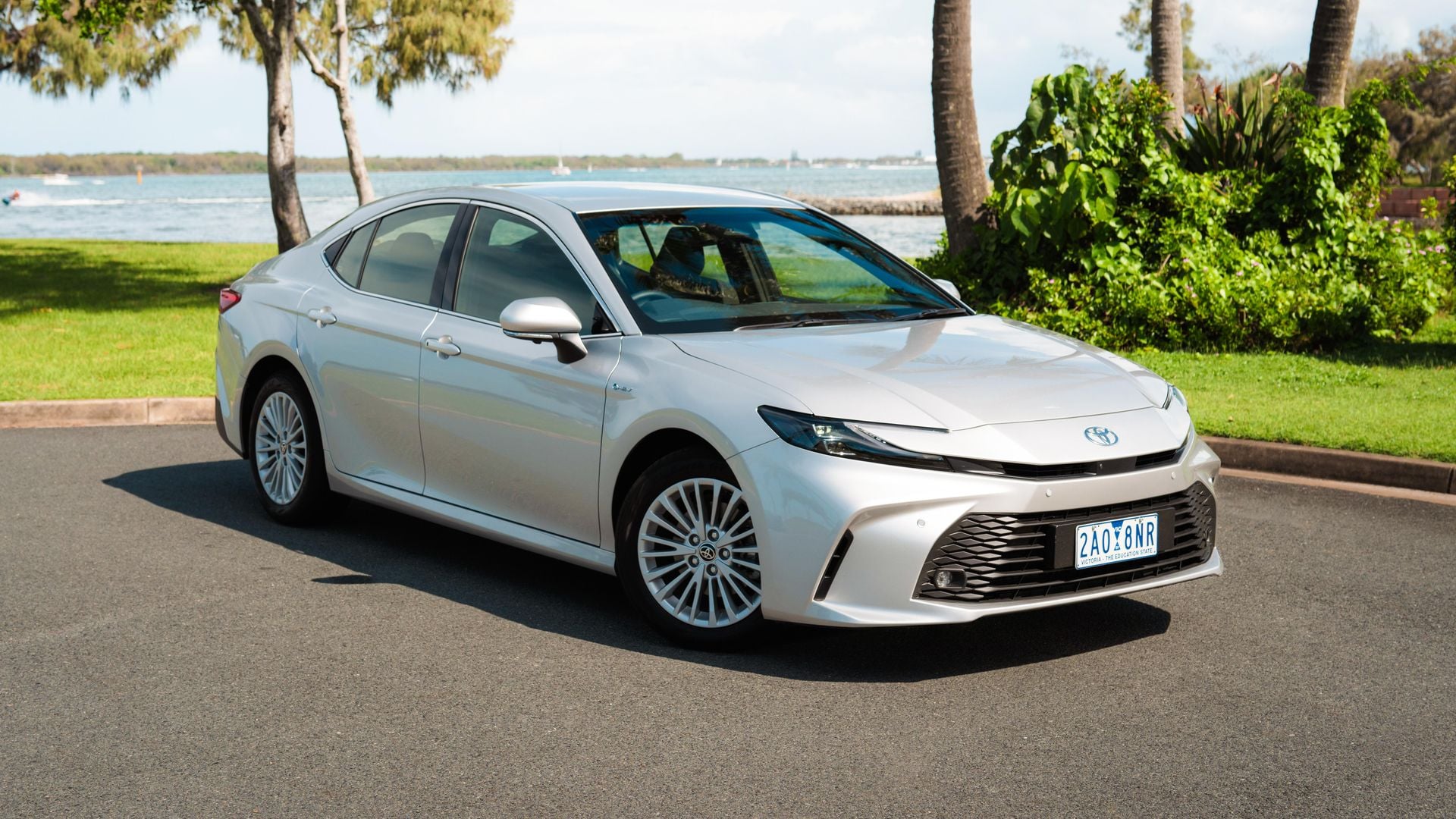
The exterior design has also undergone a "hammerhead" transformation, aligning it with the design language of the Prius and the Crown. Professional reviews often cite this sharper, more aggressive aesthetic as a necessary update to keep the sedan relevant in a market increasingly dominated by crossovers and SUVs.
Powertrain and Performance Analysis
The core of every current Toyota Camry review is the fifth-generation Toyota Hybrid System. This system pairs a 2.5-liter four-cylinder engine with two electric motors in front-wheel-drive (FWD) models, and a third electric motor on the rear axle for Electronic On-Demand All-Wheel Drive (AWD) variants.
Power Output and Acceleration
In FWD configurations, the system produces a combined 225 horsepower. The AWD version sees a slight bump to 232 horsepower. While these numbers may seem modest compared to the outgoing V6, reviewers emphasize the "instant torque" provided by the electric motors. The Camry no longer hunts for gears; instead, the electronically controlled Continuously Variable Transmission (eCVT) provides smooth, linear acceleration that is particularly effective in urban stop-and-go traffic.
The 0-60 mph times generally hover in the low 7-second range. While not a sports car, it provides more than enough passing power for highway merging. Technical editors have noted that the integration between the gasoline engine and the electric motors is more seamless than in previous generations, with the "droning" noise typical of older CVTs being significantly muffled through better acoustic glass and sound deadening.
Fuel Economy and Efficiency
The primary reason consumers seek reviews on the Toyota Camry is efficiency. The 2026 models continue to deliver class-leading numbers. The entry-level LE trim remains the efficiency leader, often achieving an EPA-estimated 51 MPG combined. Even the sportier, heavier XSE trims with AWD still manage to stay in the high 40s. These figures make the Camry one of the most cost-effective long-distance commuters on the market, especially as fuel prices fluctuate.

Interior Comfort and Technological Advancements
Historically, the Camry was criticized for having a "functional but boring" interior. Reviews of the 2025 and 2026 models suggest that Toyota has finally addressed this. The cabin now features a driver-centric cockpit with higher-quality materials, such as SofTex synthetic leather and genuine leather in higher trims, replacing the hard plastics found in older iterations.
Infotainment and Connectivity
The Toyota Audio Multimedia system is a standout feature in 2026 reviews. Standard models come with an 8-inch touchscreen, while the XLE and XSE trims boast a massive 12.3-inch display. The software supports:
- Wireless Apple CarPlay and Android Auto.
- Over-the-air (OTA) updates to keep navigation and safety features current.
- Dual Bluetooth phone connectivity.
- An available 9-speaker JBL Premium Audio system.
Critics frequently praise the physical buttons for volume and climate control, which Toyota has wisely retained despite the industry trend toward touch-sensitive "haptic" sliders. This ergonomic choice reduces driver distraction and improves the overall user experience.
Cabin Quietness and Ergonomics
The 2026 Camry has seen improvements in NVH (Noise, Vibration, and Harshness) levels. Toyota engineers added more insulation in the dashboard and floor panels, and the XLE trim features acoustic-laminated front side windows. The result is a cabin that remains remarkably quiet even at highway speeds. Rear-seat legroom remains a benchmark in the segment, comfortably accommodating three adults with sufficient headroom, despite the sloping roofline.
Comparing the 2026 Toyota Camry Trims
Choosing the right Camry depends on whether you prioritize comfort, sportiness, or value. The following table breaks down the primary specifications and features of the 2026 lineup.
| Feature | LE (Base) | SE (Sport) | XLE (Premium) | XSE (Sport Premium) |
|---|---|---|---|---|
| Powertrain | 2.5L Hybrid FWD/AWD | 2.5L Hybrid FWD/AWD | 2.5L Hybrid FWD/AWD | 2.5L Hybrid FWD/AWD |
| Horsepower | 225 (FWD) / 232 (AWD) | 225 (FWD) / 232 (AWD) | 225 (FWD) / 232 (AWD) | 225 (FWD) / 232 (AWD) |
| Suspension | Standard Comfort | Sport-Tuned | Standard Comfort | Sport-Tuned |
| Wheels | 16-inch Alloy | 18-inch Black Alloy | 18-inch Multi-spoke | 19-inch Smoke Gray |
| Infotainment | 8-inch Touchscreen | 8-inch Touchscreen | 12.3-inch Touchscreen | 12.3-inch Touchscreen |
| Interior | Fabric Seats | SofTex Seats | Leather/Dinamica | Leather-Trimmed |
| Est. Starting MSRP | ~$29,500 | ~$31,800 | ~$34,500 | ~$35,800 |
Safety Ratings and Driver-Assistance Systems
Safety remains a cornerstone of the Toyota brand. The 2026 Camry comes standard with Toyota Safety Sense 3.0 (TSS 3.0), a suite of active safety technologies that use a combination of camera and radar sensors.
Key features included in TSS 3.0:
- Pre-Collision System with Pedestrian Detection: This system can detect vehicles, pedestrians, bicyclists, and even motorcyclists in certain conditions and provide automatic emergency braking.
- Full-Speed Range Dynamic Radar Cruise Control: Ideal for highway driving, this maintains a set distance from the car ahead and can bring the Camry to a complete stop in traffic.
- Lane Tracing Assist: Provides steering inputs to help keep the vehicle centered in its lane.
- Proactive Driving Assist: A newer addition that provides gentle braking into curves or steering support to help maintain distance between the vehicle and a preceding vehicle or pedestrian.
Professional safety reviews from organizations like the Insurance Institute for Highway Safety (IIHS) consistently award the Camry the "Top Safety Pick+" designation. The 2026 model benefits from reinforced side-impact beams and a comprehensive airbag system that includes knee airbags and rear-seat side airbags.
Reliability and Long-Term Value
One of the most frequent themes in reviews on the Toyota Camry is its Total Cost of Ownership (TCO). The Camry is widely regarded as one of the most reliable vehicles in the world. By 2026, the hybrid components (battery, electric motors, and transaxle) have a proven track record of lasting well over 200,000 miles when properly maintained.
Maintenance and Warranty
Toyota provides a competitive warranty package that helps bolster owner confidence:
- Basic Warranty: 3 years/36,000 miles.
- Powertrain Warranty: 5 years/60,000 miles.
- Hybrid Battery Warranty: 10 years/150,000 miles.
- ToyotaCare: A complimentary maintenance plan covering factory-scheduled maintenance for 2 years or 25,000 miles.
Resale value is another area where the Camry excels. According to Kelley Blue Book and other valuation experts, the Camry retains a higher percentage of its original MSRP after five years than almost any other mid-size sedan, including the Honda Accord and Nissan Altima. This makes it an excellent financial decision for both leasees and long-term owners.
Common Criticisms and Limitations
Despite the overwhelming praise, no vehicle is perfect. Thorough reviews on the Toyota Camry often mention a few recurring drawbacks:
- Brake Pedal Feel: Like many hybrids, the transition between regenerative braking (which charges the battery) and friction braking (the physical pads and rotors) can feel slightly "mushy" or inconsistent to drivers used to traditional gasoline cars.
- Low Seating Position: The TNGA-K platform places the seats lower to the ground for better handling. This can make ingress and egress more difficult for older drivers or those with mobility issues compared to a crossover like the Toyota RAV4.
- Trunk Space (AWD Models): While the battery is located under the rear seats to preserve cargo room, the addition of the rear electric motor in AWD models slightly encroaches on under-floor storage space, though the main trunk volume remains competitive at approximately 15.1 cubic feet.
- Infotainment Learning Curve: While the new system is vastly superior to the old "Entune" software, some users find the deep menus and subscription-based services (like Remote Connect) to be frustrating.
FAQs About the Toyota Camry
Is the Toyota Camry only available as a hybrid in 2026?
Yes, for the 2026 model year in the North American market, the Toyota Camry is exclusively powered by a hybrid system. This decision was made to maximize fuel efficiency and meet stricter emissions standards while providing a smoother driving experience.
How does the Camry AWD system work if there is no driveshaft?
The Camry AWD system is "Electronic On-Demand." It uses a dedicated electric motor mounted on the rear axle to power the rear wheels when the system detects a loss of traction or under heavy acceleration. This eliminates the need for a heavy mechanical driveshaft, which saves weight and improves fuel economy.
Does the Camry hybrid battery need to be plugged in?
No, the Toyota Camry is a traditional hybrid (HEV), not a plug-in hybrid (PHEV). The battery is automatically recharged through "regenerative braking" and by the gasoline engine while you drive. You never need to plug it into an electrical outlet.
What is the difference between the SE and XSE trims?
The SE is the entry-level "Sport" trim, featuring a sport-tuned suspension, 18-inch black wheels, and SofTex synthetic leather seats. The XSE is the premium version of the sport trim, adding 19-inch wheels, genuine leather upholstery, a larger 12.3-inch infotainment screen, and more advanced lighting features.
Is the 2026 Toyota Camry good for long road trips?
The Camry is widely considered one of the best road-trip vehicles in its class. With a driving range that can exceed 600 miles on a single tank of gas (LE trim) and standard adaptive cruise control, it offers a fatigue-reducing experience for long-distance travelers.
Final Recommendation
When examining reviews on the Toyota Camry in 2026, the conclusion is clear: if you value efficiency, safety, and long-term financial stability, the Camry is the premier choice in the mid-size sedan market. While it may not offer the raw thrills of a turbocharged sports sedan, its 232-horsepower hybrid system provides a refined and responsive drive that satisfies most daily requirements.
For those looking for the best value, the LE trim offers the highest MPG and lowest entry price. However, for drivers who want a modern tech experience and premium materials, the XLE or XSE trims are worth the extra investment. Before purchasing, it is recommended to test-drive both the FWD and AWD versions to see if the added traction of the AWD system is necessary for your local climate.
Image Gallery
Select an image to open it in a new tab.




Celine Dubois
Contemporary Living and Global Arts Columnist
